
What if the real reason you’re exhausted isn’t your schedule, but a genomic traffic jam inside your cells? It’s a common frustration. You sleep eight hours, yet you still wake up feeling like you’re wading through molasses. If you’ve been searching for how to increase cellular energy, you’ve likely realized that caffeine is just a temporary bandage for a molecular issue. You aren’t alone. Many of us struggle with cognitive fog and slow physical recovery that seems to linger far too long.
Recent breakthroughs are changing the way we look at vitality. In April 2026, researchers updated findings on clinical trial NCT04351113, which explored how mitochondrial-targeted antioxidants can protect muscle function. This guide will walk you through these scientific milestones, including the impact of the 2026 Dietary Supplement Regulatory Uniformity Act on supplement transparency. You’ll learn how to revitalize your energy at the molecular level using evidence-based strategies. We’ll look at why 78% of consumers are now shifting toward clean-label, third-party verified options and how this precision approach leads to sustained mental clarity and faster physical recovery.
Key Takeaways
- Mitochondria produce 90% of your body’s energy. Learn how to manage this biological currency for peak daily performance.
- Mitochondrial DNA is uniquely fragile. Discover how the “exhaust pipe” effect of energy production can lead to DNA damage and mental fog.
- Find out how to increase cellular energy by using HIIT and fasting to trigger the growth of new, healthy mitochondrial networks.
- Molecular hydrogen acts as a targeted signaling molecule. See how it can help upregulate ATP production and speed up your physical recovery.
- Stay ahead of the curve with 2026 research on new supplement ingredients and stricter safety standards for your peace of mind.
The Science of ATP: Why Your Cells Run Out of Fuel
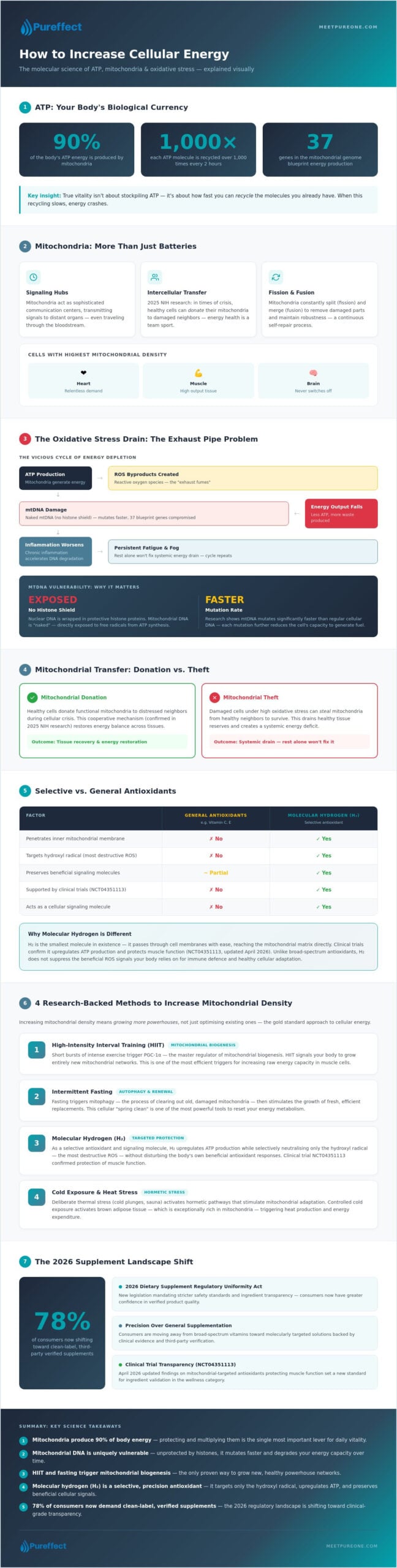
Ever wonder why some days you feel like a flat battery? The answer lies in Adenosine Triphosphate, or ATP. Think of it as the biological currency your body spends on everything from blinking to running a marathon. The Science of Cellular Energy tells us that your mitochondria are responsible for producing 90% of this vital fuel. When people ask how to increase cellular energy, they’re really asking how to make these microscopic powerhouses more efficient.
Not all cells are created equal. Your heart, muscles, and brain cells are packed with thousands of mitochondria because their energy demands are relentless. But here is the fascinating part. A 2025 study from the NIH revealed that mitochondria aren’t just stuck inside one cell. In times of extreme stress or “crisis,” healthy cells can actually donate their mitochondria to damaged neighbors. This process, known as intercellular mitochondrial transfer, suggests that our energy health is a team sport played at the molecular level.
The ATP Recycling Challenge
You don’t just make ATP once and use it up. It’s a constant loop. A single ATP molecule in your body is recycled over 1,000 times every two hours. It’s an incredible feat of biological engineering. If this recycling slows down, your energy levels tank. This is often why we feel “old.” As we age, the machinery responsible for this rapid turnaround begins to lag. True vitality isn’t about having a massive stockpile of ATP; it’s about how fast you can reboot the molecules you already have.
Mitochondrial Signaling and Systemic Health
Mitochondria aren’t just passive batteries. They act as sophisticated signaling hubs. They can even travel through your bloodstream to communicate with distant organs. To stay healthy, they constantly change shape through processes called fission (splitting) and fusion (joining). This helps them weed out damaged parts and stay robust. When you successfully trigger the growth of entirely new powerhouses, you’ve achieved mitochondrial biogenesis. Understanding these signals is a major step in learning how to increase cellular energy effectively.
Protecting the Powerhouse: How Oxidative Stress Drains Energy
Energy isn’t free. Every time your mitochondria churn out ATP, they create a byproduct called reactive oxygen species (ROS). Think of it as the exhaust pipe of your cellular engine. When these “exhaust fumes” build up, they cause oxidative stress. This stress is a primary reason people struggle with how to increase cellular energy. It damages the very machinery trying to keep you awake. If your “exhaust” isn’t managed, the engine eventually stalls.
Why is this so destructive? Your mitochondrial genome consists of just 37 specific genes. These genes are the blueprints for energy production. Unlike the DNA in your cell’s nucleus, mitochondrial DNA (mtDNA) is “naked.” It lacks the protective protein coating known as histones. This makes it significantly more susceptible to damage. In fact, research suggests mtDNA can mutate much faster than regular DNA. When these 37 genes are compromised, your ability to produce fuel drops significantly.
There is also a darker side to the cellular sharing we mentioned earlier. While healthy cells can donate powerhouses, damaged cells under high oxidative stress can actually “steal” mitochondria from their healthy neighbors to survive. This “mitochondrial theft” can drain your overall energy reserves. It leaves your healthy tissues struggling to keep up with the demands of the damaged ones, creating a systemic energy drain that rest alone won’t fix. This same surge in oxidative stress is at the heart of travel-related exhaustion, and understanding combating travel fatigue with molecular hydrogen reveals how high-altitude environments can trigger a localized metabolic crisis that compounds this cellular damage.
The Vulnerability of Mitochondrial DNA
Without histones to act as a shield, your mtDNA is directly exposed to the free radicals produced during ATP synthesis. This creates a “leaky” energy production system. Research shows that chronic inflammation accelerates this DNA degradation. It’s a vicious cycle. Your cells produce less energy but more waste, leading to the persistent lethargy many of us feel daily. It’s like a car engine that’s rusted from the inside out; it burns more fuel but goes half the distance. Chronic inflammation is also a key driver of home remedies for joint stiffness, as the same oxidative pathways that damage mitochondrial DNA can contribute to reduced mobility and morning stiffness in your joints.
Selective Antioxidants vs. General Supplements
Most people reach for Vitamin C or E to fight this. But there’s a catch. Many general antioxidants are too large to penetrate the inner mitochondrial membrane where the real damage happens. This is where molecular hydrogen (H2) changes the conversation. Recent clinical trials show that H2 is a selective antioxidant. It specifically targets and neutralizes the toxic hydroxyl radical. This is the most destructive type of ROS. Unlike other supplements, H2 doesn’t interfere with beneficial signaling molecules your body needs to stay healthy. Using a molecular hydrogen generator is a precise way to protect these delicate powerhouses without disturbing your body’s natural balance.
4 Research-Backed Methods to Increase Mitochondrial Density
Want to actually change your biology? Increasing mitochondrial density is like adding more cylinders to your engine. It isn’t just about making the ones you have work harder. It’s about growing more of them. This is the gold standard for how to increase cellular energy. When you have more powerhouses, your body handles daily demands with ease and recovers faster from exertion.
Start with High-Intensity Interval Training (HIIT). Research shows that short, intense bursts of effort trigger a specific survival signal. Your cells realize their current energy capacity is lacking. In response, they initiate mitochondrial biogenesis. It’s a direct way to force a cellular upgrade. Similarly, cold exposure is a powerful trigger. Taking a cold shower or using an ice bath activates brown fat. This tissue is dense with mitochondria and burns energy specifically to create heat. This “browning” effect doesn’t just burn calories; it increases the total number of active powerhouses in your system.
Molecular hydrogen therapy is the fourth pillar of this strategy. It acts as a signaling molecule that supports these biological stressors. While HIIT and cold exposure provide the “nudge” your cells need to grow, hydrogen helps manage the oxidative load that comes with that growth. It’s a non-invasive way to ensure your cells are resilient enough to handle the demands of building new energy structures. Building a consistent hydrogen therapy daily routine around these biological stressors can help you time your intake precisely to maximize cellular resilience and recovery.
Metabolic Synergy: Fasting and Hydrogen
Fasting is the ultimate cleanup crew. When you stop eating for a set period, your cells enter autophagy. They begin recycling damaged parts, including old, “leaky” mitochondria. This process, called mitophagy, makes room for new growth. You can deepen this effect by looking into Hydrogen Therapy and Intermittent Fasting. Recent data shows that molecular hydrogen can mimic the metabolic signals of calorie restriction. It helps your system transition into fat-burning mode while keeping oxidative stress in check during the fast.
Optimizing the Sleep-Energy Cycle
Quality sleep is where the magic happens. While you’re out, your brain’s glymphatic system flushes out metabolic waste. Mitochondria are the engines that power this nighttime “brain wash.” If your cellular energy is low, this cleanup stalls, leaving you foggy the next morning. A simple way to support this is by using hydrogen inhalation before bed. It lowers the oxidative load, allowing your mitochondria to focus on recovery rather than defense. If you’re ready to optimize your recovery, the PureONE Molecular Hydrogen Generator offers a non-invasive way to support these vital biological cycles every day.
Molecular Hydrogen: The Next Frontier in Cellular Resilience
Molecular hydrogen isn’t just a passive shield against oxidative stress. It’s a sophisticated messenger. Research indicates that H2 acts as a signaling molecule that actually prompts your mitochondria to upregulate ATP production. It’s a proactive strategy for anyone looking at how to increase cellular energy. Instead of just reacting to damage, you’re giving the “go” signal to your molecular powerhouses. It’s about optimizing the system from the inside out.
How do you actually get this molecule into your system? There are three primary routes. Inhalation allows the gas to enter the bloodstream quickly for systemic reach. Drinking hydrogen-rich water is excellent for metabolic health and gut balance. In June 2026, the FDA maintained its designation of molecular hydrogen as “Generally Recognized as Safe” (GRAS) for use in beverages. You can even apply it to the skin for localized recovery. Each method offers a unique way to support your cellular resilience and overall vitality. To get the most out of these delivery methods, following a structured hydrogen therapy daily routine that meets the H2HUBB minimum performance standards ensures you’re consistently hitting the therapeutic thresholds your cells need.
Why the 66/33 Ratio Matters
Advanced delivery systems often utilize a 66/33 ratio; this consists of 66% hydrogen and 33% oxygen. This balance is critical. It provides a therapeutic dose of hydrogen while ensuring your cells have the oxygen they need to stay productive. Safety studies on these specific gas mixtures show they’re exceptionally well-tolerated for long-term use. If you want a foundational understanding of this science, you can explore What is Molecular Hydrogen? to see how it works at a molecular level.
Implementing Home Cellular Therapy
Implementing this at home is surprisingly simple. You don’t need a medical degree to start your journey toward better energy. A daily routine with the PureONE Molecular Hydrogen Generator can be as easy as a 30-minute inhalation session while you read or work. It’s a low-barrier way to participate in your own discovery. There’s no high-pressure commitment here; it’s about finding what works for your unique biology. You can also visit our new shop to find specialized accessories that can enhance your daily experience and help you maintain that molecular edge.
Your Path to Molecular Vitality
Protecting your 37-gene mitochondrial genome is the foundation of long-term health. We’ve explored how metabolic stressors like HIIT and fasting trigger growth, and how selective antioxidants like molecular hydrogen act as a signaling bridge for recovery. Understanding how to increase cellular energy isn’t just about a quick fix; it’s about supporting your body’s natural recycling of ATP. With the 2026 shift toward stricter supplement regulations and clean-label preferences, choosing precise, research-backed tools has never been more important.
You now have a roadmap to move past persistent lethargy. By managing the “exhaust pipe” effect of energy production and leveraging the 66/33 hydrogen-to-oxygen ratio, you can revitalize your daily focus. Ready to start your own experiment? You can experience the cellular difference with the PureONE Molecular Hydrogen Generator. It’s endorsed by wellness experts and built with a proprietary stainless steel condenser for consistent quality. We offer a 365-day risk-free trial because we want you to feel the results for yourself. Your journey toward better living starts at the molecular level. We’re here to help you every step of the way.
Frequently Asked Questions
Can molecular hydrogen actually increase ATP production?
Molecular hydrogen supports the upregulation of enzymes that directly boost ATP levels. It works by neutralizing the specific free radicals that normally slow down the electron transport chain. This protection allows your powerhouses to run at full capacity without being bogged down by waste. If you’re wondering how to increase cellular energy, protecting the production site is the most logical place to start.
How long does it take to feel a difference in cellular energy?
Most people notice a shift in mental clarity within the first few days of consistent use. However, the process of physically growing new mitochondria takes more time. You’ll likely see the most significant results in how to increase cellular energy after about four weeks. This timeline follows the natural biological pace of mitochondrial biogenesis. Consistency is key; your cells need a steady signal to prioritize growth over just survival.
Is it better to inhale hydrogen or drink hydrogen water for energy?
Inhalation is often the preferred route for systemic benefits because it delivers a higher volume of hydrogen gas directly into your bloodstream. This is particularly helpful for cognitive focus and physical recovery. Drinking hydrogen water provides targeted support for the gut and liver. For a comprehensive approach, using both methods ensures that the hydrogen reaches every corner of your body, from your digestive tract to your brain.
Does caffeine help or hurt mitochondrial health in the long run?
Caffeine is a double edged sword. In small, occasional doses, it can actually stimulate mitochondrial activity. But if you’re using it to mask a genuine energy deficit, you’re just borrowing from tomorrow’s reserves. Long term health depends on fixing the underlying cellular issues rather than just overriding your body’s signals. Overreliance on stimulants can eventually lead to mitochondrial fatigue and decreased overall efficiency.
Can you have too many mitochondria?
Your body is quite good at self regulating. While you can’t really have “too many” healthy mitochondria, you can definitely have too many damaged ones. The goal is a high density of functional powerhouses. Elite endurance athletes often have double the mitochondrial density of sedentary individuals. This is why they recover so much faster. More healthy mitochondria simply mean a higher capacity for work and resilience.
What are the best foods to support mitochondrial biogenesis?
Disclaimer
The information provided by Pureffect and any of its products are for educational and informational purposes only and is not intended as medical advice. Individual results may vary, and no specific health outcomes are guaranteed. Always consult a qualified healthcare professional before starting any wellness practice or product.