
Hydrogen-rich water may affect plants at two key stages: seed germination and growth. Using hydrogen water for plants may support these processes, and a 4-hour treatment produced the highest germination rate among the wheat seeds tested. The findings point to potential, not a universal growing formula.
It’s reasonable to wonder whether changing the water can affect plant growth. Early research suggests molecular hydrogen may activate antioxidant enzymes and help plants respond to environmental stress. Results can vary with the crop and growing conditions.
Here, you’ll learn what research says about seeds and established plants, what hydrogen-rich irrigation may and may not do, and how hydrogen-enriched water systems fit in. You’ll also find practical considerations, including why this approach doesn’t replace basic plant care.
Key Takeaways
- See how hydrogen-rich water may influence seed germination and why treatment conditions matter.
- Learn what affects hydrogen-enriched irrigation, including how dissolved hydrogen changes after water is prepared.
- Explore the plant-growth findings and the biological responses observed in wheat.
- Understand why there isn’t a single recommended dissolved-hydrogen concentration for every plant and growing setup.
- Find out when a home hydrogen-water generator may fit into your interest in plant watering.
Seed germination
Could water influence a plant before a seedling emerges? Studies suggest hydrogen-rich water may affect germination by activating antioxidant enzymes in seeds. These enzymes help manage oxidative stress as a seed resumes growth. This offers one possible explanation for researchers’ interest in molecular hydrogen during early development, while responses may differ between crops and growing conditions.
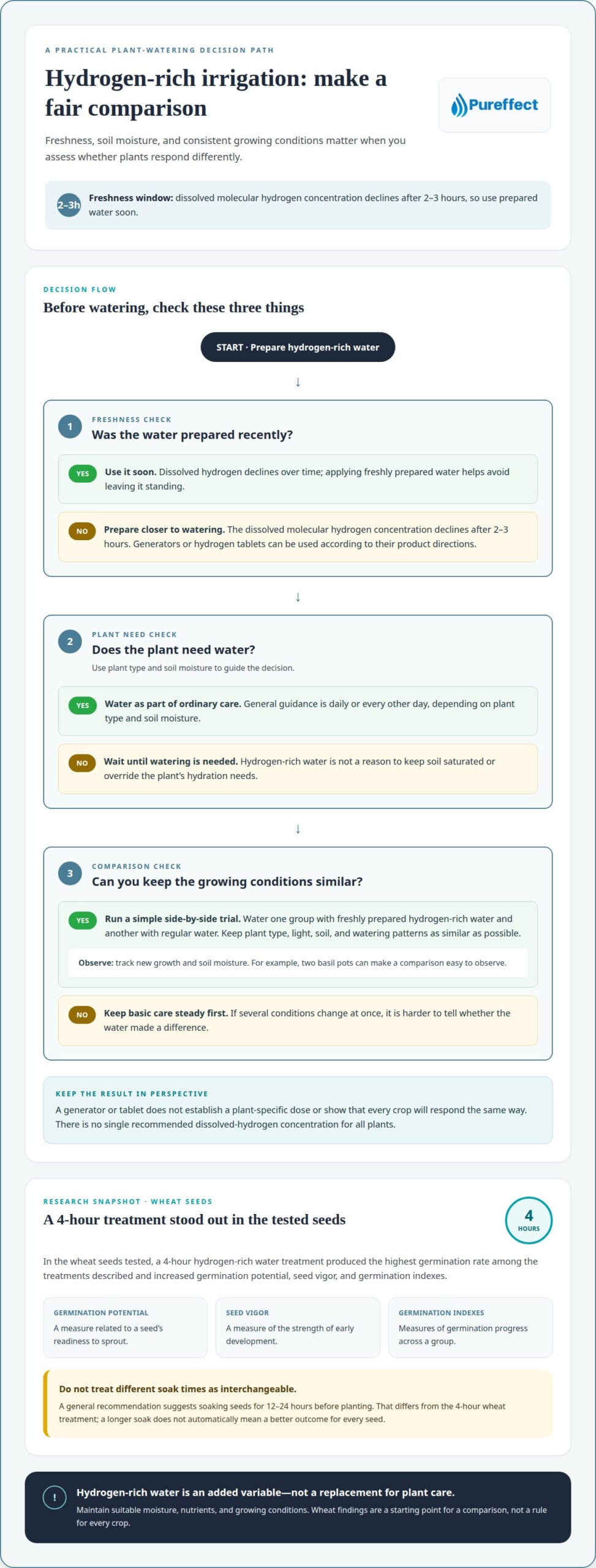
Wheat provides a useful example. In tested wheat seeds, a 4-hour hydrogen-rich water treatment increased germination potential, seed vigor, and germination indexes. These measures describe related but distinct outcomes: a seed’s readiness to sprout, the strength of early development, and the progress of germination across a group. Together, they offer more detail than simply recording whether a seed emerged.
A general recommendation is to soak seeds in hydrogen-rich water for 12 to 24 hours before planting. That suggested window differs from the 4-hour treatment examined in the wheat study. They shouldn’t be treated as interchangeable instructions for every seed. Species, seed condition, and the treatment method can influence results, so a longer soak doesn’t automatically mean a better outcome.
To try it, compare treated and untreated seeds from the same packet. Keep the seed type, planting depth, growing medium, and moisture consistent. For example, soak one group of wheat seeds in hydrogen-rich water and another in plain water before sowing. Record how many sprout and how evenly they develop. This comparison helps separate a possible water effect from differences in planting conditions.
You can also assess development after sprouting. Observe whether seedlings emerge evenly, develop sturdy stems, and establish roots in the growing medium. For tomato or bean seeds, compare treated and untreated groups under the same light and watering conditions. These observations add context to the germination count, since emergence alone doesn’t show the quality of early growth.
Hydrogen-rich water doesn’t replace suitable moisture, temperature, or nutrients. Keep these basics steady while assessing using hydrogen water for plants, and treat findings from wheat as a starting point, not a rule for every crop. A consistent comparison gives you a clearer picture of how your seeds respond.
Hydrogen-enriched irrigation systems
How often should plants be watered with hydrogen-rich water? A general recommendation is daily or every other day, depending on plant type and soil moisture. Let the plant’s watering needs guide you: hydrogen-rich water is no reason to keep soil saturated.
At home, prepare hydrogen-rich water with a hydrogen-water generator or hydrogen tablets, following that product’s instructions. Use the water soon after preparation, since its dissolved molecular hydrogen concentration declines after 2-3 hours. A prepared batch left standing loses some of the quality that makes it hydrogen-rich.
Hydrogen-enriched irrigation means applying water containing dissolved molecular hydrogen to a plant’s growing medium. You can use it during ordinary watering, with a watering can or irrigation setup. The key difference is the water itself, not a special schedule that overrides the crop’s hydration needs.
For a small trial, water one group of plants with freshly prepared hydrogen-rich water and another with regular water. Keep plant type, light, soil, and watering patterns as similar as possible. Two basil pots, for example, can make a comparison easy to observe. Track new growth and soil moisture rather than changing several care conditions at once.
Why use fresh water? Dissolved hydrogen escapes over time, so preparation and timing affect how much reaches the roots. Apply the water soon after preparing it rather than storing it for later. For larger plantings, consider whether you can use a batch across the growing area soon after preparation.
Can you use hydrogen tablets or a hydrogen water generator for plants? Either can prepare hydrogen-rich water. Follow the product’s directions and use water suitable for watering plants. A generator or tablet doesn’t establish a plant-specific dose or show that every crop will respond in the same way.
Plant studies suggest hydrogen-rich water may support antioxidant activity and help plants respond to environmental stress. That possibility makes it an area of interest, not a replacement for ordinary irrigation, nutrients, or suitable growing conditions. If you’re exploring a home source of hydrogen-rich water, a home molecular hydrogen generator is one option to consider for preparing water.
Hydrogen-rich water and plant growth
Plant-growth research points to possible effects on biomass and stress responses, alongside measurable changes in wheat. The findings help explain what scientists have observed, but not what every garden plant will do.
Plant Growth and Water Comparisons
Hydrogen-rich water contains dissolved molecular hydrogen, and some studies report increased plant growth and biomass. This doesn’t establish that it’s better than tap, filtered, or rainwater for every plant. Water sources, crops, and growing conditions differ. The practical question is whether a particular plant responds differently when other care conditions are comparable.
Dissolved Hydrogen Concentration
Dissolved hydrogen concentration measures the molecular hydrogen present in water. Plant studies don’t establish one recommended concentration for all species, so wheat findings aren’t a universal target for houseplants or vegetables. Outcomes can depend on the plant and growing setup. Concentration alone also doesn’t describe plant response, which involves growth, root development, and environmental conditions.
Plant Safety and Suitability
Research on hydrogen-rich water doesn’t establish the same response or suitability for every houseplant, vegetable, or garden plant. Wheat results describe wheat; they can’t determine how a fern or pepper plant will respond. This water also doesn’t replace normal plant-care needs, including appropriate irrigation and nutrition. Account for the species and growing conditions when assessing results.
Soil pH, Nutrients, and Microbes
Hydrogen-rich water isn’t a fertilizer and doesn’t provide complete plant nutrition. Wheat findings also don’t establish a general effect on soil pH or beneficial microbes. Soil conditions and nutrient availability remain separate parts of plant care.
The original wheat study authors (not identified in the research facts) reported that 4-hour and 5-hour hydrogen-rich water treatments significantly increased hydrogen peroxide levels in wheat. They also reported that a 4-hour exposure produced the highest nitric oxide levels in wheat roots and shoots, and that a 4-hour treatment significantly upregulated the Dreb1 gene. These results describe measured wheat responses, not proof of the same soil effects across garden plants.
Claims about practical benefits should be considered alongside the need for direct testing. Field experiments are needed to validate the effects of hydrogen-rich water on plant growth and drought-stress mitigation. Hydrogenated-water irrigation may encourage healthy root development and growth, but this is a potential benefit, not an established response for every species or growing setup. Crops watered with hydrogen-enriched water may also be more resistant to drought, unfavorable conditions, toxins, disease, and pests. These claims don’t mean every crop will experience all of these effects, or that this irrigation replaces appropriate watering, nutrition, or other care.
For gardeners, the practical takeaway is to distinguish these potential benefits from the wheat measurements described above. The proposed effects concern roots, growth, and resilience, but field experiments are still needed to validate them. Until then, treat them as possibilities to assess under relevant growing conditions, not universal outcomes or a guaranteed advantage over other water sources.
What concentration of dissolved hydrogen is recommended for watering plants?
Wheat findings don’t establish a universal dissolved-hydrogen concentration for watering plants. They describe treatment durations and plant responses, not a target that applies to every crop. A value observed in wheat can’t automatically become a standard for lettuce, herbs, or ornamental plants.
Dissolved hydrogen concentration describes how much molecular hydrogen is present in a given volume of water. A reading is useful only in the context of the plant, growing medium, and watering conditions. For example, lettuce in a container and lettuce in a garden bed may have different moisture conditions, even if the water starts at the same concentration.
Rather than treat one number as a universal dose, make a controlled comparison. Water comparable plants with freshly prepared hydrogen-rich water and ordinary water, keeping light, soil, and watering amounts consistent. Record visible changes, such as new leaves or wilting, in each group. This helps you assess the water in context without confusing concentration with plant response.
- Keep the comparison fair: Use the same plant species and similar growing conditions.
- Apply water consistently: Follow each plant’s normal moisture needs rather than increasing irrigation to deliver more hydrogen.
- Note preparation timing: Dissolved hydrogen decreases as prepared water stands, so use it while fresh.
Concentration is also different from total plant nutrition. Hydrogen-rich water doesn’t supply all the nutrients a plant needs, so it can’t replace suitable fertilizer or healthy growing conditions. For container-grown lettuce, for instance, both water quality and adequate nutrients matter. Changing the water alone doesn’t meet all its care needs.
Research findings in wheat provide useful context, but they don’t define a concentration target for every species or setup. Focus on consistent preparation and watering, then observe the crop you’re growing. If you want a home option for preparing hydrogen-rich water, explore this home hydrogen-water generator.
Some guidance focuses on using hydrogen-rich water alongside plant-care products rather than setting a concentration target. Hydrogen water can be combined with fertilizers, but applying them separately is recommended to maintain hydrogen concentration. This is a handling recommendation, not a universal dissolved-hydrogen value for plants. Separately, wheat research found increased zinc and iron concentrations and antioxidant enzyme activity in the roots and shoots of wheat seeds treated with hydrogen-rich water. These findings describe wheat responses, not a concentration recommendation for other plants.
The guidance also includes recommendations about hydrogen peroxide. One answer recommends using 1 tablespoon (15 mL.) of hydrogen peroxide per cup of water for plants with root rot or fungal infections. Another answer recommends diluting hydrogen peroxide at 1 part hydrogen peroxide to 10 parts water before watering plants. These are recommendations about hydrogen peroxide, not stated dissolved-hydrogen concentration targets. They do not provide a way to calculate the hydrogen content of water or replace a controlled comparison of hydrogen-rich water with ordinary water. Keep the treatment being assessed clear, and observe the plant response without assuming that a wheat result sets a target for another crop.
Pureffect: PureONE Molecular Hydrogen Generator
The PureONE Molecular Hydrogen Generator is a home option for preparing hydrogen-infused water. If you’re considering adding freshly prepared hydrogen water to your plant-watering routine, explore the research and practical limits discussed here as you decide whether to try it.
Plant studies don’t establish a universal concentration or show that every species responds alike. Keep ordinary plant-care needs, including suitable moisture and nutrients, in view. The PureONE Molecular Hydrogen Generator prepares hydrogen-infused water; it doesn’t replace these fundamentals or guarantee improved growth.
To learn more about the PureONE Molecular Hydrogen Generator, contact Pureffect.
Make Your Next Plant-Water Experiment Count
Choose a plant and decide what you want to learn before changing its watering routine. A thoughtful approach to using hydrogen water for plants starts with a clear purpose, such as observing new growth or comparing how two similar plants respond. Keep the rest of their care steady and record what you notice. This gives your experiment direction instead of relying on a quick impression.
Let the plant’s needs guide you. Don’t add extra water just to try a new approach, and maintain normal nutrition and growing conditions. Hydrogen-rich water may not produce the same response in every plant, so treat your observations as specific to the plants and conditions you tested. A careful trial can help you decide whether this practice fits your routine.
Pureffect offers the PureONE Molecular Hydrogen Generator for preparing hydrogen-infused water at home. Contact Pureffect to discuss plant irrigation and explore whether it fits your interests. Start small, stay curious, and let your plants guide what you try next.
Frequently Asked Questions
Does hydrogen water help plants grow, and what does research show?
Studies report increased growth rates and biomass in some plants watered with hydrogen-rich water, alongside possible benefits under drought and other environmental stresses. Wheat research also found changes in antioxidant activity and plant signaling, but findings from one crop don’t establish the same response in every species. For a practical comparison, track new leaves on similar plants while keeping their light, soil, and watering routine consistent.
Disclaimer
The information provided by Pureffect and any of its products are for educational and informational purposes only and is not intended as medical advice. Individual results may vary, and no specific health outcomes are guaranteed. Always consult a qualified healthcare professional before starting any wellness practice or product.