
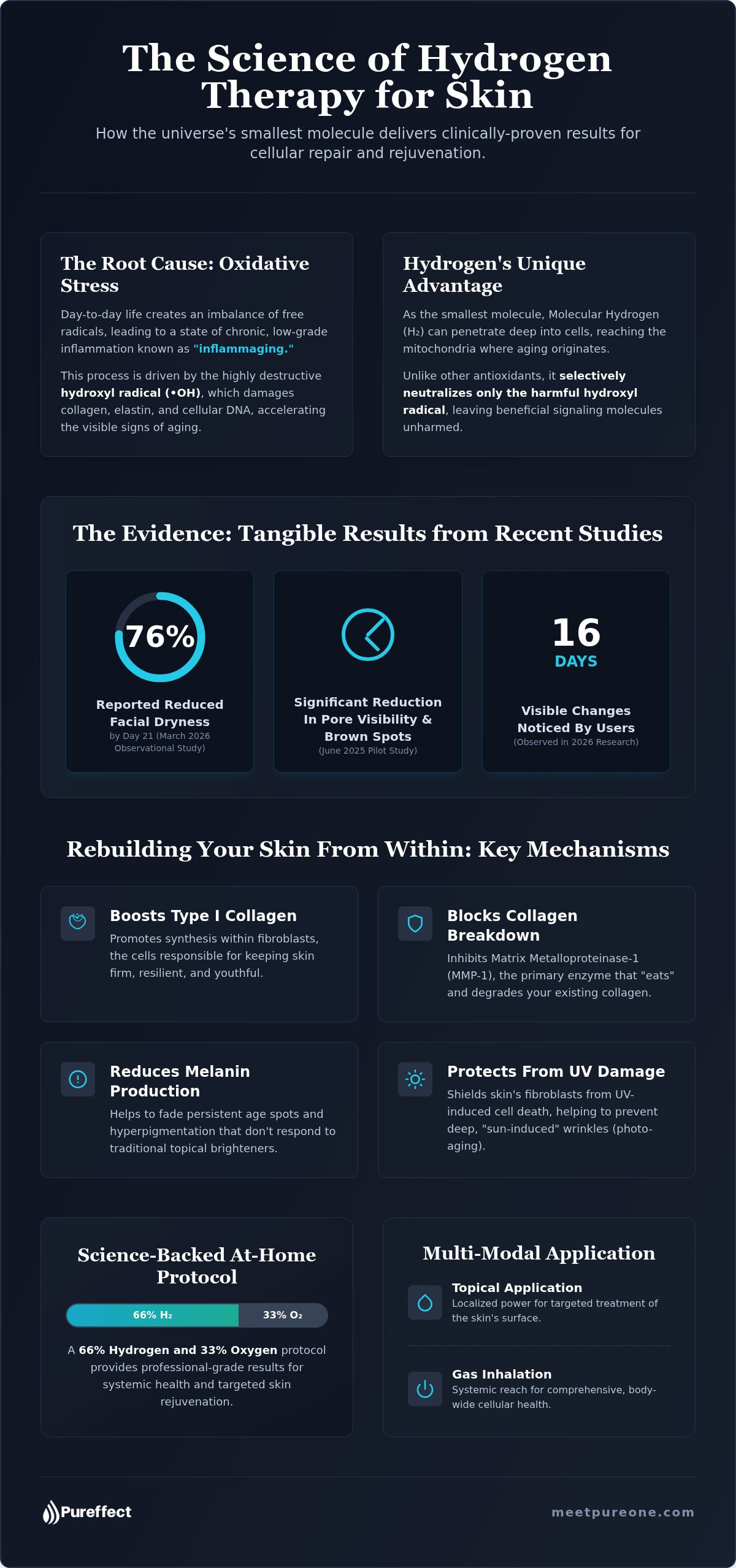
What if the secret to glowing skin isn’t another cream, but the smallest molecule in the universe? Recent data from a March 2026 observational study found that 76% of participants reported reduced facial dryness by day 21 of their hydrogen routine. It’s a striking shift from the traditional approach of layering topical products that often fail to reach the deeper layers of our cells. If you’re tired of battling “inflammaging” or dullness that won’t budge, you’re not alone. We all want a routine that actually delivers on its promises without the guesswork.
In this guide, you’ll discover how hydrogen therapy for skin rejuvenation works at a mitochondrial level to neutralize selective aging triggers. We’ll break down the latest findings, including a June 2025 pilot study that showed a statistically significant reduction in pore visibility and brown spots. You’ll learn about the “saturation effect” observed in 2026 research and how to use multi-modal therapy to achieve visible results, with many users noticing changes by day 16. It’s time to move past the hype and look at the grounded, clinical evidence for a simpler path to healthy skin.
Key Takeaways
- Understand how molecular hydrogen selectively neutralizes the specific free radicals that trigger “inflammaging” and cellular breakdown.
- Explore the research behind hydrogen’s ability to promote Type I collagen synthesis while blocking the enzymes that cause skin sagging.
- Compare the localized power of topical applications with the systemic reach of gas inhalation to see which method fits your routine.
- Discover how hydrogen therapy for skin rejuvenation can improve your skin’s baseline hydration and texture according to 2026 pilot studies.
- Learn how to implement a science-backed 66% hydrogen and 33% oxygen protocol at home for professional-grade results.
The Science of Oxidative Stress: Why Your Skin Ages at a Cellular Level
What actually causes skin to lose its bounce over time? It’s often a result of oxidative stress. Think of it as a form of biological rust. This happens when your body has more free radicals than its internal defenses can handle. This persistent imbalance leads to “inflammaging,” a chronic state of low-grade inflammation that quietly accelerates the breakdown of collagen and elastin. If you feel like your topical creams aren’t doing enough, it’s because they’re likely missing the root cause happening deep inside your cells.
The primary culprit in this process is the hydroxyl radical. In dermatology, this is known as the most aggressive “aging trigger” because it indiscriminately damages proteins and DNA. While traditional antioxidants like Vitamin C or Vitamin E are helpful, they are physically bulky. Their size often prevents them from reaching the most vulnerable parts of a cell. Hydrogen therapy is a game-changer here. Because molecular hydrogen is so small, it can slip through cellular membranes that stop other nutrients cold.
The Mitochondrial Connection to Skin Vitality
Your mitochondria act as the power plants for your skin cells. They produce the energy required for repair and renewal. However, these power plants also leak aging-related radicals as a byproduct of energy production. Recent research into mitochondrial decay shows a direct link between failing cellular energy and visible skin sagging. When these internal engines sputter, the skin’s structural support begins to collapse. Mitochondrial resilience is the absolute key to 2026 longevity.
Why Selective Antioxidation is the New Skincare Gold Standard
Why is hydrogen therapy for skin rejuvenation becoming the preferred choice for science-backed wellness? It’s all about being selective. Most antioxidants neutralize every radical they encounter. This is actually a problem because your skin needs “good” radicals, like nitric oxide, to maintain healthy blood flow and cellular communication. Hydrogen is unique because it only targets the harmful hydroxyl radicals.
A pilot clinical study published in June 2025 confirmed that this selective approach produces measurable results. Researchers found that by neutralizing specific oxidative triggers, they could normalize biophysical skin parameters across various age groups. This means you can fight the signs of aging without accidentally switching off your skin’s natural signaling and repair systems.
Biological Mechanisms: How Molecular Hydrogen Repairs the Dermal Matrix
How does molecular hydrogen actually rebuild what time takes away? It’s not just about stopping damage. It’s about active repair. Research shows that H2 promotes Type I collagen synthesis within our fibroblasts. These are the cells responsible for keeping skin firm and youthful. At the same time, hydrogen tackles a major internal enemy: Matrix Metalloproteinase-1 (MMP-1). Think of MMP-1 as an enzyme that “eats” your collagen. By inhibiting this enzyme, hydrogen helps preserve the structural integrity of your dermal matrix.
Hydrogen also acts as a sophisticated signal modulator. Instead of just reacting to inflammation, it tells your cells to stop the inflammatory cascade before it spirals out of control. This is a big reason why hydrogen therapy for skin rejuvenation is becoming a staple in longevity routines. It even reaches the pigments. Recent studies have noted a reduction in melanin production, which is excellent news for anyone dealing with persistent age spots or hyperpigmentation that hasn’t responded to traditional brighteners.
Collagen Synthesis and Fibroblast Protection
Your skin’s texture depends entirely on healthy fibroblasts. Unfortunately, UV rays and environmental toxins are fibroblast killers. When we look at the science of cellular health, we see that H2-rich environments can actually protect these cells from UV-induced death. By keeping fibroblasts active, hydrogen ensures a smoother, more resilient skin texture. It’s like giving your skin’s foundation a second chance at a cellular level.
Reducing UV-Induced Damage and Photo-Aging
Sun damage is the leading cause of premature aging, often referred to as photo-aging. A March 2025 review in Molecular Hydrogen in Medical Skin Cosmetology highlights how H2 protects against solar radiation at a DNA level. It isn’t a replacement for sunscreen, but it helps the skin recover from the oxidative stress that sun exposure leaves behind. Pilot studies from 2025 showed that applying hydrogen-rich water significantly reduced redness and inflammation after acute UV exposure. Over time, this daily protection helps prevent the deep, “sun-induced” wrinkles that topical creams often ignore. If you’re looking for a research-backed way to support your skin’s recovery, you might want to explore how a home generator fits your routine.
Multi-Modal Application: Research on Inhalation vs. Topical H2
Is it better to breathe hydrogen, drink it, or apply it directly to your face? Most people start with a simple water bottle, but the team at Pureffect suggests that a multi-modal approach is the real secret to hydrogen therapy for skin rejuvenation. While topical applications handle localized issues like surface texture, inhalation provides a systemic reach that drinking water alone can’t match. By using multiple modes, you’re attacking the signs of aging from every possible angle.
Think of topical H2 as a targeted strike for blemishes and fine lines. In contrast, inhalation delivers a much higher therapeutic dose directly into your bloodstream. This systemic saturation feeds your skin from the inside out. A March 2026 internal study highlighted this “inside-out” effect, where participants tracked their progress over 60 days. The average day for the first noticeable skin change was day 16, and texture scores improved by 2.7 points on a 10-point scale by day 45. This wasn’t just a surface-level fix; it was a fundamental shift in cellular hydration levels.
The Power of Hydrogen Inhalation for Systemic Skin Health
Inhalation is the most efficient way to saturate your tissues with molecular hydrogen. Medical research indicates that inhaled hydrogen significantly improves microcirculation throughout the body. When blood flow to the dermis increases, your cells receive more oxygen and nutrients while clearing out metabolic waste. It’s a foundational repair process that starts deep beneath the surface. If you’re weighing your options, you can read more about a hydrogen inhalation machine vs water bottle to see which delivery method fits your specific goals.
Topical Application: Wet Compresses and Facial Mists
Surface treatments still play a vital role. A 2025 pilot study conducted at the Medical University of Bialystok found that topical hydrogen water significantly reduced pore visibility and red spots in just four weeks. Interestingly, the study reported statistically significant effects on reducing brown spots and UV-induced hyperpigmentation just one week after treatment. You can easily use H2-infused water as a facial mist or a wet compress for stubborn “problem areas” like under-eye circles.
This targeted method provides an immediate anti-inflammatory effect. It’s particularly helpful for reactive skin types or calming the skin after a long day in the sun. Combining these localized treatments with systemic inhalation creates a synergistic effect that no single cream can replicate. To start your own multi-modal routine at home, explore the PureONE Molecular Hydrogen Generator and its versatile application modes.
The PureONE Protocol: Implementing Research-Backed Rejuvenation at Home
How do you take all this clinical data and turn it into a morning routine? It’s one thing to read about 2026 pilot studies; it’s another to see those results in your own mirror. At Pureffect, we designed the PureONE Molecular Hydrogen Generator to serve as the bridge between lab-verified science and your daily life. Instead of guessing, you can follow a structured protocol designed for maximum cellular impact. You don’t need a medical degree to start your journey toward better skin.
One of the standout features of this device is the proprietary stainless steel condenser. This component is vital for producing consistent, high-purity gas without the fluctuations found in lower-quality tools. Consistency is the secret ingredient in any longevity routine. If the output varies, your results will too. By focusing on high-tech precision with a low-barrier setup, we’ve made it easy to bring professional-grade hydrogen therapy for skin rejuvenation into your living room.
A Daily Routine for Cellular Glow
Creating a “cellular glow” doesn’t have to be complicated. You can simplify your science-backed wellness routine into three practical steps:
- Step 1: Start your morning with H2-infused water. This primes your system for internal hydration and sets a healthy baseline for the day.
- Step 2: Dedicate 30 minutes to H2 inhalation. As research suggests, this provides the systemic antioxidant support needed to reach the dermis from within.
- Step 3: Use a topical mist or wet compress. This targets the surface-level “problem areas” like the red spots and pore visibility highlighted in recent 2025 research.
Why the 66/33 Ratio Matters for Skin Safety
Safety is just as important as efficacy. Many people ask about the specific 66% hydrogen and 33% oxygen mixture. Why not use 100% hydrogen? The answer is simple: cellular respiration. By including oxygen, you prevent the risk of “hypoxia” that can occur with pure hydrogen inhalation. This balanced mixture supports your cells’ ability to breathe while the hydrogen gets to work on repairing oxidative damage.
The PureONE generator is specifically engineered to maintain this precise ratio for every session. It’s the most versatile tool for this protocol, offering four different modes to suit your needs. We believe in the logic of this research so much that we offer a 365-day risk-free trial. It’s an invitation to participate in your own discovery. Does it work for your skin texture? We encourage you to verify the results for yourself.
The Future of Your Skin Starts at the Cellular Level
The science is clear: skin aging isn’t just a surface issue; it’s a cellular one. By shifting your focus from topical cover-ups to mitochondrial support, you’re addressing the root cause of “inflammaging” at its source. We’ve explored how hydrogen therapy for skin rejuvenation works by targeting the aggressive hydroxyl radicals that damage your dermal matrix. Whether you’re using inhalation for systemic repair or topical mists for localized blemishes, the goal remains the same: providing your cells with the molecules they need to regenerate naturally.
At Pureffect, we believe in providing tools that are as transparent as the research behind them. Our Canadian-manufactured generator is endorsed by Howie Mandel and designed to deliver the high-purity results discussed throughout this guide. Because we value your journey toward better living, we offer a 365-day money-back guarantee. It’s a chance to verify the logic of molecular hydrogen for yourself without any pressure. Experience the PureONE 365-Day Risk-Free Trial today. We’re excited to be your partner as you discover a simpler, science-backed way to support your skin’s long-term vitality.
Frequently Asked Questions
Is hydrogen therapy safe for sensitive or reactive skin types?
You can expect to notice changes relatively quickly. According to a March 2026 observational study, participants saw the first visible skin improvements around day 16. By day 21, 76% of those involved reported a significant reduction in facial dryness. While deep fine lines may take longer to soften, the study showed that self-rated skin texture scores continued to improve by an average of 2.7 points through day 45.
Can I use hydrogen therapy alongside my existing skincare products?
Yes, you can easily integrate it into your current routine. Think of hydrogen as a foundational step rather than a replacement. It doesn’t react negatively with active ingredients like retinol or niacinamide. In fact, using a hydrogen mist before applying your favorite serum can help prep the skin environment. It neutralizes surface-level oxidative stress, allowing your existing products to focus on their specific tasks without battling extra inflammation.
Why is inhalation better for skin than just drinking hydrogen water?
It comes down to the dosage and how the gas travels. While drinking hydrogen water supports general wellness, inhalation provides a much higher therapeutic concentration. Inhaled hydrogen enters the bloodstream directly and is distributed systemically to the dermis. This “inside-out” approach ensures that hydrogen therapy for skin rejuvenation reaches the deep structural layers where collagen is made. It simply provides more molecular power for cellular repair than drinking alone.
Is there a risk of “over-antioxidating” the skin with molecular hydrogen?
Not with molecular hydrogen. Traditional antioxidants can sometimes neutralize “good” radicals that your skin needs for signaling. Hydrogen is unique because it is selective. It only targets the damaging hydroxyl radicals while leaving beneficial molecules, like nitric oxide, completely alone. This selectivity prevents the “antioxidant paradox” where you accidentally hinder your skin’s natural repair signals. It’s a smarter, safer way to manage oxidative stress without overstepping.
How often should I use the PureONE generator for optimal skin rejuvenation?
Consistency is your best friend for visible results. We recommend a daily 30-minute inhalation session to maintain systemic antioxidant levels. For targeted areas, using a topical mist two or three times a day can help manage local inflammation. Research from 2026 suggests a “saturation effect” occurs around day 45. After this point, daily use helps maintain your improved skin baseline rather than providing continuous new gains. It’s about steady, long-term maintenance.
Disclaimer
The information provided by Pureffect and any of its products are for educational and informational purposes only and is not intended as medical advice. Individual results may vary, and no specific health outcomes are guaranteed. Always consult a qualified healthcare professional before starting any wellness practice or product.