
What if the most effective tool for fighting chronic inflammation is also the smallest molecule in existence? It sounds like a reach, but by mid-2026, more than 1,000 scientific articles and 800 clinical studies have investigated exactly what is molecular hydrogen and how it interacts with our cells. You’ve probably dealt with that nagging brain fog or the slow, heavy recovery that follows a tough workout. It’s frustrating when your body feels like it’s constantly battling internal noise from oxidative stress.
This guide explores the technical evidence behind H2 as a selective antioxidant. Unlike traditional supplements, molecular hydrogen specifically targets the most cytotoxic radicals without disrupting essential cellular signaling. We’ll break down the peer-reviewed data across 170 health areas, including research on inhaled concentrations between 1% and 4%, to help you understand the biological mechanics at play. You will also learn how to evaluate if a hydrogen generator fits your lifestyle and which delivery methods provide the most systemic impact.
Key Takeaways
- Learn how the unique molecular size of H2 allows it to bypass cellular barriers and target oxidative stress directly at the mitochondrial level.
- Understand what is molecular hydrogen through the lens of selective signaling, where it neutralizes harmful hydroxyl radicals while leaving beneficial ones intact.
- Compare the biological efficacy of hydrogen-infused water against high-flow gas inhalation methods, including the 66/33 Hydrox ratio.
- Review evidence-based findings on how H2 exposure can effectively “reprogram” liver metabolism and improve systemic recovery markers.
- Establish a practical daily protocol using the “30-Day Vitality” approach to measure improvements in brain fog and inflammatory response.
Defining Molecular Hydrogen: More Than Just the First Element
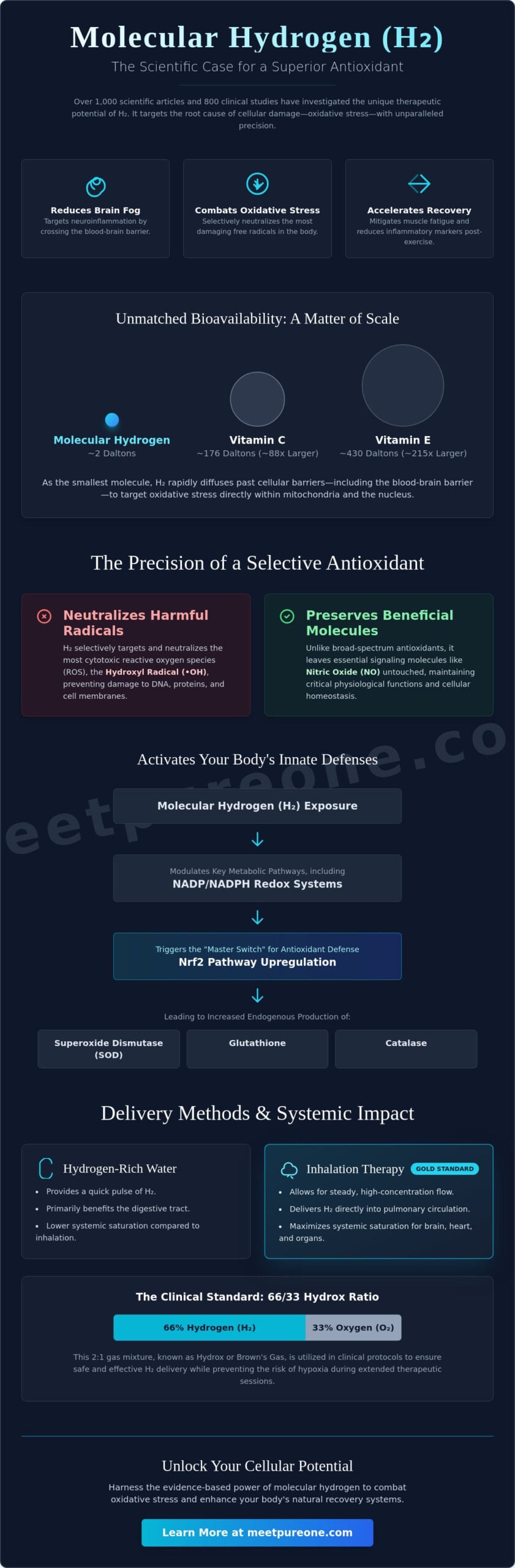
Molecular hydrogen (H2) is a diatomic gas consisting of two hydrogen atoms covalently bonded together. This creates the smallest neutral molecule in existence, which is a critical distinction when understanding what is molecular hydrogen compared to its atomic or ionic forms. Because H2 is electrically neutral and incredibly small, it bypasses the usual biological gates that restrict larger, polar molecules. This allows it to diffuse rapidly into the bloodstream and permeate cellular compartments, including the mitochondria and the nucleus, where it can interact with the cell’s most sensitive machinery.
The Smallest Molecule with the Biggest Impact
The bioavailability of H2 is unmatched due to its low molecular weight of approximately 2 daltons. In contrast, traditional antioxidants like Vitamin C (176 daltons) or Vitamin E (430 daltons) are significantly larger and often rely on active transport mechanisms to cross lipid bilayers. The “smallness” of H2 is particularly vital for crossing the blood-brain barrier, a feat that most supplemental antioxidants cannot achieve. This rapid diffusion allows H2 to address oxidative stress in the central nervous system and other hard-to-reach tissues within minutes of administration.
H2 vs. H2O: Clearing the Confusion
It’s important to clarify that adding H2 to water does not change the H2O molecule into a new chemical compound. When we define what is molecular hydrogen in a therapeutic context, we are referring to H2 gas dissolved into a liquid or mixed into the air. The water simply acts as a delivery vehicle. Pureffect designs systems like the PureONE to create these hydrogen-rich environments safely. This allows for the implementation of Hydrogen therapy without altering the fundamental structure of the water, ensuring the gas remains bioavailable for cellular uptake.
The Biological Mechanism: How H2 Targets Oxidative Stress
The real magic of H2 lies in its precision. While most antioxidants act like a blunt instrument, molecular hydrogen is a selective agent. What does this mean for your body? It means it only targets the troublemakers. Research into Molecular hydrogen and cellular health highlights its unique ability to neutralize the hydroxyl radical (•OH). This is the most destructive radical in the human body. Unlike other common supplements, H2 leaves beneficial signaling molecules, like nitric oxide, completely alone.
Understanding what is molecular hydrogen at a biological level reveals a surprising level of sophistication. Recent findings from 2022 to 2024 suggest that H2 does more than just scavenge radicals; it actually reprograms metabolism. Specifically, it modulates the NADP/NADPH redox pathways. This is a central regulator of how your liver processes energy and manages inflammation. By shifting these ratios, H2 helps upregulate the Nrf2 pathway. This serves as a master switch that triggers your body’s own defense systems, including:
- Increased production of superoxide dismutase (SOD).
- Enhanced glutathione levels.
- Improved mitochondrial biogenesis.
Selective Scavenging: Neutralizing the “Bad” Radicals
Your cells actually need some reactive oxygen species (ROS). They act as messengers for growth and immune response. If you wipe them all out with high-dose vitamins, you might actually hurt your performance. H2 is smarter. It differentiates between “good” ROS and “bad” ROS. By focusing only on the cytotoxic radicals, it maintains the delicate balance of your cellular environment without interfering with essential signaling. This same selective mechanism is why researchers have been exploring molecular hydrogen for kidney health, as the kidneys are particularly vulnerable to hydroxyl radical-induced scarring and oxidative damage.
Mitochondrial Support and ATP Production
Ever wonder why athletes are turning to this tech? It comes down to the mitochondria. H2 supports the electron transport chain, which is the engine room for ATP (energy) production. By reducing the oxidative load on these organelles, H2 can help mitigate muscle fatigue. Clinical studies show that using a molecular hydrogen generator before or after exercise leads to faster recovery and reduced inflammatory markers. It is a simple way to help your cells work more efficiently.
Delivery Methods: Inhalation, Water, and the 66/33 Ratio
Choosing a delivery method is the next step once you understand what is molecular hydrogen and how it functions. While most early research focused on hydrogen-rich water (HRW), inhalation has emerged as the gold standard for systemic saturation. It’s about volume and time. Drinking a glass of water provides a quick pulse of H2 to the digestive tract. In contrast, breathing the gas allows for a steady, high-concentration flow directly into the pulmonary circulation. This is especially vital for addressing localized oxidative stress in the brain or heart.
Many clinical protocols now utilize a specific mixture known as Hydrox or Brown’s Gas. This consists of a 66% hydrogen and 33% oxygen ratio. Why the extra oxygen? During long therapeutic sessions, breathing pure H2 could potentially displace necessary oxygen in the lungs. By using a 66/33 mix, you eliminate the risk of hypoxia. This balance ensures you can maintain therapeutic levels for 60 to 90 minutes without compromising respiratory safety. Beyond inhalation, specialized tools like goggles now allow for topical H2 application to the eyes, targeting oxidative damage in ocular tissues directly.
Inhalation vs. Drinking: Which is More Effective?
The debate often comes down to dosage. You can learn more about the specifics in our guide on Hydrogen Therapy for Oxidative Stress: Comparing Delivery Methods. To match the H2 volume of a 30-minute inhalation session, you would likely need to drink dozens of liters of water. However, HRW remains excellent for gut health and liver metabolism. For those seeking maximum cellular impact, the PureONE Molecular Hydrogen Generator provides the flexibility to utilize both methods simultaneously.
The Science of the Proprietary Stainless Steel Condenser
Gas purity is non-negotiable. When generating H2 at home, the gas must be cooled and purified before it reaches the cannula. A high-grade stainless steel condenser plays a critical role here. It manages the gas temperature to ensure consistent saturation levels and prevents moisture buildup in the delivery tubes. This technical precision maintains the 66/33 ratio accurately. It ensures that every breath delivers a clean, therapeutic dose of what is molecular hydrogen in its most bioavailable state.
Implementing Molecular Hydrogen into Your Wellness Protocol
Ready to put the science to work? Establishing a routine depends on your specific goals, but research suggests that consistency is more important than sheer volume. When you look at what is molecular hydrogen through a clinical lens, most successful human trials involve daily exposure. A standard session usually lasts between 30 and 60 minutes. This window allows the H2 to reach peak levels in the bloodstream and begin the selective scavenging process we discussed earlier. It’s a simple habit with a high biological yield.
If you’re just starting, try the “30-Day Vitality” approach. Commit to one session every day for a month. This timeframe is enough to observe changes in systemic markers. Is it safe for the long haul? Yes. Clinical data tracking daily use over 6-month periods shows no adverse effects, making it a sustainable addition to a longevity-focused lifestyle. Combining inhalation with a few glasses of hydrogen-infused water creates a 24/7 support system for your mitochondria. You get the systemic saturation from breathing the gas and the localized metabolic support from the water. Those managing specific organ health concerns, such as those researching molecular hydrogen for kidney health, may find that this combined approach offers the most comprehensive renal support.
Finding Your Frequency
Not every protocol is the same. For a deep dive into specific schedules, check out our guide on How Often to Use Hydrogen Therapy. During your first month, pay close attention to subjective markers like mental clarity and afternoon energy dips. Many users report a significant reduction in brain fog within the first two weeks of consistent use. Track your recovery times after exercise too. You might find you’re ready for your next workout much sooner than usual.
The PureONE Solution: Home-Based Molecular Hydrogen
You don’t need a clinical setting to access these benefits. The PureONE Hydrogen Generator is designed to handle all four modes of therapy, from high-flow inhalation to creating hydrogen-rich water. It’s built for those who want to verify the science for themselves. We offer a 365-day risk-free trial because we believe the data speaks for itself. It’s a low-barrier way to discover what is molecular hydrogen can do for your specific cellular health without the high cost of in-clinic sessions.
Take Control of Your Cellular Future
By now, it’s clear that H2 is much more than a simple gas. It’s a sophisticated signaling molecule capable of crossing the blood-brain barrier and supporting your mitochondria at the source. We’ve looked at how it selectively neutralizes the most harmful radicals while leaving your body’s natural defense signals intact. Whether you choose the systemic depth of inhalation or the metabolic support of hydrogen-rich water, the evidence is consistent. Understanding what is molecular hydrogen is only the first step toward optimizing your recovery and mental clarity.
Ready to move from theory to practice? The PureONE Hydrogen Generator is manufactured in Canada using medical-grade components and carries the endorsement of Howie Mandel. It is built to deliver the precise 66/33 ratio required for safe, effective therapy in your own home. For those who are serious about investing in preventative health at home and building long-term cellular resilience, this represents a foundational tool backed by rigorous science. You don’t have to take our word for it; you can experience the science for yourself with the PureONE Hydrogen Generator through our 365-day risk-free trial. It is a simple, evidence-based way to invest in your long-term vitality. Your journey to better cellular health starts with a single breath.
Frequently Asked Questions
Is molecular hydrogen therapy safe for long-term use?
Molecular hydrogen therapy is considered safe for long-term use, as evidenced by its classification as a Generally Recognized As Safe (GRAS) substance by the FDA for use in beverages. Human clinical trials have monitored subjects for periods exceeding six months without observing toxic side effects or negative biological shifts. Because H2 is a natural byproduct of intestinal bacteria, your body is already accustomed to its presence at low levels.
Can I get too much molecular hydrogen?
It is virtually impossible to “overdose” on H2 because it is a volatile gas that doesn’t build up in your tissues. If your cells reach saturation, any excess molecule is simply exhaled through the lungs. This self-regulating mechanism makes it a low-risk addition to any wellness protocol. Unlike fat-soluble vitamins that can reach toxic levels, H2 remains transient and non-accumulative in the human body.
How does molecular hydrogen differ from regular hydrogen gas?
Technically, they are the same chemical structure, but the term helps clarify what is molecular hydrogen in a therapeutic context. In wellness research, we focus on H2, which consists of two hydrogen atoms bonded together. This neutral, stable form is what allows for selective antioxidant activity. This differs from “atomic hydrogen,” which is a single, highly unstable atom that is not used for cellular health applications.
Does molecular hydrogen really cross the blood-brain barrier?
Yes, H2 crosses the blood-brain barrier with ease due to its extremely low molecular weight of just 2 daltons. Most traditional antioxidants are too large to pass through this protective membrane, but the tiny size of H2 allows it to diffuse into the brain within minutes of inhalation. This rapid diffusion is why researchers are actively studying its impact on neuroinflammation and cognitive oxidative stress in 2026.
What is the difference between H2 and H2O?
H2 is a gas molecule made of two hydrogen atoms, while H2O is a liquid compound where hydrogen is chemically bonded to oxygen. When you dissolve H2 into water, you aren’t creating a new chemical compound. You’re simply using the water as a carrier for the gas. Understanding what is molecular hydrogen means recognizing that the H2 remains a free, active gas ready to penetrate your cells rather than becoming part of the water molecule itself.
Disclaimer
The information provided by Pureffect and any of its products are for educational and informational purposes only and is not intended as medical advice. Individual results may vary, and no specific health outcomes are guaranteed. Always consult a qualified healthcare professional before starting any wellness practice or product.