
Could the most effective recovery tool actually be the one you can use while sitting on your couch? For years, high-pressure oxygen was the gold standard for deep tissue healing, but the conversation is shifting. When looking at hydrogen therapy vs hyperbaric oxygen therapy, the choice isn’t just about pressure; it’s about how your cells handle stress. Is it possible that a smaller molecule could do the heavy lifting without the heavy price tag?
You’ve likely felt the frustration of slow recovery or the persistent inflammation that feels impossible to shake. Maybe you’ve considered hyperbaric sessions but felt hesitant about the $650 price tag per visit or the claustrophobia of being locked in a tube. It’s a common hurdle. We’re here to show you that a sustainable, daily routine is possible without the clinical overhead. We’ll dive into the latest 2026 research to help you decide which protocol actually fits your life.
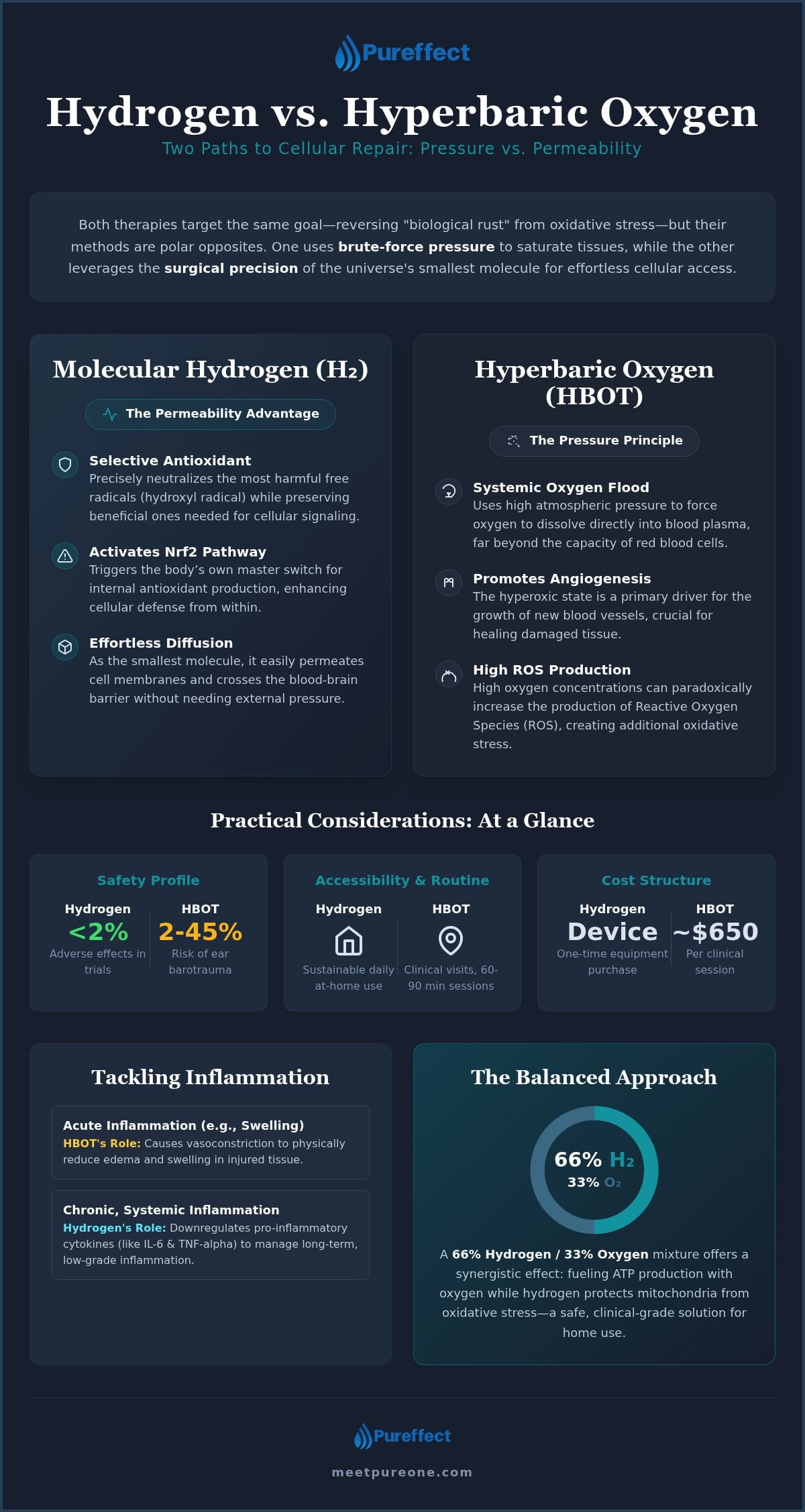
A January 2026 study highlights that hydrogen therapy offers a high safety profile, with adverse effects appearing in less than 2% of clinical trials. We’ll compare this to the mechanical intensity of oxygen chambers. You’ll learn why a 66% hydrogen and 33% oxygen ratio is gaining traction as a balanced approach to oxygenation. It’s about finding a recovery method that is both scientifically sound and easy to maintain.
Key Takeaways
- Understand the fundamental shift from using brute-force atmospheric pressure to the surgical precision of selective molecular diffusion for deep cellular repair.
- Discover how molecular hydrogen activates the Nrf2 pathway to stimulate your body’s own internal antioxidant production, a process distinct from traditional oxygenation.
- Compare the logistical barriers and clinical costs of hydrogen therapy vs hyperbaric oxygen therapy using the latest 2026 medical findings on therapeutic efficacy.
- Learn why a specific 66% hydrogen and 33% oxygen mixture provides a safe, clinical-grade solution for daily recovery without leaving your home.
- Explore the permeability advantage that allows molecular hydrogen to reach deep tissues and cross the blood-brain barrier without the need for a pressurized chamber.
Hydrogen Therapy vs. Hyperbaric Oxygen Therapy: Two Paths to Cellular Repair
Why are we comparing these two? Both target the same biological villain: oxidative stress. Think of oxidative stress as the “biological rust” that slows down your recovery and drains your energy levels over time. While they share a common goal of cellular repair, their methods are polar opposites. One relies on heavy external pressure to force healing, while the other uses effortless molecular diffusion. In the modern debate of hydrogen therapy vs hyperbaric oxygen therapy, it’s not just about which is “better.” It’s about which biological pathway your body needs to thrive in 2026.
The Mechanism of Hyperbaric Oxygen (HBOT)
The field of Hyperbaric medicine operates on a simple physical principle: Henry’s Law. By increasing atmospheric pressure inside a sealed chamber, oxygen is forced to dissolve directly into your blood plasma. It goes far beyond the carrying capacity of your red blood cells. This hyperoxic state is a powerful trigger for healing. Medical research confirms that HBOT is a primary driver for angiogenesis, which is the growth of new blood vessels in damaged tissue. But this “brute force” approach has a logistical cost. High pressure is a serious medical intervention. It requires professional supervision to manage risks like middle ear barotrauma, which research indicates can affect between 2% and 45% of patients depending on the pressure levels used.
The Mechanism of Molecular Hydrogen (H2)
Hydrogen takes a much more subtle route. It doesn’t need pressure because it’s the smallest molecule in existence. It slips through cell membranes and even crosses the blood-brain barrier with ease. While HBOT floods the system with oxygen to spark repair, hydrogen acts as a selective antioxidant. It doesn’t neutralize the “good” free radicals your body needs for signaling; it specifically targets the hydroxyl radical, the most destructive waste product in human biology. A 2026 research review confirms that H2 inhalation allows for immediate systemic access, bypassing the digestive tract entirely. It’s a surgical tool for cellular cleanup rather than a heavy-pressure hammer. This makes it an ideal partner for the PureONE Molecular Hydrogen Generator, which brings this precision into a home setting.
By 2026, the wellness trend has clearly moved toward proactive home care. Why wait for a clinical appointment when you can support your cells daily? The shift is about moving from reactive, high-cost clinical visits to consistent, low-barrier protocols that fit into your actual life.
The Science of Inflammation: How HBOT and H2 Influence Recovery
How does the body handle the “cleanup” after an injury or a long workout? In the debate of hydrogen therapy vs hyperbaric oxygen therapy, the answer lies in how they interact with inflammation. HBOT is like a high-pressure hose, washing the system with oxygen to spark life. But there’s a catch. High concentrations of oxygen can lead to hyperoxia. This actually increases the production of reactive oxygen species (ROS). It’s why following FDA guidance on Hyperbaric Oxygen Therapy is critical for safety. Hydrogen, however, uses surgical precision. It doesn’t just scavenge radicals; it activates the Nrf2 pathway. This is your body’s internal master switch for antioxidant production.
Research Insight: Hydrogen and Mitochondrial Resilience
Studies from 2024 and 2025 show that H2 significantly reduces mitochondrial DNA damage during high-intensity recovery. While HBOT boosts ATP production by flooding the mitochondria with dissolved oxygen, H2 acts as a signal modulator. It tells the cell to protect itself. This synergy is key. By using a 66% hydrogen and 33% oxygen mixture, you get the fuel for ATP without the exhaust fumes of excessive oxidative stress. It turns a potentially damaging hyperoxic environment into a safe, therapeutic one.
Addressing the Inflammatory Response
Which one should you choose for a swollen ankle versus a persistent, low-grade ache? HBOT is excellent for acute inflammation. It causes vasoconstriction, which reduces edema (swelling) by physically pushing fluid out of the tissue. Hydrogen is often better for chronic, systemic inflammation. It downregulates pro-inflammatory cytokines like IL-6 and TNF-alpha. Recent research suggests that while HBOT handles the immediate fire, H2 manages the long-term smoldering. If you’re looking for a way to balance these two forces at home, exploring a clinical-grade hydrogen generator might be the missing piece of your recovery puzzle.
Practical Guidance: Pressure vs. Permeability in Your Daily Routine
How often can you actually make it to a clinic? When weighing hydrogen therapy vs hyperbaric oxygen therapy, the “barrier to entry” is a major factor. HBOT sessions are effective but demanding. You’re looking at 60 to 90 minutes inside a pressurized chamber, often multiple times a week. For many, the logistical hurdle and the clinical environment make it difficult to maintain as a long-term wellness habit. Is there a way to get deep cellular support without the commute?
The answer lies in permeability. While HBOT relies on atmospheric pressure to force oxygen into your plasma, hydrogen doesn’t need a push. It’s so small that it diffuses through your tissues effortlessly. Safety is another clear differentiator. While HBOT carries a documented risk of middle ear barotrauma, a review of 81 clinical trials found that the rate of adverse effects for hydrogen therapy was below 2%. It’s a low-risk, high-reward approach that fits into a busy schedule.
The Convenience Factor: Home Wellness in 2026
The shift toward home-based generators is accelerating because consistency usually beats intensity. Using a device like the PureONE allows you to integrate recovery into your morning routine or while you relax at night. You aren’t “locked in” a chamber; you’re just breathing. This flexibility makes daily use possible, which research suggests is more effective for managing systemic inflammation than sporadic high-pressure sessions. If you’re curious about which delivery method suits your lifestyle, you might find our breakdown of the Hydrogen Inhalation Machine vs. Water Bottle helpful.
Who Should Choose Which Therapy?
HBOT remains the gold standard for specific medical crises. If you’re dealing with non-healing diabetic wounds, carbon monoxide poisoning, or severe decompression sickness, the clinical chamber is essential. However, for those focused on daily inflammation, athletic recovery, and cognitive support, molecular hydrogen is the more practical choice. Many people now use a “Hybrid Approach.” They use H2 daily to keep oxidative stress low and only visit a clinic for HBOT when they need a heavy-duty intervention. Ready to bring clinical-grade tech into your living room? You can explore the PureONE generator here to start your own home protocol.
The PureONE Advantage: Clinical-Grade Hydrogen Therapy at Home
Why choose between two powerful recovery paths when you can bridge the gap? The PureONE Molecular Hydrogen Generator serves as that essential bridge. It delivers the selective antioxidant benefits of molecular hydrogen while maintaining a safe, therapeutic level of oxygenation. This proprietary 66% Hydrogen and 33% Oxygen ratio is widely considered the “sweet spot” for cellular health. It provides your body with the metabolic fuel it needs without the oxidative stress risks often linked to pure oxygen environments. It’s a balanced approach that respects your biology.
Purity is the foundation of any effective gas therapy. To ensure you’re breathing only the cleanest gas, the PureONE features a proprietary stainless steel condenser. This component ensures the hydrogen remains pure and free from contaminants. While clinical chambers focus on the intensity of pressure, this system focuses on the quality of the molecule itself. It effectively brings the debate of hydrogen therapy vs hyperbaric oxygen therapy to a practical conclusion for home users. You get the clinical-grade results you want with the convenience your lifestyle demands.
Four Modes of Therapy in One Device
Consistency is easier when your equipment is versatile. The PureONE isn’t limited to just one delivery method; it offers four distinct modes. You can switch between direct inhalation for systemic cellular access, drinking hydrogen-rich water for metabolic support, or even using topical applications for localized recovery. Research indicates that using multiple delivery methods can increase the overall bioavailability of H2 in the body. If you’re ready to customize your setup, you can explore specialized accessories in the PureONE shop to find the right fit for your daily routine.
A Trusted Partner in Your Wellness Journey
We believe that high-tech wellness should be accessible and transparent. That’s why the PureONE is endorsed by public figures like Howie Mandel, who value grounded, research-driven health tools. Every unit is built with rigorous Canadian manufacturing standards, ensuring you receive a device that is as reliable as it is effective. We stand by these results with a 365-day risk-free trial. It’s a full year to experience the shift in your energy and recovery levels. Investing in your cellular resilience isn’t just about feeling better today; it’s the ultimate preventative strategy for your future.
Empower Your Recovery with Cellular Precision
Choosing between high-pressure oxygen and molecular hydrogen isn’t a trade-off. We’ve seen how HBOT provides a powerful spark for acute healing. In contrast, hydrogen offers surgical precision for managing daily, systemic inflammation. The 2026 research landscape suggests that the most effective protocol is the one you can maintain consistently. By utilizing a 66/33 H2-O2 output, you get the metabolic fuel your cells need without the oxidative stress of a high-pressure environment.
In the decision of hydrogen therapy vs hyperbaric oxygen therapy, accessibility is the ultimate advantage. Our Canadian-made generator, endorsed by Howie Mandel, brings clinical-grade support directly to your home. It’s built for those who value long-term resilience over temporary fixes. Are you ready to discover how deeper recovery feels? You can Experience the PureONE Risk-Free for 365 Days. Take the first step toward a more energized version of yourself today. We’re excited to be part of your journey.
Frequently Asked Questions
Can I use hydrogen therapy and hyperbaric oxygen therapy together?
Yes, they are increasingly used together in clinical settings to maximize results. Research from 2026 suggests that the selective antioxidant properties of hydrogen can mitigate the oxidative stress caused by high-pressure oxygen. This synergy allows for deep tissue oxygenation while protecting cellular structures from reactive oxygen species. It’s a best of both worlds approach that balances brute force healing with molecular protection, creating a more comprehensive recovery environment.
Is molecular hydrogen therapy safer than HBOT for home use?
Hydrogen therapy generally has a higher safety profile for unsupervised home use compared to pressurized oxygen. While HBOT carries risks like middle ear barotrauma or oxygen toxicity, a review of 81 clinical trials showed adverse effects in less than 2% of hydrogen users. This makes it a low-risk option for daily wellness. In the debate of hydrogen therapy vs hyperbaric oxygen therapy, H2 offers a much lower barrier to entry for home environments.
How many minutes of hydrogen inhalation equal one HBOT session?
There isn’t a direct minute for minute conversion because they work through different biological pathways. HBOT uses pressure to saturate plasma with oxygen, while hydrogen uses diffusion to reach cells. However, most daily protocols recommend 30 to 60 minutes of hydrogen inhalation to maintain systemic antioxidant levels. While HBOT is often a weekly clinical event, hydrogen therapy is designed for daily consistency to provide cumulative benefits over time without the clinical overhead.
Does hydrogen therapy help with claustrophobia issues associated with HBOT?
Yes, hydrogen therapy is an ideal alternative for those who struggle with the confined space of a hyperbaric chamber. You can perform hydrogen inhalation while sitting in your favorite chair or lying in bed. There’s no heavy equipment or sealed tubes involved. This accessibility removes the psychological stress often linked to pressurized therapy, making it much easier to stick to a long-term recovery routine without any feelings of confinement or anxiety.
What are the specific research findings on hydrogen for inflammation?
Clinical research has documented that molecular hydrogen downregulates pro-inflammatory cytokines like IL-6 and TNF-alpha. A 2024 review highlights its role in activating the Nrf2 pathway, which triggers the body’s own antioxidant defenses. Unlike traditional supplements, hydrogen’s small size allows it to penetrate deep into joints and tissues where inflammation often hides. This makes it a powerful tool for managing chronic systemic issues rather than just treating acute surface symptoms with temporary fixes.
Do I need a prescription for a home molecular hydrogen generator?
No, you don’t need a prescription to purchase or use a home molecular hydrogen generator like the PureONE. While hyperbaric oxygen therapy often requires medical oversight due to the risks of high pressure, hydrogen is classified as Generally Recognized As Safe (GRAS) by the FDA for many applications. This allows you to take control of your own recovery protocol without the need for clinical appointments, insurance hurdles, or complex medical authorizations.
Disclaimer
The information provided by Pureffect and any of its products are for educational and informational purposes only and is not intended as medical advice. Individual results may vary, and no specific health outcomes are guaranteed. Always consult a qualified healthcare professional before starting any wellness practice or product.