
What if brain fog is less a problem to “power through” and more a signal to investigate? When familiar tasks take longer or your thoughts feel unusually slow, it’s understandable to look for a quick fix. But combating brain fog and mental fatigue starts with recognizing that “brain fog” describes symptoms, not a diagnosis. Sleep disruption, stress, medication effects, hormonal changes, nutritional deficiencies, and post-viral illness can all play a role, and the right next step depends on the cause.
You can take practical steps without assuming one solution works for everyone. Notice when symptoms occur, consider what was happening around them, and track whether a manageable routine change makes a difference. This guide also explains when persistent or unexplained symptoms deserve medical attention.
You’ll learn what to discuss with a healthcare professional, including whether cognitive screening or blood tests may be appropriate, and how to assess complementary options without mistaking early promise for proven treatment. The goal isn’t to chase every trend. It’s to understand what you’re experiencing and choose your next step with care.
Key Takeaways
- For combating brain fog and mental fatigue, start by recording when symptoms occur and what’s happening around them.
- Try one manageable routine change at a time, such as taking regular breaks, then reassess whether it helps.
- Research can offer clues about possible contributors, but findings need context and don’t identify the cause of your symptoms.
- Seek medical advice if symptoms persist, worsen, recur, or interfere with daily life. Sudden confusion or neurological changes need urgent attention.
What Brain Fog and Mental Fatigue Feel Like, and What They Do Not Tell You
You might reread a familiar email several times, lose your place while switching between routine tasks, or struggle to find a word you use every day. Experiences like these are often described as brain fog. Brain fog is a symptom description, not a medical diagnosis. The phrase can describe changes in concentration, working memory, word-finding, or perceived mental clarity, but it doesn’t explain why they’re happening.
Mental fatigue can feel like reduced capacity for sustained thinking. Planning, focusing, or making decisions may take more effort than usual. That’s different from simply feeling physically tired, though the two can overlap. Fatigue may involve mental or physical tiredness, as the broad overview of Fatigue describes. Neither experience has just one possible cause, and a difficult day alone doesn’t mean something is medically wrong.
Which changes might people describe as brain fog?
The details vary. One person may find it hard to hold several steps in mind while following a recipe; another may lose track of a conversation after an interruption. You might feel slower to organize thoughts or less mentally clear than usual. Symptoms can fluctuate and affect some everyday tasks more than others. A forgotten name or brief lapse in attention, by itself, doesn’t establish illness or cognitive decline.
When does mental fatigue deserve closer attention?
Look for a pattern, not just one moment. When did the change begin? How long does it last? Does it appear in particular situations, or keep returning? Has it started to interfere with work, household tasks, conversations, or other parts of daily life?
A short-lived rough day may pass with rest or a change in routine. Symptoms that persist, worsen, recur, or limit everyday functioning deserve closer attention and may be worth discussing with a healthcare professional. These questions can help you describe what’s changed, but they can’t identify a cause on their own. When combating brain fog and mental fatigue, the useful first step is noticing your experience clearly, not trying to diagnose yourself from a checklist.
What Research Says About Brain Fog, Fatigue, and Possible Contributors
Brain fog can occur alongside disrupted sleep, stress, illness, medication effects, or other health factors. These are possible contributors, not a checklist for diagnosing yourself. The University of Rochester Medical Center’s overview of causes of brain fog also notes that the experience can have different explanations. A connection found in research doesn’t prove what’s causing one person’s symptoms.
How can sleep, stress, and workload affect mental clarity?
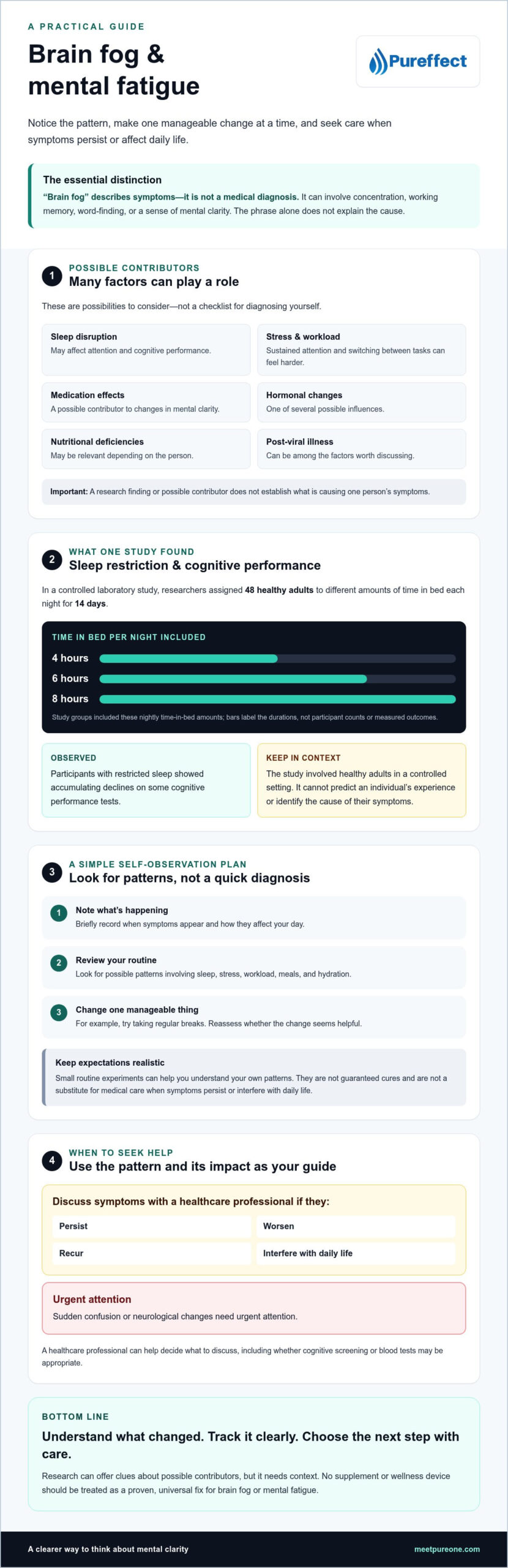
Sleep has been studied under controlled conditions. In a 2003 laboratory study published in Sleep, Van Dongen and colleagues assigned 48 healthy adults to different amounts of time in bed, including four, six, or eight hours nightly, for 14 days. Participants with restricted sleep showed accumulating declines on some cognitive performance tests. The study examined healthy adults in a controlled setting, not people seeking care for brain fog, so it can’t predict an individual’s experience or establish the cause of their symptoms.
Stress and workload may also make sustained attention feel harder. Imagine moving from one meeting to another, each with a different topic, then trying to recall which decision belongs to which discussion. That kind of context-switching can be mentally demanding; it isn’t, by itself, evidence of a health condition. Research findings about groups can point to patterns, but they don’t explain every person’s symptoms.
What does research say about possible biological mechanisms?
Sleep restriction research supports a link between insufficient sleep and poorer performance on some attention and memory tasks. It doesn’t show that every episode of mental fatigue has the same biological pathway. Illness, medication effects, and other health factors may contribute in different ways, and some proposed explanations remain under investigation. Keep established observations separate from hypotheses, especially when evidence comes from laboratory or animal studies rather than clinical research in people.
That’s why no supplement or wellness device should be treated as a proven, universal fix for brain fog. If you’re exploring an optional wellness device, review what it is intended for and what evidence supports its claims. The PureONE Molecular Hydrogen Generator is a wellness product, not an established treatment for brain fog or mental fatigue. A careful approach to combating brain fog and mental fatigue starts with understanding the limits of the evidence and considering your symptoms with a healthcare professional when needed.
How to Try Practical Steps for Combating Brain Fog and Mental Fatigue
Small experiments can help you understand your own patterns. They aren’t a substitute for medical care when symptoms persist or interfere with daily life, and everyday habits aren’t guaranteed cures. Try this simple process:
- Note what’s happening. Briefly record when symptoms appear and how they affect your day.
- Review your routine. Look for possible patterns in sleep, stress, workload, meals, hydration, and recent medication changes.
- Choose one manageable change. For example, build in a short break during a long stretch of focused work.
- Reassess. Check whether the change seems helpful, makes no difference, or is difficult to maintain.
Changing one factor at a time makes personal patterns easier to notice. It won’t prove what’s causing symptoms, but it can give you clearer information to act on.
How can you track symptoms without overcomplicating it?
Keep brief daily notes rather than creating a complicated scoring system. Jot down when symptoms started, how intense they felt in plain language, how you slept, what your workload was like, and whether anything changed, including medication. Add a practical detail, such as whether it was harder to follow a shopping list or finish a routine household task. Bring useful notes to a healthcare appointment so you can explain what’s changed.
Which everyday adjustments are reasonable first experiments?
Start with basics you can sustain. Try keeping a consistent sleep routine, taking regular breaks, drinking fluids throughout the day, and eating balanced meals. Notice your response rather than expecting a particular result. A change that suits one person may not suit another.
If you suspect a prescribed medication is affecting your concentration or energy, contact the clinician who manages it. Don’t stop or change prescribed medication on your own. If symptoms persist, worsen, recur, or limit daily activities, arrange medical advice rather than relying only on self-tracking.
If you’re considering a wellness device as an optional part of your routine, review its details and the evidence carefully. You can learn more about the PureONE Molecular Hydrogen Generator, but it shouldn’t be treated as a proven way to relieve brain fog or mental fatigue.
Seeking Medical Advice and Evaluating Complementary Options
Consider contacting a healthcare professional if cognitive symptoms persist, worsen, keep returning, or interfere with work and everyday tasks. Sudden confusion or new neurological changes need urgent medical attention. Don’t wait to see whether a supplement or wellness device helps first.
What should you discuss with a healthcare professional?
Persistent or worsening cognitive symptoms merit professional evaluation. To make the conversation more useful, share when the symptoms began, how long they last, whether they come and go, and which daily activities they affect. Mention relevant health changes and bring a list of medications and supplements, including any recent changes. Your clinician can decide what assessment, if any, fits your circumstances. There’s no single checklist that can identify the cause for everyone.
Keep any symptom notes you’ve already made, but don’t feel you need to arrive with a diagnosis. The aim is to describe what’s changed and work out an appropriate next step together. Supplements and wellness devices shouldn’t replace that assessment or prescribed care. Check with a healthcare professional before adding a supplement, particularly if you take medication or have an ongoing health condition.
How should you assess molecular hydrogen wellness claims?
Look closely at what a study actually tested. Research on molecular hydrogen in general does not automatically show an effect on brain fog or mental fatigue. Ask whether research involved people, whether it directly measured cognitive symptoms or fatigue, and whether its participants and methods apply to the claim being made. Findings from other outcomes, or early-stage laboratory research, can’t establish that a product relieves these symptoms.
PureONE product details describe four modes involving inhalation, hydrogen-infused water, or skin application. They also list a gas mixture of 66% molecular hydrogen and 33% oxygen. These are product specifications, not evidence that it treats brain fog. Check current product information for specifications and trial terms.
If you’re curious about it as an optional wellness device, explore the PureONE Molecular Hydrogen Generator. Keep the decision separate from medical care, and weigh any claims against evidence that directly studies the outcome you care about. A grounded approach to combating brain fog and mental fatigue is to investigate symptoms first, then assess complementary options with clear expectations.
Take Your Next Step With Clearer Information
Brain fog describes cognitive symptoms, not their cause. As you work on combating brain fog and mental fatigue, notice when symptoms occur, review possible routine-related patterns, and try one manageable change at a time. If symptoms persist, worsen, recur, or interfere with daily life, share what you’ve observed with a healthcare professional. Sudden confusion or neurological changes need urgent medical attention.
Complementary wellness options deserve the same careful look. PureONE product information describes four modes and a mixture of 66% molecular hydrogen and 33% oxygen. Those specifications don’t establish that it treats brain fog or mental fatigue. Pureffect offers a 365-day risk-free trial; review the current terms before making a decision.
If you’re curious about the device as an optional wellness product, explore the PureONE Molecular Hydrogen Generator and review its details alongside the available evidence. Start by paying attention to your own experience, and discuss persistent symptoms with a healthcare professional.
Frequently Asked Questions
What is the difference between brain fog and mental fatigue?
Brain fog is a casual label for changes in concentration, working memory, word-finding, or perceived mental clarity. Mental fatigue describes feeling mentally drained or finding that sustained thinking takes more effort. They can happen together, but they’re not interchangeable: someone may feel mentally exhausted without noticeable memory lapses, or have trouble concentrating without feeling sleepy. Neither term identifies an underlying cause or serves as a medical diagnosis.
Can lack of sleep cause brain fog and mental fatigue?
Yes. Too little or disrupted sleep can make attention, recall, and clear thinking harder. Research in people links sleep restriction with poorer performance on some cognitive tasks. That doesn’t mean one bad night explains every episode, or that sleep is the only possible contributor. Note sleep alongside symptoms. If brain fog continues despite changes to your routine, worsens, or interferes with daily activities, discuss it with a healthcare professional.
How do you reduce brain fog naturally?
There isn’t one natural fix that works for everyone. For combating brain fog and mental fatigue, start with manageable foundations: keep a consistent sleep routine, take breaks during demanding tasks, drink fluids regularly, and eat balanced meals. Track symptoms and change one routine factor at a time so you can notice patterns. These steps may support general wellbeing, but they aren’t cures or substitutes for medical advice if symptoms persist.
When should I see a doctor about brain fog?
Arrange medical advice if symptoms persist, worsen, keep returning, or make everyday activities harder. Before your appointment, note when the symptoms began, how they’ve changed, their effect on daily life, relevant health changes, and your medications. A healthcare professional can decide what assessment is appropriate for your circumstances. Sudden confusion or new neurological changes warrant urgent medical attention rather than routine self-monitoring.
Can stress contribute to mental fatigue?
Yes. Ongoing stress can make it harder to sustain attention and feel mentally refreshed, especially when demands leave little time to recover. For example, a packed schedule with frequent interruptions may leave you mentally drained by the end of the day. That experience alone doesn’t establish a diagnosis, and stress isn’t the only possible contributor. Notice whether symptoms track with workload or stressful periods, and seek care if they persist or limit daily functioning.
Can molecular hydrogen therapy treat brain fog?
There’s no established evidence that molecular hydrogen therapy treats brain fog or mental fatigue. Research on molecular hydrogen generally doesn’t prove benefit for these specific symptoms. PureONE is an optional home wellness device; product information describes four modes and a mixture of 66% molecular hydrogen and 33% oxygen. Those specifications aren’t evidence of symptom relief. Don’t use a wellness device in place of medical assessment or prescribed care, and review evidence carefully before considering one.
Disclaimer
The information provided by Pureffect and any of its products are for educational and informational purposes only and is not intended as medical advice. Individual results may vary, and no specific health outcomes are guaranteed. Always consult a qualified healthcare professional before starting any wellness practice or product.