
What if improving skin elasticity from within is less about finding one miracle ingredient and more about steady, realistic support? If collagen powders, beauty foods, and bold promises have left you unsure what’s worth trying, your skepticism makes sense. Skin changes over time, and no single shortcut tells the whole story.
So what can you do, and what should you be cautious about? This guide explains factors that affect skin elasticity, how to weigh nutrition claims, and which everyday habits support overall skin health without promising more than the evidence can deliver.
We’ll also look at emerging research on molecular hydrogen and clarify what it does, and doesn’t, show about elasticity. The goal is to help you make informed choices, set realistic expectations, and focus on practical steps instead of marketing hype.
Key Takeaways
- Learn why elasticity, firmness, and hydration are related but distinct, and how collagen, elastin, and fibroblasts contribute to skin structure.
- Use evidence from human studies to weigh nutrition claims, and focus on dietary adequacy rather than treating individual foods as cures.
- Build a practical routine around sun protection, balanced eating, and avoiding smoking, while keeping expectations realistic about what habits can change.
- Understand what research can and can’t yet tell us about improving skin elasticity from within, including emerging interest in molecular hydrogen.
What does skin elasticity mean, and why can it change?
How collagen and elastin help skin spring back
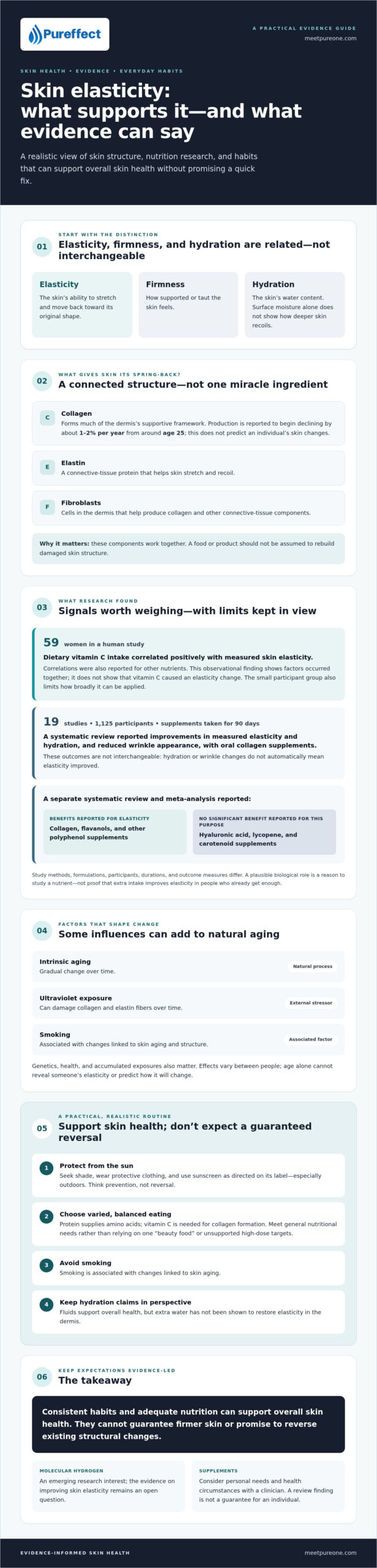
In the dermis, collagen forms much of the skin’s supportive framework, while elastin helps it stretch and recoil. Elastin is a connective-tissue protein that contributes to this spring-back quality. Fibroblasts, cells in the dermis, help produce collagen and other components of connective tissue. These parts work together, so no single food or product can be assumed to rebuild damaged skin structure.
What can affect elasticity over time?
Sun exposure is a key external factor. Ultraviolet radiation can damage collagen and elastin fibers, affecting the skin’s connective-tissue structure over time. Smoking is also associated with changes linked to skin aging. These influences can add to natural aging, but their effects vary from person to person. Age alone can’t reveal someone’s skin elasticity or predict how it will change.
That context helps keep improving skin elasticity from within in perspective. Supporting overall skin health is worthwhile, but it doesn’t promise to reverse existing structural changes. In the next sections, we’ll look at what nutrition and everyday habits may support, and where the evidence still has limits.
What does research say about nutrition and skin elasticity?
Nutrition can supply the building blocks and supporting nutrients skin needs, but that doesn’t make any single food a treatment. Protein provides amino acids used throughout the body, including in connective tissue. Vitamin C is needed for collagen formation. The Linus Pauling Institute’s research on nutrition and skin explains the roles of vitamin C and other nutrients in skin health. These biological roles make a nutrient relevant to study, but they don’t prove that extra intake improves elasticity in someone who already gets enough.
Protein and vitamin C: what their roles do, and don’t, show
A 2024 study of 59 women found a positive correlation between dietary vitamin C intake and skin elasticity. It also reported correlations with other nutrients, including fatty acids and several minerals and B vitamins. These findings are observational: they show that factors occurred together, not that a nutrient caused a change. The small participant group also means the result shouldn’t be treated as a prediction for everyone. A balanced diet that meets general nutritional needs is a sensible foundation; unsupported high-dose targets aren’t necessary to make that point.
Collagen supplements and other popular claims
How can you support skin elasticity through everyday habits?
There’s no daily routine that can guarantee firmer skin. But consistent habits can support skin health and help limit avoidable stress on its structure. Keep the plan simple: protect skin from the sun, eat a varied diet, avoid smoking, and give changes time.
Build a realistic skin-support routine
Use sun protection as prevention, not as a promise to reverse existing changes. Seek shade, wear protective clothing, and use sunscreen as directed on its label, especially when spending time outdoors. These steps help limit ultraviolet exposure, which can affect connective tissue over time.
A varied eating pattern can provide protein and nutrients needed for general health. Choose different foods across the week instead of relying on one so-called beauty food. Drinking enough fluids supports overall health, but extra water hasn’t been shown to restore elasticity in the dermis. Smoking is associated with changes in skin structure, so avoiding it supports broader health, too. None of these habits guarantees a cosmetic result.
How should you judge progress?
Skin changes gradually, and age, genetics, and past sun exposure all influence what you see. A temporarily smoother look may reflect hydration, while lighting and camera angles can change how texture appears. Neither is a reliable measure of deeper structural change.
Track the habits you control instead of checking your skin every day. For example, use a weekly calendar to note whether you used sun protection on outdoor days and ate varied meals. Review the pattern after several weeks. This can help you see whether your routine is becoming consistent, but it doesn’t predict visible results.
Can molecular hydrogen improve skin elasticity from within?
It’s a reasonable question, but interest in molecular hydrogen and its antioxidant potential doesn’t establish that it improves skin elasticity. To support that claim, human research would need to measure elasticity directly, explain how it was assessed, and show clear results. Changes in inflammation, oxidative stress, hydration, or general skin appearance are related research questions, but they aren’t interchangeable with elasticity.
What evidence would support a skin-elasticity claim?
A March 2025 review described molecular hydrogen research in medical cosmetology as an early-stage field, with clinical studies exploring outcomes such as acne and skin sensitivity. Those outcomes don’t demonstrate improved elasticity. A June 2025 pilot study examined topical hydrogen-rich water over four weeks and reported changes in pigmentation, porphyrin levels, pore size, and wrinkle severity. It was a topical study, not evidence that hydrogen taken internally improves elasticity, and the listed outcomes don’t include a direct elasticity measure.
That distinction matters. Before relying on a headline, check whether a study involved people or only laboratory or animal research, what it measured, how long participants were followed, and whether its findings have been repeated. Small samples and short follow-up can offer early clues, but they can’t establish lasting benefits. The research details described here don’t establish a human skin-elasticity benefit from molecular hydrogen.
How to assess a home hydrogen device
PureONE is a home molecular hydrogen generator with four modes that support hydrogen inhalation, hydrogen-infused water, and direct skin application. These are ways to use the device, not proof that any mode improves elasticity. The available product information doesn’t establish skin-elasticity outcomes, so treat that benefit as unproven rather than assuming it from broader research on skin or oxidative stress.
If you’re curious about the device, learn more about the PureONE hydrogen generator and review its details with that evidence limit in mind. For now, improving skin elasticity from within is better approached through the established habits discussed earlier, while molecular hydrogen remains an area for further research.
Choose steady support, not a quick fix
Improving skin elasticity from within calls for patience and a clear sense of what the evidence can support. Skin structure reflects more than one factor, and no single food, supplement, or device can promise to restore it. Consistent skin-protective habits and a balanced diet are practical foundations, while supplement findings and emerging approaches deserve a closer look at the quality and limits of the research.
Molecular hydrogen remains an area of investigation, not an established way to improve skin elasticity. PureONE is a home molecular hydrogen generator, manufactured in Canada, with four modes. The available product information doesn’t establish an elasticity benefit, so keep that distinction in mind as you explore your options.
Explore the PureONE molecular hydrogen generator and review its details with realistic expectations.
Frequently Asked Questions
Can you improve skin elasticity from within?
You may support skin health from within, but no diet or habit can guarantee improved elasticity or reverse existing changes. Skin’s structure is influenced by aging, genetics, and accumulated exposure to ultraviolet radiation. A practical approach is to eat a balanced diet, protect your skin from the sun, and avoid smoking. Think of these as supportive habits, not a promise of a particular cosmetic result.
What foods may support skin elasticity?
No single food is proven to restore elasticity. Aim for a varied diet that provides enough protein and a range of nutrients. For example, beans or eggs can contribute protein, while citrus fruit can provide vitamin C, which the body uses in collagen formation. A 2024 study of 59 women found an association between vitamin C intake and elasticity, but it didn’t show that eating a specific food causes skin changes.
Do collagen supplements improve skin elasticity?
Does drinking more water make skin more elastic?
Drinking enough water supports general health, but drinking extra water hasn’t been established as a way to restore the dermis’s elasticity. Skin can look temporarily less dry or feel more comfortable when hydration improves, but surface moisture and deeper structural recoil aren’t the same thing. If you’re thirsty, drink fluids; don’t rely on extra water alone to change skin elasticity.
Can molecular hydrogen improve skin elasticity?
There isn’t enough evidence here to conclude that molecular hydrogen improves skin elasticity. A 2025 pilot study of topical hydrogen-rich water reported changes in pigmentation, pore size, and wrinkle severity, but it didn’t establish an elasticity benefit or show that drinking hydrogen-rich water has the same effect. PureONE is a home device with four modes, but its available product information doesn’t establish elasticity outcomes.
How long does it take to improve skin elasticity?
There’s no reliable timeline for improving skin elasticity through everyday habits. Skin changes gradually, and age, genetics, and past sun exposure can affect what you notice. Some collagen supplement studies measured outcomes after 90 days, but that doesn’t guarantee a similar result or timeline for you. Don’t judge structural change by a few days of altered hydration or different lighting. Focus on consistent habits and realistic expectations.
Disclaimer
The information provided by Pureffect and any of its products are for educational and informational purposes only and is not intended as medical advice. Individual results may vary, and no specific health outcomes are guaranteed. Always consult a qualified healthcare professional before starting any wellness practice or product.