
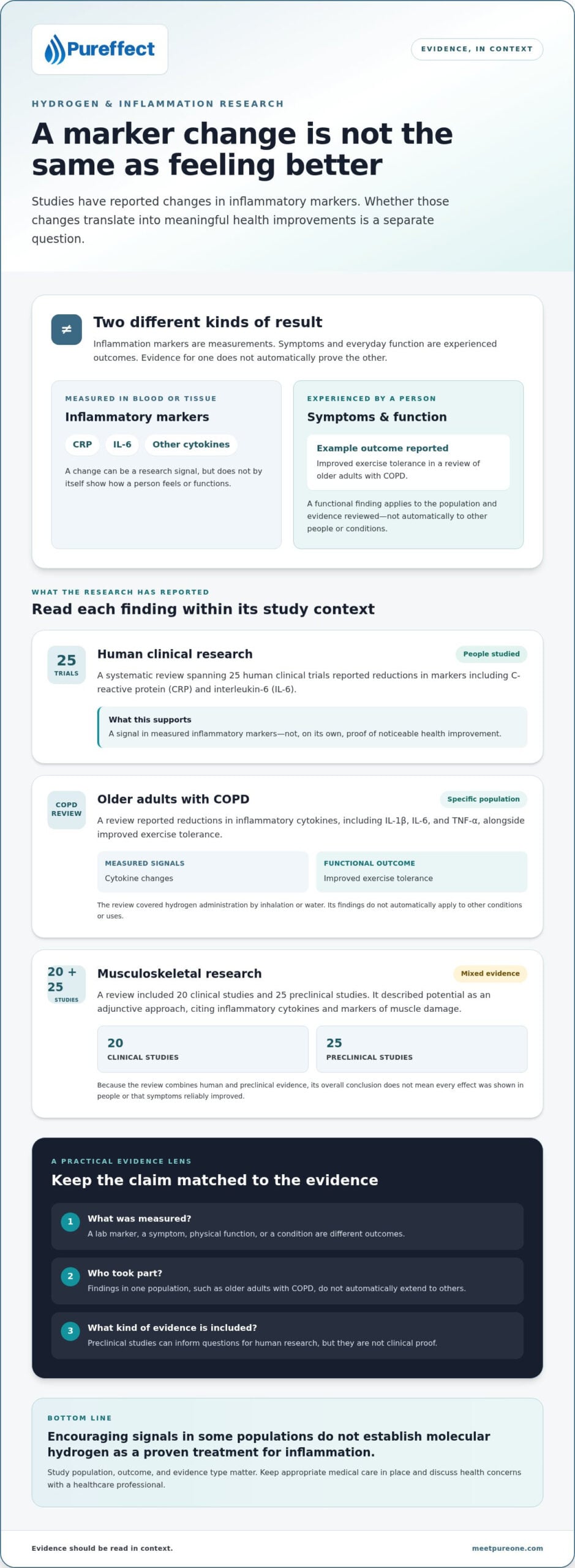
What if a change in an inflammation marker doesn’t mean you’ll feel better? That distinction matters when considering reducing inflammation naturally with hydrogen. A 2024 systematic review of 25 human clinical trials reported reductions in markers such as C-reactive protein (CRP) and interleukin-6 (IL-6). But a change in those measurements does not, on its own, show whether people experienced a meaningful improvement in health.
It’s reasonable to be curious about a potential wellness approach, especially when research sounds encouraging. Early findings, however, aren’t proof, and confident marketing can move faster than research. This article looks at how molecular hydrogen relates to inflammation research, what human studies have measured, and why study size and duration affect how confidently results can be applied. It also offers a practical way to weigh a home wellness device against the evidence, while keeping prescribed care and conversations with your healthcare professional in view.
Key Takeaways
- Inflammation is a normal part of the body’s response, but persistent inflammation raises different questions. Molecular hydrogen is being studied, not established as an inflammation treatment.
- Research findings may not apply equally across conditions, populations, or ways of using hydrogen.
- Evaluate claims by checking what a study measured, who took part, and what limitations affect its findings.
- PureONE’s home-use modes and product specifications are separate from evidence of health benefits. Keep appropriate medical care in place.
What Does Inflammation Mean, and Where Might Molecular Hydrogen Fit?
Inflammation is the body’s coordinated response to injury, infection, or irritation. It helps protect and repair tissue, so a short-lived response isn’t automatically a problem. The basics are covered in What is inflammation?. The important distinction is between a response that resolves and one that persists or keeps returning. When considering reducing inflammation naturally with hydrogen, the research question isn’t simply whether a marker can change. It’s what that change means for people.
How Is Short-Term Inflammation Different From Persistent Inflammation?
Why Are Researchers Studying Molecular Hydrogen?
Molecular hydrogen, or H₂, is a molecule made of two hydrogen atoms bonded together. Biomedical research is investigating its possible effects on oxidative stress and inflammatory signaling. These are related but distinct areas: oxidative stress involves an imbalance between reactive molecules and the body’s defenses, while inflammation is a broader biological response. In brief: Molecular hydrogen is an investigational molecule studied for potential effects on oxidative stress and inflammatory processes, but these proposed effects do not establish it as an anti-inflammatory treatment for people.
An influential early study by Ohsawa and colleagues reported antioxidant effects in a laboratory and animal model of brain injury, proposing that hydrogen could affect certain reactive oxygen species (Nature Medicine, 2007). That work helped motivate further research, but it wasn’t proof of a health benefit in humans. Biological plausibility is a starting point, not a clinical result. To explore the molecule itself, see the related article What is Molecular Hydrogen?
Take the proposed mechanism as a reason researchers are asking questions, not evidence that hydrogen will relieve symptoms or change the course of a condition. Human studies need to test specific uses and outcomes directly. Findings from one setting may not apply to another.
What Does Medical Research Say About Hydrogen and Inflammation?
Research findings vary by population, delivery method, and outcome, so read them in context rather than as a single verdict. Two 2026 reviews illustrate that range: one focused on older adults with COPD, while another examined musculoskeletal conditions and combined clinical with preclinical studies.
What Have Human Studies Measured So Far?
A May 2026 review of hydrogen research in aging populations with COPD reported reductions in inflammatory cytokines, including IL-1β, IL-6, and TNF-α, alongside improved exercise tolerance. The review covered hydrogen administration by inhalation or water. These findings include laboratory measures and a functional outcome, but they apply to the reviewed COPD population, not automatically to other conditions. Individual trial sizes and treatment durations aren’t provided in the summary, so they shouldn’t be inferred.
A January 2026 review of musculoskeletal research included 20 clinical studies and 25 preclinical studies. It concluded that molecular hydrogen showed potential as an adjunctive approach, citing inflammatory cytokines and markers of muscle damage. Because the review combines human and preclinical evidence, its overall conclusion doesn’t mean every reported effect was demonstrated in people or that symptoms reliably improved.
| Evidence type | What the cited research reports | How to read it |
|---|---|---|
| Human research | The COPD review reported cytokine changes and improved exercise tolerance in older adults. | A promising signal in a specific population, not proof that hydrogen treats COPD or other inflammatory conditions. |
| Observational research | No specific inflammation-focused observational finding is detailed in the research summarized here. | Don’t assume an association establishes cause and effect. |
| Preclinical research | The musculoskeletal review included 25 preclinical studies alongside 20 clinical studies. | These findings can guide questions for human trials, but aren’t clinical proof. |
Why Do Promising Results Not Yet Prove an Anti-Inflammatory Treatment?
A review can bring encouraging findings together, but confidence depends on the underlying studies and whether results hold up in larger, longer, independent trials. The condition and route of administration matter, too. Evidence from inhalation in one population can’t establish the effect of hydrogen water for someone with a different health concern.
Quotable summary: “Research has reported encouraging signals in some populations, but it hasn’t established molecular hydrogen as a proven treatment for inflammation.” For readers considering a home device, PureONE product details describe the device separately from clinical findings.
How Can You Evaluate Hydrogen Therapy Claims Responsibly?
Claims about reducing inflammation naturally with hydrogen can sound persuasive, especially when they use scientific terms. Use this four-step check to judge whether the evidence supports the specific promise.
- Identify the exact claim. Is the product said to change a lab marker, ease a symptom, improve function, or treat a condition? These are different claims and require different evidence.
- Find the human evidence. Look for research involving people, not only cell or animal studies. Check whether it measured the outcome being promised. A lab finding can support further investigation, but it can’t establish a benefit in people.
- Inspect the outcome. A change in an inflammatory marker isn’t automatically a noticeable improvement in pain, mobility, or daily life. Check what participants experienced, not only what a blood test showed.
- Assess the limitations. Consider the number and type of participants, follow-up period, and whether the result has been independently replicated. Check whether the study’s condition and hydrogen delivery method match the claim. Results from one group or method may not transfer to another.
Testimonials can describe an individual’s experience, but they can’t show what caused a change or whether others are likely to experience the same thing. Give more weight to studies that clearly describe their methods and outcomes. Be cautious when promotional language sounds more certain than the research.
How Should Hydrogen Fit Alongside Medical Care?
Persistent symptoms deserve proper evaluation. Talk with a qualified clinician about what you’re experiencing and any complementary approach you’re considering, particularly if you have a diagnosed condition or take prescribed medication. Hydrogen therapy isn’t a substitute for diagnosis or treatment. Don’t delay medical evaluation or change prescribed care based on a wellness claim.
If your interest is everyday joint stiffness, the separate article Home Remedies for Joint Stiffness addresses that topic. Keep general comfort measures distinct from investigating the cause of persistent or worsening symptoms.
If you’re considering an at-home device after weighing the evidence, review the PureONE Molecular Hydrogen Generator as a wellness product, not as a proven inflammation treatment.
Could PureONE Fit Into a Cautious At-Home Wellness Routine?
Once you’ve separated product information from clinical findings, consider whether a home device fits your preferences. PureONE is manufactured in Canada, and its product information states that it produces a gas mixture of 66% molecular hydrogen and 33% oxygen. These are product specifications, not evidence of an inflammation-related health outcome.
What Does PureONE Offer for Home Use?
PureONE offers four therapeutic modes for home use, including hydrogen inhalation, hydrogen-infused water, and direct skin application. The PureONE Molecular Hydrogen Generator page provides further product details for anyone weighing these options.
Delivery method matters when interpreting research: evidence about one form of use doesn’t automatically establish a benefit from another. Treat the modes as descriptions of how the device can be used, not proof that a particular mode reduces inflammation.
What Should You Keep in Mind Before Trying a Wellness Device?
Pureffect offers a 365-day risk-free trial. That’s a purchasing term, not a measure of clinical effectiveness. Before trying a device, consider your personal goals and discuss health questions with a qualified clinician, especially if you have persistent symptoms or an existing care plan.
If you’re exploring reducing inflammation naturally with hydrogen, keep expectations grounded in the available evidence. A home wellness device may be one consideration in your routine, but it shouldn’t delay medical evaluation or replace prescribed care.
Make Your Next Step an Informed One
Curiosity is a good starting point, but it doesn’t have to become a commitment. If you’re considering reducing inflammation naturally with hydrogen, decide what you hope to learn or experience, then separate that expectation from what current research can show. A clear question can help you discuss the idea with your clinician and judge a wellness option on its actual merits.
If a home device is something you’d like to explore, review its features and intended use before deciding whether it fits your routine. Explore the PureONE molecular hydrogen generator and consider how it aligns with your goals alongside the medical care you need.
Frequently Asked Questions
Can molecular hydrogen reduce inflammation?
It may affect inflammation-related processes, but research can’t predict whether it will help a particular person. Before considering it, define the concern you want to address, such as a diagnosed condition or a specific symptom, and what improvement would matter in daily life. This can help you discuss the idea with a clinician and assess whether a claimed benefit is relevant to your situation.
Is hydrogen therapy proven to treat inflammatory diseases?
No established evidence shows that hydrogen therapy treats inflammatory diseases. To assess a disease-specific claim, look for human research on that condition and the outcome being promised, rather than relying on broad claims about inflammation or general wellness. Check whether the evidence concerns the same form of hydrogen use being promoted. A promising research question is not the same as an established treatment option.
Does hydrogen water work the same way as hydrogen inhalation?
They shouldn’t be assumed to work the same way. When reading a study or product claim, note how hydrogen was administered and compare that method with the one you’re considering. Look for details about the studied intervention rather than relying on the word “hydrogen” alone. This helps prevent conclusions from one form of use being applied to another without evidence.
Can I use hydrogen therapy alongside prescribed medication?
Ask your clinician or pharmacist before adding a hydrogen product to your routine. Bring the product information and a current list of your medications and supplements so they can consider your health circumstances and intended use together. Don’t adjust a prescription on your own. If you notice a new or worsening symptom after starting any complementary product, contact a healthcare professional for guidance.
How soon might someone notice an effect from hydrogen therapy?
There’s no reliable timeline that applies to everyone. If you’re discussing a trial of a wellness approach with your clinician, consider tracking a specific symptom and how it affects an everyday activity, such as climbing stairs or getting dressed. Note changes alongside other routine or treatment changes, since that context may help you describe your experience. Seek medical advice for persistent or worsening symptoms rather than waiting for a product to work.
Is PureONE a medical treatment for inflammation?
No. PureONE is a home molecular hydrogen wellness device, not a medical treatment for inflammation. Its product description tells you about the device and its intended uses, not whether it can address a particular diagnosis. If you’re considering it, compare the use mode you’re interested in with the research relevant to your question, and discuss personal health concerns with your clinician before making it part of your routine.
Explore the PureONE Molecular Hydrogen Generator to review its home-use modes and product details.
Disclaimer
The information provided by Pureffect and any of its products are for educational and informational purposes only and is not intended as medical advice. Individual results may vary, and no specific health outcomes are guaranteed. Always consult a qualified healthcare professional before starting any wellness practice or product.