
Setting up your first hydrogen machine for family use starts with a stable place for the device, a clear routine, and a simple understanding of what it produces. The right setup depends on the machine’s instructions and whether your household plans to make hydrogen water, use another mode, or both. A shared device still calls for clear, individual use habits.
A useful setup covers more than switching the machine on. Understand what it produces, how to prepare hydrogen-infused water, and how to care for the device. PureONE is a home wellness product, not a medical device or a substitute for medical advice or treatment.
This guide walks through the setup in order: choosing a spot, preparing the machine as directed, understanding concentration labels, and building a straightforward care routine. You’ll also learn what to consider when several family members may use the same device, so you can get started with realistic expectations and a little more confidence.
Key Takeaways
- Plan a practical setup by considering where the machine will sit and how your household will use it.
- Learn what hydrogen concentration labels can tell you about the water produced.
- Understand the basics of hydrogen generation without getting lost in technical detail.
- See which equipment and everyday setup factors to consider before getting started.
- Build a simple care routine and think through shared use across the family.
How hydrogen water machines infuse water with molecular hydrogen
- Start by reading the machine’s instructions, then identify its water reservoir, controls, and drinking-water outlet. A hydrogen water machine adds molecular hydrogen to water for drinking; the result is hydrogen-rich water. The concentration is commonly expressed in parts per million, or ppm. Portable hydrogen water bottles typically produce 0.5-1.0 ppm, with output varying by model. Treat concentration as a device-specific measure, not a promise of a health outcome.
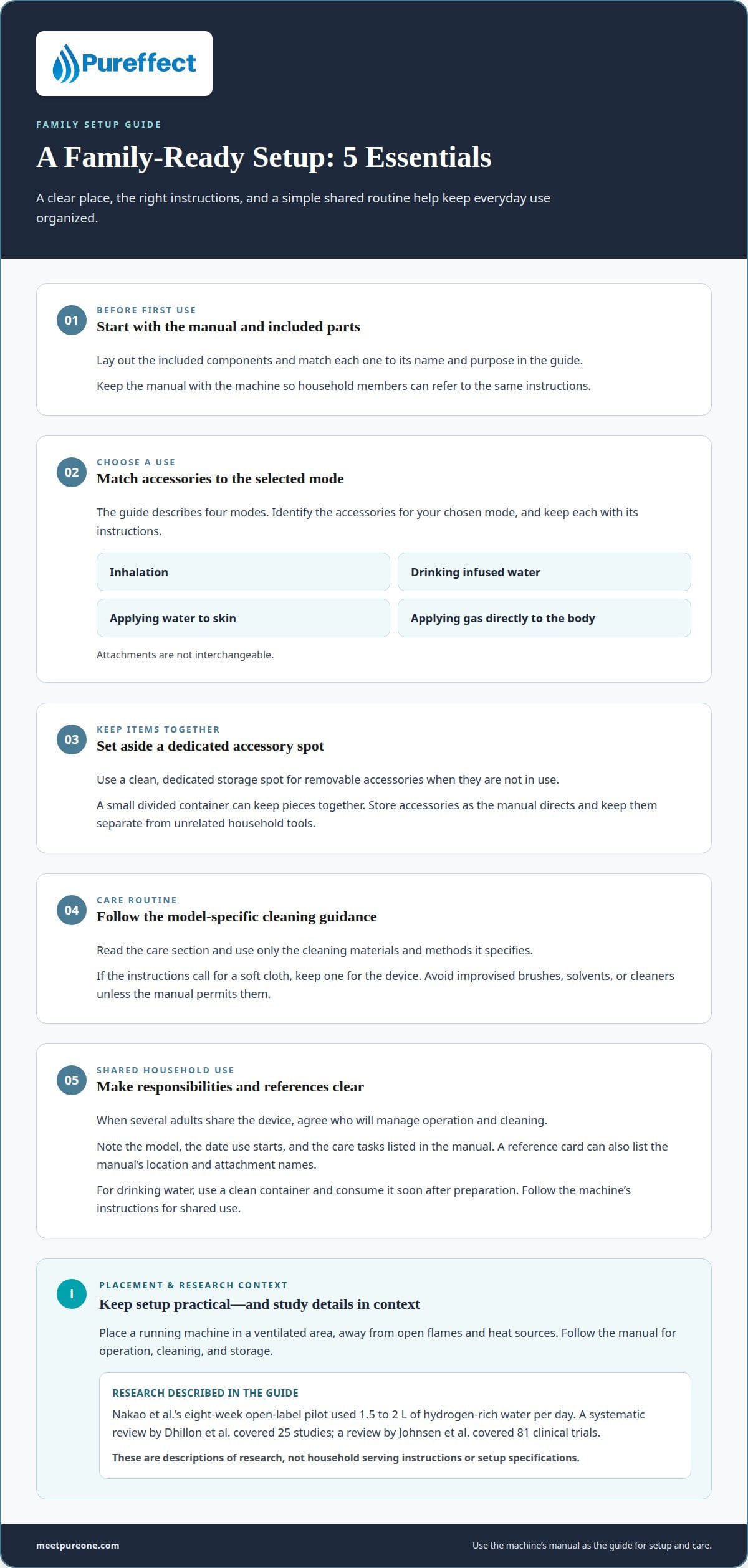
- Fill the drinking-water container as directed, staying within its marked capacity. Choose the water source specified in the instructions, then secure the lid or container before starting a cycle. Wait for the machine’s completion signal rather than guessing from another model’s timing. Nakao et al.’s eight-week open-label pilot used 1.5 to 2 L of hydrogen-rich water per day. That study describes its own routine, not a required household serving plan.
- Place the running machine in a ventilated area, away from open flames and heat sources. Follow the manual for operation, cleaning, and storage, and do not attempt to collect or store the gas. For drinking water, use a clean container and consume it soon after preparation. These habits help keep use orderly and reduce the risk of spills or contamination.
- Choose between a portable bottle and a home machine by considering volume and routine. Portable bottles make individual batches, typically 300-500 ml per cycle, while a home setup may better suit repeated preparation for several people. Neither format guarantees the same concentration; output varies by model. For a family, assign each person a clean drinking vessel and follow the device’s instructions for shared use. Avoid assuming a bottle’s cycle or output applies to another machine.
- If your model has a distilled-water bin, use distilled water there only when its instructions call for it, and fill to the marked level. Keep this reservoir separate from the drinking-water container if the design distinguishes them. Cycle time depends on the model and selected setting, so use its indicator instead of applying a universal time. Dhillon et al.’s systematic review covered 25 hydrogen-rich water studies, while Johnsen et al.’s review covered 81 hydrogen clinical trials. Those reviews provide research context, not a setup specification.
Electrolysis and hydrogen generation
- Start by deciding how you plan to use the machine: for hydrogen-infused water, another supported mode, or several modes. Read the operating guide before the first use to understand the model-specific steps for setup, operation, and care. PureONE supports inhalation, drinking hydrogen-infused water, topical use of the water, and direct application of the gas to the body.
- When comparing machines, focus on intended use, setup requirements, water requirements, maintenance, and how clearly the manual explains each step. A label such as “electrolyzer” or “reformer” alone won’t tell you whether a device suits your home routine. PureONE is an integrated tabletop unit with four modes, so you can consider its different uses as part of one setup.
- For a United States home, permit requirements depend on the equipment and installation. A plug-in tabletop appliance differs from a permanent installation, and local requirements may vary. PureONE is designed as a tabletop home device; follow its operating instructions and check applicable local requirements if you are planning a permanent installation.
- Before regular use, note the model, the date you start, and the care tasks listed in the manual. If several adults share the device, agree who will manage operation and cleaning. A simple record helps you follow the care schedule without adding extra steps to each person’s routine.
- Use the manufacturer’s instructions as the boundary for troubleshooting. If a control behaves unexpectedly, stop the cycle using the normal controls and consult the guide before trying another setting. Don’t open the housing, modify parts, or apply advice intended for another model. If you’re comparing a home unit with multiple uses, explore the PureONE Molecular Hydrogen Generator’s intended uses alongside its operating guidance.
Review the manual for the care features and cleaning steps specific to your machine. Do not assume it has a self-cleaning cycle or use a cleaning method intended for a different generator. Following the instructions helps you care for the device without risking damage to its components.
What equipment and materials are needed to set up a hydrogen generator?
- Start with the manual and the included parts. Lay out the components and match each one to its name and purpose in the guide. This helps distinguish the parts needed for each mode from accessories used for other functions. Keep the manual with the machine so household members can refer to the same instructions.
- PureONE’s four modes use different ways of applying or consuming hydrogen: inhalation, drinking infused water, applying the water to skin, and applying the gas directly to the body. Identify the accessories needed for your chosen mode using the manual, and keep each with its instructions. Do not treat attachments as interchangeable.
- Prepare a clean, dedicated storage spot for removable accessories when they aren’t in use. A small divided container can keep pieces together and reduce the chance of losing them among everyday kitchen items. Store accessories only as the manual directs, and keep them separate from unrelated household tools. This makes it easier to find the right component when you’re ready to use the machine.
- Read the care section and use only the cleaning materials and methods it specifies. Different surfaces and attachments may need different handling. If the instructions call for a soft cloth, keep one for the device; avoid improvised brushes, solvents, or cleaners unless the manual permits them.
- Keep a simple reference card with the model name, the manual’s location, and the names of the attachments. Store it with the guide rather than somewhere it could be damaged. When more than one adult operates the machine, clear labels can help prevent guesswork about which accessory belongs to each mode.
- Before first use, check that each removable component is clean, undamaged, and accounted for. Compare it with the manual, then assemble only the parts needed for the selected mode. Do not force connectors or substitute similar-looking accessories. If a part appears damaged or does not match the guide, follow the manufacturer’s instructions before proceeding.
- Keep the original packaging or organize it for safe disposal only after confirming that setup is complete and all included items are accounted for. Some people prefer storing the manual and small accessories together; others use a labeled drawer. Choose a system your household can maintain. A consistent place for instructions and attachments makes later use more orderly without adding unnecessary equipment.
What electricity, water, and ventilation requirements does a hydrogen generator have?
- Check the machine’s label and manual before connecting it to power. Use the supplied cord as directed, and make sure the outlet matches the stated requirements. Keep the connection dry and accessible. If the label or instructions do not match your household supply, do not connect the machine until the mismatch is resolved.
- Place the machine near an appropriate outlet, away from sinks, splashes, and crowded counter edges. Keep the cord clear of walkways and hot appliances, and leave room to reach the controls and position a container. Follow the manual’s placement instructions for the model.
- Follow the manual’s water instructions exactly. A machine may distinguish between the water used to make drinking water and water placed in a separate internal bin. Use the stated source for each compartment, and respect its fill markings. Don’t add minerals, flavorings, cleaners, or other substances unless the manufacturer specifically directs it.
- Use a clean container for the water you plan to drink. If the machine requires a particular vessel or fit beneath its outlet, use that arrangement rather than balancing a glass. Keep drinking water separate from water used for cleaning or maintenance. A labeled container can help family members avoid confusing reservoir water with ready-to-drink water.
- Set the unit in a room with the ventilation described in its instructions. Don’t enclose it in a cabinet or place it beside a heat source unless the manufacturer permits that setup. Keep the area around the machine clear, and avoid using it near open flames. Follow the model’s own directions for placement and operation.
- Before a cycle, check that the reservoir is seated, the fill level is correct, and the power connection is dry. Start the machine using its normal controls, then follow its completion indicator. Don’t estimate a cycle time from another model or leave a running device unattended contrary to its instructions. Stop using it if a cord or housing appears damaged.
- Keep the manual available for household members who may operate the machine. Review its power, water, placement, and cleaning steps together, then agree on who refills and maintains it. For a home option with clear setup guidance, explore the PureONE Molecular Hydrogen Generator and its intended uses.
Quality hydrogen water machines with solid titanium electrolysis plates coated in medical-grade platinum are recommended. Drinking roughly 500 to 700 mL of hydrogen water shortly after waking is also recommended.
Pureffect: PureONE Molecular Hydrogen Generator
The PureONE Molecular Hydrogen Generator brings several hydrogen-use options into a home device. It offers four modes for inhaling hydrogen gas, drinking hydrogen-infused water, or applying it directly to the skin. That flexibility may suit households considering different ways to use one machine, while each person should follow the device’s instructions for their chosen mode.
Manufactured in Canada, PureONE uses a proprietary stainless steel condenser and produces a consistent mixture of 66% molecular hydrogen and 33% oxygen. Those specifications describe the machine’s output, not a promised health result. Use them alongside the practical factors covered above, including placement, water handling, power, and care, when deciding whether this type of device fits your home routine.
For more information, contact Pureffect or visit meetpureone.com.
Make Your Home Routine Your Next Step
Make the machine part of a clear, manageable household routine. Decide where it will be kept, who will prepare and clean it, and which modes each person plans to use. A shared plan helps prevent confusion and keeps everyone aligned with the instructions.
When setting up your first hydrogen machine, consider whether its modes and care requirements fit your household. PureONE makes molecular hydrogen fresh at home and supports four ways to use it. Keep expectations grounded: it is a wellness device, not a substitute for medical advice or treatment.
Pureffect offers the PureONE Molecular Hydrogen Generator for home use. If you’d like to explore whether it fits your household, view the PureONE Molecular Hydrogen Generator. Start with the questions that matter to your family, then make a thoughtful choice at your own pace.
Frequently Asked Questions
Can the whole family use it?
Adults in the same household can share a machine by following its instructions and using separate, clean drinking vessels. For example, label each person’s glass to avoid mix-ups. Do not assume the device is suitable for children; use it with children only if the manual explicitly permits it. Each person should follow the instructions for their chosen mode.
Do I need to do anything to maintain it?
Yes. Follow the manual’s cleaning and care schedule, and keep a simple record of completed tasks. Wipe spills promptly and clean the exterior and controls using the specified method. Do not add household cleaners or descaling products to a water chamber unless the instructions direct you to. Stop using the machine if its cord or housing appears damaged.
How long does a cycle take?
Cycle time depends on the machine and selected function, so use its display or instructions rather than estimating. For PureONE, the product information states that infusing one liter of water takes 10 minutes and reaches approximately 0.8 ppm dissolved molecular hydrogen. Longer infusion doesn’t increase that concentration. Other machines may use different cycles, so don’t apply PureONE’s timing to another model.
What kind of water do I put in?
Use the water specified in the machine’s instructions, and check the directions for each compartment rather than assuming they use the same water. Keep drinking water separate from water in an internal reservoir when the manual calls for that distinction. Do not add flavorings, minerals, or cleaning agents unless instructed.
What is a hydrogen machine and what is it used for?
A hydrogen machine is a home device that provides molecular hydrogen for uses such as preparing hydrogen-infused water. PureONE also supports inhalation, applying infused water to skin, and applying hydrogen gas directly to the body. These are product uses, not medical diagnoses or a replacement for care from a healthcare professional. Benefits discussed for molecular hydrogen are based on peer-reviewed studies, and individual results may vary.
What type of hydrogen generator is best for a first-time user?
Choose a machine whose modes and care instructions suit your routine. If you want hydrogen-infused water, check how the device prepares it; if you want several ways to use hydrogen, consider a multi-mode unit such as PureONE. Understand the water requirements and cleaning steps before use, and do not choose a device solely by its concentration label. Explore PureONE’s four modes and setup instructions to decide whether it fits your household.
Disclaimer
The information provided by Pureffect and any of its products are for educational and informational purposes only and is not intended as medical advice. Individual results may vary, and no specific health outcomes are guaranteed. Always consult a qualified healthcare professional before starting any wellness practice or product.