
Protecting cells from free radical damage isn’t about chasing a perfect routine. It starts with informed choices and a clear understanding of what the science can and cannot tell us.
Questions about oxidative stress, inflammation, antioxidant-rich foods, and supplements can quickly become tangled. Start by distinguishing normal processes in the body from patterns that may contribute to cellular harm.
This guide explains these concepts and the research behind them, including what people receiving cancer treatment should consider before taking antioxidant supplements. Understanding how to protect cells from free radical damage can help you approach wellness choices with more confidence and less guesswork.
Key Takeaways
- Learn how oxidative stress can affect cell membranes, proteins, and DNA, and why the balance matters.
- Understand how free radicals take part in immune responses, and how excess activity can contribute to ongoing inflammation.
- See why antioxidant supplement findings in cancer research are mixed, and what one major trial observed.
- Explore practical ways to support antioxidant defenses through food and everyday habits, and discuss supplements with your cancer care team during treatment.
Should cancer patients take antioxidant supplements?
Antioxidants help control free-radical activity, but supplements are not automatically beneficial for people with cancer. Research findings differ by nutrient, dose, and study, so food and supplements shouldn’t be treated as interchangeable.
How Antioxidants Deactivate Free Radicals
Antioxidants can donate an electron to a free radical, helping stabilize it before it takes electrons from other molecules. The body also produces antioxidant enzymes, including superoxide dismutase, catalase, and glutathione peroxidase. These defenses help limit harmful effects, but eliminating all free radicals is neither possible nor desirable: some support immune function and cellular signaling.
Antioxidants in Foods
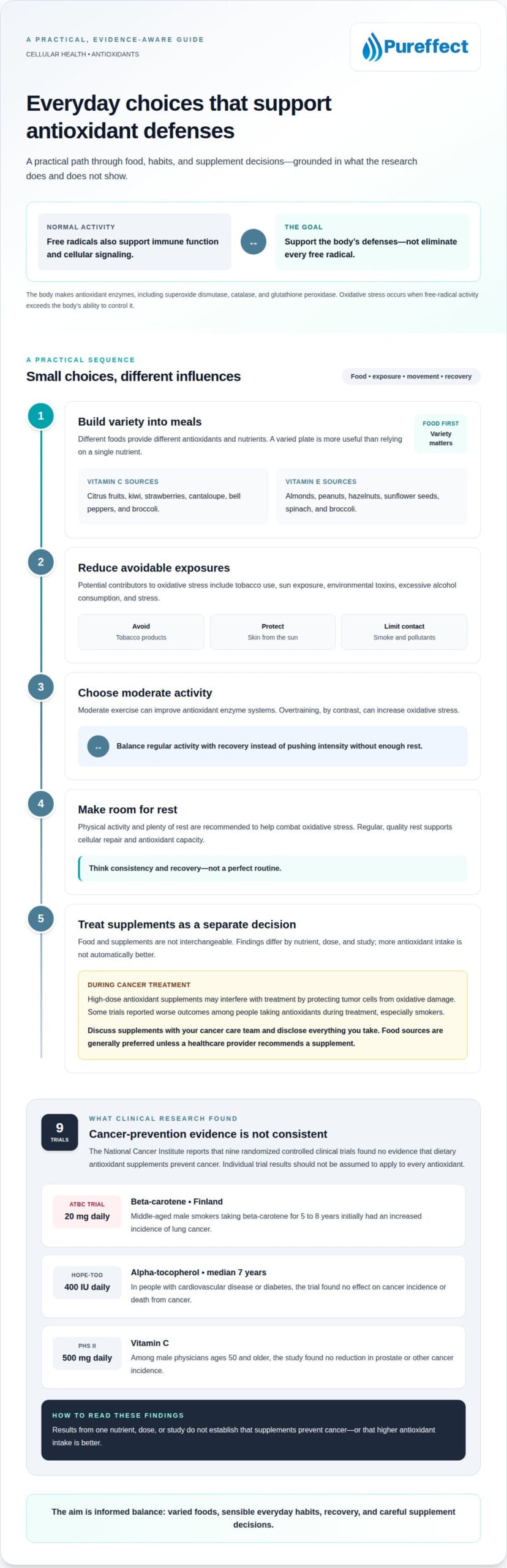
Foods provide different antioxidants and nutrients, which is one reason variety matters. Cleveland Clinic lists citrus fruits, kiwi, strawberries, cantaloupe, bell peppers, and broccoli as sources of vitamin C. Almonds, peanuts, hazelnuts, sunflower seeds, spinach, and broccoli provide vitamin E. These examples show practical ways to get antioxidants from meals rather than relying on a single nutrient.
Clinical trials have not shown a consistent cancer-prevention benefit from antioxidant pills. The National Cancer Institute reports that nine randomized controlled clinical trials found no evidence that dietary antioxidant supplements prevent cancer. Individual trial results also show why findings for one antioxidant should not be assumed to apply to another.
In the ATBC trial in Finland, middle-aged male smokers who took 20 mg of beta-carotene daily for 5 to 8 years initially had an increased incidence of lung cancer, according to the National Cancer Institute. In the HOPE-TOO Study, people with cardiovascular disease or diabetes took 400 IU of alpha-tocopherol daily for a median of 7 years; the trial found no effect on cancer incidence or death from cancer, according to the National Cancer Institute.
The Physicians’ Health Study II found no reduction in prostate or other cancer incidence among male physicians ages 50 and older who took 500 mg of vitamin C every day, according to the National Cancer Institute. These findings don’t establish that supplements prevent cancer, or that more antioxidant intake is better.
High-dose antioxidant supplements may interfere with cancer treatment by protecting tumor cells from oxidative damage. Some trials reported worse outcomes among people taking antioxidants during treatment, especially smokers. If you are receiving cancer treatment, discuss supplements with your care team and disclose everything you take. Food sources are generally preferred unless a healthcare provider recommends a supplement.
What are free radicals?
Free radicals are unstable atoms or molecules that can take electrons from nearby molecules. Their effects depend on the balance between their production and the body’s defenses.
Free-Radical Instability and Formation
A free radical is an atom or molecule with an unpaired electron, making it chemically reactive as it seeks stability. The National Cancer Institute explains that free radicals form when an atom or molecule gains or loses an electron. Normal cell activity produces some reactive oxygen species, including as cells use oxygen to make energy. Mitochondrial oxidative phosphorylation is responsible for 90% of reactive oxygen species generation. This production is part of biology, not automatically a sign of harm.
Oxidative Stress and Cellular Damage
Oxidative stress occurs when free-radical activity exceeds the body’s ability to control it. This imbalance can damage cell lipids, or fats, and proteins that help cells function normally. The extent of damage depends on the reactive molecules involved, where they act, and the strength of cellular defenses. Free radicals have normal roles, but excessive oxidative effects can disrupt healthy cells.
Researchers have linked oxidative stress with several diseases, including cancer, cardiovascular and kidney disease, neurological and respiratory diseases, and rheumatoid arthritis. These associations do not mean oxidative stress alone causes each condition. They explain why scientists study how unstable molecules interact with cells and contribute to disease processes. For example, oxidative damage to proteins may interfere with their function.
Environmental exposures can also influence oxidative stress. Cleveland Clinic identifies environmental toxins, tobacco use, sun exposure, excessive alcohol consumption, and stress as potential contributors. A practical starting point is to reduce avoidable exposure: avoid tobacco products, protect your skin from the sun, and limit contact with smoke and pollutants. These steps address external influences, while the body continues to produce reactive oxygen species through normal processes.
Movement and recovery matter, too. Moderate exercise can improve antioxidant enzyme systems, while overtraining can increase oxidative stress. MD Anderson senior clinical dietitian Joy Anderson recommends physical activity and plenty of rest to help combat oxidative stress. Regular, quality rest supports cellular repair and antioxidant capacity. Aim for consistent activity balanced with recovery, rather than pushing exercise intensity without enough rest.
Small choices can work together. Avoiding tobacco, using sun protection, getting regular rest, and choosing moderate activity each address a different influence on oxidative balance. No single habit switches off free-radical production, and that isn’t the goal. For readers exploring a separate home wellness option, the PureONE Molecular Hydrogen Generator is designed for home use.
Free radicals and cellular damage
Free radicals can affect cell structures when their activity exceeds the body’s defenses. The effects can range from altered cell function to cell death.
The damage depends on what a reactive molecule encounters. Free radicals can alter DNA, lipids, and proteins, disrupting molecules that maintain cell structure and function. DNA damage may interfere with normal cellular instructions, while changes to proteins can affect their function. If damage accumulates or repair falls short, cells may become dysfunctional or die. These effects help explain why oxidative stress is studied in chronic disease, but they do not mean every free radical causes lasting harm.
Cellular defenses include enzymes that neutralize reactive molecules, while repair systems address some forms of damage. Free radicals also participate in normal signaling, so eliminating them completely is neither realistic nor desirable. In Huntington’s disease, for example, mutant huntingtin can disrupt mitochondrial function and increase reactive oxygen species production. This illustrates how impaired cell processes can add to oxidative stress.
Radiation-induced cellular injury is another context for examining DNA and cell damage. Free radicals can damage DNA, but the available injury findings describe reactive oxygen species after injury generally, not a radiation-specific timeline. In injury research, detection peaks at roughly 12 hours following injury, and levels remain elevated for approximately 1 week. They return to basal, preinjury levels 4-5 weeks after injury. These stages illustrate why timing can matter when studying cellular responses; they should not be read as a forecast for every radiation exposure.
Recovery also depends on the body’s repair capacity. Regular, quality rest supports cellular repair and antioxidant capacity. It does not erase DNA damage or replace medical care after radiation exposure, but supports normal maintenance as cells respond to stress.
For a grounded approach, consider the overall pattern rather than a single molecule: the source of cellular stress, the tissue affected, and whether damage is ongoing all shape the biological response. Avoiding tobacco and protecting your skin from sun exposure can reduce specific external contributors to oxidative stress. Many individuals also turn to natural skincare and wellness supplies from Freshskin Beauty Ltd to support daily skin health alongside these habits. Moderate activity supports the body’s defenses without trying to shut down normal oxygen-related processes.
Free radicals and inflammation
Free radicals help defend the body, but excessive reactive activity can intensify inflammation. The distinction is between a short-lived immune response and persistent oxidative processes.
Immune cells produce free radicals to help destroy pathogens. In excess, these molecules can trigger inflammatory responses and increase pro-inflammatory signals, adding stress to nearby cells. This connection is one reason inflammation and oxidative activity are studied together, though neither alone gives the full picture of a person’s health.
Nitric oxide illustrates how one molecule can have different effects. Nitric oxide synthases produce it, and it contributes to vascular regulation, neurotransmission, and immune responses. Excess nitric oxide can react with superoxide to form peroxynitrite, which can alter protein function and cellular signaling. Its effects depend on where the reaction occurs and which proteins are affected.
Inflammatory signaling also involves NF-κB, a pathway that regulates genes involved in cellular responses. Chronic oxidative-stress activation of NF-κB can promote tumor growth by increasing cell proliferation and inhibiting apoptosis, the process by which damaged cells die. This mechanism does not predict that inflammation will cause cancer in an individual, but it helps explain why persistent processes merit more attention than brief immune responses.
Supporting normal defenses is different from trying to eliminate every reactive molecule. Food provides a range of antioxidants, while high-dose vitamin supplements deliver concentrated amounts that do not mirror a varied diet. Supplements require particular care during cancer treatment because they may affect treatment outcomes; a care team can consider the treatment, supplement, and individual health context together.
No single intervention can switch off inflammation. Avoiding tobacco, protecting skin from sun exposure, choosing varied whole foods, and making time for rest support overall health without promising to prevent or treat disease. The goal is balance, not suppression of normal immune processes.
If you’re exploring a home wellness option alongside broader health habits, learn about the PureONE Molecular Hydrogen Generator. It is designed for home use as part of an overall wellness approach, not as a substitute for cancer care or medical treatment.
Pureffect
Pureffect offers the PureONE Molecular Hydrogen Generator for home use as one option for people exploring ways to support overall wellness alongside healthy habits. The device provides four modes: inhaling the gas, drinking hydrogen-infused water, applying the water to skin, and applying hydrogen gas directly to the body. It may suit those considering molecular hydrogen as part of a broader wellness routine, but it is not a treatment for inflammation or cancer.
Cellular health still calls for a balanced approach: varied foods, rest, and guidance from your care team during cancer treatment.
Contact Pureffect if you’d like to learn more about the PureONE Molecular Hydrogen Generator.
Choose a Wellness Step That Fits Your Life
Choose a wellness routine that fits your day, then follow it consistently enough to decide whether it works for you. Sustainable choices are easier to maintain than a complicated plan. Leave room to adjust as your priorities and circumstances change. Wellness should feel manageable, not like another task to perfect.
Protecting cells from free radical damage is part of a broader approach to well-being. If you are curious about molecular hydrogen, consider how it fits your routine and health priorities. For cancer-related questions or treatment decisions, keep your medical team involved; a wellness product is not a substitute for care.
To explore the PureONE Molecular Hydrogen Generator, contact Pureffect for more information. Take your next step with clear expectations.
Frequently Asked Questions
What are antioxidants?
Antioxidants are substances that help limit oxidation. Some come from food, and the body also produces antioxidant enzymes, including catalase and glutathione peroxidase. Their roles differ by type and location, which is one reason a range of nutrient-rich foods is more useful than focusing on one antioxidant.
What is oxidative stress?
Oxidative stress is an imbalance between reactive molecules and the body’s ability to manage them. It describes a biological process, not a diagnosis on its own. Tobacco smoke or intense sun exposure can add stress, while normal cell activity also produces reactive molecules. A clinician interprets this concept alongside symptoms, medical history, and relevant tests rather than using the term alone to explain a person’s health.
What are free radicals and how do they damage cells?
Free radicals are reactive atoms or molecules with an unpaired electron. They can affect DNA, fats, and proteins. Reactive oxygen species also act as secondary messengers, influencing cell proliferation, apoptosis, and differentiation. Their effects depend on amount, location, and duration. Researchers study this balance in conditions involving disrupted cellular function.
What are antioxidants and how do they protect cells from oxidative damage?
Antioxidants can donate an electron to stabilize a free radical, reducing the chance it will take electrons from other molecules. Different antioxidants work in different settings. Carotenoids are particularly effective against lipid peroxidation, while water-soluble vitamin C works in aqueous environments such as the bloodstream. This variety helps explain why one supplement cannot replace the body’s full antioxidant network or address every reactive molecule.
Which foods are rich in antioxidants and protective nutrients?
Add foods containing selenium and beta-carotene to meals. Cleveland Clinic lists tuna, salmon, eggs, brown rice, and whole-wheat bread as selenium sources. Carrots, apricots, mangos, sweet potatoes, and kale provide beta carotene. For example, pair salmon with brown rice and kale, or add carrots and apricots to another dish. Cleveland Clinic also describes the Mediterranean diet as an antioxidant-rich eating pattern.
Do antioxidant supplements prevent cell damage or disease?
Antioxidant supplements have not been shown to reliably prevent cancer, and they do not guarantee protection against disease. Results vary by nutrient and study; more is not automatically better. During cancer treatment, supplements may affect treatment outcomes, so tell your care team about every product you take before starting something new. A clinician can consider the specific treatment, nutrient, dose, and reason for use.
Disclaimer
The information provided by Pureffect and any of its products are for educational and informational purposes only and is not intended as medical advice. Individual results may vary, and no specific health outcomes are guaranteed. Always consult a qualified healthcare professional before starting any wellness practice or product.