
Research on hydrogen water and blood sugar has produced mixed results, not a clear benefit. One study found no effect specific to hydrogen water on fasting blood glucose, while other research reported changes in different metabolic measures. Hydrogen water for blood sugar management is therefore worth examining carefully, but it is not a proven diabetes treatment.
It’s understandable to look for practical ways to support blood sugar alongside your existing care. But what does the evidence show, and how should you interpret findings from small studies? The details matter: researchers have studied different groups, intake amounts, and time periods, so the results do not all point in the same direction.
Here, we’ll review the human research, what it suggests about glucose and insulin response, and why hydrogen water should complement, not replace, diabetes treatment. You’ll also see how study durations and daily intake varied, along with safety considerations to discuss with your healthcare provider before changing your routine.
Key Takeaways
- Weigh the mixed human-study results before treating hydrogen water as a blood sugar strategy.
- Learn how researchers have studied hydrogen-rich water alongside metabolic concerns, and why it should complement rather than replace diabetes care.
- See how intake timing and study duration affect what the findings can tell you.
- Understand why oxidative stress markers matter when researchers explore possible metabolic effects.
- Explore whether the PureONE Molecular Hydrogen Generator fits your interest in making hydrogen-rich water at home.
Hydrogen Water: Does It Actually Work?
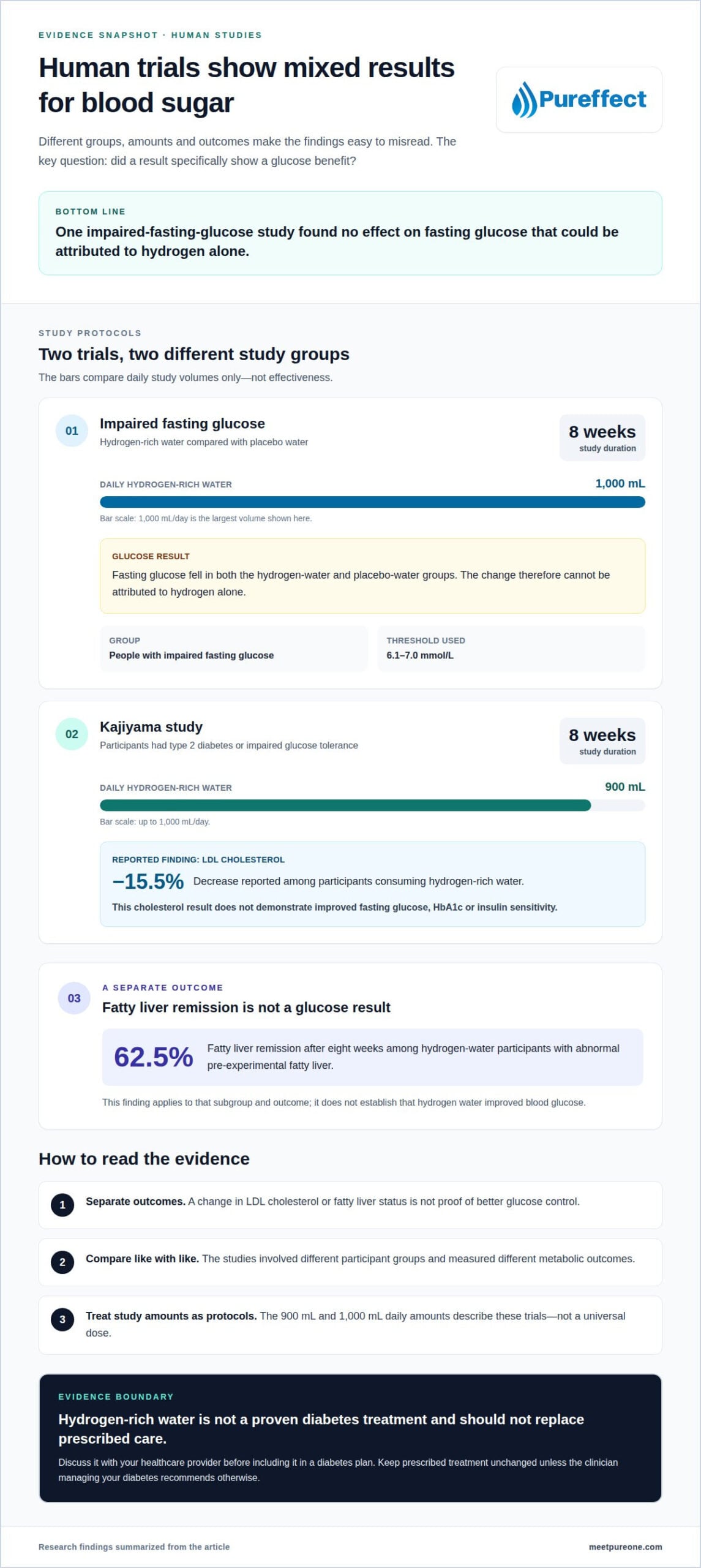
A useful way to interpret these trials is to distinguish glucose results from other metabolic findings. In the study of impaired fasting glucose, fasting glucose fell in both the hydrogen-water and placebo-water groups. The result therefore cannot be attributed to hydrogen alone.
Human Clinical Evidence
Human clinical evidence comes from studies that test hydrogen-rich water in people. It matters because participant characteristics and measured outcomes shape what each result can tell you. According to Study authors, participants with impaired fasting glucose were assigned to drink 1000 mL of hydrogen-rich water or placebo water daily for eight weeks.
That study also examined fatty liver, a different metabolic outcome. After eight weeks, fatty liver remission occurred in 62.5% of hydrogen-rich-water participants with abnormal pre-experimental fatty liver, according to Study authors. The finding describes that subgroup and outcome; it doesn’t establish that blood glucose improved because of hydrogen water.
Glucose Tolerance and Fasting Glucose
Impaired fasting glucose and impaired glucose tolerance refer to different patterns of elevated blood glucose. The impaired fasting glucose study used 6.1 to 7.0 mmol/L as its diagnostic threshold. This distinction matters when comparing trials: the Kajiyama study included people with type 2 diabetes or impaired glucose tolerance, rather than only participants with impaired fasting glucose.
In the Kajiyama study, participants consumed 900 mL/day for eight weeks. Nutrition Research reported a 15.5% decrease in LDL cholesterol among participants consuming hydrogen-rich water. That cholesterol result is separate from glucose control. It doesn’t demonstrate improved fasting glucose, HbA1c, or insulin sensitivity.
What do human clinical studies show about blood glucose? Findings vary by population and outcome. One study found no hydrogen-specific effect on fasting glucose, while other reported changes involved different metabolic measures. For hydrogen water for blood sugar management, distinguish evidence about glucose from findings about cholesterol or fatty liver.
Hydration and Blood Glucose Regulation
Hydration supports normal fluid balance, but drinking water alone does not show that hydrogen has a distinct effect on glucose. Exercise, for example, can affect fluid needs, while glucose regulation involves broader metabolic processes. The type of water consumed and its effect on blood sugar are separate questions.
Hydrogen-rich water may cost more than tap water because it requires a product or preparation method. Bottled-water prices vary by product and format, so there is no single cost comparison. Price does not demonstrate a blood sugar benefit, and hydrogen water for blood sugar management should not be judged by cost alone.
Complementary use alongside diabetes treatment
Hydrogen-rich water is being explored as a possible addition to diabetes care, not as a replacement for established treatment. The evidence includes animal findings and limited human observations, so it is important to keep that distinction clear.
Evidence in Type 2 Diabetes
Research on type 2 diabetes examines whether molecular hydrogen may affect glucose, cholesterol, inflammation, and other metabolic markers. In type 2 diabetic rats, hydrogen water was associated with lower blood glucose and cholesterol and improved diabetes-related liver and kidney dysfunction. A separate study gave hydrogen-rich water to streptozotocin-induced diabetic rats for 14 days.
These animal effects offer leads, not proof of benefit in people. A report on hydrogen inhalation as an adjunct in Chinese patients with type 2 diabetes described improved glycemic control and lower fasting plasma glucose than in a control group. Inhalation is a different route from drinking rich water, so those findings cannot establish what hydrogen water does.
Product Approval and Safety
Animal and human findings do not establish FDA approval to treat or manage diabetes. Hydrogen water should not be used instead of prescribed medication or care, and the findings described here do not establish a specific side-effect rate or show that water-based products are risk-free. Avoid changing medication or delaying treatment because of an unproven addition.
Guidance From Clinicians and Organizations
Discuss hydrogen-rich water with your healthcare provider before including it in a diabetes plan, especially if you take other supplements. Clinicians can consider your medication, glucose readings, and other supplements when interpreting fasting glucose and related markers. Keep prescribed treatment unchanged unless the clinician managing your diabetes recommends otherwise, and do not base treatment decisions on animal findings alone.
Daily hydrogen-rich water intake and treatment duration
Human studies have tested different amounts and schedules, rather than a single shared routine. Their protocols show what daily use meant in those studies; they do not establish a universal dose.
Suggested Daily Intake
In the Kajiyama study, participants with type 2 diabetes or impaired glucose tolerance consumed 900 mL/day for eight weeks. Another trial assigned participants with impaired fasting glucose 1000 mL of hydrogen-rich water daily for eight weeks. These amounts describe research protocols, not a general prescription.
That distinction matters when assessing claims about glucose metabolism. A result observed with one volume, group, and schedule cannot automatically be expected from another. Studies also compared hydrogen-rich water with other conditions, including placebo water, helping distinguish possible hydrogen-related effects from ordinary water intake.
There is no single research-tested daily amount that applies to everyone with diabetes. A suitable routine depends on its purpose, overall fluid needs, and personal medical circumstances. Hydrogen-rich water should remain an optional addition to regular diabetes care, not a reason to change prescribed treatment or replace ordinary hydration.
Hydrogen content and handling also affect how a serving compares with water used in a study. A product’s stated hydrogen concentration does not make its serving volume equivalent to the amount tested in a particular trial. Findings apply to the water and conditions studied, so consider the study’s population and protocol before drawing conclusions about a different routine.
Timing and Treatment Duration
Timing and duration describe two separate choices: when a serving is consumed and how long daily use continues. The research has examined multiweek schedules, including an eight-week Kajiyama protocol and a 12-week study involving people with impaired fasting glucose. These timelines show what investigators tested; they don’t establish how long an individual should use hydrogen-rich water.
Some reported outcomes also come from a 10-week study in people with metabolic concerns who drank hydrogen-rich water daily. Changes in blood sugar and signs of reduced inflammation were reported, but those observations don’t establish a required treatment duration. Different participants, measurements, and study designs can produce results that aren’t directly comparable.
For timing after preparation, the article’s guidance is to drink hydrogen water within 15-30 minutes after opening or mixing it. This matters because hydrogen may escape from water after exposure to air. Following that timing keeps the drink closer to its freshly prepared state, though it doesn’t guarantee a particular glucose response.
If you choose a routine, keep it consistent and record when you start, how often you follow it, and relevant glucose readings. Discuss the plan with your healthcare provider, especially before combining hydrogen-rich water with supplements or changing diabetes care. An antioxidant claim does not establish improved function or reduced disease risk.
Oxidative stress and reactive oxygen species
Reactive oxygen species are molecules formed during normal cellular activity. Oxidative stress describes an imbalance between these molecules and the body’s antioxidant defenses. In diabetes research, oxidative damage is studied alongside glucose metabolism, inflammation, and insulin function. Hydrogen-rich water is being explored for possible effects on these processes, but a change in an oxidative marker is not the same as improved blood sugar control.
One proposed explanation focuses on molecular hydrogen’s potential interaction with reactive oxygen species. Researchers are examining whether this interaction could affect oxidative stress without disrupting useful cellular signaling. These ideas help explain why hydrogen water is studied in metabolic conditions. However, they remain proposed mechanisms and do not establish that drinking it improves insulin action or prevents diabetes complications.
Researchers measure oxidative stress through biomarkers rather than directly observing every reaction inside the body. In the Kajiyama study, urinary 8-isoprostanes served as a marker of oxidative stress. Participants consuming hydrogen-rich water showed a 6.6% decrease in this marker after eight weeks. The finding suggests a change in one measured indicator, not a direct measurement of reactive oxygen species throughout the body.
This distinction helps put headlines in perspective. A lower marker may suggest less oxidative damage in the measured pathway, but glucose readings and insulin response are separate outcomes. The Kajiyama result does not show that every participant experienced better glucose regulation. Nor does a single marker establish a broad antioxidant effect across tissues. Conclusions depend on what the study measured and compared.
For readers, the key question is how biomarker findings connect to outcomes that matter in daily diabetes care. Researchers can examine oxidative stress alongside fasting glucose, insulin-related measures, or cholesterol, but a change in one category does not automatically predict a change in another. A marker offers a clue about biological activity; it is not a substitute for clinical measures or an established treatment plan.
So, what do these findings suggest? They give researchers a reason to study the relationship between molecular hydrogen, oxidative stress, and metabolic health. The 6.6% change in urinary 8-isoprostanes is specific to the Kajiyama study’s measured marker and timeframe. It shouldn’t be interpreted as a 6.6% improvement in blood sugar, insulin sensitivity, or diabetes outcomes.
Careful interpretation keeps the science in proportion. Oxidative stress is one area of investigation, alongside glucose metabolism and inflammation. Future studies would need to link changes in markers with meaningful clinical outcomes across different patient groups. For now, these findings explain the research interest, not a proven treatment effect. Keep prescribed diabetes care central when weighing antioxidant claims or new wellness routines.
Pureffect: PureONE Molecular Hydrogen Generator
Pureffect’s PureONE Molecular Hydrogen Generator lets you make hydrogen-infused water at home. It is designed for people interested in adding hydrogen water to a wellness routine, not replacing diabetes treatment. Current findings do not establish that hydrogen water manages blood sugar, so keep prescribed care central and discuss new supplements or routines with your healthcare provider.
The device also offers inhalation and topical modes, giving you options beyond drinking hydrogen-infused water. If you’re exploring home use, consider whether making this water fits your routine and expectations. For questions about the PureONE Molecular Hydrogen Generator, contact Pureffect.
Make Your Next Step an Informed One
Before adding a wellness habit, decide what you want it to do. If your goal is hydrogen water for blood sugar management, keep that separate from the care plan guiding your diabetes treatment. Consider how a new routine fits your priorities and current treatment, and discuss it with your healthcare provider.
Curiosity is a useful starting point when it leads to thoughtful questions rather than quick conclusions. Consider whether you’re interested in drinking hydrogen-infused water at home and what you’d want to understand before adding it to your routine. Pureffect offers the PureONE Molecular Hydrogen Generator for people exploring this option. It is a wellness product, not a substitute for medical care.
If you’d like to learn more about the generator, discuss your questions with Pureffect. Take your time, stay grounded in your care plan, and choose the next step that feels right for you.
Frequently Asked Questions
How Does It Compare to Other Supplements?
Hydrogen water is a drink, while supplements contain different ingredients and doses. The studies discussed here assess hydrogen-rich water, not other supplements, so they cannot show whether it works better or worse than another option. Compare the evidence for each product and consider whether it could affect your care plan.
How Might It Work?
Researchers are examining whether molecular hydrogen may influence reactive oxygen species, which are involved in cellular activity. Oxidative stress is studied in relation to metabolic health, but a change in an oxidative-stress marker does not by itself prove improved blood sugar control. Glucose readings and other clinical measures are separate outcomes.
Does hydrogen water lower blood sugar in people with diabetes?
Human research does not establish hydrogen water as a reliable way to lower blood sugar in people with diabetes. In a study of impaired fasting glucose, fasting glucose fell in both the hydrogen-water and placebo-water groups, so the change cannot be attributed specifically to hydrogen. Do not use it as a replacement for prescribed medication, glucose monitoring, or clinical care.
How much hydrogen water did clinical trials use, and for how long?
Trials used differing schedules, not a universal daily recommendation. One study assigned participants with impaired fasting glucose 1000 mL of hydrogen-rich water daily for eight weeks. The Kajiyama study used 900 mL/day for eight weeks among participants with type 2 diabetes or impaired glucose tolerance. These protocols do not establish an appropriate amount for everyone.
What is the proposed mechanism of molecular hydrogen for blood sugar management?
Researchers propose that molecular hydrogen may affect oxidative stress and related metabolic processes. In the Kajiyama study, urinary 8-isoprostanes, a marker of oxidative stress, decreased after participants consumed hydrogen-rich water. This biomarker finding does not prove the mechanism caused a blood sugar change.
Can hydrogen water interact with diabetes medications or affect hypoglycemia risk?
The findings discussed here do not establish how hydrogen water interacts with specific diabetes medications or affects hypoglycemia risk. If you are considering adding it, discuss your medication list and glucose-management plan with your healthcare provider. Do not reduce or stop prescribed treatment based on hydrogen-water research.
Disclaimer
The information provided by Pureffect and any of its products are for educational and informational purposes only and is not intended as medical advice. Individual results may vary, and no specific health outcomes are guaranteed. Always consult a qualified healthcare professional before starting any wellness practice or product.