
More hydrogen is not automatically better. Molecular hydrogen has no known toxic effects at therapeutic concentrations, but drinking excessive amounts of water can dilute blood sodium and become life-threatening. Whether you can have too much hydrogen therapy depends on the method: with hydrogen water, the main concern is drinking too much fluid, while any added benefits over regular water remain uncertain.
It’s reasonable to ask whether hydrogen water works. Studies report potential effects, but they don’t establish it as a proven treatment. This article reviews what research has found, where the evidence is limited, and what to keep in mind about possible risks. You’ll learn why the amount of water matters and how to consider hydrogen therapy as a wellness option, not a replacement for medical care.
Key Takeaways
- Learn why the route of hydrogen use matters when thinking about potential risks.
- See how hydrogen’s proposed effects on oxidative stress differ from proof of a health benefit.
- Use the study findings to judge what hydrogen water may support and where results remain uncertain.
- Understand why promising research should be weighed against its limitations before changing a health routine.
Are There Side Effects or Risks?
Molecular hydrogen is described as a non-toxic medical gas, with no known toxic effects at therapeutic concentrations. Can you have too much hydrogen therapy? The answer depends on the method: drinking excessive water can dilute blood sodium, while hydrogen-specific risks at therapeutic concentrations are not well established.
Hydrogen Water Side Effects
Hydrogen water has no established hydrogen-specific side-effect profile for most people, but drinking too much water can dilute blood sodium. This condition, called hyponatremia, can become life-threatening if the kidneys cannot remove the excess water. The concern is the volume consumed, not simply whether the water contains dissolved hydrogen.
Hydrogen water contains 0 calories and 0 grams of carbohydrates, but those figures don’t make unlimited intake safe. People doing intense exercise are usually the group at risk of hyponatremia from overdrinking. Pace fluid intake to thirst and activity rather than trying to maximize hydrogen consumption.
Medication Interactions and Health Conditions
No documented adverse medication interactions have been reported for hydrogen therapy. If you have a health condition or take medication, discuss hydrogen water with a physician. Your overall health and treatment plan can affect whether adding it is appropriate.
Reported biological effects include antioxidant and anti-inflammatory activity, possible changes to pro-inflammatory cytokines, and nervous-system protection. These effects are still being studied; they don’t establish that hydrogen treats disease or replaces prescribed care. If you’re pregnant or considering hydrogen therapy for a child, consult a physician, since general safety findings do not establish safety in these situations.
Hydrogen gas is not flammable at concentrations lower than 4%. Still, use inhalation equipment as directed and keep it away from flames or sparks. The setting matters, especially where gas could collect or ventilation is poor.
When to Stop or Seek Medical Care
Stop use if you experience an unexpected or troubling symptom, and seek medical attention for severe symptoms such as confusion, fainting, or a seizure. These may indicate a serious problem, including hyponatremia following excessive water intake.
If symptoms begin during inhalation or topical use, stop the session and seek medical advice before resuming. A physician can consider the symptom, delivery method, existing conditions, and medications. People with COPD should consult a physician before changing their management plan.
If you’re asking, “Can you have too much hydrogen therapy?” distinguish hydrogen exposure from excessive water intake. Hydrogen therapy is best considered a possible support tool, not a replacement for diagnosis, medication, or urgent medical care.
Hydrogen Water: Does It Actually Work?
Molecular hydrogen is being studied for possible effects on oxidative stress and health. Research includes biological explanations and human trials, but findings vary by outcome.
Effects on Oxidative Stress
Oxidative stress occurs when reactive molecules outpace the body’s defenses, potentially affecting cells. Molecular hydrogen may influence this balance by interacting selectively with hydroxyl radicals and peroxynitrite, two reactive species discussed in research.
After consumption, hydrogen can move through the bloodstream and cross cell membranes. The body retains consumed hydrogen for about one hour, so timing and delivery may affect exposure. Hydrogen-rich water is a nutritional approach, not a replacement for metabolic care or treatment aimed at symptoms.
Researchers are also exploring whether molecular hydrogen affects redox signaling, the chemical balance that helps regulate cell activity. This possibility is relevant because oxidative stress is involved in many biological processes, but changing a marker does not by itself show that a disease improves.
Antioxidant Properties
Molecular hydrogen is proposed to act as a selective antioxidant, targeting certain radicals rather than suppressing every reactive molecule. This distinction matters because reactive molecules also play a role in normal signaling, and broad antioxidant action could interfere with useful processes.
Research reviews describe possible effects beyond direct interaction with radicals. Molecular hydrogen may influence antioxidant enzyme gene expression, regulate redox balance, and support blood vessel function. These mechanisms offer testable explanations, not proof that drinking hydrogen-rich water prevents disease or improves daily energy.
Hydrogen-rich water and oxygen are not interchangeable: water contains dissolved molecular hydrogen, while oxygen is a separate gas. A saturated hydrogen solution contains about 1.6 parts per million of hydrogen. That concentration helps describe the drink, but it doesn’t establish how much benefit a person will experience.
Clinical Evidence
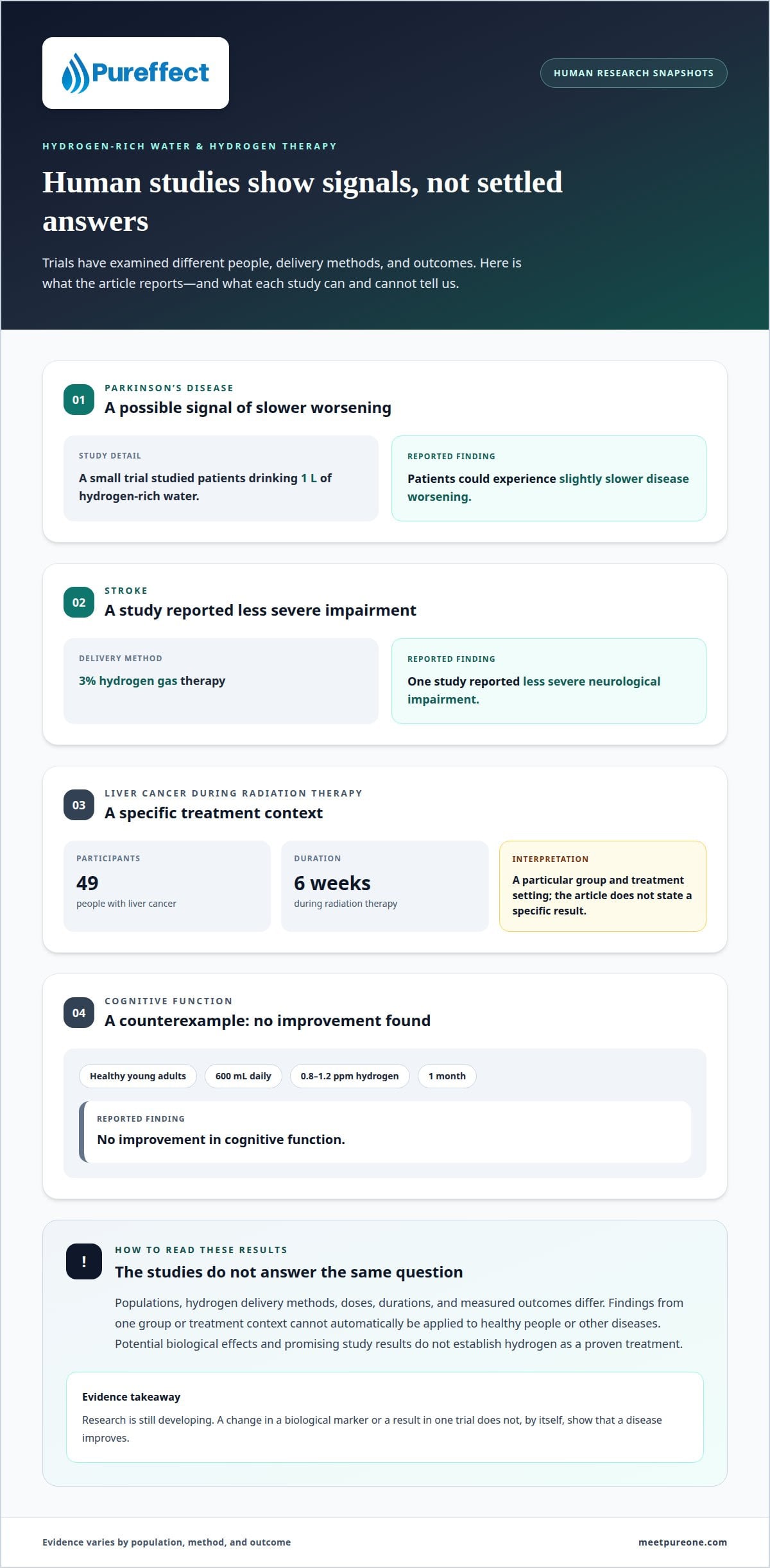
Human studies have examined molecular hydrogen therapy across different conditions and delivery methods. A small Parkinson’s disease trial found that patients drinking 1 L of hydrogen-rich water could experience slightly slower disease worsening. One stroke study reported less severe neurological impairment with 3% hydrogen gas therapy.
Other findings are mixed. In a study of 49 people with liver cancer, participants drank hydrogen-rich water for 6 weeks during radiation therapy. That design examined a specific group and treatment context, so its results cannot automatically be applied to healthy people or other diseases.
Cognitive research offers a useful counterexample. Healthy young adults consumed 600 mL of hydrogen-rich water containing 0.8-1.2 ppm hydrogen daily for one month, with no improvement in cognitive function. Differences in population, dose, duration, and measured outcome make study-to-study comparisons difficult.
For an at-home delivery option, explore this home hydrogen generator overview alongside the evidence on hydrogen-rich water.
Research limitations and uncertainty about hydrogen water benefits
Studies of hydrogen water examine different groups, delivery methods, and outcomes, so their findings don’t all answer the same question. Water volume matters too: excess fluid can pose a risk unrelated to hydrogen itself.
High-concentration hydrogen inhalation can displace oxygen in the surrounding air and create a fire or explosion hazard near ignition sources. Inhalation protocols commonly use hydrogen gas at concentrations of 1-3%; that range should not be treated as permission to alter a device’s settings or use it outside its directions.
Limits of the Research
Research limitations reflect how study design and outcome measures restrict what findings can show. A change in one test result or symptom does not establish a broad benefit for patients.
According to the National Library of Medicine, people with mild cognitive impairment consumed 300 mL of hydrogen-rich water daily over an annual period without improvement in overall cognitive test scores. That result speaks to the measured cognitive outcomes in that group, not every possible use.
Studies also vary in hydrogen concentration, intake, duration, and participants’ health status. A result in one patient group may not apply to another, and a short-term measure may not capture lasting effects. Researchers may measure inflammation, symptoms, or cognitive performance, but these outcomes are not interchangeable.
Risks of Inhaling Hydrogen Gas
Inhalation risk depends on gas concentration and the setting, because hydrogen can reduce the oxygen available in the surrounding air. This matters especially in enclosed spaces, where an unintended release may change the air people breathe.
Hydrogen also presents an ignition hazard at flammable concentrations. Keep inhalation equipment away from flames and sparks, use it only as directed, and don’t increase the gas concentration or flow. Commonly used 1-3% protocols describe a research practice, not a personal adjustment guide.
Hydrogen water and inhaled hydrogen are different delivery routes, so their study results shouldn’t be combined as if they were identical. Drinking delivers dissolved hydrogen in water; inhalation delivers hydrogen gas through breathing. The route, exposure, and study population all affect what a result can tell you.
Compared with regular water, the additional health benefits of hydrogen water remain uncertain. Researchers may study effects on inflammation or other outcomes, but these questions are distinct from basic hydration. Hydrogen gas can escape into the air after a drink is opened, so consuming it within an hour helps preserve its dissolved content.
Don’t confuse a possible effect of hydrogen with the danger of excessive fluid intake. Drinking too much water can dilute blood sodium if the kidneys cannot remove the extra fluid. Hyponatremia can be life-threatening, so avoid forcing yourself to drink more water for a potential wellness benefit.
To interpret a study, match its method, participants, and measured outcome to the claim being made. A finding about hydrogen inhalation, for example, cannot by itself establish that drinking hydrogen water improves the same symptoms.
Potential benefits and limits of the evidence
Research has explored molecular hydrogen in relation to several health questions, but potential benefits vary by outcome. A finding about wound healing, exercise recovery, or metabolic function cannot establish that hydrogen treats every condition. The key distinction is between a biological possibility and a demonstrated clinical result.
For wound healing, molecular hydrogen may reduce inflammation around an injury, potentially supporting repair. That possibility does not show that drinking hydrogen speeds healing in people. Researchers also study diabetes, obesity, fatty liver, and metabolic syndrome, but these conditions involve different processes and outcomes. A change in one measure would not prove improvement across all four.
Exercise is another area of interest. Molecular hydrogen may help protect muscles during activity or support recovery afterward. These are separate outcomes: protecting muscles during exercise does not necessarily mean less fatigue later. Weight-loss findings also need careful interpretation. Hydrogen has aided weight loss in animal studies, but animal results alone cannot establish the same effect in people.
Other proposed benefits include support for immune function and brain recovery after injury. Molecular hydrogen may help the immune system respond to infections, and researchers have considered recovery after concussion or trauma. These possibilities don’t mean hydrogen replaces infection care, rehabilitation, or urgent assessment after a head injury. The condition and outcome being studied matter.
Some research has also examined allergic reactions, cancer risk, and treatment side effects. These are distinct clinical questions, not one broad measure of wellness. For example, a possible effect on chemotherapy side effects would not demonstrate that hydrogen prevents cancer. Likewise, findings about blood pH or inflammation cannot substitute for evidence of symptom relief or disease control.
Hydrogen therapy is best understood as a possible support tool within a broader therapeutic strategy. To assess a claim, identify the specific outcome, the population studied, and whether the evidence comes from animals or people. Then check whether the delivery method matches the claim: drinking, inhalation, and topical use are not interchangeable. These distinctions help keep promising research in perspective.
If you’re considering home use, explore an at-home hydrogen option as one way to learn about delivery methods. Keep the research question specific, and don’t treat a potential benefit as a proven clinical result.
Pureffect: PureONE Molecular Hydrogen Generator
The PureONE Molecular Hydrogen Generator is designed for home use. Its four modes let you drink hydrogen-infused water, apply it to your skin, apply hydrogen gas directly to your body, or inhale the gas. These options offer different ways to use the device, but potential wellness support is not the same as a proven treatment for disease.
If you’re considering hydrogen use at home, think about the method you’re interested in and how it fits alongside your existing care. The generator is not a substitute for prescribed treatment or medical guidance. Explore the PureONE Molecular Hydrogen Generator from Pureffect to see whether its four modes suit your needs.
Make Your Next Step a Thoughtful One
Deciding whether hydrogen therapy belongs in your routine starts with a clear goal. Are you exploring general wellness or hoping to address a specific concern? That distinction can help you decide what to discuss with a healthcare professional and what outcome matters to you. If you’re still wondering whether you can have too much hydrogen therapy, keep safety and evidence in view rather than assuming more is better.
Hydrogen use is a personal choice, and the right next step depends on your health needs and the approach you’re considering. Pureffect offers the PureONE Molecular Hydrogen Generator for home use. Explore its four modes, then decide whether they fit your priorities and existing care.
Contact Pureffect to discuss your options. Stay curious, take your time, and make a choice that feels informed and right for you.
Frequently Asked Questions
Where does molecular hydrogen belong in a serious longevity program?
Keep hydrogen therapy exploratory rather than making it the centerpiece of a longevity plan. Start with your priorities and established care, then decide whether hydrogen relates to a specific personal goal. For example, someone interested in general wellness can distinguish that aim from managing a diagnosed condition. This helps keep expectations realistic and prevents an experimental option from displacing care with a clearer role.
What Is Hydrogen Therapy?
Hydrogen therapy is a broad term for using molecular hydrogen in a wellness or research context. It doesn’t describe one standardized clinical protocol, so the phrase alone doesn’t tell you what exposure a study examined. When reading about a finding, identify the intervention and the outcome researchers measured. This makes it easier to see whether the result applies to the approach you’re considering, instead of assuming all hydrogen-related methods are interchangeable.
Can hydrogen therapy cause side effects or harm?
Whether you can have too much hydrogen therapy depends on how it’s used; there isn’t one universal threshold across methods. Don’t increase frequency or exposure simply because an initial session produced no noticeable change. If you develop an unexpected symptom, stop using the method and consider its timing and context when seeking advice. No immediate reaction does not mean more use will be beneficial.
What is a safe dose or concentration of hydrogen therapy?
There’s no single dose that applies to every hydrogen approach. A concentration used in a research protocol describes that study’s conditions, not a personal target. To interpret a dose claim, distinguish the delivery method, exposure, and intended outcome instead of comparing figures from unlike protocols. In particular, don’t assume a concentration measured in one form can be converted directly into a suitable amount for another.
How long and how often can you use hydrogen therapy?
There’s no universal schedule for hydrogen use across different goals and methods. Study durations are designed around specific research questions, so copying one schedule does not establish a routine for another purpose. If you’re considering regular use, follow the directions for your method and avoid extending sessions or increasing frequency to pursue a stronger effect. Keep changes to medical care separate from a wellness routine.
Can drinking hydrogen-rich water cause side effects if consumed in excess?
Yes, excessive consumption can be a problem even when the water contains hydrogen. Count hydrogen-rich water as part of your total fluid intake, not as an extra quota on top of your usual needs. Don’t force yourself to drink additional servings for a particular result. What matters is your total intake and circumstances, not simply the hydrogen content of each glass.
Disclaimer
The information provided by Pureffect and any of its products are for educational and informational purposes only and is not intended as medical advice. Individual results may vary, and no specific health outcomes are guaranteed. Always consult a qualified healthcare professional before starting any wellness practice or product.