
What if the wellness therapy you bring home to fight cellular damage is actually triggering oxidative stress on purpose? When comparing hydrogen vs ozone therapy for home use, you are weighing two radically different biological strategies. While ozone deliberately induces a controlled oxidative burst to stimulate your internal defenses, molecular hydrogen acts as a selective antioxidant, neutralizing harmful free radicals without disrupting essential signaling pathways.
If you feel cautious about bringing reactive gas equipment into your home, you aren’t alone. Nobody wants to juggle complicated equipment or worry about respiratory irritation in their own living room. You deserve straightforward, evidence-based answers. In this guide, you will discover the biological mechanisms, safety profiles, and clinical evidence separating molecular hydrogen from ozone therapy for home wellness. We’ll examine what modern clinical research reveals about cellular uptake, map out clear safety margins, and help you choose a practical daily routine that supports your vitality with complete peace of mind.
Key Takeaways
- Explore the biological divide in hydrogen vs ozone therapy for home use, contrasting targeted free radical neutralization with oxidative stress stimulation.
- Discover why molecular hydrogen offers an inherent safety profile, while ozone requires strict handling protocols to avoid toxic lung exposure.
- Review peer-reviewed findings on how each gas influences mitochondrial cellular energy, inflammatory cytokines, and systemic tissue repair.
- Compare real-world home administration routines, contrasting non-invasive inhalation and enriched water with complex ozone insufflation methods.
Hydrogen vs. Ozone Therapy: Understanding the Fundamental Cellular Mechanisms
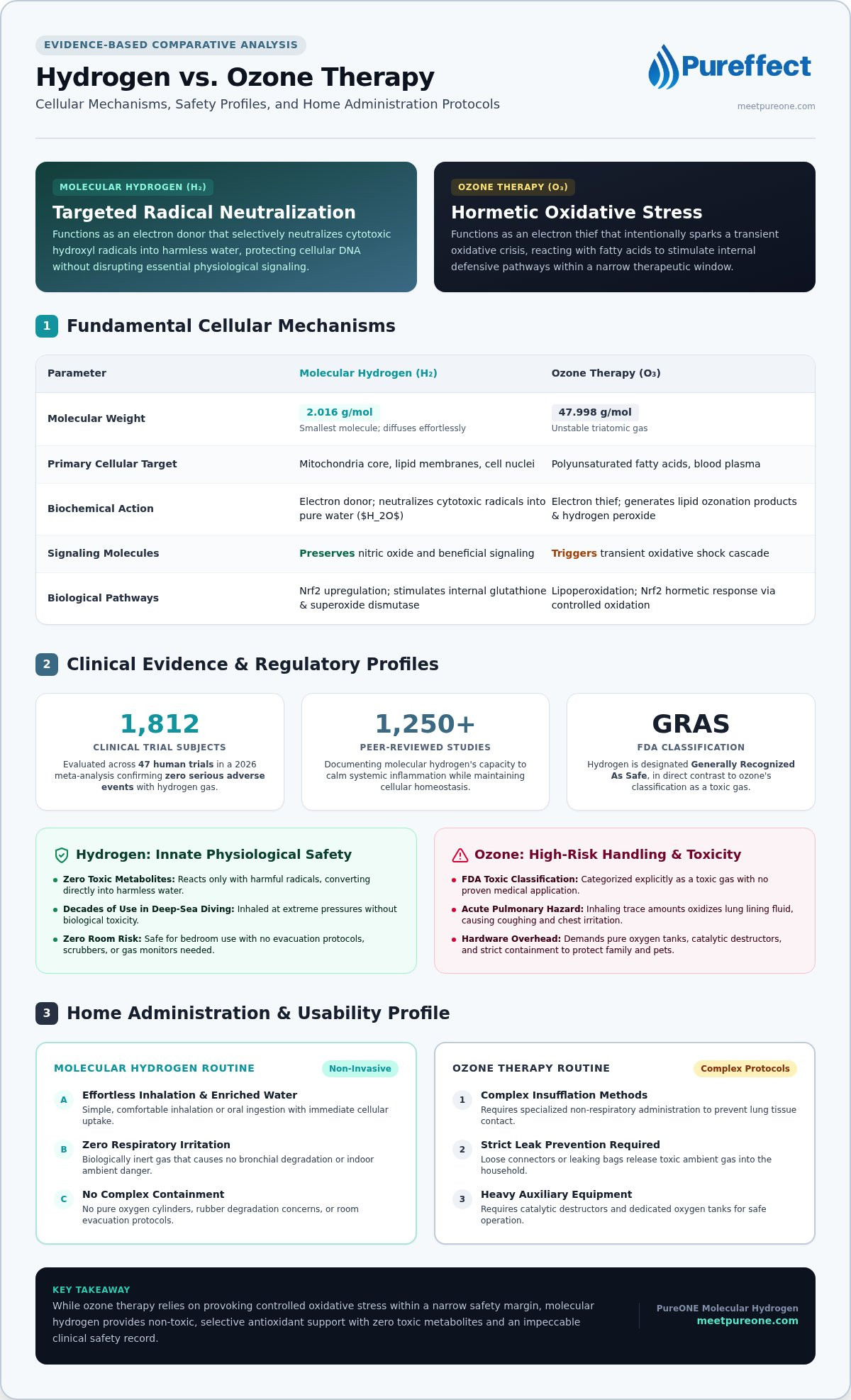
How do two gases marketed for cellular health work in completely opposite ways? When comparing hydrogen vs ozone therapy for home use, the biochemical contrast is striking. Molecular hydrogen ($H_2$) functions as an electron donor that selectively neutralizes cell-damaging radicals. In contrast, ozone ($O_3$) acts as an electron thief, intentionally forcing a transient oxidative crisis. One soothes oxidative stress; the other provokes it.
| Parameter | Molecular Hydrogen ($H_2$) | Ozone Therapy ($O_3$) |
|---|---|---|
| Molecular Weight | 2.016 g/mol (smallest molecule) | 47.998 g/mol (unstable triatomic gas) |
| Primary Cellular Target | Mitochondria, lipid membranes, cell nuclei | Polyunsaturated fatty acids, blood plasma |
| Biological Pathway | Nrf2 upregulation, selective radical scavenging | Lipoperoxidation, Nrf2 hormetic cascade |
Crucially, molecular hydrogen preserves beneficial physiological signaling molecules like nitric oxide and hydrogen peroxide while exclusively hunting cytotoxic hydroxyl radicals.
How Molecular Hydrogen Neutralizes Cytotoxic Free Radicals
Because molecular hydrogen is extraordinarily small, it diffuses effortlessly through lipid membranes, targeting the core of the mitochondria where reactive oxygen species form. By neutralizing hydroxyl radicals into harmless water, $H_2$ protects cellular DNA without dampening normal metabolic signals. Clinical findings show that this selective action upregulates the Nrf2 pathway, stimulating the body’s internal production of glutathione and superoxide dismutase.
How Ozone Therapy Induces Hormetic Oxidative Stress
Ozone takes the alternate path. When introduced to biological fluids, it reacts instantly with polyunsaturated fatty acids to produce lipid ozonation products and hydrogen peroxide. This controlled shock provokes an immune and enzymatic response, as detailed in this Ozone Therapy Overview. However, ozone operates within an exceptionally narrow therapeutic window, which makes hydrogen vs ozone therapy for home use a critical comparison for anyone evaluating real-world safety margins.
Home Safety Profiles: Evaluating Toxicity, Handling, and Respiratory Risks
Bringing active gas equipment into your living room demands foolproof safety margins. When assessing hydrogen vs ozone therapy for home use, operational safety represents the single greatest divide between the two. A 2026 meta-analysis of 47 human clinical trials involving 1,812 participants confirmed zero serious adverse events associated with hydrogen gas administration, and the FDA categorizes hydrogen as Generally Recognized As Safe (GRAS) for consumption. Ozone presents a stark contrast. The FDA Regulation on Ozone explicitly classifies it as a toxic gas with no proven medical application, largely due to its potent respiratory reactivity.
The Critical Pulmonary Danger of Ambient Ozone Exposure
Inhaling even trace amounts of ozone quickly oxidizes the epithelial lining fluid in your lungs. This reaction sparks acute bronchial irritation, chest discomfort, and persistent coughing. Because ambient ozone degrades rubber and irritates lung tissue, home ozone setups require specialized catalytic destructors and dedicated pure oxygen tanks to operate safely. If a connector loosens or an insufflation bag leaks, ambient ozone escapes into the room. That creates immediate respiratory hazards for family members, infants, and pets.
The Non-Toxic Safety Record of Molecular Hydrogen Inhalation
Molecular hydrogen acts as a biologically neutral molecule in human physiology. It generates zero toxic metabolites, simply turning cytotoxic radicals into plain water. Commercial deep-sea divers have inhaled high-concentration hydrogen gas mixtures for decades at extreme underwater pressures without toxic side effects. You can inhale hydrogen in an ordinary bedroom without exhaust fans, gas monitors, or catalytic scrubbers.
A quick breakdown of home handling hazards highlights the difference:
- Ozone Therapy: Carries severe pulmonary toxicity if inhaled, demands dedicated oxygen cylinders and catalytic destructors, and risks toxic indoor leaks.
- Molecular Hydrogen: Produces zero toxic metabolites, requires no room evacuation protocols, and carries an impeccable clinical safety record.
If you want peace of mind while supporting cellular health, exploring an integrated home device like the PureONE Molecular Hydrogen Generator provides a gentle, non-toxic routine without the hazards of caustic gases.
Systemic Benefits: Comparing Chronic Inflammation, Recovery, and Mitochondrial Support
How do these contrasting biological pathways translate into measurable physical energy and long-term recovery? When weighing hydrogen vs ozone therapy for home use, clinical trials reveal distinct systemic adaptations. Over 1,250 peer-reviewed studies highlight hydrogen’s capacity to calm systemic inflammation while preserving metabolic homeostasis. Ozone, on the other hand, exerts its power through an initial shock wave, showing clinical success in specialized settings like ischemic stroke rehabilitation and localized pathogen reduction, but at the cost of provoking transient tissue strain.
Modulating Inflammatory Cytokines and Oxidative Stress
Daily physical stress and metabolic fatigue trigger pro-inflammatory signaling loops driven by TNF-alpha, interleukin-6 (IL-6), and nuclear factor-kappa B (NF-kB). Molecular hydrogen systematically intercepts these cascades at the genetic level, down-regulating excessive cytokine expression without blunting your baseline immune vigilance. Ozone therapy operates on the opposite spectrum. It initially spikes inflammatory cytokines to provoke a rebound defense, a forceful mechanism that can easily overwhelm individuals dealing with compromised vitality or elevated chronic fatigue.
Consider the documented clinical outcomes across targeted human trials:
- Neuroprotection and Fatigue: A 2026 traumatic brain injury trial showed that patients inhaling a 2% hydrogen gas mixture experienced significantly lower intracranial pressure and improved recovery scores.
- Motor Function: Preliminary data on Parkinson’s disease demonstrated a 28% improvement in unified rating scores following eight weeks of daily hydrogen inhalation.
- Pain and Discomfort: An August 2026 crossover trial on fibromyalgia patients documented a 44% reduction in systemic pain using rectal ozone insufflation compared to 9% with sham treatment.
While ozone yields measurable results in clinical pain management, the intervention requires forcing an oxidative insult. Hydrogen provides clean, restorative support that you can sustain every single day without metabolic rebound.
Mitochondrial Energy Production and Cellular Longevity
Mitochondria generate over 90% of cellular energy, yet they remain vulnerable to the metabolic exhaust they create. Hydrogen easily penetrates the inner mitochondrial matrix, protecting delicate membrane lipids and shielding ATP synthase from oxidative decay. Conversely, ozone therapy exposes cells to transient hydrogen peroxide and lipid aldehydes. While this prompts mitochondrial enzyme production in robust tissue, an umbrella review updated in May 2026 concluded that ozone fails to deliver consistent clinical benefits over standard care across multiple chronic conditions.
Building resilient, all-day energy shouldn’t involve walking a tightrope between cellular repair and oxidative damage. You can protect your mitochondria effortlessly by choosing the Canadian-made PureONE Molecular Hydrogen Generator for safe, daily recovery at home.
Choosing the Ideal Home Therapy: Administration Practicality and Daily Integration
The most sophisticated wellness protocol in the world is useless if it sits in a closet collecting dust. When deciding between hydrogen vs ozone therapy for home use, practical daily friction often becomes the deciding factor. Long-term cellular health relies on consistent habits. If a routine feels uncomfortable, time-consuming, or clinically intimidating, daily compliance quickly evaporates.
Administration Methods: Invasive Protocols vs. Effortless Inhalation
Because direct ozone inhalation is dangerously toxic to pulmonary tissue, systemic home administration is inherently invasive. Users must rely on rectal or vaginal insufflation using specialized silicone catheters, syringes, and ozone-resistant bags. The process demands meticulous equipment sterilization, precise ozone concentration adjustments, and dedicated room ventilation to handle caustic off-gassing. For most people, it feels clinical, awkward, and exhausting.
Molecular hydrogen completely flips this dynamic. Inhaling hydrogen gas requires nothing more than slipping on a comfortable nasal cannula. You can read, work on your laptop, or unwind on the couch while breathing normally. There is no odor, no mucosal irritation, and no cleanup. Pairing inhalation with freshly infused hydrogen water adds another layer of hydration and systemic bioavailability that takes mere seconds out of your morning routine.
PureONE: Engineered for Versatile and Safe Home Hydrogen Therapy
Rather than wrestling with industrial oxygen tanks and chemical catalytic destructors, modern hydrogen therapy prioritizes elegant, foolproof design. Pureffect developed the Canadian-made PureONE to deliver clinical-grade support directly to your living room without requiring medical supervision.
Here is what sets it apart for everyday living:
- Precision Gas Ratio: Delivers a balanced mixture of 66% molecular hydrogen and 33% oxygen for optimal cellular uptake.
- Canadian Engineering: Built with a proprietary stainless steel condenser designed for clean, reliable performance.
- Four Therapeutic Modes: Seamlessly switch between gas inhalation, enriched drinking water, and targeted topical misting.
If you are ready for a safe, non-toxic routine that integrates smoothly into everyday life, explore the Canadian-made PureONE Molecular Hydrogen Generator, backed by an industry-leading 365-day risk-free trial.
Taking the Next Step Toward Effortless Cellular Resilience
Deciding between hydrogen vs ozone therapy for home use ultimately comes down to biological intent and daily peace of mind. While ozone relies on provoking controlled oxidative stress through invasive administration and strict respiratory precautions, molecular hydrogen works in harmony with your cellular chemistry. It provides selective antioxidant protection, shields mitochondrial vitality, and carries an impeccable record of non-toxic safety.
Your wellness routine shouldn’t feel like a clinical chore or introduce chemical risks into your home. The Canadian-made PureONE makes cellular recovery accessible, gentle, and practical. Engineered with a proprietary stainless steel condenser, it supplies a balanced clinical-grade delivery ratio of 66% molecular hydrogen and 33% oxygen across four versatile therapeutic modes.
You don’t have to compromise between clinical depth and everyday ease. Experience effortless cellular renewal with the PureONE Molecular Hydrogen Generator risk-free for 365 days, and discover how simple feeling your best can be.
Frequently Asked Questions
Can you safely inhale ozone gas at home like you inhale molecular hydrogen?
No, you should never inhale ozone gas. Direct inhalation of ozone is severely toxic to pulmonary tissue and rapidly oxidizes the delicate epithelial lining of the respiratory tract. While molecular hydrogen is completely safe to breathe through a simple nasal cannula, inhaling ozone triggers immediate chest tightness, mucosal inflammation, and acute lung irritation. Health regulators strictly prohibit direct respiratory exposure to ozone under any circumstances.
Is molecular hydrogen therapy scientifically validated for reducing systemic inflammation?
Yes, substantial clinical literature confirms its anti-inflammatory effects. More than 1,250 peer-reviewed publications demonstrate that molecular hydrogen acts at the cellular level to down-regulate pro-inflammatory signaling proteins such as TNF-alpha, interleukin-6, and NF-kB. By selectively neutralizing toxic hydroxyl radicals without disturbing essential signaling molecules like nitric oxide, hydrogen calms chronic systemic stress while maintaining normal baseline immune surveillance.
How do the administration methods for home ozone and hydrogen therapy compare?
When assessing hydrogen vs ozone therapy for home use, the protocols differ drastically in comfort and convenience. Systemic home ozone relies on invasive rectal or vaginal insufflation, demanding catheters, specialized collection bags, and catalytic destructors to control caustic gas leaks. In contrast, molecular hydrogen offers effortless, multi-modal delivery. You can easily breathe the gas through a lightweight cannula, drink freshly infused water, or apply topical misting.
What happens if you accidentally breathe in ozone generated by a home machine?
Accidentally inhaling ozone immediately triggers coughing, upper airway irritation, throat dryness, and substernal chest discomfort. Because ozone is a harsh oxidizer, indoor leaks from faulty tubing or unventilated enclosures can quickly affect sensitive family members and household pets. If accidental exposure occurs, you should exit the room immediately, ventilate the living area thoroughly with fresh air, and rest until respiratory sensations subside.
Can you combine molecular hydrogen therapy with other functional wellness protocols?
Yes, molecular hydrogen pairs seamlessly with other restorative routines, including red light therapy, infrared saunas, and targeted dietary supplementation. Because hydrogen functions as a selective antioxidant that converts exclusively into harmless water inside your cells, it doesn’t conflict with other modalities or trigger metabolic rebound. It protects mitochondrial integrity, allowing your cells to utilize energy more effectively during subsequent recovery protocols.
How long does a typical daily session take for home molecular hydrogen therapy?
A typical hydrogen inhalation session lasts between 30 and 60 minutes once or twice per day. Because the process is quiet and non-invasive, you can read, work at your desk, or relax while breathing normally. Drinking hydrogen-enriched water takes just seconds. Comparing hydrogen vs ozone therapy for home use reveals that hydrogen eliminates the tedious sterilization and cleanup required by insufflation, ensuring easy daily consistency.
Disclaimer
The information provided by Pureffect and any of its products are for educational and informational purposes only and is not intended as medical advice. Individual results may vary, and no specific health outcomes are guaranteed. Always consult a qualified healthcare professional before starting any wellness practice or product.