
What if the persistent redness on your cheeks isn’t actually a skin problem at all? It’s a question many ask after spending thousands on IPL sessions or monthly prescriptions like Rhofade, only to see the flush return. You’ve likely followed the dietary advice and applied the creams, yet the heat remains. It’s exhausting to feel like your face is a billboard for your internal stress levels. We understand that frustration. You deserve a strategy that goes deeper than the surface.
Key Takeaways
- Move beyond surface-level fixes by understanding how the “Internal Flare” drives systemic oxidative stress and persistent facial redness.
- See how the latest 2026 research on the gut-skin axis connects your microbiome health directly to your skin’s vascular response.
- Discover why managing rosacea symptoms from within requires a shift from avoiding triggers to building physiological resilience at the cellular level.
- Explore how molecular hydrogen acts as a selective antioxidant to neutralize the specific cytokines responsible for chronic inflammation.
- Learn to implement a non-invasive routine that uses internal cooling and targeted antioxidant support to stabilize your body’s natural defenses.
Beyond the Surface: Why Rosacea is a Systemic Challenge
Is your face telling a story about your internal health? For years, we’ve treated rosacea as a surface-level cosmetic annoyance. But the medical community is shifting. In 2026, we’re seeing a move toward ‘Inward-Out’ management. This approach recognizes that rosacea is a systemic inflammatory disorder. A comprehensive overview of rosacea reveals its complexity, but it doesn’t always highlight the internal roots. In fact, a 2017 update from the National Rosacea Society identified over 15 potential comorbidities, including vascular and neurological conditions. When you focus on managing rosacea symptoms from within, you’re treating the source, not just the signal.
The Role of Oxidative Stress in Facial Flushing
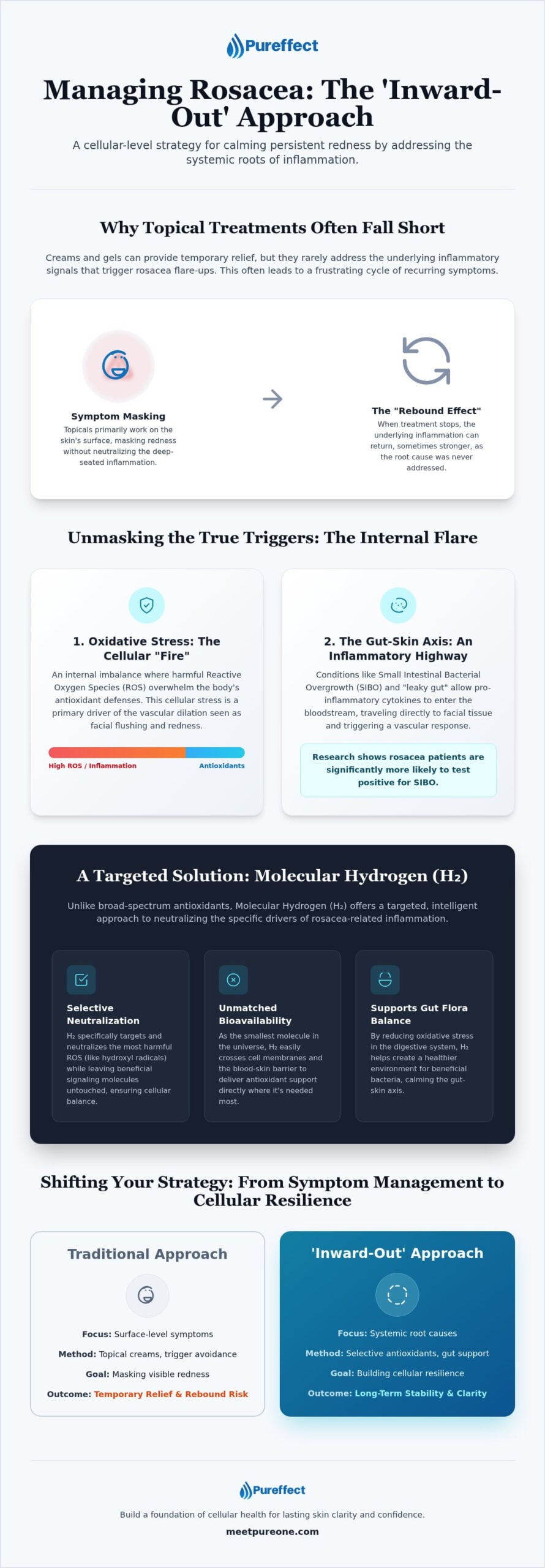
What causes that sudden, heat-filled flush? It’s often driven by oxidative stress. This happens when your body has too many reactive oxygen species (ROS) and not enough antioxidants to neutralize them. These free radicals trigger vascular dilation, making your face feel like it’s on fire. Mitochondrial efficiency is the foundation of skin health because it dictates how well your cells manage energy and resist inflammatory damage. If your internal engine is sputtering, your skin will show the smoke. Chronic flushing is essentially a visible symptom of an invisible cellular struggle.
Why Topical Treatments Often Fall Short
Creams and gels certainly have their place. However, they often address the symptom without quieting the inflammatory signaling underneath. Have you noticed a ‘rebound effect’ after stopping a prescription? Recent studies suggest that without systemic antioxidant saturation, the vascular system remains hyper-reactive. Creams simply can’t reach every cell. This is why many are turning to tools like the PureONE Molecular Hydrogen Generator. It provides the deep, intracellular support that a topical cream cannot reach.
Systemic management offers several advantages over a topical-only approach:
- Intracellular reach: Small molecules can penetrate cell membranes that thick creams cannot.
- Vascular stability: Reducing systemic inflammation helps blood vessels stay calm.
- Long-term resilience: You’re building a body that doesn’t overreact to every minor trigger.
By saturating your system with selective antioxidants, you create a buffer against the triggers that usually cause a flare. It’s about calming the storm before it reaches the surface.
The Gut-Skin Connection: Science-Backed Internal Triggers
Ever wonder why a spicy meal or a stressful day shows up on your face almost instantly? It’s the gut-skin axis at work. Research indicates that rosacea is deeply tied to our digestive health. By exploring the genetic and systemic aspects of rosacea, scientists have found that intestinal permeability, or “leaky gut,” plays a major role. When the gut barrier is compromised, pro-inflammatory cytokines enter the bloodstream. These markers don’t stay in the stomach; they travel, eventually triggering vascular dilation in the facial tissue.
Small Intestinal Bacterial Overgrowth (SIBO) is a frequent culprit in this process. Studies show that rosacea patients are significantly more likely to test positive for SIBO than the general population. This “Microbiome-Vascular” loop creates a cycle of inflammation that makes managing rosacea symptoms from within essential for long-term relief. Without addressing these internal triggers, topical fixes remain temporary.
Understanding the Gut Microbiome’s Impact on Inflammation
It’s not just about “bad” bacteria; it’s about balance. Certain strains, like Bifidobacterium, have shown promise in clinical trials for reducing skin sensitivity by lowering systemic TNF-alpha levels. When the microbiome is out of sync, it releases markers that directly impact skin clarity. Interestingly, molecular hydrogen supports gut flora balance by reducing the oxidative stress that allows pathogenic bacteria to thrive. This creates a more hospitable environment for the “good” bacteria that keep your skin calm.
New Research on Reactive Oxygen Species (ROS) and Rosacea
By 2026, the medical consensus has shifted toward selective antioxidant therapy. Unlike general antioxidants, selective ones target only the most harmful reactive oxygen species, like hydroxyl radicals. These specific ROS are known to damage the delicate walls of your facial capillaries from the inside out. This damage leads to the permanent redness often associated with advanced stages of the condition. Because hydrogen molecules are the smallest in the universe, they easily cross the blood-brain and blood-skin barriers to neutralize these threats at the source. If you’re looking for a systemic way to stabilize these pathways, the PureONE Molecular Hydrogen Generator offers a streamlined approach to daily support. It’s a simple way to protect your vascular health without complex medical interventions.
Evidence-Based Strategies for Internal Management
Why spend your life hiding from the sun or checking every menu for hidden spices? Most traditional advice focuses on avoidance. While tracking triggers is helpful, it’s a purely reactive strategy. The real shift happens when you move toward building physiological resilience. Managing rosacea symptoms from within involves strengthening your body’s response to environmental stress. This starts with your circadian rhythm. Sleep isn’t just rest; it’s when skin-repair mechanisms peak. Disrupting this cycle increases pro-inflammatory cytokines, leaving your vascular system hyper-reactive the next day.
Anti-Inflammatory Nutrition and the Role of Omega-3s
Your blood vessels are only as strong as their cellular membranes. Specific fatty acids like EPA and DHA help stabilize the walls of your capillaries. Most modern diets are skewed toward Omega-6, which can drive inflammation. Balancing this ratio is a foundational step for managing rosacea symptoms from within and calming chronic redness. To maximize these nutritional benefits, many are integrating hydrogen-rich water to potentially enhance nutrient absorption and cellular hydration. It’s a simple way to ensure your cells get exactly what they need to maintain structural integrity.
Lifestyle Shifts: Temperature Regulation and Stress Hormones
Stress isn’t just a feeling. It’s a chemical signal. High cortisol triggers neurogenic inflammation, where facial nerves release neuropeptides like Substance P. This causes immediate, intense flushing. Meditation can help; studies show it significantly lowers C-reactive protein levels, a key marker of systemic inflammation. Temperature management is equally vital. Have you tried the “Cold-Water-Warm-Body” paradox? By drinking cold water to lower your internal core temperature while maintaining a steady ambient environment, you can help regulate vascular tone. It’s a proactive way to keep the “Internal Flare” under control. If you’re ready to take a systemic approach to your skin health, the PureONE Molecular Hydrogen Generator offers a research-backed way to manage oxidative stress every day.
Molecular Hydrogen: A 2026 Approach to Systemic Resilience
Why is molecular hydrogen becoming the cornerstone of modern dermatological care? It’s because hydrogen is a selective antioxidant. Unlike traditional vitamins that neutralize all free radicals, hydrogen specifically targets the most cytotoxic ones, like hydroxyl radicals. These are the specific molecules that cause the most damage to your facial capillaries. By neutralizing only the harmful radicals, hydrogen allows your body’s natural signaling molecules to continue their work. This precision is what makes it a powerhouse for managing rosacea symptoms from within.
Topical antioxidants often struggle to penetrate the skin’s thick outer layer. Hydrogen inhalation bypasses this barrier entirely. When you inhale hydrogen, it enters the bloodstream and reaches the vascular system in seconds. This allows it to address the “Internal Flare” we discussed earlier by calming the systemic inflammation that drives facial redness. It’s not just a surface fix; it’s a fundamental shift in how your cells handle oxidative stress.
How PureONE Supports Cellular Balance
The PureONE device produces a specific 66% hydrogen and 33% oxygen mixture. This ratio is designed for maximum cellular recovery. While the hydrogen handles the inflammation, the oxygen supports mitochondrial metabolism. It’s a dual-action approach to health. You can also use the generator to create hydrogen-infused water. Drinking this water provides direct support for the gut-skin axis, helping to stabilize the microbiome and reduce the release of pro-inflammatory markers. Every PureONE is manufactured in Canada and features a proprietary stainless steel condenser. This ensures the output is clean, cool, and therapeutic every time you use it.
Incorporating Hydrogen Therapy into Your Daily Routine
How do you get the most out of your sessions? Consistency is key. Many users find that a 30 to 60 minute inhalation session in the morning helps stabilize their vascular tone for the day. If you’re experiencing an active flare-up, you can also apply hydrogen-infused water topically. This provides a “top-down” cooling effect while the inhalation works from the “bottom-up.” This dual-action method is the most effective way of managing rosacea symptoms from within while providing immediate surface relief. It’s a non-invasive, evidence-based routine that fits easily into a busy lifestyle. Ready to manage your symptoms from within? Discover the PureONE Molecular Hydrogen Generator.
Taking Control of Your Skin’s Internal Climate
The days of relying solely on surface fixes are over. We’ve seen how 2026 research identifies the “Internal Flare” as a product of systemic oxidative stress and gut microbiome imbalances. By shifting your focus toward managing rosacea symptoms from within, you’re addressing the cytokines and reactive oxygen species that cause chronic flushing before they reach the surface. It’s about building resilience, not just avoiding triggers.
Are you ready to experience the difference that systemic support can make? Endorsed by wellness experts like Howie Mandel, the PureONE is manufactured in Canada to ensure premium quality and clean output. We want you to feel confident in this discovery. That’s why we offer a 365-day risk-free trial period. There’s no pressure; just a path toward better living. Start your 365-day risk-free trial of the PureONE today and see how much calmer your skin can feel when your internal environment is in balance. Your journey to clearer skin starts from the inside out.
Frequently Asked Questions
Can diet alone fix rosacea from the inside?
Diet is a foundation, but it’s rarely a complete fix. While low-histamine foods support the microbiome, systemic oxidative stress often requires more direct intervention. 2026 studies suggest that even with a perfect diet, environmental stressors can still trigger internal inflammation. Combining nutritional changes with targeted antioxidant support creates a more robust defense against flare-ups. It’s about giving your body the tools to handle stress rather than just avoiding every trigger.
How does molecular hydrogen specifically help with facial redness?
Molecular hydrogen acts as a selective antioxidant that targets hydroxyl radicals; these are the primary drivers of capillary damage. By neutralizing these specific reactive oxygen species, it prevents the vascular dilation that manifests as persistent redness. Unlike topical creams, hydrogen gas easily penetrates the blood-skin barrier. This allows it to stabilize the vascular system and reduce the intensity of the “Internal Flare” before the flush even begins on your cheeks.
Are there specific ‘internal’ triggers I should watch for besides food?
Internal temperature regulation and cortisol levels are critical triggers often overlooked. When your core temperature rises, your body initiates a cooling response that dilates facial blood vessels. Similarly, stress-induced cortisol spikes can trigger neurogenic inflammation. Monitoring your sleep quality and emotional stress is just as important as tracking what’s on your plate when managing rosacea symptoms from within. Consistency in these factors helps maintain a calm, stable internal climate.
Is molecular hydrogen therapy safe to use alongside my current rosacea medications?
Is molecular hydrogen therapy safe to use alongside my current rosacea medications?
A “Cytokine Storm” is an overproduction of pro-inflammatory proteins like TNF-alpha and IL-17. In rosacea patients, this flood of signals causes the immune system to attack the skin’s vascular tissue. Preventing this requires maintaining high levels of internal antioxidants. 2026 research confirms that regular hydrogen inhalation helps modulate these cytokine levels. This prevents the immune system from overreacting to minor triggers like heat, exercise, or sudden changes in sunlight.
How long does it take to see skin improvements when managing symptoms from within?
Most users report a reduction in heat and flushing frequency within two to four weeks of consistent use. Improving skin clarity is a process that requires patience. While topical treatments offer temporary relief in days, managing rosacea symptoms from within requires time for cellular turnover and microbiome stabilization. By the three-month mark, many find their skin is significantly less reactive to the environmental triggers that used to cause immediate, painful flare-ups.
Disclaimer
The information provided by Pureffect and any of its products are for educational and informational purposes only and is not intended as medical advice. Individual results may vary, and no specific health outcomes are guaranteed. Always consult a qualified healthcare professional before starting any wellness practice or product.