
What if the most important part of your healing isn’t the surgery itself, but how you handle the invisible “fire” inside your cells afterward? It’s a question many patients overlook. Most of us focus on the stitches. The real work happens deep within. If you’re looking for effective post-surgery recovery enhancement at home, you need to look past the bandages and address the oxidative stress that keeps you feeling sluggish and swollen.
It’s completely normal to feel anxious about those first few weeks away from medical supervision. You want to move again, but the lingering inflammation and low energy make every day feel like a hurdle. We’re here to help you bridge that gap. In this guide, you’ll discover how to optimize your healing process by addressing cellular inflammation through evidence-based protocols.
We’ll take a close look at 2026 research findings regarding biomarkers like glutathione (GSH) and malondialdehyde (MDA). These aren’t just technical terms; they are the keys to a faster return to your daily routine. By the end of this article, you’ll have a science-backed plan to reduce visible swelling and reclaim your confidence.
Key Takeaways
- Understand how to neutralize the surge of Reactive Oxygen Species (ROS) that creates an invisible barrier to your body’s natural tissue repair.
- Explore 2026 research findings on how molecular hydrogen targets pro-inflammatory cytokines like IL-6 to reduce systemic swelling and discomfort.
- Discover a practical 5-step protocol for post-surgery recovery enhancement at home that combines cellular hydration with scheduled inhalation sessions.
- Learn why the 66/33 ratio of hydrogen and oxygen is considered the gold standard for safety and efficacy in at-home recovery environments.
Understanding the “Invisible” Recovery Barrier: Oxidative Stress
Why does your body feel like it is under attack even after the surgeon says everything went perfectly? It is likely because of a hidden chemical struggle happening at the cellular level. When we talk about post-surgery recovery enhancement at home, we aren’t just talking about comfortable pillows or finishing your prescriptions. We are talking about managing oxidative stress.
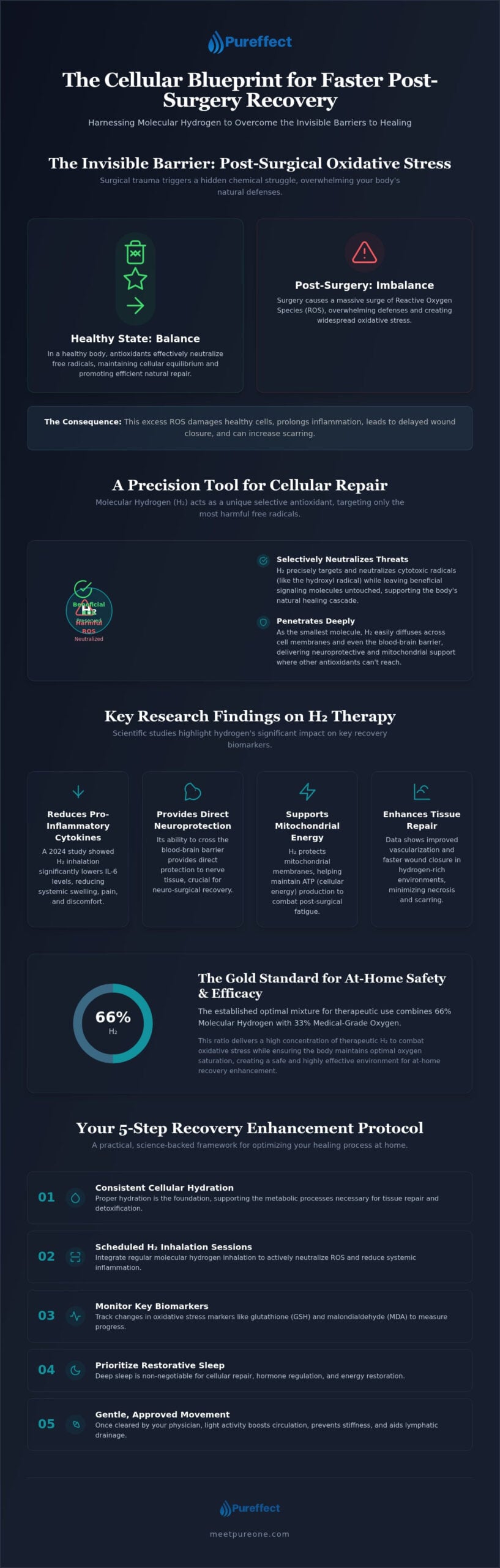
Oxidative stress is an imbalance between free radicals and the antioxidants your body uses to keep them in check. During tissue repair, this balance is easily tipped. Surgical trauma triggers a massive release of Reactive Oxygen Species (ROS). While your body is trying to knit itself back together, these ROS molecules can go on a rampage, damaging healthy cells and prolonging the inflammatory phase. If this inflammation becomes chronic, it often leads to delayed wound closure and more prominent scarring. Oxidative stress is the primary metabolic hurdle in post-surgical recovery.
The Role of ROS in Tissue Repair
Is all ROS bad? Not exactly. Your body actually uses small amounts of these molecules as messengers to trigger the healing process. The problem arises when the “healing crisis” begins. This happens when the sheer volume of trauma overwhelms your natural antioxidant defenses. Instead of signaling for help, the excess ROS starts destroying the very proteins needed for new skin and muscle. Selective antioxidant therapy is a modern approach that seeks to neutralize the most aggressive radicals while leaving the helpful signaling molecules alone. It is about precision, not just flooding the system.
Why Rest Alone Isn’t a Strategy
Many patients believe that “waiting it out” is their only job once they get home. While sleep is vital, passive rest does not actively address the biochemical fire in your cells. As part of standard post-operative care, the focus is often on wound management and pain control. However, the first 14 days are a critical window for proactive cellular support. By focusing on investing in preventative health at home, you can give your mitochondria the resources they need to clear out cellular debris. This shifts your recovery from a slow crawl to an optimized, science-backed journey toward resilience.
Research Findings: Molecular Hydrogen and Surgical Healing
A pivotal 2024 study highlighted how hydrogen inhalation significantly reduces pro-inflammatory cytokines, specifically IL-6. This is a big deal. High levels of IL-6 are often linked to prolonged pain and swelling. By lowering these markers, the body can exit the “emergency” phase of healing much faster. Recent research on oxidative stress and surgical recovery suggests that managing these biomarkers is the difference between a smooth recovery and one plagued by setbacks.
Modulating the Inflammatory Cascade
Think of hydrogen as a signal modulator rather than just a scavenger. It helps prevent “cytokine storms” that can occur after major abdominal or thoracic surgeries. This systemic balance is also why many researchers are looking at the connection between recovery and managing gut inflammation naturally. When your internal environment is calm, your body can focus its energy on closing incisions rather than fighting invisible fires. This same principle of interrupting the inflammatory cascade applies to other painful conditions like joint inflammation; for example, those interested in managing gout flare-ups naturally will find that targeting pro-inflammatory signals is equally central to achieving relief.
Mitochondrial Support for Energy Recovery
Ever wonder why you feel so exhausted after surgery? It’s because surgical trauma depletes your ATP levels, your cellular energy. Research shows that molecular hydrogen helps protect the mitochondrial membrane potential. This means your “cellular power plants” stay online and efficient. When your cells have more energy, you hit your physical therapy milestones sooner. If you’re ready to bring this level of support into your living room, you might want to explore how a molecular hydrogen generator fits into your routine.
5 Steps for Post-Surgery Recovery Enhancement at Home
- Step 1: Establish a “Cellular Hydration” routine using hydrogen-infused water to target internal oxidative stress.
- Step 2: Implement scheduled inhalation sessions to address systemic inflammation and support mitochondrial health.
- Step 3: Optimize your sleep environment for deep tissue regeneration by maintaining a cool, dark, and quiet space.
- Step 4: Use gentle, non-weight-bearing movement, such as ankle pumps or seated stretches, to stimulate lymphatic drainage.
- Step 5: Apply topical hydrogen therapy to localized incision sites using sterile gauze soaked in hydrogen water, once cleared by your doctor.
Hydration Beyond Simple Water
Standard tap water is great for quenching thirst, but it doesn’t always reach the cellular level where surgery-induced stress is highest. Hydrogen water offers superior bioavailability. This means the molecules can move more easily into your cells to neutralize free radicals. This level of hydration is a key part of improving cardiovascular health naturally, which is a frequent goal during post-op monitoring. For the best results, try drinking 16oz of hydrogen-rich water every four hours during your waking hours. It’s a simple habit that pays massive dividends in how you feel.
The Inhalation Protocol
While drinking hydrogen water helps the gut and metabolic systems, inhalation delivers a higher concentration of hydrogen directly into the bloodstream. You should set up a comfortable inhalation station in your “Recovery Command Center.” This should be a place where you can sit upright and relax without distractions. Based on clinical observations from 2025, a duration of 30 to 60 minutes twice daily is often recommended. It’s a quiet time to let your body focus entirely on repair. For patients who also experience post-operative breathing difficulties or want to understand the broader benefits of gas-based therapies, exploring hydrogen therapy for respiratory wellness can provide valuable context on how inhalation supports lung health alongside systemic recovery. Just remember, safety comes first. Always consult with your surgeon before introducing new therapies into your post-surgery recovery enhancement at home. If you’re ready to start your journey, you can get the PureONE Molecular Hydrogen Generator here to support your daily protocol.
Optimizing the 66/33 Ratio with PureONE
Why do we talk so much about a specific gas ratio? When you’re pursuing post-surgery recovery enhancement at home, precision matters just as much as it did in the operating room. The 66% hydrogen and 33% oxygen mixture is often called the “gold standard” for a reason. It mirrors the concentrations used in many successful clinical trials. By including oxygen, you address the risk of hypoxia that can occur with pure hydrogen inhalation. It’s a safer, more balanced way to support your system during long recovery sessions. This same balanced ratio is also central to hydrogen therapy for respiratory wellness, where maintaining proper oxygen levels during inhalation is especially critical for lung tissue support.
This is where Pureffect, the Canadian team behind the PureONE Molecular Hydrogen Generator, sets a different standard. It isn’t just about making gas; it’s about the quality of that gas. The device uses a proprietary stainless steel condenser to ensure the output is clean and consistent. Medical-grade materials are essential when your body is in a sensitive, post-operative state. You wouldn’t want to compromise your healing with sub-par equipment, right?
A Multi-Modal Approach to Healing
One of the best things about this setup is its versatility. You aren’t limited to just one method. One device handles three distinct needs. You can inhale the gas for systemic support, drink the hydrogen-rich water for gut health, or use the water for topical soaking on localized areas. It’s a complete toolkit for post-surgery recovery enhancement at home. If you’re feeling a bit skeptical, that’s okay. Pureffect offers a 365-day risk-free trial so you can verify the results for yourself. You can visit the PureONE shop to see the accessories that make these different applications possible.
The PureONE Difference
Consistency is the secret to mimicking the results you see in research papers. Our manufacturing standards at Pureffect ensure that every session delivers the same high-quality output. This reliability is critical when you are tracking your progress against specific healing milestones. We encourage you to be an active participant in your recovery. Don’t just take our word for it. Look into the science of molecular hydrogen and see how it aligns with your specific health goals. We’re here to be your partner in that discovery process.
Take Control of Your Cellular Healing
The science is clear; precision matters. Whether it’s the selective nature of molecular hydrogen or the safety of the 66/33 gas ratio, every detail counts toward getting you back to the life you love. If you want to bring this technology into your own living room, we’re here to help. Endorsed by Howie Mandel, the PureONE system is designed for those who value transparency and results. You can enhance your recovery with the PureONE Molecular Hydrogen Generator today. With a 365-day risk-free trial and free shipping in North America, you can verify the logic for yourself. You’ve got this, and we’re excited to see you thrive.
Frequently Asked Questions
Is molecular hydrogen safe to use immediately after surgery?
Yes, molecular hydrogen is generally considered safe for use immediately following a procedure. The FDA has granted it “Generally Recognized As Safe” (GRAS) status for consumption. Many clinical studies utilize hydrogen therapy in the acute phase of recovery to target oxidative stress. However, you should always consult your surgical team before starting post-surgery recovery enhancement at home to ensure it aligns with your specific wound care instructions.
Can I use hydrogen therapy if I am taking pain medications?
You can typically use hydrogen therapy while taking prescribed pain medications. There are no documented negative interactions between molecular hydrogen and common post-operative analgesics. Some researchers suggest that hydrogen may actually help mitigate the oxidative stress and gut irritation sometimes caused by use of certain anti-inflammatory drugs. It acts as a supportive partner to your existing medical plan rather than a replacement.
How soon will I notice the effects of hydrogen inhalation on my recovery?
Many patients report a noticeable difference in their energy levels and localized swelling within the first 24 to 48 hours of consistent use. While visible physical changes like reduced redness might take a few days, the chemical shift in your biomarkers happens much faster. Clinical trials often measure significant reductions in pro-inflammatory markers shortly after the first few inhalation sessions. Consistency is the secret to seeing these results.
Do I need to drink hydrogen water and inhale the gas, or is one enough?
While using either method provides benefits, combining both offers a more comprehensive approach to post-surgery recovery enhancement at home. Inhalation allows for a higher concentration of hydrogen to enter the bloodstream quickly, which is ideal for systemic inflammation. Drinking hydrogen water targets the digestive system and supports metabolic health. Using both methods ensures that hydrogen reaches your cells through multiple pathways for maximum efficacy.
Can hydrogen therapy help with the appearance of surgical scars?
Hydrogen therapy can support the aesthetic outcome of your healing by modulating the early inflammatory phase of wound repair. Research indicates that reducing excess Reactive Oxygen Species (ROS) helps prevent the chronic inflammation that often leads to thicker, more visible scar tissue. By promoting a calmer internal environment, your body can focus on organized collagen deposition. This often results in flatter, less prominent scars once the incision is fully closed.
What happens if I use the hydrogen generator for more than an hour?
There is no risk of overdosing on hydrogen if you use the generator for longer than an hour. Molecular hydrogen is non-toxic, and any excess gas that your body doesn’t use is simply exhaled through your lungs. Most clinical protocols focus on 30 to 60 minute sessions because that is the timeframe required to reach peak saturation in the tissues. Staying on longer is perfectly safe but may not offer additional benefits.
Disclaimer
The information provided by Pureffect and any of its products are for educational and informational purposes only and is not intended as medical advice. Individual results may vary, and no specific health outcomes are guaranteed. Always consult a qualified healthcare professional before starting any wellness practice or product.