
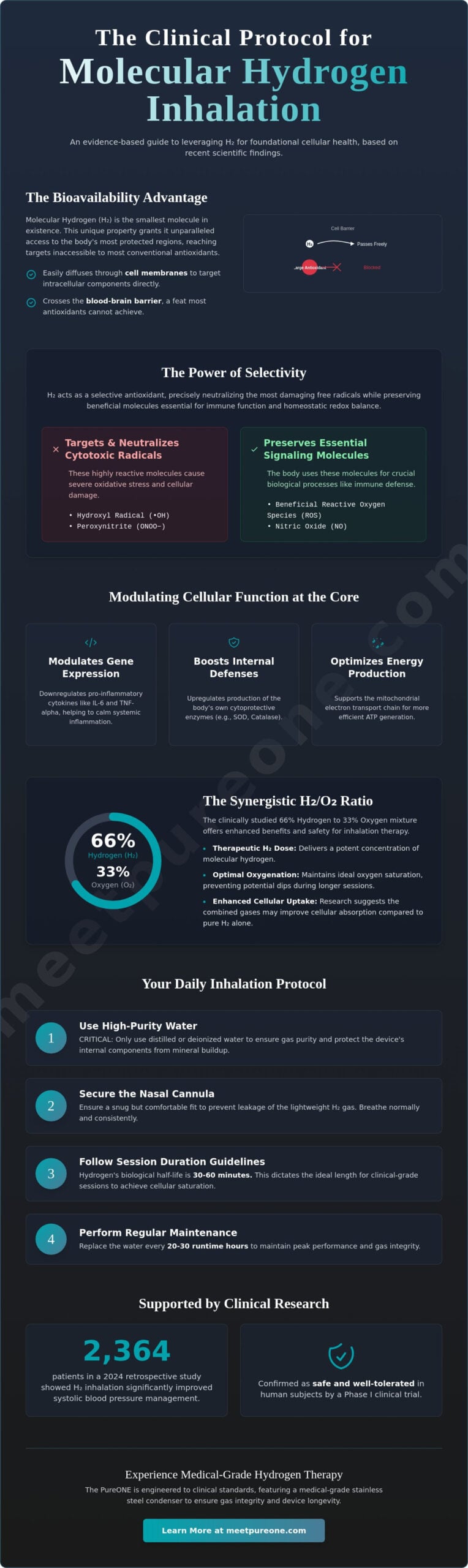
We’re here to clear the air. The science is moving fast. A 2024 retrospective study of 2,364 patients showed that hydrogen inhalation, when added to standard care, significantly improved systolic blood pressure management. This guide helps you master a research-justified daily protocol with evidence-based precision. We’ll dive into the specific biological pathways that make the 66/33 ratio so effective and why purity is paramount. You’ll gain total confidence in operating high-end hardware like the PureONE. Let’s turn the latest clinical data into your new morning routine.
Key Takeaways
- Understand how H2 acts as a selective signaling agent. Neutralize cytotoxic radicals like peroxynitrite without disturbing essential biological processes.
- Learn exactly how to use a hydrogen inhalation machine by mastering the setup of high-purity distilled water systems and secure cannula placement.
- Discover why the 30-to-60-minute biological half-life of hydrogen dictates the ideal length for clinical-grade sessions.
- Explore the technical advantages of the 66/33 gas ratio found in the PureONE and how to toggle between inhalation and topical applications.
The Biological Mechanism: Why Inhaling Molecular Hydrogen Works
Why is molecular hydrogen causing such a stir in the medical community? It comes down to size and selectivity. Hydrogen (H2) is the smallest molecule in existence. This unique physical property allows it to diffuse through cell membranes and slip past the blood-brain barrier with ease. Most conventional antioxidants are simply too bulky to reach the inner sanctum of your cells, but H2 goes exactly where it’s needed. When you understand how to use a hydrogen inhalation machine, you aren’t just breathing gas; you’re deploying a cellular signaling agent that works at a foundational level.
H2 is famous for being a "selective" antioxidant. It doesn’t just neutralize everything in sight. It specifically targets the most destructive elements, like the hydroxyl radical (•OH) and peroxynitrite (ONOO−). These are the bad guys responsible for severe oxidative stress. It leaves beneficial reactive oxygen species alone, which is crucial because your body uses those for immune defense and signaling. According to a 2024 clinical review of hydrogen’s therapeutic applications, H2 acts as a selective antioxidant by neutralizing only the most cytotoxic radicals without disturbing the essential biological processes required for homeostatic redox balance. This precision makes what is molecular hydrogen one of the most important questions in modern wellness research, and Hydrogen therapy a standout intervention for systemic inflammation.
H2 as a Gaseous Signaling Molecule
H2 does more than just clean up oxidative waste. It actually talks to your DNA. Research shows it modulates gene expression to downregulate pro-inflammatory cytokines such as IL-6 and TNF-alpha. It also boosts your body’s internal defenses by upregulating cytoprotective enzymes like superoxide dismutase (SOD) and catalase. Inside the mitochondria, H2 helps optimize the electron transport chain, which can lead to more efficient ATP production. It’s a comprehensive upgrade for your cellular engines.
The 66/33 Ratio: Synergizing Hydrogen and Oxygen
You might wonder why specific ratios matter. While pure hydrogen is effective, long sessions can occasionally lead to a dip in oxygen levels if you aren’t careful. A 66% hydrogen and 33% oxygen mixture, often referred to as Brown’s Gas, provides the best of both worlds. It ensures you’re getting a therapeutic dose of H2 while maintaining perfect oxygen saturation. This synergy is a core feature of the PureONE Molecular Hydrogen Generator. Many researchers believe this combined approach enhances cellular uptake compared to pure H2, making it a smarter way to master how to use a hydrogen inhalation machine for long-term health.
Step-by-Step Protocol for Operating a Hydrogen Inhalation Machine
Once your reservoir is filled, connect the nasal cannula to the end of your last filter bottle. Ensure the prongs are curved toward your face and the slide bolsters are snug but comfortable. After securing the cannula, follow the startup sequence. Power the unit on, select your desired output level (Inhalation or Water Infusion), and verify the flow rate. A recent phase I clinical trial confirmed that inhaling hydrogen gas at controlled flow rates is remarkably safe and well-tolerated by human subjects. To ensure this level of safety in a home environment, the PureONE utilizes multiple pressure mitigation measures such as pressure sensor and pressure relief as well as water filters to scrub the gas of any possible in-purities.
Nasal Cannula Placement and Comfort
How should you breathe? Just relax. Insert the prongs into the nostrils and loop the tubing over your ears. There’s no need for deep, forced breaths; a normal, steady rhythm is sufficient for therapeutic gas exchange. The goal is consistent saturation, not lung capacity tests. If the prongs feel dry, a tiny drop of water-based lubricant can help. Avoid anything oil-based to keep the system clean and the gas flow unobstructed.
System Maintenance for Gas Integrity
How often should you change the water in your filters? For peak performance, we recommend a full water swap every 20 to 30 runtime hours. This prevents the buildup of any trace contaminants that might have slipped in. Keeping the reservoir sealed and the environment dust-free is critical for long-term device performance. It’s a small step that protects your investment and ensures every session is as effective as the first. If you’re looking for a system designed for this level of durability, the PureONE Molecular Hydrogen Generator is built with these exact clinical standards in mind.
Clinical Protocols: Duration, Frequency, and Timing for Results
How long should you actually spend in a session? It isn’t a random guess. The biological half-life of molecular hydrogen in human tissue is approximately 30 to 60 minutes. This means the gas enters and exits your system relatively quickly. To reach therapeutic saturation, clinical research suggests that 30 to 90 minute sessions are the "sweet spot" for systemic inflammation reduction. If you’re wondering how to use a hydrogen inhalation machine for maximum impact, the answer lies in this window. Shorter sessions might offer a quick boost, but the deep cellular work happens during that sustained 60 minute mark.
Consistency is your best friend here. Think of it as a cumulative effect. Sporadic, high-dose sessions don’t provide the same signaling benefits as daily exposure. Regular inhalation keeps your cytoprotective pathways active and your redox balance stable. For a deeper look at how this compares to other ways of getting H2, check out our comparison on hydrogen therapy for oxidative stress. By maintaining a daily rhythm, you allow the H2 to consistently modulate gene expression and suppress pro-inflammatory markers. To fine-tune exactly how often to use hydrogen therapy based on your specific wellness goals and the latest clinical data, our evidence-based frequency protocols for 2026 provide a detailed breakdown of the optimal saturation-clearance cycle.
Morning vs. Evening Protocols
Timing your session can change the outcome. A morning protocol is excellent for "priming" the body. It prepares your cells to handle the oxidative stressors you’ll face throughout the day, from pollution to mental stress. Conversely, an evening session leverages the anti-inflammatory effects for sleep quality. It supports nocturnal recovery by lowering systemic tension and supporting the body’s natural repair cycle.
Adjusting Dosage for Specific Wellness Goals
Your goals should dictate your schedule. Athletes often benefit from a 60 minute post-exertion protocol. This specific timing helps mitigate lactic acid buildup and muscle damage documented in sports science trials. If you’re focused on cognitive support, 30 minute high-frequency sessions are often recommended. These shorter, frequent bursts help target neuro-inflammation and keep the brain’s antioxidant defenses sharp. Ready to implement these protocols with clinical-grade equipment? Explore the PureONE Molecular Hydrogen Generator to start your home wellness journey.
Maximizing Outcomes with the PureONE System
Mastering how to use a hydrogen inhalation machine requires more than just following a timer. It requires hardware that supports your biology. The PureONE Molecular Hydrogen Generator is designed around the 66/33 gas ratio, a technical standard that ensures therapeutic efficacy without compromising safety. While many entry-level units use plastic internal components that can off-gas or degrade under constant use, the PureONE utilizes a proprietary stainless steel condenser. This engineering choice preserves gas purity and ensures that what you’re breathing is exactly what the research calls for: clean, medical-grade molecular hydrogen. It’s a high-tech solution designed for a low-barrier daily routine.
Why the 66/33 Mix is the Research Standard
While some machines offer 99% pure H2, clinical settings often favor the 66% hydrogen and 33% oxygen blend. Why? It’s about the "Safe Inhalation" threshold. During long sessions, breathing pure H2 can occasionally lead to a slight dip in oxygen saturation if the environment isn’t perfectly ventilated. The 66/33 mix ensures your oxygen levels remain perfectly stable throughout the entire session. This allows for the 60 to 90 minute sessions required for systemic inflammation reduction without any physiological strain. It’s a smarter, research-backed approach to long-term home therapy.
Integrating Hydrogen Water and Inhalation
Don’t limit yourself to just breathing. The PureONE system is multi-modal. You can easily switch between inhalation, infusing your drinking water, and even applying the gas topically. For those focused on longevity, we suggest a "dual-saturation" protocol. Try drinking a glass of hydrogen-infused water while you perform your daily inhalation session. This hits your system from two different delivery pathways simultaneously. For more on these longevity-focused strategies, explore our evidence-based guide on extending your life with hydrogen. If you want to expand your setup, visit the PureONE shop for specialized accessories like eye goggles or skin applicators to target localized oxidative stress with precision.
Taking Charge of Your Cellular Health
Ready to put the science into practice? You now understand that molecular hydrogen isn’t just a trend; it’s a selective signaling molecule that targets oxidative stress with surgical precision. By mastering how to use a hydrogen inhalation machine through consistent 60 to 90 minute sessions, you’re aligning your daily routine with the biological half-life of H2. The goal is steady, daily saturation. You’re supporting your body’s internal defenses and helping your mitochondria run at peak efficiency.
Choosing the right hardware is the final piece of the puzzle. The PureONE system is manufactured in Canada and features a proprietary stainless steel condenser to ensure the highest purity. It’s the clinical-grade 66/33 output endorsed by Howie Mandel for its reliability and performance. Why settle for less when your long-term wellness is on the line? You deserve a partner in health that values transparency as much as you do. Start your 365-day risk-free trial of the PureONE Hydrogen Generator today and see the difference for yourself. It’s time to breathe easy and live better.
Common Questions About Hydrogen Inhalation
How long does it take to feel the benefits of hydrogen inhalation?
Most users notice acute physiological shifts, such as improved mental clarity or reduced muscle soreness, within the first few sessions. However, the more profound systemic benefits typically require cumulative exposure. Clinical observations in recent studies suggest that markers of oxidative stress and systemic inflammation often show measurable improvement after four to eight weeks of daily protocols. Consistency is the key to seeing these long-term results.
Can I overdo hydrogen inhalation therapy?
It is virtually impossible to "overdose" on hydrogen gas because it’s a non-toxic signaling molecule with a high safety profile. A 2023 review of 81 clinical trials noted that very few adverse reactions have ever emerged in human subjects. While you can’t overdo it in terms of safety, there is a biological saturation point. Once your tissues are saturated, additional inhalation time provides diminishing returns rather than increased benefits. Understanding how often to use hydrogen therapy within the optimal saturation-clearance cycle helps you avoid this plateau and get the most from every session.
What kind of water is safest to use in a high-grade hydrogen generator?
High-purity distilled or deionized water with a conductivity of less than 1 microsiemens per centimeter is the only safe choice for high-grade generators. This prevents the accumulation of mineral scale and organic contaminants that could interfere with gas production. Learning how to use a hydrogen inhalation machine correctly starts with protecting the internal components from the "hard" minerals found in tap or spring water. Using anything else can lead to premature hardware failure.
Is it safe to inhale hydrogen while sleeping?
Inhaling hydrogen while sleeping is safe as long as your device includes an automatic timer and proper ventilation. Many users find that overnight sessions help maximize the repair phase of the sleep cycle. When considering how to use a hydrogen inhalation machine overnight, ensure the nasal cannula is secured to prevent tangling. It’s also vital to use a machine that maintains a stable gas concentration to avoid any risk of oxygen displacement during deep sleep.
How often should I replace the nasal cannula for hygiene and performance?
We recommend replacing your nasal cannula every 30 to 60 days to maintain hygiene and gas flow integrity. Over time, the medical-grade PVC or silicone can become stiff or develop microscopic cracks that harbor bacteria. If you have been sick, replace the cannula immediately to prevent reinfection. Regularly wiping the prongs with a saline solution between uses also helps extend the life of the accessory while ensuring the gas remains pure.
Disclaimer
The information provided by Pureffect and any of its products are for educational and informational purposes only and is not intended as medical advice. Individual results may vary, and no specific health outcomes are guaranteed. Always consult a qualified healthcare professional before starting any wellness practice or product.