
What if your body actually responds better to hydrogen when you give it a break? It sounds counterintuitive; however, the latest clinical data suggests that constant exposure might not be the win you think it is. Here at Pureffect, we’ve noticed users often feel stuck wondering how often to use hydrogen therapy to see real changes without wasting their time. You want a routine that works with your biology, not against it. We’ve all been there, staring at a device and wondering if that extra thirty minutes actually translates to better health.
This guide bridges the gap between guesswork and science by exploring the "Saturation-Clearance Cycle." With over 1,000 scientific articles and 800 clinical studies now published as of 2026, we have a much clearer picture of how H2 interacts with our cells. You’ll learn the exact timing needed to maintain therapeutic levels based on the biological half-life of the molecule. We’ll also examine findings from recent reviews of musculoskeletal trials to show you how pulsed administration can optimize mitochondrial signaling. By the end, you’ll have a clear, evidence-based daily protocol to maximize anti-inflammatory benefits with precision.
Key Takeaways
- Understand the biological half-life of H2 and why its ability to peak in the blood within 15 minutes defines the ideal session length.
- Discover how often to use hydrogen therapy by matching your frequency to specific wellness targets, from chronic inflammation to rapid athletic recovery.
- Learn why the selective antioxidant nature of molecular hydrogen makes a biological “overdose” unlikely by protecting essential redox signaling.
- Master a 24-hour protocol that layers inhalation and hydrogen water to maintain cellular saturation throughout the day.
- Explore how the proprietary condenser technology in the PureONE Molecular Hydrogen Generator ensures consistent gas concentration for every session.
The Science of Hydrogen Saturation: Biological Half-Life and Cellular Retention
Why does the size of a molecule dictate your daily schedule? Molecular hydrogen is the smallest element in existence. This physical reality allows it to diffuse through cellular membranes that stop other antioxidants cold. It easily penetrates the blood-brain barrier and moves directly into the mitochondria. According to this Hydrogen Therapy Overview, these unique pharmacokinetics are what make H2 a "master" signaling molecule. But there’s a catch. Because it’s so small, it leaves the body just as quickly as it enters.
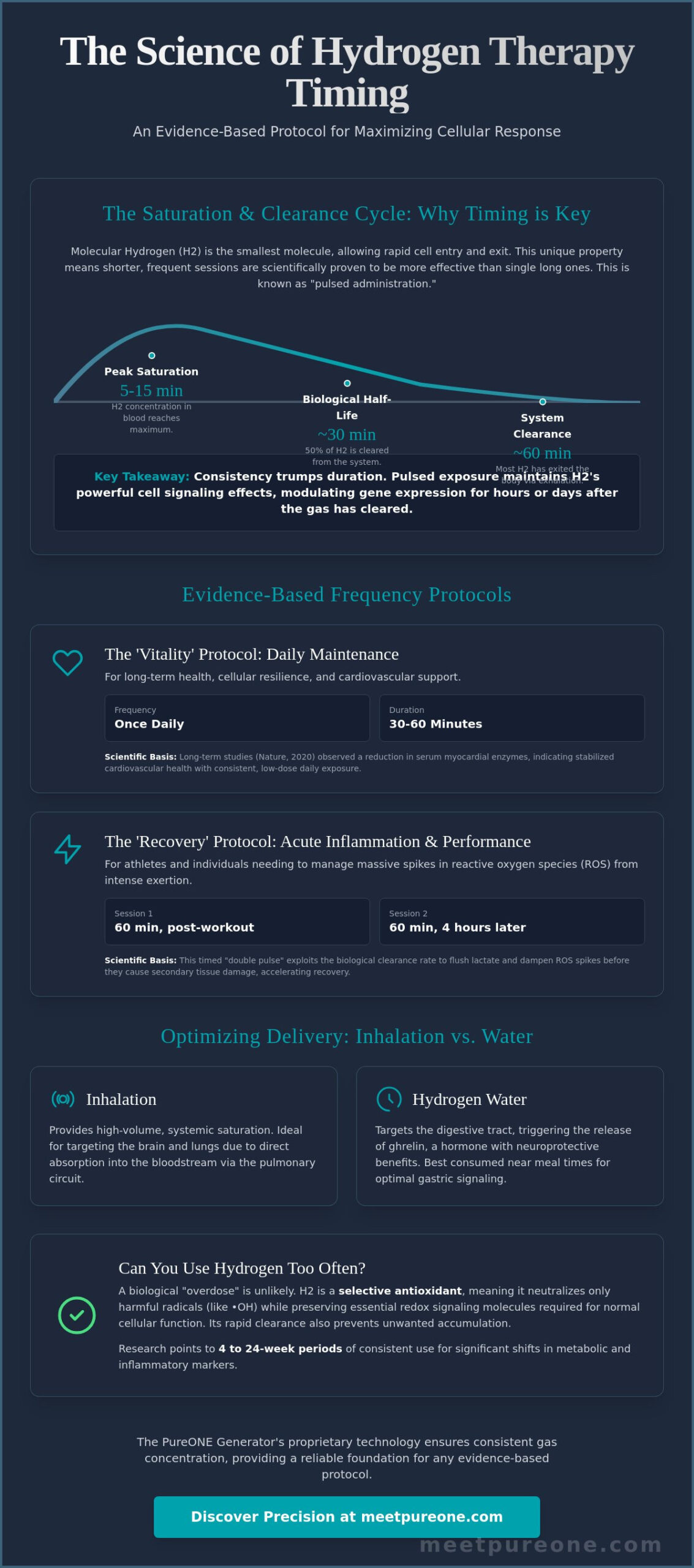
Clinical data indicates that H2 reaches peak concentration in the blood within 5 to 15 minutes of starting inhalation. However, the biological half-life is approximately 30 minutes. Within an hour, most of the gas has been cleared through exhalation. This rapid cycle is the most important factor in determining how often to use hydrogen therapy. To maintain therapeutic levels, we need to think in terms of "pulses" rather than one long, static session. Understanding this clearance rate helps you avoid wasting time on sessions that exceed your body’s saturation ceiling. If you want a deeper understanding of the molecule itself, our guide on what is molecular hydrogen and how it interacts with cells covers the peer-reviewed mechanics in detail.
Why Consistency Trumps Duration
Is a three-hour session better than three twenty-minute sessions? Science says no. Shorter, frequent "pulses" are more effective at maintaining steady-state antioxidant levels. This is because H2 does more than just neutralize radicals; it modulates gene expression. These epigenetic shifts can persist for hours or even days after the gas has left your system. By using the PureONE Molecular Hydrogen Generator for shorter intervals throughout the day, you keep these signaling pathways active without hitting a point of diminishing returns.
Inhalation vs. Ingestion: Frequency Differences
The way you take your H2 changes how your body uses it. Inhalation provides a high-volume systemic saturation that’s excellent for brain and lung health. Drinking hydrogen-infused water works differently. It targets the digestive tract and triggers the release of ghrelin, a hormone that offers neuroprotective benefits. For optimal results, time your water intake near meal times. This creates a specific gastric signal that complements the systemic saturation from your inhalation sessions.
Evidence-Based Frequency Protocols for Specific Wellness Targets
A comprehensive review of Clinical Studies on Hydrogen Therapy highlights that delivery methods and dosages vary widely across the medical field. To get started with the right setup, see our research-backed guide on using inhalation machines. Understanding these variables ensures you aren’t just guessing with your health.
The ‘Vitality’ Protocol: Daily Maintenance for Longevity
The ‘Recovery’ Protocol: Acute Inflammation and Performance
Athletes face a different challenge: massive spikes in reactive oxygen species (ROS) during intense exertion. The protocol here is more aggressive. We suggest a 60-minute session immediately after your workout, followed by a second session four hours later. This timing exploits the biological clearance rate to flush lactate and dampen ROS spikes before they cause secondary tissue damage. You can explore the science of hydrogen for athletic recovery to see how these markers change. If you’re ready to integrate this into your training, the PureONE Molecular Hydrogen Generator provides the consistent output needed for high-performance demands.
Identifying the Saturation Ceiling: Can You Use Hydrogen Therapy Too Often?
Can you actually overdo it? It’s a fair question. Most antioxidants follow a "U-shaped" curve where too much eventually becomes pro-oxidant. Hydrogen is different. It’s a selective antioxidant. This means it only neutralizes the most cytotoxic radicals, like the hydroxyl radical, while leaving beneficial signaling molecules untouched. Because it doesn’t interfere with your body’s natural redox signaling, a biological "overdose" is highly unlikely. It simply doesn’t have the capacity to suppress the healthy oxidative bursts your immune system needs. To understand the full biological basis for this selectivity, see our detailed breakdown of what is molecular hydrogen as a selective antioxidant and how it differs from conventional antioxidant supplements.
When deciding how often to use hydrogen therapy, the limiting factor isn’t toxicity; it’s time. Six-month safety data monitored 13 biochemical parameters and found no adverse alterations in liver or kidney function indexes. However, long sessions require the right gas mixture. The 66% Hydrogen and 33% Oxygen ratio is critical. This specific balance ensures you maintain optimal blood oxygenation while receiving a high therapeutic dose of H2. It prevents hypoxia, which can occur with pure hydrogen inhalation over extended periods. This ratio allows for much longer sessions without the risks associated with oxygen displacement.
Safety Profile of Long-Term H2 Inhalation
Managing ‘Herxheimer’ or Detox Responses
Some users report mild headaches or fatigue during their first week. Is this a side effect? Not exactly. It’s often a "cleanup" response as cells begin to shift their metabolic state and clear out accumulated oxidative debris. If you feel off, simply titrate your frequency. Start with 15 minutes and work your way up over several days. Ready to start your own journey with a device designed for safety? You can explore the PureONE Molecular Hydrogen Generator to see how consistent, safe dosing fits into your life.
Optimizing Your PureONE Schedule: A Practical Implementation Guide
How do you actually fit a clinical protocol into a busy Tuesday? It isn’t just about owning the machine; it’s about the rhythm you create. By integrating inhalation, hydrogen water, and topical applications, you build a comprehensive net of cellular protection. The PureONE Molecular Hydrogen Generator uses proprietary condenser technology to ensure gas concentrations remain stable throughout your session. This consistency is vital. Without it, you’re just guessing at your actual dosage. To see how these layers work together, you can compare hydrogen therapy for oxidative stress delivery methods to see what fits your lifestyle.
The 30-Day Vitality Template
Think of your first month as a cellular reset. We suggest a two-phase approach to help you master how often to use hydrogen therapy for long-term success. During Weeks 1 and 2, focus on a loading phase of 90 minutes daily. This initial period is specifically designed to lower malondialdehyde (MDA) levels, which 2023 clinical research identifies as a primary marker for systemic lipid peroxidation and oxidative debt. Once you’ve addressed this backlog, move to a maintenance phase in Weeks 3 and 4. Reducing your time to 45 or 60 minutes daily provides the necessary mitochondrial support to keep your baseline healthy.
Maximizing the PureONE Experience
Does timing matter for your brain? Absolutely. Using the 66/33 hydrogen-oxygen mix during work hours can sharpen cognitive focus without the crash of stimulants. It’s a steady, clean energy. To bridge the gaps between inhalation sessions, sip hydrogen-rich water throughout the day. This creates a 24/7 cycle of cellular protection that works from the inside out. Systemic inhalation supports your internal organs while localized topical application targets skin rejuvenation. It’s a synergistic loop that targets both systemic and localized oxidative stress. Ready to start your protocol? Get the PureONE Molecular Hydrogen Generator with a 365-day risk-free trial and see the difference for yourself.
Your Path to Sustained Vitality
You now have the technical framework to stop guessing and start optimizing. We’ve explored how the short biological half-life of H2 makes pulsed dosing the most effective way to maintain mitochondrial signaling. We also confirmed that the selective nature of molecular hydrogen makes the risk of a biological "overdose" virtually nonexistent. Determining how often to use hydrogen therapy becomes simple once you align your sessions with your body’s natural clearance cycle. It’s about consistency over intensity.
Ready to see what science-backed vitality feels like? Start your 365-day risk-free trial of the PureONE Hydrogen Generator. You’re just a few sessions away from a more resilient you.
Frequently Asked Questions
Is it safe to use molecular hydrogen therapy every single day?
Daily use is perfectly safe because molecular hydrogen acts as a selective antioxidant. Unlike other substances that can become pro-oxidants at high doses, H2 only neutralizes the most cytotoxic radicals like the hydroxyl radical. The FDA has categorized hydrogen-rich water as "Generally Recognized as Safe" (GRAS). Long-term clinical monitoring over six months has shown no adverse changes in liver or kidney biochemical markers, making it ideal for foundational daily support.
Can I use hydrogen therapy for more than an hour at a time?
You can absolutely extend your sessions beyond sixty minutes if you use the correct gas mixture. Using a precise 66% hydrogen and 33% oxygen ratio prevents the risk of hypoxia during long inhalation periods. This balance allows the body to stay fully oxygenated while receiving a high therapeutic dose of H2. While shorter pulses are highly efficient, longer sessions are often used in clinical trials for chronic systemic inflammation without any reported toxicity.
How long does it take to see results from daily hydrogen inhalation?
Timeline results vary based on your specific wellness targets. Acute benefits like reduced lactate buildup or improved post-exercise recovery can be felt almost immediately. However, clinical trials for chronic conditions often show significant symptomatic relief after a 4-week intervention. For metabolic shifts and deeper cellular changes, research suggests a 24-week period is needed to see substantial movement in markers like serum myocardial enzymes or lipid peroxidation markers.
Should I use hydrogen therapy in the morning or at night?
The best timing depends on your primary goal for how often to use hydrogen therapy. Morning sessions are excellent for cognitive focus and triggering metabolic signaling through ghrelin release. Evening use is often preferred for managing systemic inflammation and supporting overnight cellular repair. Many users find success with a split protocol, using inhalation in the morning for alertness and again in the evening for recovery and sleep quality.
What happens if I miss a day of hydrogen therapy?
Missing a day won’t cause any adverse effects or withdrawal symptoms. However, because H2 has a short biological half-life of approximately 30 minutes, your steady-state antioxidant levels will return to baseline fairly quickly. While some gene expression changes persist after the gas leaves your system, consistency is the key to maintaining long-term mitochondrial resilience. Simply resume your 30-day vitality protocol the next day to get back on track with your cellular health.
Disclaimer
The information provided by Pureffect and any of its products are for educational and informational purposes only and is not intended as medical advice. Individual results may vary, and no specific health outcomes are guaranteed. Always consult a qualified healthcare professional before starting any wellness practice or product.