
What if you could bypass the lingering ache of a high-intensity session without blocking your body’s natural muscle adaptations? You know the frustration of having a mind ready for the next interval while your legs are still heavy with DOMS. This is why many elite competitors are turning to hydrogen therapy for athletic recovery to bridge the gap between training and performance. It’s a method that moves beyond surface-level fixes by addressing the biochemical exhaust produced during extreme exertion.
In this 2026 research guide, we’ll explore how molecular hydrogen acts as a selective antioxidant to accelerate muscle repair and reduce downtime. We will dive into the specific data behind hydrogen therapy for athletic recovery, including recent findings on blood lactate management and mitochondrial protection. You’ll learn how to integrate these scientific protocols into your own routine to improve efficiency and return to the gym faster. By the end, you’ll understand why hydrogen therapy for athletic recovery is becoming the standard for athletes who value both immediate relief and long-term strength gains. Let’s look at the logic together and see if this fits your recovery routine.
Key Takeaways
- Understand the “antioxidant paradox” and why common supplements like Vitamin C might actually be hindering your muscle’s natural ability to adapt to training.
- Review the latest clinical evidence on hydrogen therapy for athletic recovery, specifically how molecular hydrogen influences blood lactate levels and the expression of FGF21 for better energy use.
- Master a practical protocol for timing your sessions, whether you need a pre-workout endurance boost or a post-workout repair strategy for localized fatigue.
- Discover why the 66/33 hydrogen-oxygen ratio is the emerging standard for safe, high-purity recovery at home without the need for clinical visits.
The Metabolic Cost of Training: Why Traditional Recovery Fails
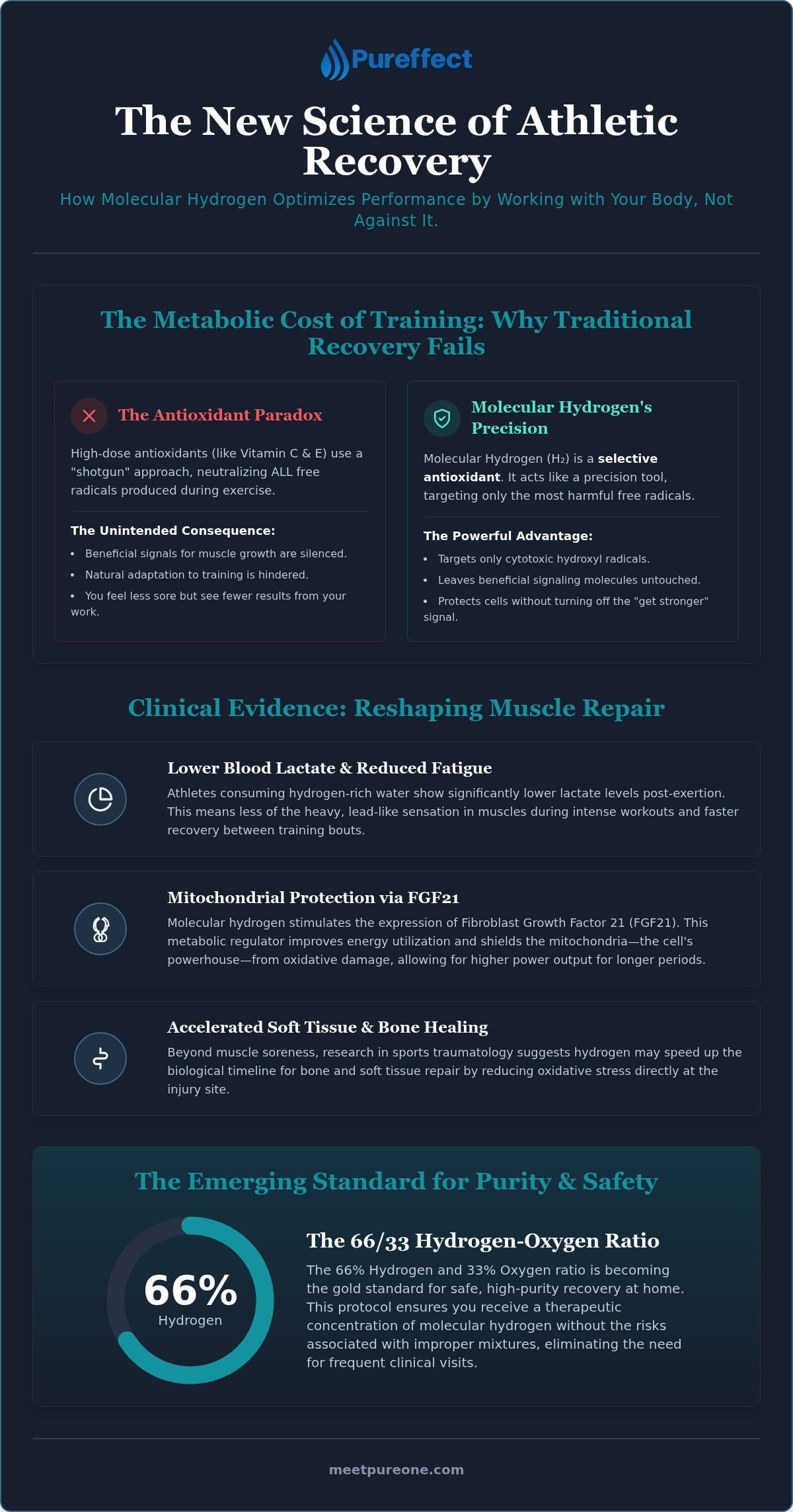
When you push your body to its limits, your cells pay a price. Every breath you take during a sprint and every muscle contraction during a lift creates Reactive Oxygen Species (ROS). These are natural byproducts of intense physical exertion. Think of them as metabolic exhaust. While some exhaust is normal, an overflow leads to oxidative stress that can damage your DNA and cell membranes. This is the hidden cost of every high-intensity session.
For decades, the standard response was to load up on high-dose antioxidants like Vitamin C or E. But here’s the catch. Scientists have identified an antioxidant paradox where these supplements can actually hinder muscle adaptation. They’re too blunt. By neutralizing all free radicals, they accidentally silence the biological signals that tell your muscles to grow bigger and stronger. You might be feeling less sore, but you’re also potentially seeing fewer results from your hard work.
Molecular hydrogen is the smallest molecule in the universe, capable of crossing the blood-brain barrier and entering mitochondria. This unique size allows it to go where other recovery tools cannot. It acts as a selective antioxidant, meaning it only targets the most harmful radicals while leaving your body’s beneficial signaling molecules alone. This precision is why Hydrogen therapy represents a massive shift in how we approach hydrogen therapy for athletic recovery.
The Paradox of Oxidative Stress in Athletes
Why is some inflammation actually good? It’s the trigger for hypertrophy. If you completely suppress the inflammatory response, you might be sabotaging your gains. The real villains are hydroxyl radicals. These are the primary drivers of cellular damage and serve no known beneficial purpose in the body. Hydrogen selectively neutralizes these cytotoxic radicals. It’s like having a precision laser instead of a shotgun. You protect the cells without turning off the “get stronger” signal your body needs after a workout.
Beyond Ice Baths and Ibuprofen
Traditional methods often focus on the surface. Ice baths constrict blood vessels to reduce swelling, but they don’t address the internal biochemical storm. Similarly, anti-inflammatory drugs can sometimes delay long-term tissue repair by interfering with the natural healing cycle. They mask the problem rather than solving it at the source.
Modern recovery is moving toward cellular resilience. Instead of just numbing the pain, we want to help the cell function better under pressure. Using a professional-grade tool like the PureONE Molecular Hydrogen Generator allows you to support this resilience right at home. It provides a way to flush out the metabolic waste that causes DOMS without blocking the pathways needed for genuine athletic progress.
Clinical Evidence: How Molecular Hydrogen Reshapes Muscle Repair
What does the data actually say about your recovery time? While the theory of selective antioxidants is compelling, the clinical results are what truly matter for performance. Recent narrative reviews from 2024 in the field of sports orthopaedics have shifted the focus toward how hydrogen influences metabolic markers. It isn’t just about “cleaning up” damage. It’s about changing how your body responds to stress. This is the core of hydrogen therapy for athletic recovery.
One of the most exciting findings involves Fibroblast Growth Factor 21 (FGF21). This protein acts as a metabolic regulator. Research suggests that molecular hydrogen stimulates FGF21 expression, which improves energy utilization and fatty acid metabolism. For an athlete, this means your mitochondria are better protected from oxidative damage during those final, bone-burning intervals. By shielding the “powerhouse” of the cell, you maintain higher power output for longer periods. You can see this in action in this Clinical Trial on Muscle Damage, which highlights how hydrogen improves power in elite competitors.
Lowering Blood Lactate and Reducing Fatigue
Have you ever felt that heavy, lead-like sensation in your legs mid-workout? That’s often tied to rising blood lactate levels. Studies have consistently shown that athletes who consume hydrogen-rich water before or during exercise exhibit significantly lower lactate levels post-exertion. This isn’t just a minor dip. It’s a measurable shift that allows for faster muscle function recovery between successive training bouts. For a deeper look at these specific protocols, check out The Science of Hydrogen Therapy for Athletic Recovery: A Research-Driven Guide. It explains why this metabolic “flush” is so effective.
Accelerating Soft Tissue and Bone Healing
Recovery isn’t always about muscle soreness. Sometimes, it’s about actual injury. In the world of sports traumatology, researchers are investigating how hydrogen influences fracture healing markers. By reducing the oxidative stress at the injury site, hydrogen may help speed up the biological timeline for bone and soft tissue repair. There’s also a growing interest in the neuroprotective effects of hydrogen for athletes in contact sports. It helps mitigate the secondary damage that occurs after a physical impact. If you’re looking to bring this level of support into your own routine, the PureONE Molecular Hydrogen Generator offers a professional-grade way to implement these findings at home.
Practical Protocols: Integrating Hydrogen into Your Post-Workout Routine
Knowing the science is one thing. Applying it to your training schedule is where the results happen. To maximize hydrogen therapy for athletic recovery, you need a strategy that matches your specific training load. Are you dealing with systemic inflammation after a marathon, or is it localized fatigue from a heavy squat day? Identifying your goal is the first step toward building a protocol that actually works.
Timing matters just as much as the dose. For endurance athletes, consuming hydrogen-rich water approximately 30 minutes before training can help buffer the initial oxidative stress spike. Post-workout, the focus shifts to repair and rehydration. By maintaining a consistent schedule, you help your body build long-term cellular resilience. This isn’t a “one and done” fix. It’s a foundational habit that supports your mitochondrial health over time.
Hydrogen-Rich Water for Metabolic Efficiency
Drinking hydrogen-infused water is perhaps the most convenient way to support your metabolism. Research involving elite fin swimmers showed that daily doses between 1,260 and 2,520 mL significantly improved recovery markers. This method is excellent for rehydration because the hydrogen molecule is small enough to penetrate tissues rapidly. If you’re unsure which delivery method fits your lifestyle, you can explore the Hydrogen Inhalation Machine vs. Water Bottle comparison to see the trade-offs in concentration and convenience.
Inhalation Therapy for Systemic Recovery
When you need to achieve higher concentrations of molecular hydrogen in the bloodstream, inhalation is the gold standard. This route is particularly effective for systemic recovery and addressing the mental “brain fog” that often follows intense competition. Current athletic research suggests session durations of 30 to 60 minutes to achieve therapeutic saturation. This systemic approach supports the nervous system, helping you transition from a high-stress “fight or flight” state back into a “rest and digest” recovery mode. For those ready to implement these high-concentration protocols, you can get started with the PureONE Molecular Hydrogen Generator to bring clinical-grade recovery into your home environment.
The 66/33 Standard: Optimizing Resilience with PureONE
Why settle for “good enough” when clinical research points to a specific standard? When we talk about hydrogen therapy for athletic recovery, the ratio of gases matters. PureONE produces a consistent mixture of approximately 66% molecular hydrogen and 33% oxygen. This isn’t a random choice. It’s the 66/33 Standard. This specific balance ensures you’re receiving a high therapeutic dose of hydrogen while maintaining the oxygen levels your body requires during a high-flow session.
Safety and purity go hand in hand. To achieve this, the PureONE Molecular Hydrogen Generator uses a proprietary stainless steel condenser. This component is critical for gas purity, ensuring that the mixture you inhale is clean and consistent. It’s about bringing the precision of a laboratory into your living room. By focusing on these specific ratios, you can replicate the environments found in the most successful clinical trials without leaving your home. It’s professional-grade recovery on your own terms.
Why the Hydrogen-Oxygen Balance Matters
When you’re inhaling gas at a high flow rate, your body still has a physiological need for supplemental oxygen. The 66/33 ratio mimics the most effective clinical research environments. This balance provides maximum safety and efficacy, allowing you to stay in a session for the recommended 30 to 60 minutes without concern. The PureONE provides professional-grade recovery without the need for expensive clinic visits or memberships. It’s a common-sense approach to high-performance health.
Bringing Professional-Grade Recovery Home
Elite training schedules don’t follow a 9-to-5 clock. Why should your recovery? Having 24/7 access to molecular hydrogen means you can treat systemic inflammation at 10 PM or prep your mitochondria at 5 AM. You can use the PureONE Molecular Hydrogen Generator for multi-modal recovery. This versatility is key for athletes who need more than just one way to heal. You can switch between inhalation for systemic support and topical applications for localized muscle issues.
We are a team of experts who are genuinely excited about this field. We want you to feel empowered in your own discovery. That’s why we offer a 365-day risk-free trial. It’s our commitment to evidence-based results and your long-term success. If you want to dig even deeper into the science of how this molecule works at the foundational level, explore What is Molecular Hydrogen? for a look at cellular health in 2026. The logic is simple, the results are documented, and the next step is yours to take.
Take Control of Your Cellular Resilience
Are you ready to bring this clinical-grade support into your own training routine? The PureONE is Canadian-manufactured to guarantee gas purity and delivers the precise 66% hydrogen and 33% oxygen therapeutic ratio discussed in the latest research. Because we believe in evidence-based results, we offer a 365-day risk-free trial so you can verify the logic for yourself. Shop the PureONE Molecular Hydrogen Generator today and start your journey toward faster repair and reduced downtime. Your next personal best is waiting.
Frequently Asked Questions
Does hydrogen therapy interfere with muscle hypertrophy or strength adaptations?
No, molecular hydrogen doesn’t block the training signals your muscles need to grow. While high-dose traditional antioxidants can accidentally blunt hypertrophy, hydrogen is a selective molecule. It only neutralizes the most damaging radicals. This allows your body’s natural adaptation process to continue uninterrupted. You get the strength gains you worked for without the excessive cellular damage that slows you down.
How soon after a workout should I use hydrogen therapy for maximum benefit?
You should aim to use it within 30 to 60 minutes after your session for optimal muscle repair. If your goal is endurance, drinking hydrogen-rich water 30 minutes before you start helps buffer lactate buildup. Consistency is the real key to success. Using it daily helps build the long-term cellular resilience needed to handle increasing training loads without burning out.
Can I use hydrogen inhalation and drink hydrogen water on the same day?
Absolutely. Many athletes use both methods to cover different recovery bases on the same day. Drinking hydrogen water is excellent for metabolic efficiency and rapid rehydration. Inhalation provides a higher concentration for systemic recovery and nervous system balance. They work together to provide a more comprehensive approach to hydrogen therapy for athletic recovery by addressing both internal and external stressors.
Is there clinical evidence that hydrogen therapy helps with DOMS (soreness)?
Yes, clinical trials have documented significant reductions in Delayed Onset Muscle Soreness (DOMS). Studies on elite athletes show lower levels of creatine kinase, which is a common marker of muscle damage. By targeting the hydroxyl radicals at the source, hydrogen helps you feel less “heavy” and move more freely. It’s a proven way to reduce the downtime between your hardest training blocks.
How long does a typical hydrogen inhalation session last for an athlete?
A typical session for an athlete lasts between 30 and 60 minutes. This timeframe is based on current research into how long it takes for the gas to reach therapeutic levels in the blood and tissues. It’s a perfect time to relax, meditate, or review your training notes. The goal is to allow your body enough time to reach a state of cellular saturation.
Is hydrogen therapy safe for long-term use in professional sports?
Current research suggests it is very safe for long-term use in professional sports. Molecular hydrogen is actually a natural byproduct of gut fermentation in the human body. There are no known toxic effects from higher doses or long-term administration. This makes it a sustainable tool for professionals who need to maintain peak performance year-round without the risk of pharmaceutical side effects.
Disclaimer
The information provided by Pureffect and any of its products are for educational and informational purposes only and is not intended as medical advice. Individual results may vary, and no specific health outcomes are guaranteed. Always consult a qualified healthcare professional before starting any wellness practice or product.