
Did you know that a surgical site infection can add an average of 8.1 days to your hospital stay? It is a sobering statistic from 2026 research that highlights the high stakes of the healing process. We all want to get back to our normal lives as quickly as possible. Yet, the reality of persistent swelling, low energy, and inflammatory pain often feels like a brick wall. You aren’t just looking to “get by”; you want to thrive during your convalescence.
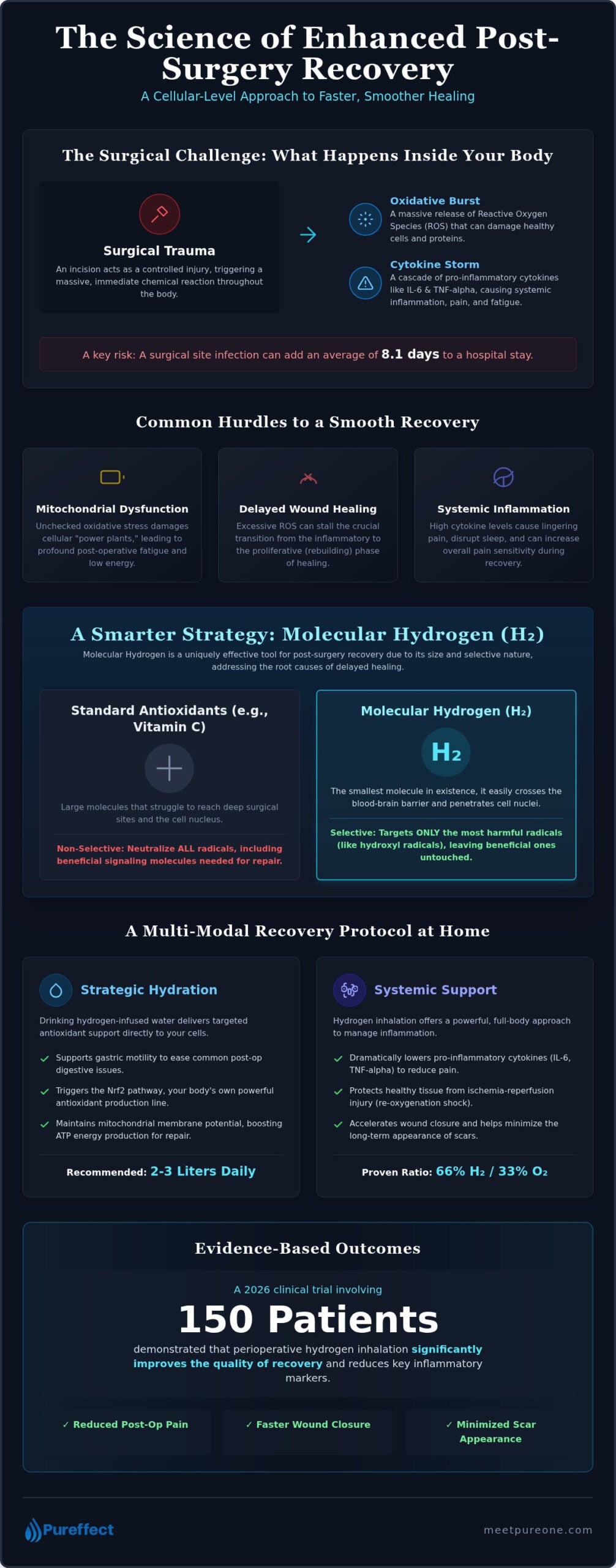
This guide shows you how to take control using evidence-based post-surgery recovery enhancement at home to neutralize the oxidative stress burst that follows tissue trauma. You’ll discover how specific cellular strategies can help manage post-op cytokines and accelerate tissue repair. Recent clinical trials involving 150 patients have already demonstrated that perioperative hydrogen inhalation significantly improves the quality of recovery and reduces inflammatory markers. We’re diving into the science of reduced downtime and optimal scar formation so you can partner with your body for a faster, smoother return to health. Are you ready to see what the latest research says about your recovery?
Key Takeaways
- Learn how to neutralize the “oxidative burst” that follows surgical trauma to achieve effective post-surgery recovery enhancement at home.
- Discover why hydrogen-infused water outpaces standard hydration by supporting gastric motility and easing post-op digestive issues.
- Explore the systemic power of a 66% hydrogen and 33% oxygen ratio to lower inflammatory cytokines and protect your cells during repair.
- Find out how to set up a multi-modal recovery station that combines inhalation and topical use for faster wound closure.
- See how 2026 clinical data supports non-pharmacological strategies to reduce pain and minimize the long-term appearance of scars.
The Biology of Healing: Oxidative Stress and Surgical Trauma
Surgery is a form of controlled trauma. The moment an incision is made, your body initiates a massive chemical reaction known as the oxidative burst. This is an immediate, localized release of Reactive Oxygen Species (ROS). While your immune system uses some ROS to fight off potential pathogens, an overproduction becomes a major hurdle. Excessive ROS damage healthy proteins and lipids, which can stall the transition from the inflammatory phase to the proliferative phase. Understanding The Biology of Wound Healing is essential for anyone looking to optimize their results. If these radicals aren’t managed, wound closure slows down and the risk of prominent scarring increases.
Have you felt that heavy, bone-deep exhaustion after a procedure? It isn’t just the anesthesia wearing off. This fatigue often stems from mitochondrial dysfunction. When the oxidative burst is left unchecked, ROS can damage the “power plants” of your cells. This drop in cellular energy makes even small movements feel like a marathon. To combat this, researchers are focusing on selective antioxidant therapy. Unlike standard vitamins that neutralize all radicals, selective antioxidants target only the most cytotoxic (harmful) ones. This allows beneficial signaling molecules to continue the repair process while protecting your cellular integrity.
Ischemia-Reperfusion Injury in Surgery
During many procedures, blood flow to specific tissues is temporarily restricted. This is called ischemia. When the surgeon finishes and blood flow returns, a second wave of damage occurs known as reperfusion injury. This sudden surge of oxygen creates a massive spike in hydroxyl radicals. Research indicates that neutralizing these specific radicals can protect surrounding healthy tissue from “re-oxygenation shock.” Standard oral antioxidants often struggle to reach these deep surgical sites in high enough concentrations. This is why systemic strategies are becoming a cornerstone of post-surgery recovery enhancement at home.
The Cytokine Response and Systemic Inflammation
The trauma of surgery isn’t just local; it’s a full-body event. Your system releases a cascade of pro-inflammatory cytokines like IL-6 and TNF-alpha. These markers are responsible for the systemic inflammation that causes lingering pain and disrupts your sleep cycles. High cytokine levels can actually increase your sensitivity to pain, making the recovery period feel much more intense. Exploring the science of molecular hydrogen reveals its unique ability to modulate these specific inflammatory markers. By lowering the “volume” of this cytokine storm, you can achieve a more effective post-surgery recovery enhancement at home and get back to your routine faster.
Strategic Hydration: Upgrading Post-Surgery Fluid Intake
Is plain water enough? Not quite. After a major procedure, your body enters a high-demand state where standard fluid intake often falls short. Strategic Hydration is crucial because your tissues require significantly more metabolic support to rebuild. Beyond just preventing thirst, the right kind of hydration can tackle one of the most common post-op hurdles: opioid-induced constipation. Hydrogen-infused water has been shown to support gastric motility, helping your digestive system wake up after anesthesia. This is a simple but vital part of post-surgery recovery enhancement at home.
Molecular hydrogen does more than just hydrate. It acts as a gaseous signaling molecule. This means it triggers the Nrf2 pathway, which is your body’s own internal antioxidant production line. During the first 14 days post-op, timing is everything. Drinking hydrogen-rich water consistently throughout the day ensures a steady supply of these signaling molecules to your stressed cells. It’s a proactive way to keep the inflammatory response in check while your body focuses on closing the wound.
Molecular Hydrogen vs. Standard Antioxidants
Why choose hydrogen water over a Vitamin C supplement? It comes down to size. H2 is the smallest molecule in existence. This allows it to effortlessly cross the blood-brain barrier and penetrate cell nuclei where other antioxidants simply cannot go. While Vitamin C and E can sometimes neutralize beneficial radicals, hydrogen is a selective scavenger. It only goes after the most damaging radicals. This same logic is explored in athletic recovery research, where reducing oxidative stress without blunting the body’s natural adaptations is key. The same principles apply to your surgical repair.
Supporting Mitochondrial Membrane Potential
Your mitochondria rely on a specific electrical charge to produce energy. Surgical trauma can disrupt these battery levels. Hydrogen-rich water helps maintain this membrane potential, leading to an increase in ATP production. You need this ATP for wound protein synthesis. To get started, you can easily prepare this water at home. Using a dedicated device like the PureONE generator allows you to infuse your drinking water with high concentrations of H2 in just a few minutes. Aim for 2-3 liters daily during those first two weeks to keep your cellular energy levels optimized. This targeted approach is a cornerstone of effective post-surgery recovery enhancement at home.
Inhalation Therapy: Managing Inflammation at the Source
Safety is a top priority when you are dealing with limited mobility. Because the gas is delivered through a simple nasal cannula, it is incredibly easy for patients who are unable to sit up or move frequently. You don’t have to worry about complicated setups or heavy equipment while you are trying to rest. This method allows for consistent, passive therapy that works while you sleep or relax, making it a stress-free addition to any recovery plan.
Systemic Distribution and Tissue Saturation
How fast does it work? Inhalation allows hydrogen to reach your entire circulatory system within minutes. This rapid distribution is a game-changer for orthopedic surgery recovery. If you’re dealing with deep joint inflammation after a hip or knee replacement, you need a solution that reaches those hard-to-access tissues. Using the PureONE Molecular Hydrogen Generator ensures you have a consistent, high-concentration source right at your bedside. It provides the systemic saturation necessary to reach every cell in your body, regardless of where the surgical site is located. This comprehensive approach is what makes it a vital part of post-surgery recovery enhancement at home.
Neurological and Psychological Recovery
Have you ever experienced “post-op fog”? That hazy, disconnected feeling is often caused by neuro-inflammation triggered during major procedures. Hydrogen inhalation is unique because the molecules are small enough to cross the blood-brain barrier effortlessly. Research suggests this can reduce cognitive decline and help stabilize your mood during the stressful weeks of convalescence. Once your surgical site has healed, many people choose to integrate this into a wider preventative health routine to maintain cellular resilience. It is about more than just fixing a wound; it is about protecting your brain and your future health. To begin optimizing your own cellular repair, you can invest in the PureONE generator today.
Integrating PureONE into Your Home Recovery Protocol
Ready to turn your living room into a high-tech healing suite? Setting up a “Molecular Recovery Station” is simpler than it sounds. Place your generator where you spend the most time, likely your bedside or a comfortable recliner. By keeping the device within reach, you ensure that post-surgery recovery enhancement at home becomes a seamless habit rather than a chore. Consistency is your best friend during these early weeks of repair.
A multi-modal approach is the secret to total tissue saturation. You don’t have to choose just one method. Start your morning with a glass of hydrogen-rich water to prime your gut. Follow this with a 30-minute inhalation session to address the systemic inflammation we discussed earlier. In the afternoon, use the topical mode for localized support. This creates a “Home Recovery Hub” that addresses healing from the inside out and the outside in.
How do you know it’s working? It’s helpful to track your progress daily. Focus on these three metrics:
- Sleep Quality: Are you resting more deeply as neuro-inflammation subsides?
- Swelling Reduction: Is the puffiness around your incision site visibly decreasing?
- Energy Levels: Do you feel less of that “post-op crash” in the late afternoon?
As you move past the 14-day mark, your focus shifts from acute repair to long-term cellular maintenance. Keeping your generator active helps prevent the minor inflammatory spikes that can occur as you return to your normal physical activity. It’s about maintaining that cellular resilience for the long haul.
Practical Application: Topical and Localized Support
Hydrogen water isn’t just for drinking. Once your surgeon gives the “okay,” you can use hydrogen-infused water for gentle wound site cleaning. Research suggests that H2 modulates collagen, which is critical for minimizing scar tissue formation. It helps the skin knit back together without the excessive fibrosis that leads to heavy scarring. If you are struggling with the joint stiffness that often follows surgery, the PureONE’s multiple modes can help you regain your range of motion more comfortably.
The PureONE Advantage for Post-Op Patients
We believe in transparency and your right to verify the science yourself. That is why we offer a 365-day risk-free trial. It acts as a safety net, allowing you to focus on your health without the pressure of a quick decision. Our proprietary stainless steel condenser ensures gas purity, so you know exactly what you are putting into your body. Ready to take the next step toward better living? You can view the PureONE system and start your recovery journey today.
Take Control of Your Healing Journey
Recovery doesn’t have to be a passive waiting game. By addressing the oxidative burst at a cellular level, you can actively shorten your downtime and improve the quality of your repair. We have explored how strategic hydration and inhalation therapy target inflammatory cytokines directly; this provides a clear path for post-surgery recovery enhancement at home. Why settle for a slow, painful convalescence when the research points toward a more resilient way to heal?
The PureONE Molecular Hydrogen Generator is your partner in this process. It’s manufactured in Canada for medical-grade consistency and is even endorsed by Howie Mandel. We want you to feel completely confident in your discovery, which is why we offer a 365-day risk-free trial. You have a full year to verify the logic and see the results for yourself in your own environment.
Are you ready to give your body the support it deserves? Accelerate your recovery with the PureONE Molecular Hydrogen Generator and start feeling like yourself again. Your journey to better living starts with a single, focused breath. We’re excited to help you move forward.
Frequently Asked Questions
Is molecular hydrogen therapy safe to use immediately after surgery?
Yes, molecular hydrogen is considered safe for immediate use, though you should always consult your surgeon first. Because it is a selective antioxidant, it doesn’t interfere with the body’s essential signaling processes. A 2026 clinical trial involving 150 patients demonstrated that perioperative inhalation actually improved recovery quality without adverse effects. It helps manage the initial oxidative burst that occurs right after the first incision.
How many times a day should I use hydrogen inhalation during recovery?
Most recovery protocols suggest two to three sessions of 30 to 60 minutes each day. This frequency helps maintain systemic tissue saturation during the critical first 14 days of repair. Consistent use is a key part of post-surgery recovery enhancement at home. Since the delivery via nasal cannula is passive, you can easily fit these sessions into your rest periods or while sleeping.
Can I use hydrogen-infused water to take my post-op medications?
You can use hydrogen-infused water to take your medications just like regular water. It is simply purified water with dissolved H2 gas. Interestingly, its impact on gastric motility might even help your body process oral medications more comfortably. This is particularly helpful if you are dealing with the digestive slowdown often caused by anesthesia or pain management prescriptions.
What is the difference between hydrogen water and regular distilled water for healing?
Distilled water is simply pure, but it lacks the therapeutic gas needed to neutralize harmful radicals. Hydrogen-infused water acts as a functional fluid that triggers the Nrf2 pathway. While regular water prevents dehydration, hydrogen water actively supports mitochondrial membrane potential. This increase in cellular energy is vital for the protein synthesis required to close surgical wounds.
How does the 66/33 hydrogen-oxygen ratio benefit my recovery specifically?
This specific 66/33 ratio provides a balanced delivery of therapeutic hydrogen and life-sustaining oxygen. It ensures your cells have the oxygen required for metabolic repair while the hydrogen manages the inflammatory cytokine response. This dual-action approach is specifically designed to support respiratory health and cellular resilience during periods of low physical activity. It is a robust standard for home recovery.
Does molecular hydrogen help with post-surgical scarring?
Research indicates that molecular hydrogen helps minimize scarring by modulating collagen production. By reducing excessive oxidative stress at the wound site, it prevents the overgrowth of fibrous tissue that leads to thick scars. This is a significant benefit for those pursuing post-surgery recovery enhancement at home who are concerned about long-term aesthetic outcomes. It helps the skin heal more smoothly.
Disclaimer
The information provided by Pureffect and any of its products are for educational and informational purposes only and is not intended as medical advice. Individual results may vary, and no specific health outcomes are guaranteed. Always consult a qualified healthcare professional before starting any wellness practice or product.