
Did you know that a mere 1% improvement in your flow-mediated dilation can reduce your future cardiovascular risk by as much as 13%? It’s a striking statistic from recent heart health meta-analyses. If you’re looking for natural ways to improve circulation, this data proves that even small, targeted changes to your vascular health can yield massive long-term dividends. It is about more than just “moving more”; it is about how your body handles stress at a cellular level.
You’re likely here because you’re tired of the nagging chill in your hands or that heavy, cramping feeling in your legs during a simple walk. It’s frustrating when your body feels like it’s operating on a delay. We’ve all been there, wondering why the standard advice doesn’t always seem to do the trick. The good news is that science has moved past simple plumbing metaphors. We now know that blood flow is a molecular game. This 2026 guide focuses on the “why” behind your vascular health.
We’ll break down the latest research on inorganic nitrates and the specific 600 mg threshold needed for real results. You’ll also learn how “vascular gymnastics” like thermal conditioning and molecular hydrogen can protect your microvasculature. It’s time to move beyond the basics and give your body the research-backed support it deserves.
Key Takeaways
- Discover why the endothelium acts as the “brain” of your blood vessels and how to support this critical lining using natural ways to improve circulation.
- Learn how “vascular snacks”—short, two-minute movement breaks—can prevent the dangerous drop in shear stress that happens during prolonged sitting.
- Understand the science of “vascular gymnastics” through thermal conditioning protocols that boost nitric oxide without overworking your heart.
- Explore how molecular hydrogen acts as a selective shield for your microvasculature, protecting the delicate glycocalyx from oxidative damage.
- Get a clear, research-backed daily protocol designed to optimize your blood viscosity and flow through strategic hydration and timing.
Beyond the Pump: Why Your Microcirculation Needs Molecular Support
Most people think of circulation as a simple plumbing job. The heart pumps, the blood flows, and the body works. But it’s actually a sophisticated dual system. You have the macrocirculation, which are the big arterial highways, and the microvascular circulation, the tiny side streets where the real work happens. While your heart provides the pressure, your endothelium acts as the “brain” of the operation. This single layer of cells lines every vessel, sensing blood flow and deciding when to dilate or constrict. It’s the most important factor when looking for natural ways to improve circulation.
Why does this matter in 2026? Because we’ve realized that vascular resilience is a molecular challenge. When oxidative stress takes over, it damages the endothelial glycocalyx. This is a delicate, gel-like shield that protects your vessel walls. When it breaks down, your blood becomes “sticky,” a state known as high blood viscosity. This makes your heart work harder to push blood through narrowed, resistant paths. This is why modern research focuses on molecular support to neutralize selective reactive species without blunting healthy signaling.
The Role of Nitric Oxide in Vasodilation
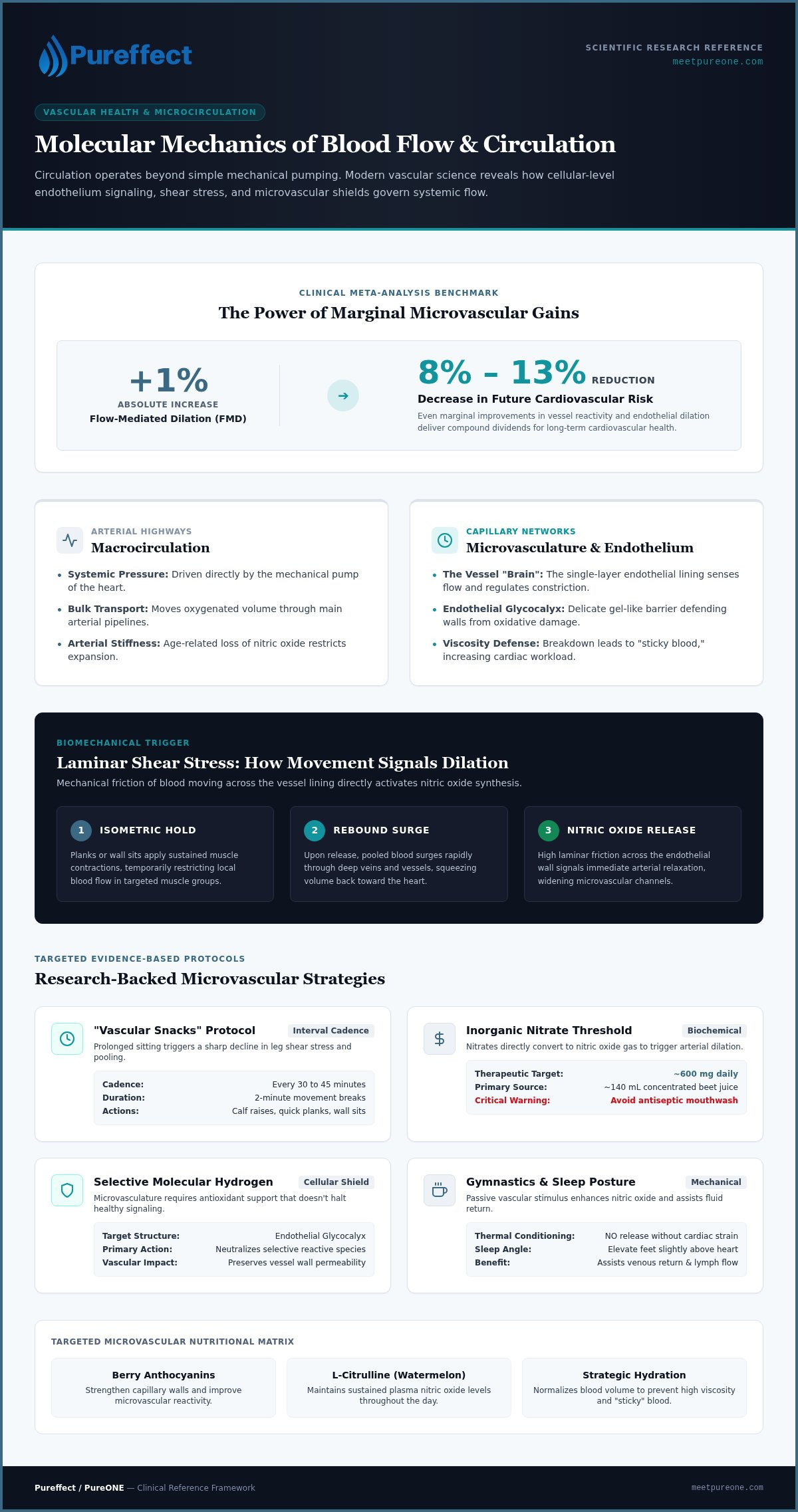
Nitric oxide is the “open sesame” signal for your vessels. It tells them to relax and expand. Research shows that as we age, our natural production of this gas drops significantly. This leads to arterial stiffness, which drains your energy because your tissues aren’t getting oxygen efficiently. Improving flow-mediated dilation (FMD) is key. Even a 1% absolute increase in FMD corresponds to an 8% to 13% decrease in future cardiovascular events. Finding natural ways to improve circulation often starts with restoring this vital signaling molecule.
Silent Signs of Micro-Vascular Decline
How do you know if your capillaries are struggling? You might feel “heavy legs” after a short walk or notice your skin looks dull. These are often signs that your micro-vessels aren’t keeping up with demand. Blood viscosity refers to the thickness and stickiness of your blood. High viscosity increases the load on your heart and slows down wound healing. By addressing the molecular health of your blood, you ensure that these tiny vessels remain open and functional, supporting everything from your brain to your toes.
Foundational Lifestyle Habits for Enhanced Blood Flow
Is your daily walk enough? While steady-state cardio is great, your vessels thrive on a specific mechanical stimulus called laminar shear stress. This is the friction of blood moving across the vessel lining, which triggers the production of protective molecules. When you’re exploring natural ways to improve circulation, you have to look beyond the heart rate. You need to consider how your lifestyle choices directly influence the “slipperiness” of your blood and the flexibility of your arteries. Simple practices to improve blood circulation naturally, such as strategic hydration, play a massive role here. Proper water volume ensures your blood doesn’t become too viscous, making it easier for your heart to maintain steady pressure without overexertion.
Isometric Exercise and Vascular Shear Stress
Have you ever tried a wall sit or a plank? These isometric holds do more than build core strength. When you hold a muscle contraction, you temporarily restrict blood flow to that area. The magic happens when you release. This creates a “rebound” effect, sending a surge of blood through the vessels and creating significant shear stress. This process helps deep veins squeeze blood back toward the heart. For office workers, interrupting sedentary time every 30 to 45 minutes with just two minutes of calf raises or a quick plank can prevent the sharp decline in leg circulation that leads to heavy, swollen feet.
Sleep posture is another overlooked tool. Elevating your feet slightly above your heart level during rest can use gravity to assist venous return and lymphatic drainage. It’s a small adjustment that yields big results for morning vitality.
Nutritional Vasodilators: Beets, Cocoa, and Beyond
Your diet acts as a chemical factory for your blood vessels. To see a real change, aim for a therapeutic threshold of approximately 600 mg of inorganic nitrates daily. You’ll find this in about 140 mL of concentrated beetroot juice. This nitrate converts into nitric oxide, which helps your arteries relax. Don’t forget the power of specific berry anthocyanins; these compounds have been shown to strengthen capillary walls and improve microvascular reactivity. Adding L-citrulline from foods like watermelon can further support sustained nitric oxide levels throughout the day.
One surprising tip? Skip the antiseptic mouthwash. It kills the oral bacteria needed to convert those dietary nitrates into blood-pumping nitric oxide. While these habits form your base, adding molecular hydrogen can provide that extra layer of cellular protection against the oxidative stress mentioned earlier. It is one of the most promising natural ways to improve circulation by keeping the vessel lining resilient and clear.
Advanced Natural Modalities: Heat, Cold, and Molecular Hydrogen
If you have mastered the basics of movement and nutrition, it is time to look at environmental stressors. These are the advanced natural ways to improve circulation that train your vessels from the inside out. Ever tried deep diaphragmatic breathing? It isn’t just for relaxation. Each breath acts as a mechanical pump for your lymphatic system, assisting the return of fluid that your veins can’t handle alone. But for those looking for a true “vascular workout,” the answer lies in temperature and molecular signaling.
Contrast Therapy: The Vascular Gym
Think of your blood vessels as muscles that need to be flexed. When you step into cold water (≤15°C), your limbs experience a 40% to 49% reduction in blood velocity due to acute vasoconstriction. Once you exit and warm up, your vessels dilate rapidly. This shift creates a massive surge of shear stress, which is exactly what you need to maintain arterial elasticity and capillary density. Regular heat exposure, like sauna use 4 to 7 times weekly, has even been linked to a 63% lower risk of sudden cardiac death. Curious about how this stacks up against other tools? Check out our guide on Hydrogen Therapy vs. Infrared Sauna to see which fits your routine.
Molecular Hydrogen: A New Frontier for Circulation
While heat and cold work on the mechanical side, molecular hydrogen (H2) addresses the chemical environment. One of the biggest hurdles to good flow is systemic inflammation. High-dose traditional antioxidants often fail because they neutralize everything, including the signals your body needs to grow new vessels. Molecular hydrogen is different. It is a selective antioxidant that targets only the most destructive radicals, like hydroxyl. In clinical trials, acute H2 ingestion improved flow-mediated dilation from 6.80% to 7.64% within just 30 minutes. It’s a next-generation approach to natural ways to improve circulation.
The PureONE generator makes this advanced support accessible at home. It delivers a consistent 66% hydrogen and 33% oxygen output, ensuring your cells get the specific ratio they need to thrive. If you’re wondering What is Molecular Hydrogen? and how it supports your vascular resilience, the answer lies in its ability to reduce blood viscosity without interfering with your body’s natural signaling. Ready to upgrade your vascular health? You can find the PureONE generator here to start your own research-backed protocol.
Designing Your Daily Circulation Protocol
Information is only as good as its application. How do you turn these natural ways to improve circulation into a sustainable habit? It starts by viewing your day as a series of opportunities for vascular support. You don’t need hours of free time. You just need a methodical approach that addresses both the mechanical and molecular needs of your vessels. By structuring your day around specific “vascular checkpoints,” you can maintain the laminar shear stress discussed earlier and keep your blood viscosity in check.
The 10-Minute Morning Vascular Flush
Your body wakes up in a state of relative dehydration and higher oxidative stress. A structured morning flush resets your system in three simple steps:
- Step 1: Drink 16oz of mineralized water immediately. This supports blood volume and helps manage blood viscosity from the start.
- Step 2: Spend three minutes on dry brushing or light dynamic stretching. This provides the mechanical stimulus your capillaries need to wake up.
- Step 3: Inhale molecular hydrogen to neutralize the “morning surge” of reactive oxygen species that can stiffen arteries.
Mid-day is about breaking the sedentary trap. Clinical studies show that interrupting sitting every 30 to 45 minutes with just a 2-minute bout of walking or calf raises prevents the acute decline in lower-extremity shear stress. Think of these as “vascular snacks” for your legs. In the evening, focus on recovery. Use gravity by elevating your feet for 15 minutes while finishing your final H2 session. This assists venous return and prepares your microvasculature for the repair work that happens during deep sleep.
Long-Term Tracking and Consistency
How do you know if it’s working? Look for tangible markers over the next 30 days. Are your hands and feet consistently warmer? Is your mental fog lifting? You can even use a simple thermometer to track the baseline temperature of your extremities. This data-driven approach is part of a larger trend of investing in preventative health at home. While these natural ways to improve circulation are powerful, always consult with a professional to monitor your progress. Your journey toward better flow is a partnership between advanced home tools and expert guidance.
Take Control of Your Cellular Flow
Optimizing your blood flow is no longer a mystery of “plumbing.” By focusing on the health of your endothelium and managing blood viscosity, you’re addressing the root causes of vascular decline. You’ve seen the data. Whether you are hitting specific nitrate thresholds or using thermal stress to flex your arteries, these natural ways to improve circulation are within your reach every day. It is about consistency and choosing tools that work with your body’s natural signaling rather than against it.
If you’re ready to add molecular support to your routine, the PureONE Molecular Hydrogen Generator is a powerful partner. Manufactured with high-grade stainless steel in Canada and endorsed by health experts and public figures like Howie Mandel, it delivers the cellular support your vessels need. You can experience the vascular benefits of the PureONE Molecular Hydrogen Generator today with a 365-day risk-free trial. Your vessels are the highways of your life. Give them the maintenance they deserve and start feeling the difference. You’ve got this.
Common Questions About Vascular Health
How can I improve circulation in my legs naturally?
You can use natural ways to improve circulation in your legs by implementing structured walking protocols and frequent movement breaks. The 2026 ACC/AHA guidelines highlight Supervised Exercise Therapy as a cornerstone for lower extremity health. This involves three sessions weekly for at least 12 weeks to stimulate microcirculatory perfusion. Interrupting long periods of sitting every 30 minutes with brief calf raises also prevents the sharp decline in shear stress that leads to heavy, swollen legs.
What are the best vitamins or supplements for blood flow?
What are the best vitamins or supplements for blood flow?
Hydration is critical because it directly impacts your blood viscosity. When you are dehydrated, your blood becomes “stickier” and harder to pump, which increases the workload on your heart. Drinking mineralized water helps maintain adequate plasma volume, ensuring that your blood remains fluid enough to reach the smallest capillaries in your microvasculature. It is a foundational step in any protocol designed to support long-term vascular resilience and healthy waste exchange at the cellular level.
How long does it take to see results from natural circulation methods?
Timing depends on the method you choose. Some effects are nearly immediate; for instance, clinical trials show that drinking hydrogen-infused water can improve flow-mediated dilation within just 30 minutes. However, structural improvements like increased capillary density or better arterial elasticity usually require consistency over 12 weeks. Results from thermal conditioning or structured walking protocols typically peak after three months of regular practice, making long-term adherence essential for lasting cardiovascular change.
Is molecular hydrogen therapy safe for daily use?
Yes, molecular hydrogen is a safe, selective gaseous agent for daily wellness. Unlike traditional supplements that may have a “pro-oxidant” effect in high doses, H2 only reacts with the most harmful reactive species. Devices like the PureONE generator provide a consistent 66% hydrogen and 33% oxygen output. This specific ratio supports cellular health and reduces systemic inflammation without the risk of building up toxic levels in the body, making it ideal for long-term use.
Do compression socks actually fix the root cause of poor circulation?
Compression socks are a helpful mechanical aid for assisting venous return, but they don’t address the underlying molecular causes of poor flow. They work by squeezing blood back toward the heart, which is excellent for managing swelling. However, they don’t improve endothelial function or reduce the oxidative stress that makes blood vessels stiff. For a true “root cause” fix, you should focus on natural ways to improve circulation that restore your body’s internal signaling and vessel flexibility.
Disclaimer
The information provided by Pureffect and any of its products are for educational and informational purposes only and is not intended as medical advice. Individual results may vary, and no specific health outcomes are guaranteed. Always consult a qualified healthcare professional before starting any wellness practice or product.