
What if the secret to ending chronic pain isn’t found in a pill bottle, but inside your own cells? It’s exhausting to feel like you’re just masking symptoms while the underlying fire of inflammation keeps burning. You want to move freely again without the nagging fear of medication dependency hanging over your head. That’s why more people are looking for non-pharmaceutical pain relief options that actually address the biological “why” behind their discomfort.
We agree that true recovery shouldn’t come with a list of side effects. A 2025 clinical trial focused on hydrogen inhalation for fibromyalgia patients found that consistent therapy helped regulate the body’s internal antioxidant response. This research highlights a shift toward cellular resilience rather than chemical suppression. In this guide, you’ll discover evidence-based alternatives that target the roots of discomfort to reduce systemic inflammation. We’ll show you how to build a sustainable, drug-free recovery plan that focuses on improved daily mobility and long-term health.
Key Takeaways
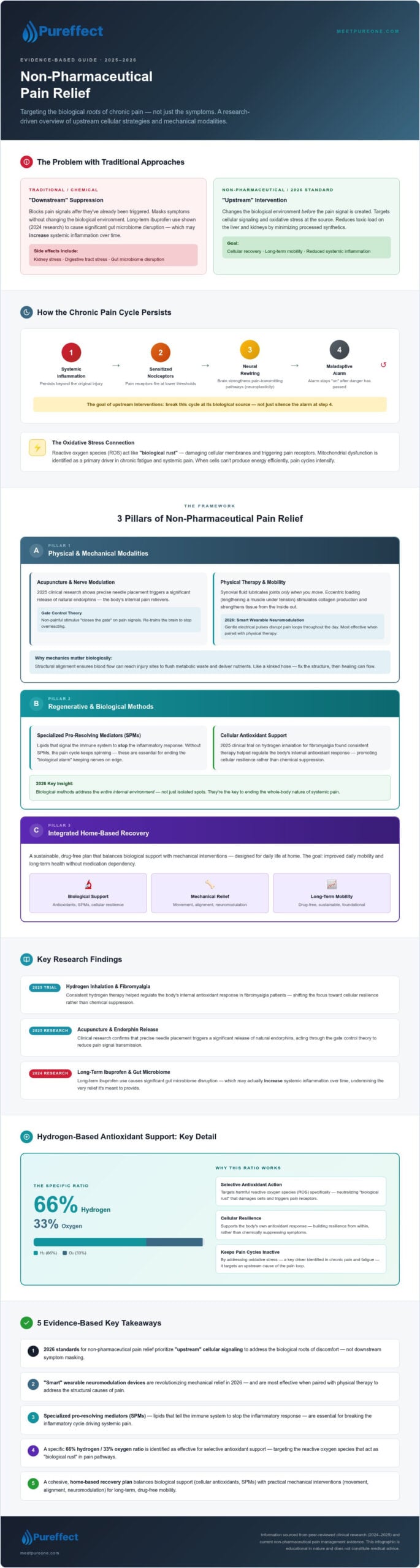
- Understand why 2026 standards for non-pharmaceutical pain relief options prioritize “upstream” cellular signaling to address the biological roots of discomfort.
- Discover how “smart” wearable neuromodulation devices are revolutionizing mechanical relief when they’re paired with physical therapy.
- Learn why specialized pro-resolving mediators (SPMs) are the key to successfully ending the body’s inflammatory cycle.
- Explore why a specific 66% hydrogen and 33% oxygen ratio is so effective for selective antioxidant support.
- Build a cohesive, home-based recovery plan that balances biological support with practical mechanical interventions.
What defines a non-pharmaceutical approach to pain?
Modern pain management is undergoing a massive shift. In 2026, the focus has moved from simply silencing symptoms to regulating cellular signaling. Traditional methods often rely on chemical masking, which works “downstream” to block pain signals after they’ve already been triggered. By contrast, current non-pharmaceutical pain management approaches prioritize “upstream” interventions. These methods aim to change the biological environment that creates the pain signal in the first place. This shift doesn’t just provide relief; it significantly reduces the toxic load on your liver and kidneys by minimizing the need for processed synthetics.
Pain as a Biological Signal
Your nervous system is an expert at interpreting data, but it isn’t always right. Acute pain serves as a vital protective alarm, while chronic pain is often maladaptive, meaning the alarm stays on long after the danger has passed. When systemic inflammation persists, it sensitizes your nociceptors, or pain receptors, making them fire at lower thresholds. Neuroplasticity in chronic discomfort is the brain’s ability to reorganize itself by strengthening the neural pathways that transmit pain signals.
The Limitations of Traditional NSAIDs
Relying on pills often comes with a hidden cost. Research from 2024 has shown that long-term ibuprofen use can cause significant gut microbiome disruption, which may actually increase systemic inflammation over time. While these drugs offer temporary relief, they often cause localized stress on the kidneys and digestive tract. Exploring non-pharmaceutical pain relief options allows you to focus on cellular recovery as a long-term mobility strategy. You aren’t just hiding the problem; you’re changing the biological landscape. High-quality tools like the PureONE support this by targeting the oxidative stress that keeps pain cycles active, helping you move away from masking and toward foundational health.
Physical and Mechanical Modalities for Targeted Relief
Acupuncture and Nerve Modulation
Acupuncture isn’t just about needles. It’s about communication. Clinical research from 2025 shows that precise needle placement triggers a significant release of natural endorphins, the body’s internal pain relievers. This works through the gate control theory. Simply put, your nerves can only carry so much information at once. By providing a non-painful stimulus, you effectively “close the gate” on pain signals. These methods essentially re-train your brain to stop overreacting to chronic signals. For those interested in the science, NIH research on complementary pain relief methods provides a deep dive into how these modalities interact with the central nervous system.
Physical Therapy and Functional Mobility
You’ve likely heard that “motion is lotion.” It’s more than a catchy phrase; it’s a biological fact. Synovial fluid, which lubricates your joints, only circulates when you move. For those struggling with daily movement, exploring Home Remedies for Joint Stiffness can be a game-changer. Physical therapists now use eccentric loading, which involves lengthening a muscle under tension, to successfully treat chronic tendon pain. This process stimulates collagen production and strengthens the tissue from the inside out. In 2026, we are also seeing the rise of smart wearable neuromodulation devices that provide gentle electrical pulses to disrupt pain loops throughout the day. While these tools manage the mechanical side, supporting your recovery with a molecular hydrogen strategy can help reduce the underlying inflammation that makes movement difficult in the first place.
Regenerative and Biological Methods for Systemic Support
Why does some pain feel like it’s everywhere? It’s often because your body is stuck in a cycle of systemic inflammation. While mechanical fixes help specific spots, biological methods address the entire internal environment. Specialized pro-resolving mediators (SPMs) are lipids that tell your immune system to stop the inflammatory response. Without them, the pain cycle just keeps spinning. In 2026, we’ve learned that these non-pharmaceutical pain relief options are essential for ending the “biological alarm” that keeps your nerves on edge.
The Oxidative Stress Connection
Oxidative stress is more than just a buzzword. Reactive oxygen species (ROS) act like biological rust, damaging cellular membranes and triggering pain receptors. Research has shown that mitochondrial dysfunction is a primary driver in chronic fatigue and systemic pain. When your cells can’t produce energy efficiently, they become more sensitive to discomfort. You can learn more about How to Increase Cellular Energy to support your mitochondrial health and build resilience from the inside out.
Anti-Inflammatory Nutrition and Supplementation
What you eat directly influences how your body interprets pain signals. A 2025 consensus on the MIND diet highlights how specific nutrients protect the nervous system and reduce cognitive-related pain perception. Omega-3 fatty acids aren’t just “good fats”; they’re the actual building blocks for anti-inflammatory signaling. For a more targeted approach, consider tart cherry extract. It’s highly effective at reducing uric acid levels, which helps manage the sharp pain associated with joint inflammation and metabolic stress.
Don’t overlook the basics of temperature and rest. Sauna sessions and cold immersion are now standard recovery tools because they trigger heat-shock proteins and reduce systemic swelling. Similarly, your sleep quality dictates your pain threshold. Poor rest makes your brain more sensitive to signals that it might otherwise ignore. By combining these non-pharmaceutical pain relief options with molecular hydrogen, you can neutralize ROS at the source. You can explore how the PureONE supports cellular regeneration to help your body finally exit the pain cycle.
Integrating Molecular Hydrogen into a Comprehensive Pain Strategy
Can a gas actually change how you feel? Molecular hydrogen (H2) is gaining traction as one of the most promising non-pharmaceutical pain relief options available today. Unlike standard antioxidants that can accidentally neutralize beneficial signaling molecules, H2 is selective. It specifically targets the most damaging free radicals while leaving your body’s natural defense systems intact. This makes it a foundational tool for anyone looking to reduce the cellular noise that translates into chronic pain.
Science of the 66/33 Ratio
Why does the specific mixture matter? The PureONE generator produces a consistent 66% hydrogen and 33% oxygen ratio. Providing oxygen alongside hydrogen is vital; it prevents the “breath-holding” fatigue or lightheadedness sometimes felt with pure hydrogen inhalation. Studies from 2024 show that H2’s tiny molecular size allows it to cross the blood-brain barrier. This is a breakthrough for neuro-inflammation, which often drives conditions like fibromyalgia. You can explore these connections further in our guide on Managing Fibromyalgia Symptoms Naturally.
Implementation: From Inhalation to Topical Use
Using hydrogen at home is straightforward. For inhalation, you simply use a comfortable cannula for 30 to 60 minutes while you read or relax. This systemic approach helps lower the overall inflammatory tone of your body. But don’t stop there. You can also use hydrogen-infused water topically. Applying it directly to a swollen joint or sore muscle can provide localized relief by neutralizing surface-level oxidative stress. It’s a dual-action strategy that supports both your internal environment and your external comfort.
Your recovery shouldn’t be a guessing game. The PureONE is designed to be a reliable partner in your journey toward better living. Because we value your education and results, every unit comes with a 365-day risk-free trial. You can verify the impact on your own mobility and inflammation levels by visiting meetpureone.com/product/pureone/. It’s time to stop masking symptoms and start supporting your body’s natural ability to heal.
Take Control of Your Cellular Recovery
You don’t have to settle for just “getting by” with temporary fixes. We’ve explored how shifting from chemical masking to cellular signaling regulation can transform your daily life. By combining mechanical alignment with biological tools like selective antioxidants, you’re addressing the actual roots of discomfort. These non-pharmaceutical pain relief options aren’t just alternatives; they’re the foundation of a modern, sustainable recovery plan that prioritizes your long-term mobility.
The Canadian-made PureONE generator offers a professional-grade solution right in your living room. It features proprietary stainless steel condenser technology to ensure purity and is even endorsed by Howie Mandel for its consistent performance. We believe in transparency and your right to verify the results yourself. That’s why we offer a full year to test the impact on your own wellness. You can start your 365-day risk-free trial with the PureONE generator today and experience the 66/33 hydrogen-oxygen difference. You deserve to move freely and live without the constant shadow of inflammation. Your path to better living is waiting.
Common Questions About Natural Pain Management
Is molecular hydrogen therapy safe for daily use in pain management?
Yes, molecular hydrogen is remarkably safe because it’s a gas your own body already produces in the gut. Unlike many non-pharmaceutical pain relief options, it doesn’t put a toxic load on your organs. A 2025 clinical trial on fibromyalgia patients demonstrated that daily inhalation was well-tolerated with no adverse effects. Since it selectively targets only the most harmful free radicals, you can use it daily as a foundational part of your recovery.
How quickly can I expect results from non-pharmaceutical pain relief?
Patience is part of the process. While mechanical interventions like chiropractic adjustments can offer fast relief, biological shifts take time. You might notice better sleep or less morning stiffness within a week of starting hydrogen therapy. However, research suggests that meaningful changes in systemic inflammation usually require 30 to 90 days of consistent use. You’re essentially “re-training” your cellular environment, which is a marathon rather than a quick sprint.
Can I combine hydrogen therapy with my current physical therapy routine?
You certainly can, and it’s highly recommended. Physical therapy handles the mechanical side of healing, while molecular hydrogen supports the biological side. By reducing oxidative stress “upstream,” you may find that your muscles and tendons respond better to the exercises your therapist assigns. This combination helps flush out metabolic waste more efficiently. It’s an excellent way to speed up your progress and make your daily mobility goals more attainable.
What is the difference between hydrogen inhalation and drinking hydrogen water for pain?
Inhalation is the most potent way to deliver a high volume of H2 gas directly into your bloodstream. It’s particularly effective for addressing neuro-inflammation because the tiny molecules easily cross the blood-brain barrier. Drinking hydrogen water is a great way to support gut health and maintain hydration levels throughout the day. Using both methods together ensures that your cells are supported systemically while also receiving the localized benefits of hydrogenated water.
Does insurance typically cover non-pharmaceutical pain relief options?
Insurance coverage for these methods varies widely. While traditional physical therapy is often covered, home-based wellness technology like the PureONE is typically an out-of-pocket purchase. Many people find they can use their HSA or FSA funds to cover the cost of wellness hardware. It’s a smart move to check with your specific provider first. Think of it as a long-term investment in avoiding the costs of medication and frequent co-pays.
Is there a risk of side effects with molecular hydrogen inhalation?
Risks are minimal because hydrogen is a non-toxic gas. Some people report a mild “cleansing” sensation when they first start, but this usually passes quickly. The PureONE specifically prevents lightheadedness by delivering a 66% hydrogen and 33% oxygen mixture, ensuring your oxygen levels remain stable during inhalation. It’s a gentle approach that respects your body’s natural chemistry, making it a standout choice among other non-pharmaceutical pain relief options.
Disclaimer
The information provided by Pureffect and any of its products are for educational and informational purposes only and is not intended as medical advice. Individual results may vary, and no specific health outcomes are guaranteed. Always consult a qualified healthcare professional before starting any wellness practice or product.