
What if the key to managing fibromyalgia symptoms naturally isn’t about masking the pain on the surface, but about addressing what’s quietly driving it at the cellular level? That’s a question researchers are taking seriously right now, and the answers are genuinely surprising.
If you’ve tried the standard prescriptions and found the side effects harder to live with than the condition itself, you’re not alone. And if you’ve felt dismissed by doctors who struggle to explain why your whole body hurts, why your brain feels like it’s wrapped in cotton wool, or why a full night’s sleep still leaves you exhausted, that frustration is completely valid. Fibromyalgia is real, complex, and deeply personal.
Here’s what this guide promises: a clear, research-driven look at the natural strategies that are actually showing results in clinical settings, including emerging evidence on molecular hydrogen therapy and its potential role in reducing oxidative stress linked to fibromyalgia. You’ll walk away with practical tools you can explore from home, grounded in science rather than guesswork. Let’s get into it.
Key Takeaways
- Fibromyalgia pain isn’t imaginary — it’s rooted in measurable cellular dysfunction, including neuroinflammation driven by overactive glial cells that amplify pain signals throughout the body.
- Managing fibromyalgia symptoms naturally starts with lifestyle fundamentals: structured movement, strategic pacing, and an anti-inflammatory diet like the Mediterranean approach can meaningfully reduce flare frequency without harsh side effects.
- Molecular hydrogen (H2) is emerging as a serious area of rheumatology research, with a uniquely small molecular size that allows it to cross the blood-brain barrier and reach the very cells driving central sensitisation.
- Not all home wellness tools are created equal — you’ll learn the exact criteria (gas purity, safety certifications, and multi-modal delivery) that separate genuinely therapeutic devices from marketing noise.
- By the end of this guide, you’ll have a clear, evidence-grounded framework for evaluating both lifestyle changes and emerging therapies — so you can make informed decisions rather than hopeful guesses.
The Cellular Reality of Fibromyalgia: Why Natural Management Matters
Most explanations of fibromyalgia stop at the symptom layer. Pain. Fatigue. Brain fog. But that description is a bit like saying a house fire is just “smoke.” It’s technically true, but it completely misses what’s actually burning. To understand why managing fibromyalgia symptoms naturally can be so effective, you need to go one level deeper, into the cells themselves.
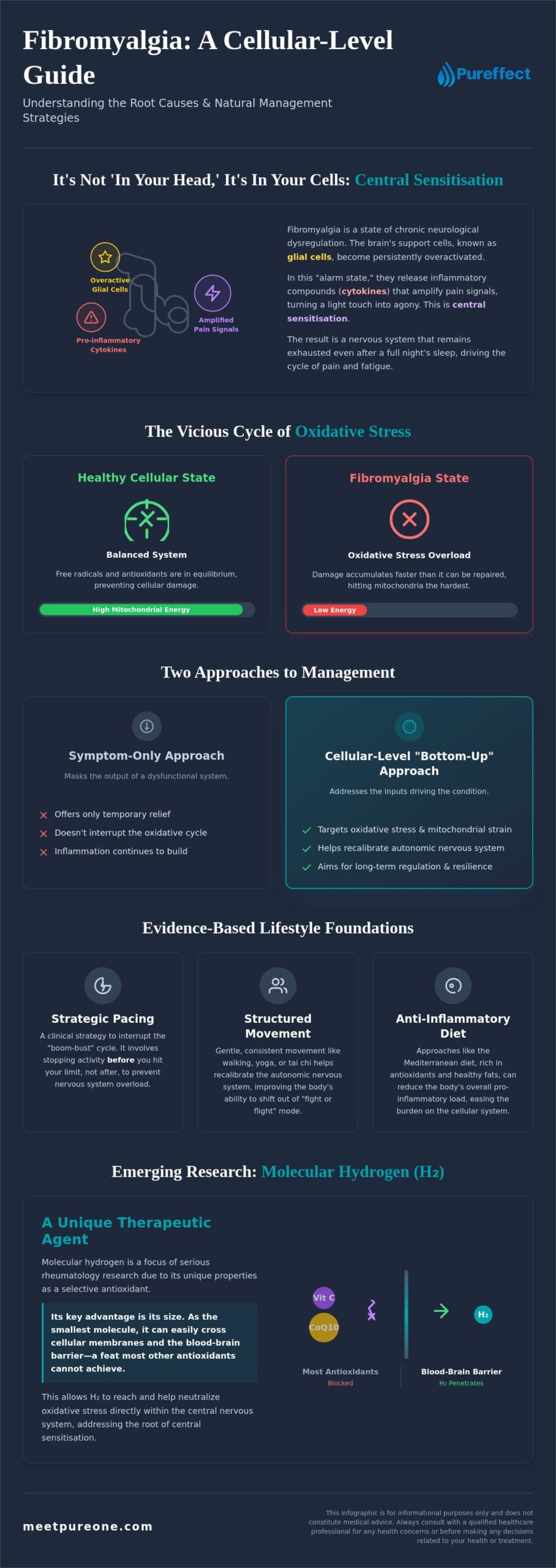
Here’s what researchers have confirmed: fibromyalgia isn’t simply a pain disorder. It’s a state of chronic neurological dysregulation. Glial cells, which are the brain’s immune-adjacent support cells, become persistently overactivated. Under normal conditions, these cells help regulate neural signalling. In fibromyalgia, they shift into a kind of permanent alarm state, releasing pro-inflammatory compounds called cytokines that amplify pain signals far beyond what the original stimulus warrants. A light touch registers as agony. A full night’s sleep still leaves the nervous system wired and exhausted. This process is called central sensitisation, and it’s the physiological engine driving the condition.
The autonomic nervous system is caught in the crossfire too. Fibromyalgia patients frequently show measurable dysfunction in heart rate variability, a reliable marker of how well the body can shift between its “rest and repair” and “fight or flight” modes. Natural interventions, including movement, breathwork, and targeted antioxidant support, work partly by helping recalibrate this balance from the ground up.
The Oxidative Stress Connection
Oxidative stress sits at the centre of this picture. In a healthy body, free radicals are produced and neutralised in a continuous, well-managed cycle. In fibromyalgia patients, that balance breaks down. Studies have documented elevated levels of malondialdehyde, a marker of lipid peroxidation, alongside reduced superoxide dismutase activity, one of the body’s primary antioxidant enzymes. The result is a cellular environment where damage accumulates faster than it can be repaired.
The mitochondria take the hardest hit. These are the organelles responsible for producing cellular energy, and they’re acutely sensitive to oxidative damage. When mitochondrial function is compromised, energy output drops, inflammatory signalling increases, and the nervous system becomes even less capable of regulating pain thresholds. It’s a self-reinforcing cycle, and it explains why so many fibromyalgia patients feel depleted even when they appear physically rested. This same pattern of neuroinflammation and oxidative stress also underlies other chronic pain conditions — if you experience both fibromyalgia and headache disorders, the research on at-home therapy for chronic migraines reveals striking parallels in the cellular mechanisms involved.
The Problem with Symptom-Only Approaches
Topical pain relief, sleep aids, and even some pharmaceutical interventions can genuinely help in the short term. No argument there. But they don’t interrupt the oxidative cycle driving glial overactivation. The inflammation keeps building. The mitochondria keep struggling. And the relief stays temporary.
This is where a “bottom-up” approach becomes genuinely compelling. Rather than suppressing the output of a dysfunctional system, cellular-level support addresses the input: the oxidative stress, the mitochondrial strain, and the autonomic dysregulation that sustain the whole cycle. Investing in preventative health at home with this kind of cellular resilience in mind is a fundamentally different strategy, and increasingly, the research is backing it up.
That distinction matters enormously when you’re evaluating which natural strategies are actually worth your time and energy.
Evidence-Based Lifestyle Interventions: Movement, Nutrition, and Pacing
Lifestyle changes get dismissed as “soft” medicine. That’s a mistake. When you’re managing fibromyalgia symptoms naturally, the evidence behind structured movement, anti-inflammatory nutrition, and clinical pacing is genuinely substantial — and the National Institute of Arthritis and Musculoskeletal and Skin Diseases recognises these approaches as core components of fibromyalgia management, not optional extras. The challenge isn’t whether they work. It’s knowing how to apply them without triggering the very flares you’re trying to prevent.
Pacing is the foundation everything else sits on. Not a vague suggestion to “take it easy,” but a clinical strategy built around pre-emptive rest. The core principle: stop activity before you hit your limit, not after. Most fibromyalgia patients have lived through the boom-bust cycle — a good day leads to overexertion, which triggers a multi-day crash. Pacing interrupts that pattern by distributing energy expenditure evenly, which keeps the autonomic nervous system from lurching between extremes. Think of it as smoothing out a jagged line rather than riding its peaks and valleys.
Sleep deserves its own mention here. Research consistently shows that disrupted slow-wave sleep directly lowers pain thresholds in fibromyalgia patients. This isn’t just about feeling groggy — it’s a measurable physiological shift. Prioritising sleep hygiene (consistent sleep and wake times, limiting blue light exposure, and keeping the bedroom cool) is one of the highest-leverage moves available. It costs nothing and directly affects how your nervous system processes pain the following day.
Anti-Inflammatory Nutrition and Supplementation
The Mediterranean diet is the most researched dietary framework for systemic inflammation, and it translates well to fibromyalgia. Olive oil, oily fish, legumes, and abundant vegetables provide a consistent supply of omega-3 fatty acids and polyphenols that help dial down cytokine activity. Processed sugars work in the opposite direction: they spike insulin, promote inflammatory signalling, and are closely associated with worsening cognitive symptoms. If fibro-fog is a persistent problem for you, cutting refined sugar is one of the first dietary levers worth pulling.
Two supplements have accumulated solid research for mitochondrial support specifically. Coenzyme Q10 (CoQ10) plays a direct role in the mitochondrial electron transport chain, and studies have found measurably reduced CoQ10 levels in fibromyalgia patients compared to healthy controls. Magnesium is the other key player; it’s involved in over 300 enzymatic reactions and supports both mitochondrial function and nervous system regulation. Deficiency is common in fibromyalgia populations, and correcting it has been associated with improvements in pain scores and sleep quality in clinical studies.
The gut-brain axis is increasingly hard to ignore in this conversation. Emerging research suggests that gut microbiome dysbiosis may amplify neuroinflammatory signals, contributing to both pain sensitivity and cognitive symptoms. A diet rich in fermented foods, prebiotic fibre, and diverse plant sources supports microbial diversity — which, in turn, may help modulate the inflammatory environment driving central sensitisation. For those looking to address this connection more directly, the research on managing gut inflammation naturally explores how molecular-level interventions targeting the intestinal environment can support the same cytokine pathways implicated in fibromyalgia.
Movement Without the Flare: Low-Impact Strategies
The research on movement is clear: inactivity makes fibromyalgia worse over time. But the wrong kind of activity does too. Two modalities stand out in the clinical literature. A 2010 randomised controlled trial published in the New England Journal of Medicine found that Tai Chi produced significant improvements in fibromyalgia symptom scores compared to a wellness education control group, with benefits sustained at 24 weeks. Aquatic therapy offers similar advantages — warm water reduces joint loading while providing gentle resistance, making it accessible even during moderate flares.
Graded exercise therapy takes a structured, incremental approach: start well below your perceived capacity, establish consistency, then increase duration or intensity by small, planned increments. The goal is building tolerance without triggering the post-exertional malaise that derails so many attempts. For practical mobility support alongside these strategies, the guide on home remedies for joint stiffness covers complementary techniques worth layering in.
These lifestyle pillars work best as a system. Nutrition supports the cellular environment. Pacing protects your energy reserves. Movement rebuilds tolerance gradually. And sleep ties it all together by resetting pain thresholds overnight. If you’re looking for a complementary tool that works at the cellular level alongside this framework, it’s worth exploring what the PureONE Molecular Hydrogen Generator brings to the picture — particularly its potential role in addressing the oxidative stress that sustains the cycle described in the previous section.
Molecular Hydrogen Therapy: Investigating the Research on Pain and Fatigue
Molecular hydrogen (H2) is the smallest molecule in existence. That sounds like a trivial detail until you understand what it means therapeutically. Its size allows it to diffuse through cell membranes, cross the blood-brain barrier, and reach the mitochondria directly — the very structures we established earlier are taking the hardest hit in fibromyalgia. No other antioxidant molecule currently under clinical investigation can claim the same access.
That’s why rheumatology researchers are paying attention. As noted in the Mayo Clinic’s overview of fibromyalgia symptoms and causes, the condition involves complex central nervous system dysfunction — precisely the kind of deep-tissue environment that conventional antioxidants struggle to reach. H2 doesn’t have that problem.
What makes hydrogen particularly interesting is its selectivity. Unlike broad-spectrum antioxidants that can interfere with beneficial reactive oxygen species (which the body uses for cellular signalling), H2 appears to neutralise specifically the most damaging radicals: hydroxyl radicals and peroxynitrite. These are the species most directly linked to mitochondrial membrane damage and neuroinflammatory cascades. It acts like a targeted intervention rather than a blunt instrument. If you’re weighing different approaches to cellular recovery and wondering how this compares to other popular modalities, the detailed breakdown in hydrogen therapy vs infrared sauna offers a research-driven comparison of these two distinct biological signals.
A 2015 pilot study published in Medical Gas Research explored hydrogen-rich water in patients with fibromyalgia and chronic fatigue syndrome. Participants reported measurable reductions in pain scores and fatigue levels after regular consumption, with the researchers noting improvements in oxidative stress markers. It was a small study, and the researchers themselves called for larger controlled trials, but it was significant as one of the first direct investigations into H2 and fibromyalgia specifically. When you’re managing fibromyalgia symptoms naturally, any intervention with even preliminary cellular-level evidence deserves a serious look.
Clinical Findings on H2 and Chronic Pain
Research on H2 inhalation has documented reductions in malondialdehyde (MDA) levels and improvements in superoxide dismutase (SOD) activity — the exact oxidative stress markers shown to be dysregulated in fibromyalgia patients. Separate investigations into mitochondrial function have found that hydrogen exposure can help preserve mitochondrial membrane potential, which directly supports ATP production. In practical terms: more cellular energy, less inflammatory signalling. The same selective antioxidant mechanism is also being investigated in neurovascular conditions — the emerging research on at-home therapy for chronic migraines explores how these identical pathways apply to migraine neurobiology, which may be relevant if headache disorders overlap with your fibromyalgia symptoms.
The 66/33 hydrogen-to-oxygen ratio matters here from a safety standpoint. Hydrogen becomes flammable at concentrations above approximately 4% in air. A therapeutic mixture delivering 66% hydrogen with 33% oxygen, delivered through a controlled nasal cannula at low flow rates, keeps the inhaled concentration well within safe parameters while still achieving meaningful systemic absorption. This ratio is the benchmark serious therapeutic devices are built around, and it’s the standard the PureONE Molecular Hydrogen Generator is designed to deliver.
Inhalation vs. Ingestion: Which Research Wins?
Hydrogen-infused water has genuine research behind it. But inhalation reaches higher therapeutic concentrations in the bloodstream faster, and it sustains those levels for longer during a session. Drinking infused water introduces H2 primarily through the gastrointestinal tract, where absorption is less direct and concentrations are lower by the time hydrogen reaches systemic circulation. Inhalation bypasses that limitation entirely.
That said, the two approaches aren’t mutually exclusive. Some devices, including the PureONE Molecular Hydrogen Generator, support both inhalation and the production of hydrogen-rich water, making a multi-modal approach practical from home. For a detailed breakdown of how these delivery methods compare across specific use cases, the guide on hydrogen inhalation machine vs water bottle is worth reading alongside this section.
When you’re managing fibromyalgia symptoms naturally, the delivery method isn’t a minor detail. It determines how much H2 actually reaches the glial cells and mitochondria driving the condition. That distinction is exactly what separates a therapeutic tool from a wellness trend.
Selecting Home-Based Support: A Buying Guide for Long-Term Management
The wellness technology market is noisy. For every device with genuine clinical grounding, there are a dozen products built around marketing logic rather than physiological need. When you’re managing fibromyalgia symptoms naturally, that distinction isn’t abstract; it determines whether you’re investing in real support or just another gadget that ends up in a drawer. Evaluating these tools requires looking past the surface to find evidence-based quality.
Three criteria separate genuinely therapeutic tools from the noise: gas purity, safety certifications, and multi-modal capability. Because fibromyalgia is a systemic condition, a device that only offers one way to use it often leaves gaps in your strategy. You need a tool that can address the body from multiple angles, providing both systemic and localized support as symptoms shift.
Evaluating the PureONE for Fibromyalgia
The team at Pureffect designed the PureONE Molecular Hydrogen Generator to be a comprehensive home tool specifically for those seeking cellular-level results. It supports four distinct application modes: inhalation, hydrogen-rich drinking water, and topical skin application. While we’ve discussed the systemic benefits of inhalation, the ability to apply hydrogen-infused water directly to the skin offers a targeted approach for localized “hot spots” that often resist other natural remedies. This versatility ensures the device remains useful regardless of how your symptoms present on a given day.
Manufactured in Canada, the PureONE utilizes a proprietary stainless steel condenser. This is a critical detail for long-term management; stainless steel resists the oxidation and microbial buildup that can plague lower-quality internal components over time. It ensures that the gas purity remains consistent across years of use. To support this long-term perspective, Pureffect offers a 365-day risk-free trial. This is particularly important for managing fibromyalgia symptoms naturally because it allows you to test the device through every season and every flare cycle, ensuring it delivers value when you need it most.
Integrating Technology into Your Daily Routine
Practicality is what makes a routine stick. Hydrogen inhalation sessions pair perfectly with the pacing strategies mentioned earlier; try using the generator during your scheduled rest periods or while winding down in the evening. This turns necessary “down time” into an active cellular recovery session without adding extra tasks to your schedule.
For systemic hydration, using hydrogen-infused water throughout the day ensures a steady intake of H2 to support the mitochondrial resilience we explored in the opening sections. If you’re ready to move beyond temporary fixes and address the cellular environment driving your pain, checking out the PureONE Molecular Hydrogen Generator is a logical next step for your home management toolkit. It’s about having a reliable partner in your journey toward a higher quality of life.
Your Next Step Toward Real, Lasting Relief
Managing fibromyalgia symptoms naturally isn’t about picking one magic fix. It’s about building a layered system that works at the cellular level, not just the surface. The research points clearly in one direction: address the oxidative stress, support the mitochondria, regulate the nervous system, and the symptoms follow.
The three pillars that matter most? A structured lifestyle framework built around pacing, anti-inflammatory nutrition, and gradual movement. Targeted supplementation to correct the specific deficiencies fibromyalgia creates. And emerging cellular-level tools like molecular hydrogen therapy, which reaches the very structures driving central sensitisation.
The PureONE Molecular Hydrogen Generator is manufactured in Canada, endorsed by Howie Mandel, and backed by a full 365-day risk-free trial. That’s a year to evaluate it across real flare cycles, not a rushed 30-day window.
You’ve done the research. You understand the science. The next move is yours. Experience the PureONE risk-free for 365 days and find out what cellular-level support actually feels like.
Frequently Asked Questions About Managing Fibromyalgia Symptoms Naturally
Is molecular hydrogen therapy safe for long-term use?
Current research suggests molecular hydrogen is well-tolerated for extended use, primarily because H2 is a naturally occurring molecule that the body already produces in small quantities through gut fermentation. Unlike pharmaceutical interventions, it doesn’t accumulate in tissues or require metabolic processing by the liver. Studies to date haven’t documented adverse effects from regular therapeutic use, though researchers consistently note that larger long-term trials are still needed to establish definitive safety profiles across all populations.
From a practical standpoint, devices delivering hydrogen at the 66/33 hydrogen-to-oxygen ratio keep inhaled concentrations well below the threshold where flammability becomes a concern. That engineering choice is a meaningful safety feature, not just a marketing detail. If you have a specific medical condition or are pregnant, checking with your physician before starting any new therapy remains the sensible first step.
Can I use natural remedies alongside my current fibromyalgia medications?
In most cases, yes, but the specifics matter. Lifestyle interventions like pacing, Mediterranean-style eating, and low-impact movement are broadly compatible with pharmaceutical fibromyalgia management and are often encouraged by clinicians as complementary strategies. Supplements require more care: magnesium, for instance, can interact with certain muscle relaxants and antibiotics, so dosage and timing are worth discussing with your prescribing doctor before adding it.
Molecular hydrogen therapy doesn’t have documented interactions with common fibromyalgia medications, including duloxetine, pregabalin, or milnacipran, but that absence of documented interaction is different from a confirmed safety clearance. Bring any new tool into the conversation with your healthcare provider. The goal is a coordinated approach, not a parallel one running in the background without medical awareness.
How long does it typically take to see results from natural fibromyalgia management?
Honestly, there’s no single timeline, and anyone promising one is oversimplifying. Dietary changes targeting inflammation can produce noticeable shifts in cognitive symptoms and energy within four to six weeks for some people. Movement-based improvements tend to emerge more gradually, often over two to three months of consistent graded exercise, because you’re rebuilding nervous system tolerance rather than just reducing acute symptoms.
Managing fibromyalgia symptoms naturally requires patience precisely because the goal is cellular-level change, not surface suppression. Oxidative stress markers and mitochondrial function don’t reset overnight. Tracking symptoms in a simple daily log, including pain scores, sleep quality, and energy levels, gives you objective data to evaluate progress rather than relying on day-to-day perception, which fibromyalgia itself distorts.
What is the best time of day to use a hydrogen inhalation machine?
Two windows tend to work well for different reasons. Morning sessions pair naturally with breathwork or light movement, using hydrogen inhalation as part of an autonomic regulation routine before the demands of the day accumulate. Evening sessions, particularly in the hour before sleep, may support the cellular recovery processes that occur during slow-wave sleep, which is the exact sleep stage most disrupted in fibromyalgia patients.
The practical answer is: start with whichever window you can protect consistently. Consistency matters more than timing precision at the outset. Once you’ve established a reliable habit, you can experiment with shifting the session and observing whether morning or evening use produces a more noticeable effect on your specific symptom pattern. Fibromyalgia is individual enough that personal observation is genuinely useful data.
Can dietary changes really reduce the “brain fog” associated with fibromyalgia?
Yes, and the mechanism is more direct than people expect. Fibro-fog is partly driven by neuroinflammation, the same cytokine activity that amplifies pain signals. Refined sugars and ultra-processed foods promote inflammatory signalling that crosses the blood-brain barrier and affects cognitive function measurably. Removing them reduces that inflammatory load. Research on the gut-brain axis adds another layer: microbiome dysbiosis has been linked to amplified neuroinflammatory signals, and dietary diversity directly shapes microbial composition.
Specific foods with documented anti-inflammatory effects on the central nervous system include oily fish rich in EPA and DHA, extra virgin olive oil containing oleocanthal, and dark leafy greens high in folate. These aren’t general wellness suggestions; they target the same cytokine pathways implicated in cognitive symptoms. Results aren’t instant, but patients who track their dietary changes alongside cognitive symptoms often report meaningful improvement within six to eight weeks of sustained dietary shifts.
What should I look for in a high-quality molecular hydrogen generator?
Three things matter most. First, gas purity: the internal components determine what ends up in the output stream, so devices built with materials resistant to oxidation and microbial build-up, like stainless steel condensers, protect output quality over years of use rather than just at unboxing. Second, delivery flexibility: a device that supports inhalation, hydrogen-rich water production, and topical application covers more physiological ground than single-mode alternatives. Third, a trial period long enough to be meaningful for a condition that fluctuates seasonally.
The 66/33 hydrogen-to-oxygen ratio is the benchmark worth checking specifically. It keeps therapeutic hydrogen concentrations within safe parameters during inhalation while still achieving meaningful systemic absorption. Devices that don’t specify their output ratio or that produce pure hydrogen without oxygen dilution are worth approaching with caution. A 365-day trial, like the one offered with the PureONE Molecular Hydrogen Generator, gives you enough time to observe the device’s effect across genuine flare cycles rather than a single snapshot.
Disclaimer
The information provided by Pureffect and any of its products are for educational and informational purposes only and is not intended as medical advice. Individual results may vary, and no specific health outcomes are guaranteed. Always consult a qualified healthcare professional before starting any wellness practice or product.