
Before trying a new therapy for an animal, it’s natural to ask whether it could cause harm. The hydrogen therapy for pets safety question can’t be answered by human research alone. Dogs, cats, and other animals may respond differently, and studies can vary in how hydrogen is given and which effects researchers monitor.
“No adverse effects reported” in a study does not prove that a therapy is safe for every pet, or that it works. The details matter: which species were studied, the route of exposure, how long it lasted, and what researchers looked for.
This article distinguishes safety findings from claims about effectiveness, explains what the limited information described here can and can’t establish, and offers practical questions to discuss with your veterinarian. Human routines and unsupported pet dosing advice are not substitutes for animal-specific evidence. The goal is to help you make a careful decision with your veterinarian.
Key Takeaways
- Understand what hydrogen therapy means for pets, including the difference between hydrogen-rich water and inhaled hydrogen.
- Assess hydrogen therapy for pets safety using species-specific research rather than assuming human findings apply to animals.
- Recognize what animal studies can and can’t establish about safety, and why study details matter.
- Use your pet’s condition, current care, and veterinary guidance to shape a cautious discussion instead of guessing at a dose or routine.
- Keep information about PureONE for human wellness separate from decisions about hydrogen use for pets.
Hydrogen therapy for pets: what does safety actually mean?
Your pet can’t tell you about mild nausea, an unpleasant taste, or unusual tiredness. That makes it important to ask what a study actually examined before drawing conclusions about hydrogen therapy for pets safety. Consider the form of molecular hydrogen (H₂), the route of exposure, and the effects researchers monitored.
What counts as hydrogen therapy for an animal?
Here, hydrogen therapy means exposure to molecular hydrogen through a stated route. Hydrogen-rich water contains hydrogen gas dissolved in water and is taken by mouth. Inhalation involves breathing hydrogen gas. These are different forms of exposure, so findings about one route do not establish the safety of another.
For a general overview of the term and its proposed uses, see Hydrogen Therapy on Wikipedia. You can also learn more about what molecular hydrogen means. General background and research in people do not establish an appropriate approach for a particular animal.
In brief: “Safe” is not a universal label. It describes what evidence has observed for a particular species, route, amount, duration, and context. It does not guarantee that every pet will tolerate exposure or benefit from it.
Does “safe” mean harmless, effective, or both?
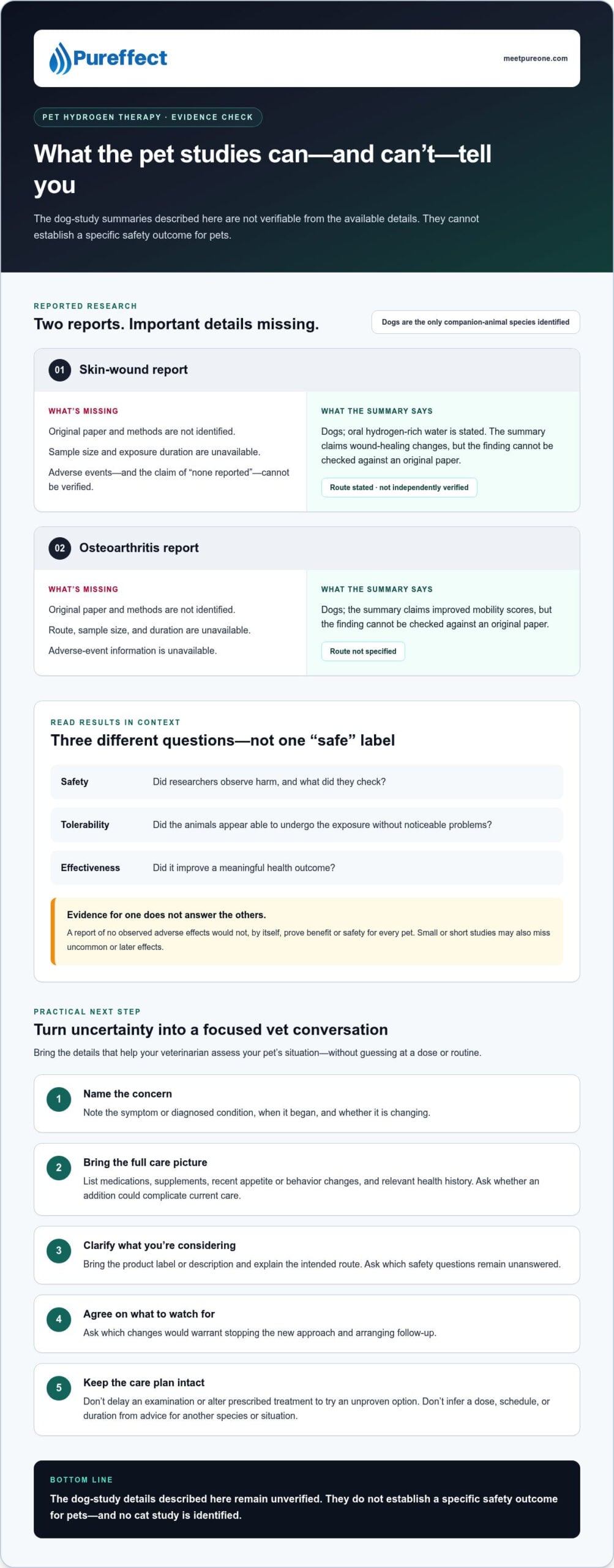
These are separate questions. Safety asks whether researchers observed harm and what they checked. Tolerability asks whether animals appeared able to undergo the exposure without noticeable problems. Effectiveness asks whether it improved a meaningful health outcome. Evidence for one does not answer the others.
A study might report no observed adverse effects without measuring any improvement in the condition being treated. That could offer limited information about tolerability under the study conditions, not proof of therapeutic benefit. A small or short study may also fail to detect uncommon effects or effects that appear later.
Keep each finding tied to its context. Results in one species, for one condition, or with hydrogen-rich water do not automatically apply to another animal or to inhalation. Instead of asking only “Is hydrogen safe?”, ask “What does the evidence show for this animal, this route, and this health concern?”
What animal research says about hydrogen therapy safety
Two dog-study reports are described here, one concerning skin wounds and the other osteoarthritis. The original papers are not identified, and the available details are insufficient to verify their methods or results. They therefore cannot support a study-level conclusion about safety or effectiveness. The table distinguishes the reported claims from what remains unknown.
| Report mentioned | Species and route | Sample and duration | Outcome described in the summary | Adverse events |
|---|---|---|---|---|
| Skin-wound report | Dogs; oral hydrogen-rich water is stated, but the paper is unidentified | Unavailable | The summary claims wound-healing changes, but the finding can’t be checked against an original paper | Unavailable; “none reported” can’t be verified |
| Osteoarthritis report | Dogs; route is unavailable | Unavailable | The summary claims improved mobility scores, but the finding can’t be checked against an original paper | Unavailable |
Which species and exposure routes have actually been studied?
The reports described here identify dogs as the only companion-animal species. The skin-wound report is said to involve oral hydrogen-rich water, but no citation or methods are provided to verify that detail. No cat study is identified, and the route used in the osteoarthritis report is not specified. A comparison of hydrogen inhalation and hydrogen water can explain how the routes differ, but it does not show which route has been validated for pets.
What can safety findings, and gaps, tell pet owners?
Without the original papers, it isn’t possible to check sample sizes, exposure durations, comparison groups, or how adverse events were monitored. The claim of “no adverse effects” in the wound report should not be treated as a verified result. Even if an improvement were confirmed, it would address effectiveness only within that study’s conditions, not establish broader safety.
The most accurate conclusion is that the dog-study details described here remain unverified, so they cannot establish a specific safety outcome for pets. The International Association for Hydrogen Safety (HySafe) offers broader hydrogen-safety context, but it does not verify veterinary outcomes. Likewise, PureONE product information concerns human home wellness, not animal research.
How to assess hydrogen therapy for your pet without guessing
Make the discussion specific before deciding whether to change anything. A brief note about your pet’s condition and what you hope to address can help keep the conversation focused on relevant risks and priorities.
- Name the concern. Record the symptom or diagnosed condition you hope to address, when it began, and whether it is changing. This gives your veterinarian useful context beyond a general interest in hydrogen.
- Bring the full care picture. List your pet’s medications, supplements, recent changes in appetite or behavior, and relevant health history. Ask whether a proposed addition could complicate the current care plan.
- Clarify what you’re considering. Bring the product label or description and explain how you think it would be used. Ask your veterinarian to identify unanswered safety questions before you act.
- Agree on what to watch for. Ask which changes in your pet’s condition would warrant stopping the new approach and arranging follow-up. Don’t infer a dose, schedule, or treatment duration from advice intended for another species or situation.
- Keep the care plan intact. Don’t delay an examination or alter prescribed treatment to try an unproven option. If the evidence or possible risks remain unclear, it’s reasonable to hold off.
Know when to pause
Be cautious of claims that promise a cure, apply to every animal, or give precise dosing without a clear veterinary basis. If your pet’s symptoms are worsening, a new concerning sign appears, or the situation seems urgent, prioritize veterinary care instead of experimenting with a wellness product.
Pause and seek veterinary advice if your pet is getting worse, you’re unsure what a product involves, or you can’t explain how the proposed change fits the care plan.
A thoughtful decision doesn’t need to be rushed. For hydrogen therapy for pets safety, start with a clear goal, an honest review of possible risks, and your veterinarian’s input. If you’re researching molecular hydrogen for your own wellness, the PureONE home-use generator is presented for human wellness, not as a product recommendation for pets.
A responsible next step: keep pet evidence separate from human wellness
Before relying on a product claim, identify what kind of claim it makes. A description of what a device can do is not evidence that it improves an animal’s health. Keeping these categories distinct helps prevent marketing language from filling gaps in the research.
How should readers interpret product information?
Read product specifications as descriptions of the device, not as veterinary findings. A stated mode or output does not establish how an animal responds, whether a particular condition improves, or what risks may arise. PureONE is described as a home-use molecular hydrogen generator with four modes for human wellness use. Its product details are relevant to people researching home wellness, not a recommendation for use with pets.
What is the most responsible takeaway for pet owners?
Use a simple filter for any claim: does it describe the device, report a measured result in animals, or make a broader promise? Only a measured animal result can speak directly to veterinary outcomes, and its relevance depends on the research itself. If a claim jumps from a product feature to a promise about pets, look for the animal evidence behind it.
For a pet-care decision, the useful next step is not choosing a device. Keep your animal’s existing care plan steady while you consider what information applies to that individual case. Wellness marketing can prompt questions, but it should not set treatment priorities. Your pet’s established veterinary care remains the anchor.
Make your next step a well-informed one
Before changing your pet’s care routine, bring your questions and any product information to your veterinarian. Ask what evidence applies to your animal’s condition and whether a proposed approach could affect current care. That conversation is a more useful starting point than an online promise.
For hydrogen therapy for pets safety, keep the decision specific to your pet. Human wellness information may be interesting, but it is not a substitute for veterinary guidance or evidence in animals. Keep your pet’s care centered on your veterinarian’s recommendations.
If you’re researching molecular hydrogen for your own wellness, PureONE is a home-use molecular hydrogen generator with four modes described for human wellness use. That product information is separate from veterinary evidence and is not a recommendation for animal use. Explore the PureONE molecular hydrogen generator for home wellness.
Stay curious, ask careful questions, and make the next decision with your pet’s needs in focus.
Frequently Asked Questions
Is hydrogen therapy safe for dogs?
The information reviewed here isn’t enough to call it safe for every dog. Reports of canine research need to be checked against the original studies before their methods and safety findings can guide a decision. Your dog’s diagnosis, health history, and current medications also matter. Discuss the specific route and product with your veterinarian before making a change, especially if your dog is already receiving treatment.
Can cats drink hydrogen-rich water?
The evidence reviewed here does not establish whether hydrogen-rich water is safe for cats. Don’t assume findings mentioned in dogs or people apply to felines. If you’re considering it, ask your veterinarian before adding it to your cat’s routine, and keep ordinary fresh water available. This is especially important if your cat has a health condition or a change in drinking habits, since that change itself may need veterinary attention.
What does research say about hydrogen therapy for pets?
Reports describe possible study areas in animals, but without verifiable original papers and study details, they can’t support a firm safety or effectiveness conclusion. When reviewing a paper, look for whether it measured a clinical outcome, such as a change in symptoms, or only a laboratory marker. Check whether researchers recorded unwanted effects and how long animals were followed. These details show what a finding can reasonably tell you.
Can hydrogen therapy replace my pet’s medication?
No. Don’t stop, reduce, or replace a prescribed medication with hydrogen therapy unless the veterinarian responsible for your pet’s care directs a treatment change. A wellness claim is not evidence that a therapy controls the condition your pet is being treated for. If you’re concerned about side effects, cost, or whether a medicine is helping, contact your veterinarian to discuss options rather than changing the plan on your own.
Are hydrogen water and hydrogen inhalation equally safe for pets?
That hasn’t been established. Drinking hydrogen-rich water and inhaling hydrogen involve different exposure routes, so evidence about one cannot confirm the safety of the other. A study’s conclusions apply only to the route and conditions its researchers examined. If someone claims both methods are equally safe for pets, ask what animal-specific evidence supports that comparison and review it with your veterinarian.
How should I talk to my veterinarian about hydrogen therapy for my pet?
Bring the product information and explain what you hope to address, such as a specific symptom or care goal. Share your pet’s diagnosis, medications, supplements, and relevant health history. Ask whether research exists in the same species and for the proposed route, what outcomes it measured, and what signs would warrant follow-up. You can also ask whether considering it could interfere with your pet’s current care plan.
Disclaimer
The information provided by Pureffect and any of its products are for educational and informational purposes only and is not intended as medical advice. Individual results may vary, and no specific health outcomes are guaranteed. Always consult a qualified healthcare professional before starting any wellness practice or product.