
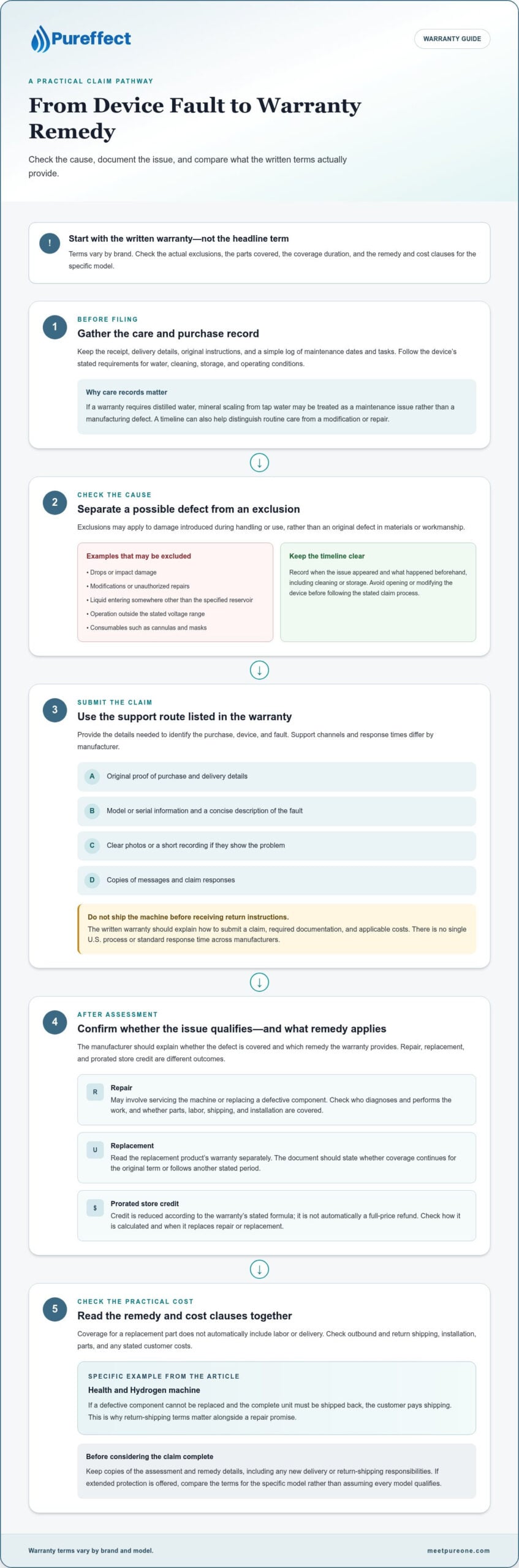
Warranty exclusions can matter as much as coverage. Some hydrogen-device warranties exclude damage caused by misuse, drops, liquid entering somewhere other than the specified reservoir, modifications, unauthorized repairs, or operation outside the stated voltage range. The hydrogen machine warranty and support terms also determine whether a problem leads to repair, replacement, or prorated store credit. These remedies are not interchangeable.
It makes sense to want clear answers before relying on coverage. What counts as ordinary wear, and which models qualify for extended protection? This guide explains how to read exclusions, assess repair and replacement terms, and understand prorated credit. It also shows how to compare warranty duration and component coverage, so you can judge what protection applies to the generator you are considering.
Key Takeaways
- Read exclusions for specific causes of damage, such as unauthorized repairs or operation outside stated limits, rather than relying on broad warranty language.
- Compare repair, component replacement, full-unit replacement, and prorated store credit. These remedies can leave you with different costs and outcomes.
- Look at coverage by component and duration, not just the headline warranty term. Short coverage on key parts can change the value of the protection.
- Extended coverage can depend on the generator model, so compare the terms for the specific unit instead of assuming every model receives the same protection.
- Keep maintenance and operating records. Clear documentation can help distinguish a covered defect from an excluded cause.
Warranty exclusions
Warranty exclusions identify causes or situations a manufacturer does not cover. Terms vary between brands, including user responsibilities, damage exclusions, and carve-outs for plant availability. Compare the actual clauses rather than relying on the warranty label.
User Responsibilities
User responsibilities are the care and operating steps required to maintain warranty eligibility. Follow the specific device instructions for water, cleaning, storage, and operating conditions. For example, if a warranty requires distilled water, mineral scaling from tap water may be treated as a maintenance issue rather than a manufacturing defect. Keep purchase and delivery records with maintenance notes to document the device’s care.
Keep a simple log of the date and type of each maintenance task. If an issue appears after cleaning or storage, those details help establish the timeline. A clear record can also distinguish routine care from a modification or repair that could affect coverage. Keep the original instructions with the receipt, so the required steps and purchase details are easy to find.
Damage and Improper Use
Damage and improper-use exclusions describe harm the warranty does not treat as a covered defect. Common examples include drops, modifications, unauthorized repairs, liquid entering somewhere other than the specified water reservoir, and operation outside the stated voltage range. These clauses distinguish a possible original defect in materials or workmanship from damage introduced during handling or use.
Consider a unit that stops working after a fall. The warranty may assess the impact as the cause, even if the failure appears later. Avoid opening or modifying the device before following the stated claim process, since unauthorized repairs may trigger a separate exclusion. Consumable items, such as cannulas and masks, may also be excluded from coverage for the main machine.
Warranty Limitations
Warranty limitations define the boundaries of coverage, including excluded events, parts, and operating conditions. For a home device, distinguish manufacturing defects from maintenance-related issues and consumable wear. That distinction helps clarify whether a reported problem concerns the original device or an excluded cause.
Availability carve-outs mainly apply to hydrogen plants, where events outside a contractor’s control can affect operation. Clauses may address recorded ambient conditions, grid events, infrastructure problems, or access restrictions. Clear terms connect exclusions to events documented by monitoring systems. A contractor responsible for only part of a plant may exclude losses caused by equipment outside its scope. Agreements can also explain how restricted access or planned maintenance affects availability calculations. These details make carve-outs more specific than a broad exception for any interruption.
Repair, replacement, and prorated store credit
A claim can lead to repair, replacement, or store credit, depending on the defect and warranty terms. Compare these remedies alongside coverage for labor, shipping, installation, and replacement parts.
There is no single United States process or standard response time across manufacturers. The written warranty should identify how to submit a claim and explain the required documentation and applicable costs.
Repairability and Replacement Parts
Repairability means restoring a machine by servicing it or replacing a defective component. A parts-based repair may avoid returning the entire hydrogen water unit, so look for terms on component diagnosis, replacement parts, and who performs the work.
Check what happens if a part cannot be replaced. For a Health and Hydrogen machine, if a defective component cannot be replaced and the complete unit must be shipped back, the customer pays shipping. This example shows why the return-shipping clause matters as much as the repair promise.
Service Costs and Coverage
Service-cost coverage states who pays for labor, shipping, installation, and parts during an approved repair. The warranty wording controls each item. Coverage for a replacement part does not automatically include labor or delivery.
Read the remedy clause alongside the cost clause. If a unit must be returned, note who pays outbound shipping and whether return delivery is addressed separately. Installation may not apply to a countertop hydrogen water device, but it can matter for equipment that requires setup. Treat prorated store credit as credit reduced according to the warranty’s stated formula, not as an automatic full-price refund. The terms should explain how the credit is calculated and when it replaces repair or replacement.
Warranty Claim Filing
Filing a warranty claim means reporting a suspected covered defect and providing details for assessment. In the United States, start with the warranty’s listed support route, then gather the original proof of purchase, delivery details, model or serial information, and a concise description of the fault.
Include clear photos or a short recording if they show the problem, and keep copies of messages and claim responses. Do not send the machine before receiving return instructions, since shipping it prematurely can complicate assessment. Support channels and response times differ by manufacturer, so follow the route and timing stated in the warranty rather than assuming phone, email, or chat support is available.
After assessment, the manufacturer should explain whether the defect qualifies and which remedy applies. If it offers a replacement, read the replacement product’s warranty terms separately. The document should say whether coverage continues for the original term or follows another stated period. Note any new delivery or return-shipping responsibilities, too. For a wellness device, these details clarify the practical value of support beyond the initial repair decision.
Use the same careful approach when comparing a specific unit, including the PureONE Molecular Hydrogen Generator: review its product information alongside the warranty terms before deciding which remedy would matter most to you.
Warranty duration and component coverage
A hydrogen machine is designed to provide hydrogen for uses such as drinking, inhalation, or topical application. Warranty coverage varies by model and component, so compare the written terms rather than relying on a headline duration.
Typical terms may cover manufacturing defects in materials and workmanship, electronic control failures, and specified internal faults during normal use. Accessories and replaceable items may have separate coverage or exclusions.
Limited Warranty Duration
A limited warranty protects only the components and defects named in its terms, for the period stated there. Compare coverage for the main device, electronics, and accessories separately. For a hydrogen water bottle, look for at least 12 months of coverage for its primary operating component and at least 24 months for its electronics. A 90-day warranty is a red flag because it provides a short period to identify a developing fault.
A longer term can be useful, but duration alone does not show which repairs qualify. Check whether the warranty period begins on purchase or delivery, and whether coverage changes after a replacement. These details determine how much of the stated term applies to the device you have.
Covered Defects
Covered defects are faults the warranty recognizes as originating in materials, workmanship, or specified components. Terms may include manufacturing defects, electronic control failures, and internal faults during normal domestic or professional use. The exact wording matters: a warranty that names electronic controls, for example, makes it clearer whether a control failure is covered.
Medical research provides context for hydrogen-related products, but it does not establish warranty coverage. LeBaron et al. studied a 24-week high-concentration hydrogen-rich water regimen in people with metabolic syndrome. That study detail describes a research regimen, not a warranty period or a guarantee of health outcomes. Keep product evidence and warranty promises distinct when evaluating a device.
Covered Parts and Repairs
Covered parts are the components specifically identified in the warranty; covered repairs are the remedies allowed for faults in those parts. Look for separate wording about the main unit, electronic components, batteries, and accessories. If a warranty names the device generally but says little about an accessory, do not assume the accessory receives the same protection.
Consumables may be treated differently from durable components. Cannulas and masks, for example, may be excluded. For batteries and other accessories, check whether the terms set a separate coverage period or replacement conditions. Registration can also affect how a warranty record is linked to a purchase, so follow the manufacturer’s stated process and keep the receipt. Registration does not itself establish broader coverage; the written warranty determines which defects and parts qualify.
Extended warranties for selected generator models
An extended warranty adds coverage beyond a generator’s original warranty term or broadens the components covered. Availability and conditions depend on the specific model and its written terms, so do not assume an extension applies across an entire product range.
For a specific model, identify its exact name or number on the product record, then match it to the warranty document. Look for a clear start date, end date, covered parts, and claim process. An extension may add time, expand component coverage, or do both. These are different benefits, and the document should make the distinction clear.
Model-specific terms matter because two generators from the same manufacturer can have different coverage. For example, one model’s extension might apply to the main unit, while another model’s document identifies electronics separately. Treat this as a comparison point rather than assuming every unit receives the same protection.
Read the added term alongside the original warranty. Check whether an extended period begins after the original coverage ends or runs from the purchase date. Then compare exclusions, authorized repairs, and replacement terms. An extra year of coverage has limited value if the fault you are concerned about remains excluded or the remedy differs from the original warranty.
Rules for normal use, maintenance, and modifications still matter during an extension. A longer term does not automatically cover damage caused by drops, unauthorized repairs, or operation outside stated conditions. Keep the original purchase record and maintenance history with the model details. These records help link a later failure to the correct device and coverage period.
Separate consumer-generator protection from plant availability warranties. A plant availability agreement measures whether industrial equipment can operate during a defined period. It may include carve-outs for recorded grid events, restricted access, or other infrastructure problems. These terms address plant performance, not extended warranty coverage for a home generator.
Use this sequence to assess an extension: match the model identifier, note the coverage dates, list covered components, and compare exclusions and remedies. Then consider its practical value. If an extension only lengthens coverage for a part you do not rely on, a clearer repair or replacement provision may matter more.
The takeaway is simple: extended coverage is model-specific, not a blanket promise. Choose based on the written terms for the exact generator, including which failures qualify, what repairs apply, and whether modifications or maintenance affect eligibility. That comparison helps you judge the extension without assuming every model receives identical protection.
Pureffect: PureONE Molecular Hydrogen Generator
PureONE Molecular Hydrogen Generator is a home-use option for people comparing hydrogen devices and their coverage terms. Its four modes let you drink hydrogen-infused water, inhale hydrogen gas, or apply hydrogen-infused water or hydrogen gas to the body. As you consider whether it fits your routine, compare the written warranty for the model with the exclusions, repair options, and component coverage discussed above.
A warranty is only one part of the decision. Consider how you plan to use the device, which modes matter to you, and what support terms apply to your purchase. That makes it easier to weigh the product’s features against the protection you want, without assuming all generator warranties work alike.
Visit the PureONE Molecular Hydrogen Generator page to learn more about the device.
Make Your Next Choice with Clarity
A warranty is most useful when its terms fit how you plan to use a device. Before choosing, turn your notes into a simple decision: which parts need protection, what remedy would be practical, and whether the written coverage matches your intended routine. This keeps the decision grounded in your priorities, not just the length of the warranty.
Choosing hydrogen machine warranty and support carefully also means separating product features from coverage promises. Pureffect offers the PureONE Molecular Hydrogen Generator for home use. Review the product information alongside the warranty documentation so you can judge the device and its terms separately. Take time to weigh everyday convenience against the protections that matter most. Your choice should make sense on both fronts.
Ready to explore the product? View the PureONE Molecular Hydrogen Generator and consider how it fits your needs. A thoughtful comparison can help make your next step feel clear and confident.
Frequently Asked Questions
How should exclusions and carve outs be approached?
Assess exclusions by identifying what each clause applies to and which event triggers it. Compare the wording with how and where you plan to use the machine. Clear hydrogen machine warranty and support terms define the scope of an exclusion and distinguish it from other coverage conditions. Before buying, note any wording that seems broad or unclear so you can compare warranty documents on the same basis.
How long is the warranty for a hydrogen machine?
A hydrogen machine’s warranty lasts for the period stated in its written warranty; there is no single term for every model. Keep warranty duration separate from a return window, satisfaction trial, or service plan. These policies address different situations and are not substitutes for defect coverage. For a useful comparison, note the warranty’s start and end dates separately from any return or trial terms.
What maintenance is required to keep a hydrogen machine warranty valid?
Follow the maintenance instructions for the exact model rather than relying on generic care advice. If the manual describes a particular cleaning method or supply, do not assume another model’s routine is interchangeable. A device may appear to work normally even when it is not being cared for according to its own instructions. Keep the original manual accessible to distinguish the manufacturer’s directions from general advice about household devices.
Are hydrogen machine warranties transferable, extendable, or available through service plans?
Transferability, extensions, and service plans depend on their written terms. If you resell the device, include the warranty paperwork and identify whether coverage applies to the new owner or stays with the original purchaser. For a service plan, distinguish routine servicing from repairs for covered defects. A plan may sit alongside a manufacturer’s warranty without changing its duration or conditions.
What are common hydrogen machine warranty limitations and risks?
A key risk is mistaking product coverage for a promise of health benefits or a particular personal outcome. A warranty addresses product faults and remedies defined in its terms; it does not establish a medical result. Read clear hydrogen machine warranty and support documents separately from health-related product claims. When deciding what protection applies, rely on the written coverage terms, not a verbal summary.
How do hydrogen machine warranties and support compare across brands?
Terms vary by brand and model, so compare the specific exclusions, component coverage, warranty duration, repair or replacement options, shipping costs, and any prorated-credit formula. For example, Hydrogen Wellness covers specified defects under normal use but excludes damage from misuse, drops, unauthorized repairs, and other listed causes.
Disclaimer
The information provided by Pureffect and any of its products are for educational and informational purposes only and is not intended as medical advice. Individual results may vary, and no specific health outcomes are guaranteed. Always consult a qualified healthcare professional before starting any wellness practice or product.