
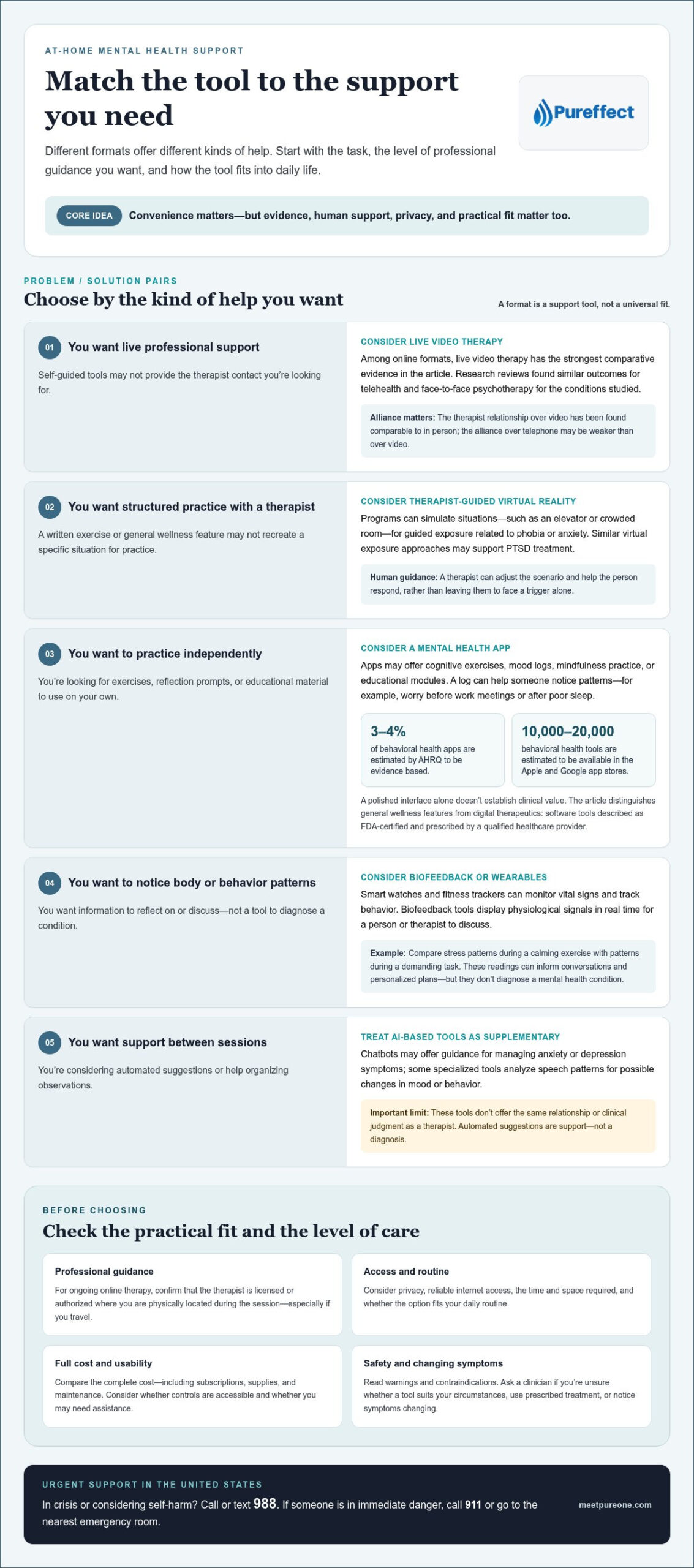
The most advanced option isn’t automatically the best fit. When comparing home therapy technologies, start with the support you need: live video therapy has the strongest comparative evidence among online formats, while apps, virtual reality programs, and wearables offer different kinds of at-home support. Research reviews have found similar outcomes for telehealth and face-to-face psychotherapy for the conditions studied.
It makes sense to want care that feels accessible, private, and practical in everyday life. Online therapy can suit many people with mild to moderate concerns, especially when travel or local access is a challenge, but some situations call for in-person evaluation or more intensive care.
This guide compares common home-based options, what each can offer, and the factors that matter when choosing a format. You’ll also see how to weigh convenience, privacy, human support, and evidence to make a more informed choice, without expecting one tool to fit everyone.
Key Takeaways
- Match the format to the support you need: live therapist contact, self-guided exercises, or tools that help track patterns can serve different purposes.
- Weigh evidence and human support alongside convenience; technology can make care easier to access, but it isn’t a substitute for every kind of treatment.
- Compare the full cost of home options, including subscriptions, supplies, and maintenance, rather than focusing only on the initial purchase.
- Consider privacy, reliable internet access, and the way a device or app fits into your daily routine before choosing.
- In the United States, call or text 988 to reach the 988 Suicide & Crisis Lifeline if you’re in crisis or considering self-harm.
Choosing a therapy format
Start with the kind of help you need and the guidance you want. A scheduled conversation, a self-directed program, and a physical device each fit a different routine.
Prescription Devices and Over-the-Counter Options
Prescription home therapy devices are selected as part of care from a qualified healthcare provider; consumers generally choose and use over-the-counter options directly. The distinction is oversight and intended use, not an automatic ranking of effectiveness. Check whether a device addresses your specific need, whether its instructions call for clinician involvement, and whether you can follow its routine safely.
For online care, a therapist generally needs to be licensed or authorized in the state where the patient is physically located during the session. This state-based requirement matters if you travel or attend sessions from another state. Confirm the therapist’s authorization for your location before arranging ongoing online therapy.
Device Features and Costs
Compare features that affect how a device fits your day: the time and space it requires, how its controls work, and whether you need assistance. For example, someone with limited hand mobility may prioritize accessible controls over extra settings. Consider the full cost structure too, including any initial purchase, recurring charges, supplies, and care needs.
Set up and maintain a device according to its instructions. Read the manual before first use, place it in the recommended setting, and follow the specified cleaning steps and maintenance schedule. Don’t substitute household cleaners or alter components unless the instructions allow it. Keep the manual accessible so you can follow the same safe routine each time.
Safety Risks and Clinician Guidance
Risks depend on the device and the person using it. Read the warnings for contraindications, especially if you have an existing health condition or use prescribed treatment. Consult a clinician before starting if you’re unsure whether the device suits your circumstances, or if symptoms change during use. For mental health concerns, tell the clinician which tool you’re considering and what support you expect from it.
Home technology isn’t the right level of support for every situation. In the United States, people in crisis or considering self-harm can call or text 988 to reach the 988 Suicide and Crisis Lifeline. If someone is in immediate danger, call 911 or go to the nearest emergency room, according to the National 911 Program. These are urgent-care steps, not device-selection criteria.
Choose a format that matches your goal, practical routine, and need for professional guidance. A useful comparison helps you take a clear next step.
Several studies find that the therapeutic alliance formed over video is comparable to the one formed in person. The alliance formed over the telephone may be weaker than the one formed over video.
Which home therapy technologies are commonly used, and what conditions do they treat?
Home tools differ in what they ask you to do and the support they provide. Virtual reality can guide structured exposure, apps offer self-guided exercises, and biofeedback tools display changes in body signals. These formats serve different needs, so match the tool to your concern and the kind of support you want.
Virtual Reality Programs
Virtual reality therapy places a person in a simulated situation while they remain in a controlled setting. A program might recreate an elevator or crowded room for guided exposure related to a phobia or anxiety disorder. Similar virtual exposure approaches may support treatment for PTSD. A therapist can adjust the scenario and help the person respond, rather than leaving them to face a trigger alone.
Mental Health Apps
Apps may offer guided cognitive exercises, mood logs, mindfulness practice, or educational modules. Some focus on sleep problems, stress management, or social anxiety. A mood log, for example, can help someone notice whether worry rises before work meetings or after poor sleep. The Agency for Healthcare Research and Quality estimates that 3 to 4 percent of behavioral health apps are evidence based, so a polished interface alone doesn’t establish clinical value.
Scale also matters. An estimated 10,000 to 20,000 behavioral health tools are available in the Apple and Google app stores. The page describes digital therapeutics as software tools certified by the U.S. Food and Drug Administration and prescribed by a qualified healthcare provider. That distinction helps separate general wellness features from software designed as a clinical intervention.
Biofeedback and Wearables
Wearables, including smart watches and fitness trackers, can monitor vital signs and track behavior. Biofeedback tools display physiological signals in real time, giving a person or therapist information to discuss during care. For instance, a user might compare stress patterns during a calming exercise with those during a demanding task. These readings can inform conversations and personalized plans, but they don’t diagnose a mental health condition.
AI-Based Support
AI chatbots can provide guidance for managing anxiety or depression symptoms, while some specialized tools analyze speech patterns for possible changes in mood or behavior. These tools may help organize observations or support people between sessions. They don’t offer the same relationship or clinical judgment as a therapist, and automated suggestions should be treated as support, not a diagnosis.
For comparing home therapy technologies, start with the task: guided exposure, structured practice, body-signal tracking, or symptom support. Consider how much professional involvement the format includes. If you’re also exploring a distinct at-home wellness device, a home-use molecular hydrogen generator is a separate category from mental health treatment tools.
How much do home therapy devices cost, including ongoing supplies and maintenance?
There isn’t one useful price for every home therapy option. Online sessions, app subscriptions, and physical devices have different cost structures. A comparison should include the initial purchase or session fee, recurring charges, supplies, and upkeep. For example, a free app tier may offer fewer features than a paid subscription, while a device may involve ongoing care beyond its purchase.
Online Therapy and App Costs
Online therapy sessions on the market typically range from $79 to $179, with a median of about $138. This range reflects five price samples from three sources collected on October 21, 2026, and is valid until November 20, 2026. It’s a market snapshot, not a universal fee. The therapist, session format, and insurance coverage can affect what a person pays.
Some mental health apps offer free basic features or tiered subscriptions. Compare what each tier includes, such as guided exercises, mood tracking, educational content, or messaging. An app used for a single feature, such as meditation, may not justify a paid plan if that feature is available in its basic tier. A service with therapist support has a different cost model from self-guided software.
Device Purchase and Ongoing Costs
For a physical home therapy device, separate the one-time purchase from recurring expenses. Depending on the device, your budget may also need to cover replacement supplies, cleaning materials, repairs, or service. Costs vary by product and use. Before choosing, list the recurring items the manufacturer requires and consider how often normal use may lead to replacement or upkeep.
Compare devices by practical ownership costs, not just advertised features. A unit requiring regular replacement parts may have different long-term costs from one that needs routine cleaning. Read the care instructions and product details for required supplies, the maintenance schedule, and any limits on use. Don’t assume that devices serving a similar purpose have identical upkeep needs.
Build a Realistic Cost Comparison
Use this four-part checklist to compare options consistently:
- Upfront expense: note the device purchase, first appointment, or app plan.
- Recurring charges: include subscriptions, repeat sessions, and replacement supplies.
- Maintenance: account for cleaning, upkeep, or repairs described for the device.
- Indirect expenses: consider travel, parking, or childcare for in-person appointments.
Insurance can change the comparison: many plans cover both online and in-person therapy, so out-of-pocket costs may be the same. Online care can also reduce indirect costs, such as travel, parking, and childcare. Compare the total cost that matters to your circumstances, then decide whether convenience, ongoing access, or a particular feature is worth the expense.
What safety risks and contraindications should users know about for home therapy devices?
Safety checks should match the device’s actual use. A virtual reality headset, an app, and a wearable create different kinds of exposure, so don’t rely on one general checklist. Start with the product instructions, identify any stated contraindications, and make sure the intended user meets them. If a warning refers to a condition, medication, age group, or implanted device that applies to you, pause and get clinical guidance before use.
Match Risks to the Technology
For virtual reality, prepare the room before starting. Move furniture and loose objects away, use the headset in a clear space, and avoid using it while walking, driving, or handling equipment. Stop if the experience causes discomfort, disorientation, or distress. A program’s ability to simulate a scenario doesn’t mean every session or setting is suitable for every user.
For a wearable, check how it sits against your skin and follow its fitting instructions. Remove it if wearing it causes irritation or discomfort. Use the charging equipment and placement described by the manufacturer, and don’t continue using a visibly damaged device. Simple checks, such as inspecting a strap before putting it on, can prevent avoidable problems.
Protect Personal Information
Before entering sensitive information in an app, review its privacy settings and decide what details are necessary. On a shared phone, use a screen lock and consider whether notifications could reveal private entries on the lock screen. For example, someone nearby might see a mood-tracking reminder unless notification previews are turned off.
Keep access to a mental health account under your control. Use a unique password, sign out on devices other people use, and avoid recording private session details where others can see them. These steps help reduce accidental disclosure, especially in a shared household or workplace.
When to Seek Clinical Guidance
Ask a clinician how a device fits alongside existing care if its instructions mention a health condition or treatment you have. Bring the product name and its intended use to the conversation. Don’t stop or change prescribed treatment because an app, wearable, or home program suggests a different approach. If using it brings on a new or worsening concern, stop and seek appropriate guidance.
Use the same caution with wellness devices: follow the stated purpose and instructions, and don’t assume a home tool addresses a medical condition. If you’re considering a separate at-home wellness option, review the PureONE device details and its intended uses before deciding whether it fits your routine.
Keep a separate device’s role clear: technology should support mental health care, not replace human interaction. Virtual reality therapy programs can use simulations to provide controlled exposure for phobias or anxiety disorders. Follow the program’s instructions and seek clinical guidance if you’re unsure whether it fits your care.
Evidence should also be considered in context. A meta-analysis reviewed six randomized controlled trials of online CBT involving young people aged 10 to 25 years. Wearable-device data can inform personalized treatment plans and interventions for managing mental health conditions. Because information about devices may not reflect current clinical guidance, seek a clinician’s advice rather than treating it as definitive.
Pureffect: PureONE Molecular Hydrogen Generator
Pureffect’s PureONE Molecular Hydrogen Generator is a home-use wellness device with options to inhale hydrogen gas, drink hydrogen-infused water, or apply it to the skin. It may suit readers exploring at-home wellness routines, rather than mental health therapy tools such as video sessions, therapy apps, or virtual reality programs. The device is designed to support overall wellness and reduce inflammation, but it isn’t a mental health treatment or a substitute for clinical care.
Think about your goal before choosing a format. If you’re looking for a home wellness device with several ways to use it, explore PureONE and consider how it fits your routine. For questions or more information, visit meetpureone.com.
Make your next step fit your goals
Turn your research into a simple decision: write down what you want support with, what kind of interaction feels workable, and what would make a tool easy to keep using. Then choose a next step that fits those priorities. Comparing home therapy technologies is most useful when it clarifies your needs, not when it pushes you toward the newest or most feature-rich option.
Keep each tool’s purpose in view. A mental health treatment platform and a home wellness device serve different roles, so choose based on your goal. If you’re exploring a home wellness option, Pureffect offers the PureONE Molecular Hydrogen Generator. Review its details and decide whether it belongs in your routine.
Explore the PureONE Molecular Hydrogen Generator and continue at a pace that feels right for you.
Frequently Asked Questions
How do home therapy devices compare in effectiveness for the same condition?
Compare tools against the same goal and outcome, not just their feature lists. For example, if two options support anxiety management, consider whether each measures symptom change, daily functioning, or completion of exercises. Also consider how often the tool is used and whether a clinician guides it. Those details help distinguish a tool that supports routine practice from one designed to deliver structured treatment.
What clinical evidence supports home therapy technologies?
Evidence varies by tool and research question. A meta-analysis of adult psychotherapy included 33 studies, of which 21 compared online psychotherapy with traditional face-to-face therapy. That gives readers a useful example of direct comparison research, but it doesn’t establish evidence for every app or device. Look for studies of the specific intervention and condition, and note whether researchers measured clinical outcomes or only user engagement.
Disclaimer
The information provided by Pureffect and any of its products are for educational and informational purposes only and is not intended as medical advice. Individual results may vary, and no specific health outcomes are guaranteed. Always consult a qualified healthcare professional before starting any wellness practice or product.