
Combining hydrogen therapy with meditation may offer a practical way to pair hydrogen inhalation with a quiet, focused wellness practice. Molecular hydrogen can cross the blood-brain barrier and act inside mitochondria, but the two practices should be viewed as complementary, not as a proven combined treatment for brain health.
Meditation appeals to many people because it creates space to slow down and focus. Hydrogen inhalation can also take place while resting, so the two practices are straightforward to consider together. But what might the pairing mean in practice, and where does the science end?
Here, you’ll learn how hydrogen inhalation may fit into a meditation routine, what research suggests about its potential relevance to brain health, and how it can complement broader wellness habits. We’ll distinguish plausible mechanisms from established findings, so you can consider this combination with curiosity and clear expectations.
Key Takeaways
- Think of meditation as a way to create a calm setting for an inhalation session, not as proof that the two practices work better together.
- Separate proposed biological mechanisms from demonstrated outcomes when weighing hydrogen’s potential relevance to brain health.
- Consider how hydrogen use fits alongside existing therapies, and keep prescribed care at the center of health decisions.
- Build wellness routines around sustainable habits such as breathwork and nutrition rather than expecting one modality to do everything.
- Explore the PureONE Molecular Hydrogen Generator as a home-use option for hydrogen inhalation and other ways of using molecular hydrogen.
Molecular hydrogen inhalation combined with meditation
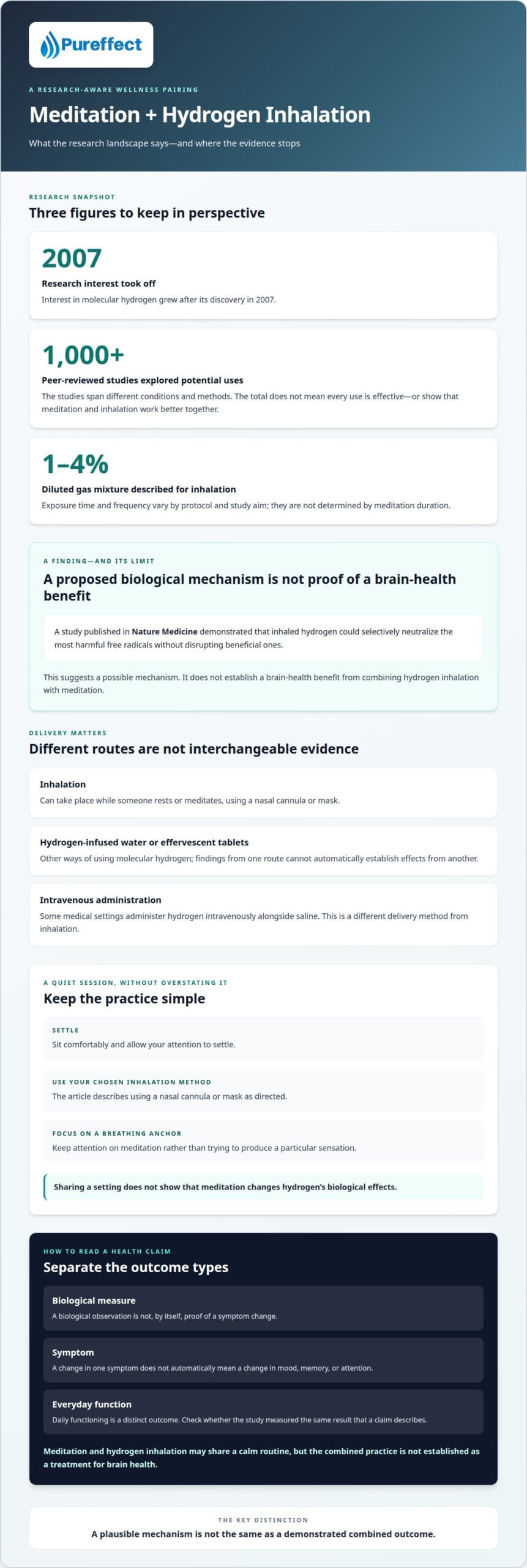
Combining hydrogen therapy with meditation means pairing molecular hydrogen inhalation with a quiet, attentive practice. You might sit comfortably, notice your breath, and allow your mind to settle while inhaling through a nasal cannula or mask. This creates a shared setting, not evidence that meditation changes hydrogen’s biological effects.
Molecular hydrogen is a molecule made of two hydrogen atoms. Research interest grew after its discovery in 2007, and more than 1,000 peer-reviewed studies have explored potential uses. These studies span different conditions and methods, so the total does not show that every use is effective or that meditation and inhalation work better together.
At the cellular level, molecular hydrogen can cross cell membranes, including the blood-brain barrier, and act inside mitochondria. One proposed explanation for its potential relevance is an effect on oxidative processes linked to cellular stress. A study published in Nature Medicine demonstrated that inhaled hydrogen could selectively neutralize the most harmful free radicals without disrupting beneficial ones. This suggests a possible mechanism, not proof of a brain-health benefit from combining hydrogen with meditation.
Hydrogen can be delivered through inhalation, hydrogen-infused water, or effervescent tablets dissolved in water. Some medical settings also administer hydrogen intravenously alongside saline. These methods deliver hydrogen differently, so findings from one route cannot automatically establish the effects of another. Inhalation is the route that can take place while someone meditates or rests.
Inhaled therapy is described using a nasal cannula or mask, with a diluted gas mixture around 1-4%. The session can be arranged around meditation without turning the practice into a medical treatment: settle into a comfortable position, use the inhalation method as directed, and focus on a simple breathing anchor. Keep attention on the meditation itself rather than trying to force a particular sensation.
What do medical organizations and regulators say about hydrogen therapy claims? A proposed cellular mechanism or study finding is not the same as an official medical recommendation. Distinguish claims about brain-health benefits from established clinical guidance.
How much do hydrogen therapy devices and sessions cost in the United States? Costs vary depending on whether someone uses a home device or a supervised session, along with the equipment and session format. There is no single price for all these options.
What doses, exposure times, and frequency have been studied for hydrogen therapy? Inhalation research describes mixtures around 1-4%, while protocols vary by delivery route and study aim. Exposure time and frequency depend on the protocol used, rather than on meditation duration.
Hydrogen inhalation may take place through a nasal cannula while someone rests or receives another therapy. It may also be administered through a mask, so the setup can form part of a resting session or accompany another therapy. Hydrogen can influence hundreds of genes, but this broad biological influence does not establish what someone will experience during meditation or prove that combining the practices produces a particular outcome. Meditation can remain focused on quiet attention while someone uses their chosen inhalation method.
Potential neuroprotection and brain health
Research on hydrogen raises questions about possible brain protection, but a proposed mechanism is not the same as a demonstrated benefit. To assess a claim, consider the outcome being discussed and whether it reflects a measurable change in health.
Potential Brain and Mood Benefits
Potential effects on the brain and mood are outcomes researchers may investigate, not established results for everyone. This distinction matters if you’re considering hydrogen for focus, emotional wellbeing, or recovery after illness.
Brain health can refer to different things, including memory, attention, and daily functioning. Mood is another outcome, and a change in one does not automatically mean a change in another. When you read a claim, identify the specific outcome it describes before deciding what it could mean for your goals.
Meditation Alone and Hydrogen Therapy
Meditation and hydrogen therapy are different practices, so compare them by considering the purpose of each. This helps prevent a calming experience from being mistaken for evidence of a biological effect.
Meditation can provide a structured way to direct attention during stress. Hydrogen therapy is studied for possible biological effects, but that does not establish that it works better than meditation alone for stress, inflammation, or recovery. For example, you can assess whether meditation supports a regular routine without assuming it changes hydrogen’s effects.
Likewise, using both practices in the same routine doesn’t show that either caused a particular change. Track mood, focus, and recovery as distinct observations, rather than treating them as interchangeable measures of brain health.
Evidence for Health Benefits
Evidence for a health benefit needs to address the outcome behind the claim. A proposed biological explanation can guide research, but cannot by itself establish that hydrogen prevents or treats brain illness.
When assessing a study, note whether it examines a biological measure, a symptom, or a change in everyday function. These are different outcomes. A result related to one should not be presented as proof of another, such as treating a biological observation as evidence of improved mood.
Consider whether the study’s question matches the claim you’re evaluating. Research on hydrogen alone cannot establish what happens when someone adds meditation. Keeping that distinction in mind helps tie expectations to the evidence, rather than extending findings beyond the question they addressed.
For readers considering home inhalation as part of a broader wellness routine, the home molecular hydrogen generator offers one way to explore that delivery method. Keep the focus on the specific outcome you care about, and distinguish a research question from a proven brain-health result.
Combining hydrogen therapy with other therapies
Hydrogen therapy may be considered alongside other wellness approaches, but pairing practices does not establish that their effects add up. Start by defining each practice’s role, such as using breathwork to direct attention or nutrition to support everyday nourishment.
For example, you can treat hydrogen inhalation and breathwork as separate parts of a routine. Breathwork directs attention to breathing patterns; hydrogen inhalation provides a different form of exposure. Keeping the activities distinct makes it easier to notice what each involves without assuming one enhances the other.
Nutrition is another consideration. A meal pattern and a hydrogen practice address different parts of a wellness routine, so one should not be framed as a substitute for the other. If you track energy or recovery, record meals, activity, and hydrogen use separately. This can make your observations more useful than changing everything at once.
Chiropractic care is also mentioned alongside hydrogen therapy as an approach intended to support nervous-system recovery. That pairing does not establish a clinical effect from combining them. Chiropractic care and hydrogen use are separate interventions, with different purposes and evidence questions.
- Breathwork: Keep the breathing practice simple, such as returning attention to each exhale, and treat hydrogen inhalation as a separate element.
- Nutrition: Maintain ordinary meal routines rather than expecting hydrogen to replace food or nutritional care.
- Chiropractic care: Consider the role of each modality separately, especially when discussing recovery goals.
A clear approach is to add only one new practice at a time. For instance, if you already use breathwork, first observe how it fits into your daily routine before adding hydrogen inhalation. This does not prove a biological effect, but it helps distinguish your experience of each practice and avoids attributing every change to the newest addition.
Existing medical treatment should retain its established place in a care plan. Hydrogen therapy is not a reason to stop prescribed medication or replace care for an illness. If you use several approaches, make any conversation with your clinician specific: name the therapy, your goal, and any changes you are considering. This gives them a clearer picture of your full routine.
The word “restore” can sound like a promise, so use it carefully. A wellness routine may support habits around rest, nutrition, or stress management, but combining approaches does not establish that they restore energy or speed recovery. Keep your goal concrete, such as building a steady breathwork habit, and evaluate each practice on its own terms.
Combining hydrogen therapy with other wellness modalities
A wellness routine can include more than therapies. Daily rhythms, gentle movement, and reflective practices also shape how you spend quiet time. Pairing hydrogen use with one of these habits can be a scheduling choice, not evidence that the combination creates a stronger effect.
Common meditation practices paired with wellness routines include a body scan, guided imagery, mantra meditation, and walking meditation. For example, you might choose a body scan while resting or repeat a phrase to anchor your attention during a quiet session.
Gentle movement is another way to build a routine. A slow walk, comfortable stretches, or mindful attention to posture can mark a transition between work and rest. If hydrogen inhalation is part of your routine, keep it as a separate activity before or after movement. Choose a practical sequence rather than assuming the order changes a health effect.
Sleep habits can also help you decide when wellness practices fit. You might set a consistent wind-down cue, such as dimming the lights or putting away a screen, then choose meditation or another quiet activity. Hydrogen use is not a substitute for sleep or proof of better rest. Keeping the purpose of each habit clear makes your routine easier to understand.
- Mindful movement: Try a slow walk or easy stretches as a separate practice.
- Wind-down routine: Pair a quiet activity with a familiar bedtime cue.
- Reflection: Write a brief note about the practice you chose and how it fit into your day.
A short journal entry can make your routine more intentional. Record the activity and why you chose it, such as wanting a calm transition after a busy day. Avoid treating one observation as proof that hydrogen or meditation caused a change. A useful note describes what happened without assigning it a medical meaning.
Keep your overall plan manageable. Choose one new habit, make room for it in your existing schedule, and decide whether it feels sustainable before adding another. This shifts the focus from stacking wellness practices to building a routine you can follow.
If home inhalation is part of the routine you’re exploring, the home molecular hydrogen generator is one option to learn about. Consider how any wellness practice fits your day, while keeping its purpose distinct from the others.
Pureffect: PureONE Molecular Hydrogen Generator
PureONE Molecular Hydrogen Generator gives you a home-use option for exploring hydrogen as part of a personal wellness routine. Its four modes let you inhale hydrogen gas, drink hydrogen-infused water, or apply it directly to the skin. If you’re considering meditation alongside hydrogen inhalation, the device may fit into a quiet session without making meditation itself a treatment.
These modes offer different ways to use molecular hydrogen, but they do not establish that hydrogen improves brain health or enhances meditation. Research findings should guide your expectations, and prescribed care remains separate from a wellness routine.
To learn more about the PureONE Molecular Hydrogen Generator, visit meetpureone.com or contact Pureffect.
Build a Routine That Fits Your Real Life
Start by deciding what you want your wellness routine to support. Is your priority setting aside quiet time, building a consistent meditation habit, or exploring hydrogen inhalation at home? A clear intention makes it easier to choose sustainable practices instead of adding several changes at once.
If you try combining hydrogen therapy with meditation, keep the routine simple and notice how each practice fits into your day. For example, you might set aside a calm period for meditation and treat hydrogen inhalation as a separate wellness activity. Keep prescribed care and professional guidance central to your health decisions.
Pureffect offers the PureONE Molecular Hydrogen Generator for people exploring hydrogen use at home. Explore the PureONE Molecular Hydrogen Generator to learn about this option and consider whether it suits your wellness routine.
Small, thoughtful choices can make a routine feel more personal and sustainable. Start with the practice that feels most useful to you.
Frequently Asked Questions
How might molecular hydrogen therapy interact with meditation or relaxation practices?
Molecular hydrogen inhalation and meditation can take place during the same quiet session, but a combined effect has not been established. You could use meditation to focus your attention while treating inhalation as a separate wellness practice. Notice whether the setup feels comfortable or interrupts your meditation. Do not treat feeling calm as evidence that hydrogen produced a specific health effect.
Are there clinical studies combining hydrogen therapy with meditation?
The research findings discussed in this article do not establish that a clinical study has tested hydrogen therapy and meditation together. They address hydrogen’s potential biological effects, not whether meditation changes those effects. This distinction matters when assessing claims about the combination. Look for research that directly evaluates both practices and measures a clearly defined outcome, rather than assuming findings on either practice apply to the pairing.
How can someone safely combine hydrogen therapy and meditation in a session?
Follow the inhalation method’s instructions and choose a comfortable seated or resting position for meditation. Keep the practice gentle: notice your natural breathing rather than forcing deep or rapid breaths. Stop if you feel unwell, and do not use a wellness routine to replace prescribed care. If you have a health condition or questions about using hydrogen alongside treatment, discuss your plan with your healthcare professional.
Disclaimer
The information provided by Pureffect and any of its products are for educational and informational purposes only and is not intended as medical advice. Individual results may vary, and no specific health outcomes are guaranteed. Always consult a qualified healthcare professional before starting any wellness practice or product.