
Why does an eight-hour sleep session sometimes feel like a three-hour nap in a drafty hallway? You’ve likely felt that heavy, leaden feeling in your limbs. Or perhaps it’s the mental fog that lingers for hours. It’s a common frustration. You’re putting in the time, but your body isn’t doing the work. This article dives into biohacking sleep for better recovery by shifting the focus from the bedroom environment to your internal cellular state.
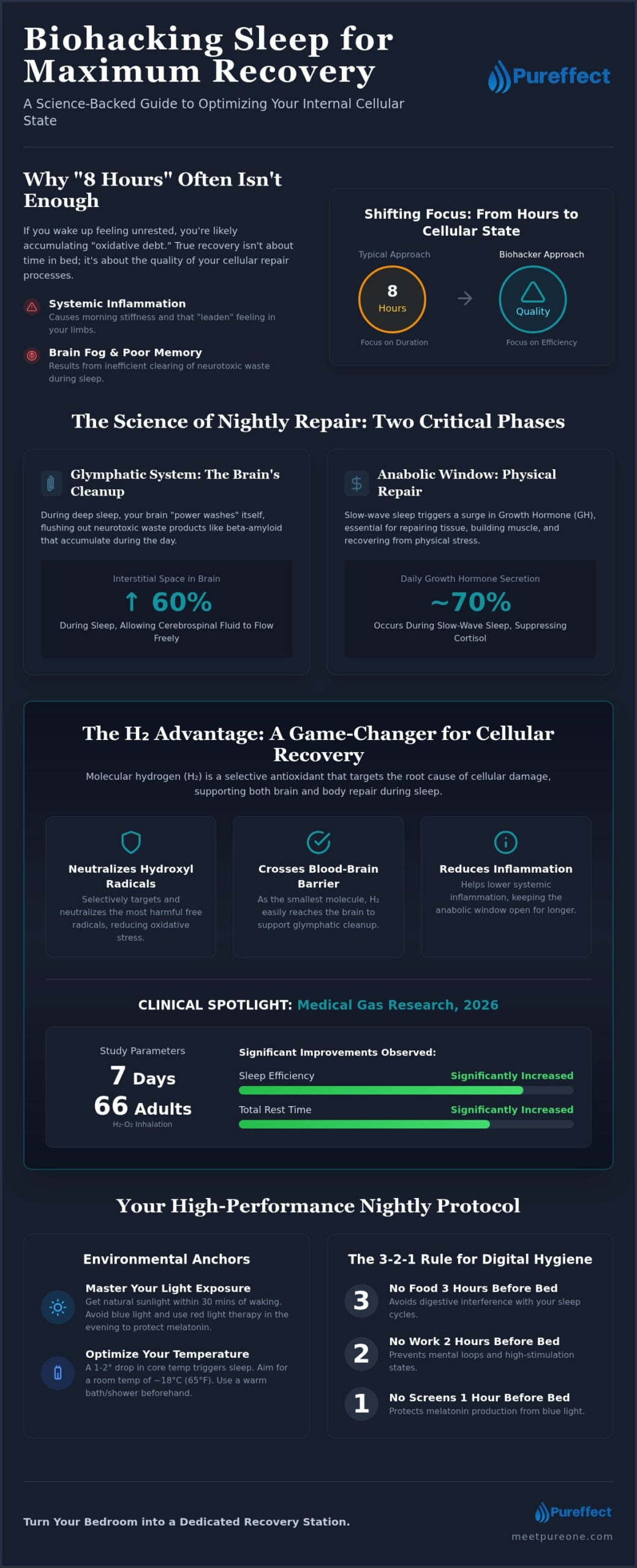
We’ll explore how to fine-tune your sleep architecture to maximize Deep and REM cycles. Recent 2026 research published in Medical Gas Research found that hydrogen-oxygen inhalation for just seven days in 66 adults significantly improved sleep efficiency and total rest time. By addressing oxidative stress at the molecular level, you can wake up without the systemic inflammation that causes morning stiffness. You’re about to discover a repeatable, high-performance night routine that turns your bedroom into a dedicated recovery station. Ready to stop guessing and start recovering?
Key Takeaways
- Discover how to activate your glymphatic system to “power wash” neurotoxic waste like beta-amyloid from the brain while you sleep.
- Learn how a simple one-to-two degree drop in core body temperature acts as a biological trigger to initiate your deepest sleep cycles.
- Explore why molecular hydrogen is a game-changer for biohacking sleep for better recovery due to its ability to neutralize harmful hydroxyl radicals.
- Master a repeatable night routine that combines hydrogen inhalation with cellular hydration to reduce muscle soreness and morning grogginess.
The Science of Biohacking Sleep for Better Recovery
Glymphatic Drainage: The Brain’s Nightly Cleanup
Imagine your brain has a built-in power washer. That’s the glymphatic system. Research shows that during sleep, the interstitial space in your brain increases by roughly 60%. This expansion allows cerebrospinal fluid to flush out neurotoxic waste like beta-amyloid. If this process is sluggish, neuro-inflammation sets in. This leads to brain fog and poor memory consolidation. This is where molecular hydrogen becomes a vital tool. Because it’s the smallest molecule in existence, it can easily cross the blood-brain barrier to support this cellular cleanup. It’s a foundational part of aligning your internal circadian rhythm with your body’s detoxification needs.
Anabolic Windows: Growth Hormone and Tissue Repair
Recovery is an active process, not a passive one. During slow-wave sleep, your body secretes roughly 70% of its daily Growth Hormone (GH). This is your primary driver for tissue repair and muscle growth. At the same time, your system works to suppress cortisol, the stress hormone that typically breaks down tissue. This balance is critical for muscle protein synthesis. What happens when you cut sleep short? Your body enters a catabolic state. A study published in the journal Sleep found that even one night of restricted sleep can significantly increase protein breakdown. To prevent this, many high-performers use the PureONE Molecular Hydrogen Generator to lower systemic inflammation before they hit the pillow. This ensures the anabolic window stays open as long as possible for maximum physical repair.
Environmental Anchors for Circadian Alignment
Your body’s internal clock doesn’t have a snooze button. It relies on specific environmental cues to tell it when to heal and when to perform. Anchoring this Master Clock starts the moment you wake up. Exposure to natural light in the first 30 minutes of the day sets a biological timer. This simple act regulates your melatonin production for the following night. Without this anchor, your system stays in a state of “circadian drift,” where your body never quite knows if it should be repairing or active. This misalignment is a primary reason people feel groggy despite “getting enough hours.”
Light as a Biological Signal
Melanopsin receptors in your eyes are the primary gatekeepers for your sleep cycle. These receptors are incredibly sensitive to blue light, which signals the brain to suppress melatonin. By 2026, adaptive lighting and “smart glass” have become standard tools for those serious about circadian stability. These technologies automatically filter stimulating wavelengths as the sun sets. To take it further, many biohackers use red-light therapy in the evening. This doesn’t just protect your melatonin; it helps stimulate mitochondrial health at a time when your cells are prepping for the nightly cleanup.
Thermal Biohacking for Deep Sleep Induction
Did you know a one to two degree drop in core body temperature is the actual trigger for sleep? Your brain needs to cool down to initiate the transition into deep rest. You can “hack” this through the Warm Bath Effect. A hot shower before bed causes peripheral vasodilation. This means your blood vessels expand near the skin, allowing heat to escape your core more efficiently once you step out. Recent research on cooling pads confirms that maintaining a slightly lower surface temperature can significantly extend the duration of Stage 3 sleep. This is the phase where the most physical repair happens. Setting your “recovery temperature” to around 18 degrees Celsius (65 degrees Fahrenheit) is a proven way to optimize sleep for better recovery.
Digital hygiene goes beyond just blue light filters. It’s about dopamine management. Engaging with high-stimulation content late at night keeps your brain in an “alert” state that’s hard to break. Try the 3-2-1 rule. No food three hours before bed. No work two hours before bed. No screens one hour before bed. This prevents digestive interference and mental loops from stealing your rest. When you combine these anchors, you create a perfect environment for biohacking sleep for better recovery. If you’re looking to accelerate the process, a quick pre-sleep session with a molecular hydrogen generator can help lower the day’s accumulated inflammation before your head hits the pillow.
Advanced Cellular Recovery: The Role of Molecular Hydrogen
Why do traditional vitamins often miss the mark when you’re asleep? Most antioxidants are too large to penetrate the mitochondrial membrane where the real damage happens. Molecular hydrogen is different. It’s the smallest molecule in the universe. This allows it to diffuse through cell membranes and reach the very center of your energy production. Unlike broad-spectrum antioxidants that might neutralize “good” free radicals needed for signaling, H2 is selective. It only targets the most cytotoxic ones, like hydroxyl radicals. Research has shown that hydrogen can significantly reduce C-reactive protein (CRP) levels. This is a primary marker of systemic inflammation that keeps you feeling stiff and tired. Understanding the science of hydrogen therapy for athletic recovery is essential for anyone serious about biohacking sleep for better recovery.
Neutralizing Oxidative Stress During the Sleep Cycle
During the repair phase of sleep, your cells produce Reactive Oxygen Species (ROS). While some ROS are normal, an excess can damage cellular DNA and stall the recovery process. High-quality medical studies emphasize the role of molecular hydrogen in upregulating your body’s endogenous antioxidant enzymes, such as glutathione and superoxide dismutase (SOD). Essentially, H2 doesn’t just fight the fire; it teaches your body how to build a better fire department. By reducing lipid peroxidation and stabilizing the mitochondrial membrane potential, molecular hydrogen acts as a potent mitoprotective agent that ensures your cellular energy centers remain intact during the repair process.
Inhalation vs. Ingestion: Maximizing Pre-Sleep Absorption
Should you drink it or breathe it? Both have benefits, but inhalation offers a higher systemic reach for immediate recovery. When you inhale a 66% hydrogen and 33% oxygen mixture, the gas enters your bloodstream directly through the lungs. This bypasses the digestive system for faster saturation. This specific 66/33 mix is often considered the gold standard for therapeutic safety and efficacy. If you’re curious about which method fits your lifestyle, check out our guide on hydrogen inhalation machines vs. water bottles. For a complete night routine, many find that a 30-minute inhalation session before bed provides the ultimate “reset” for their nervous system. Ready to upgrade your sleep? You can explore the PureONE Molecular Hydrogen Generator to start your own cellular protocol today.
The PureONE Sleep Recovery Protocol
Ready to put the science into practice? This protocol turns your bedroom into a high-performance recovery station. It’s designed to be simple, repeatable, and data-driven. By following these four steps, you ensure that biohacking sleep for better recovery becomes a standard part of your physiology rather than a lucky occurrence.
- Step 1: Engage in 30 to 60 minutes of evening hydrogen inhalation. This directly lowers the systemic inflammation accumulated during your daily activities.
- Step 2: Consume 500ml of hydrogen-infused water. This provides a reservoir of antioxidants to support overnight cellular hydration and repair.
- Step 3: Leverage the PureONE proprietary stainless steel condenser. This component ensures consistent gas purity, so you aren’t inhaling excess moisture or impurities.
- Step 4: Track your markers. Use your wearable to monitor Heart Rate Variability (HRV) and your Sleep Score to validate the protocol’s impact on your specific biology.
Implementing Hydrogen Inhalation into Your Nightly Routine
You don’t need to carve out extra time to see results. Use the cannula while you’re reading or practicing a brief meditation. This “biohack stacking” amplifies the calming effect on your nervous system. Hydrogen helps shift your body into parasympathetic dominance. This is the “rest and digest” state where the glymphatic system is most active. For a new way to use this, try a longer inhalation session on Sunday nights. This can help mitigate the effects of “social jetlag” by resetting your cellular stress markers after a weekend of altered schedules. It makes the transition back to your work week significantly smoother.
Measuring Success: HRV and Deep Sleep Trends
How do you verify the protocol is working? Look for the “hydrogen bump” in your Heart Rate Variability data. This is a noticeable increase in your autonomic nervous system’s resilience. You’ll likely see your Deep Sleep percentages climb as your body spends less energy fighting oxidative stress and more on tissue repair. Because true cellular resilience is built over weeks, we offer a 365-day risk-free trial. This allows you to track your physiological trends across all four seasons. Consistency is the secret. One night is a start; a month of this protocol is a total recovery transformation.
Mastering Your Nightly Cellular Reset
Are you ready to see what your body can do when it’s truly rested? This protocol is a series of intentional shifts that compound over time. You don’t have to guess if it’s working; you can track your own HRV and deep sleep trends to see the progress. Optimize your recovery with the PureONE Molecular Hydrogen Generator. Our system is proudly manufactured in Canada and is endorsed by health experts for building long-term cellular resilience. You can verify the results for yourself with our 365-day risk-free trial. You have the tools and the research. Now, it’s time to build a routine that works as hard as you do.
Frequently Asked Questions
How does molecular hydrogen improve sleep quality specifically?
Molecular hydrogen improves sleep quality by selectively neutralizing cytotoxic free radicals. Because it’s the smallest molecule, it easily crosses the blood-brain barrier to reduce neuro-inflammation. This process supports the glymphatic system’s ability to flush out metabolic waste. Reducing this internal oxidative stress allows the body to transition more efficiently into deep sleep cycles. It’s a foundational step in biohacking sleep for better recovery because it addresses the cellular cause of morning grogginess.
Is hydrogen inhalation safe to do every night before bed?
Yes, hydrogen inhalation is considered safe for nightly use. Molecular hydrogen is a non-toxic gas that the human body naturally produces in small amounts through gut fermentation. Using a generator like the PureONE provides a consistent 66/33 hydrogen-oxygen mix that supports cellular health without the risk of oxygen deprivation. Many users find that a nightly 30-minute session helps shift the nervous system into a parasympathetic state, making it easier to fall asleep and stay asleep.
What is the best time of day to use a hydrogen generator for recovery?
For sleep-specific benefits, the best time is 30 to 60 minutes before you plan to go to bed. This timing allows the gas to saturate your tissues and begin lowering systemic inflammation before your body enters its primary repair phase. If you’re also using it for physical recovery, a secondary session immediately after a workout can help mitigate acute oxidative stress. Using your generator in the evening ensures you’re clearing the day’s “oxidative debt.”
Can biohacking my sleep reduce muscle soreness after a workout?
You might notice a “calming” effect on your nervous system during your very first session. However, significant changes in sleep architecture, such as increased Deep and REM percentages, typically appear over two to four weeks of consistent use. Cellular resilience is built through repetition, not a single night of effort. This is why we provide a 365-day risk-free trial. It gives your body enough time to adjust and allows you to track long-term physiological trends.
Does the 66/33 hydrogen-oxygen ratio matter for sleep recovery?
The 66/33 ratio is critical for both safety and therapeutic efficacy. This specific mixture provides a high concentration of molecular hydrogen while ensuring you’re still receiving a life-sustaining 33% oxygen. It’s often cited in medical research as the gold standard for inhalation therapy. Using a ratio that isn’t precisely balanced can lead to inconsistent results. The PureONE uses a proprietary stainless steel condenser to maintain this exact ratio, ensuring every session supports your recovery goals.
Disclaimer
The information provided by Pureffect and any of its products are for educational and informational purposes only and is not intended as medical advice. Individual results may vary, and no specific health outcomes are guaranteed. Always consult a qualified healthcare professional before starting any wellness practice or product.