
A refreshing glass of water can start with a few slices of fruit and a sprig of herbs. Learning how to make antioxidant water at home is simple: add fresh ingredients to water and let their flavors infuse in the refrigerator. The ingredients contribute their own plant compounds and nutrients, while the flavor can make drinking water more appealing.
It’s useful to know what goes into the pitcher, not just how colorful it looks. This guide shares easy combinations of fruit, vegetables, and herbs, with practical tips for balancing flavors and choosing ingredients. It also explains what their antioxidant and nutritional properties may contribute, and where the benefits have limits: infused water adds flavor, but it isn’t the same as eating whole produce or a substitute for a varied diet. Start with a simple mix, taste as it infuses, and adjust it to suit you.
Key Takeaways
- Build a refreshing infusion with fruit, vegetables, and herbs, then adjust the steeping time and remove ingredients when the flavor suits you.
- Use a simple starting ratio of fresh fruit and herbs, and tailor the mix to the size of your pitcher.
- Learn how hydration may relate to digestion, mood, energy, and weight management without treating infused water as a cure-all.
- Explore the antioxidants and nutrients in ingredients such as citrus, berries, cucumber, mint, and rosemary.
- For another way to enjoy hydrogen-infused water at home, discover what the PureONE Molecular Hydrogen Generator offers.
Infusing water with fruits, vegetables, and herbs
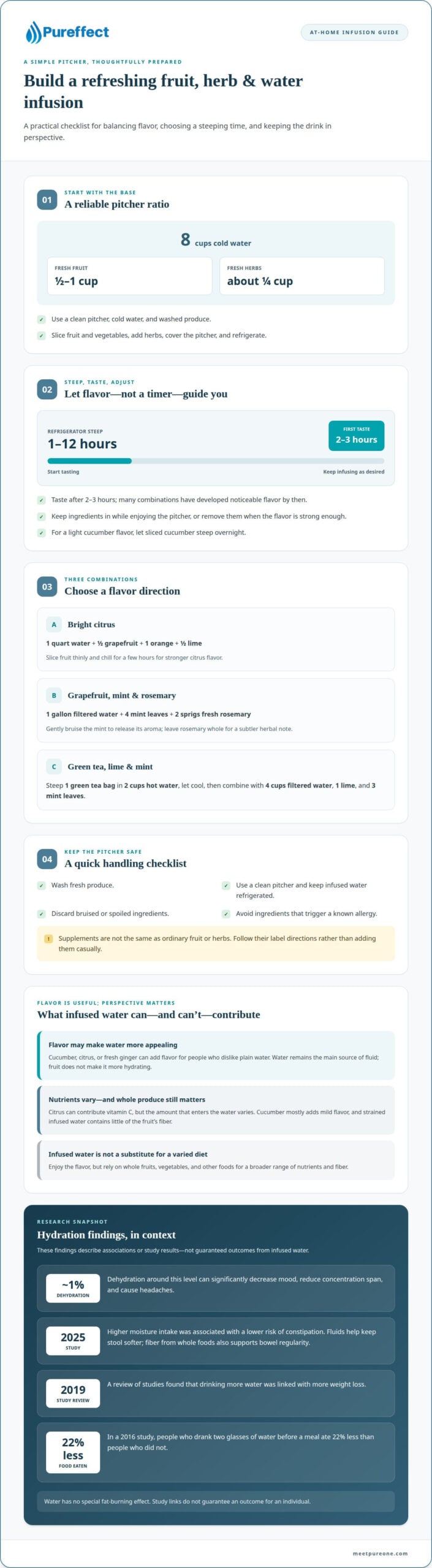
Start with a clean pitcher, cold water, and washed produce. Add sliced fruit, vegetables, or herbs, then cover the pitcher and place it in the fridge. For an easy batch, use 8 cups of water, about 1/2 to 1 cup of fresh fruit, and about 1/4 cup of fresh herbs. These combinations flavor water without turning the process into a complicated recipe. “Detox water” is a common name for these drinks, but the practical result is infused water with a fresh taste.
How long should ingredients steep? Cold-water infusions can sit in the refrigerator for 1 to 12 hours. Start tasting after 2-3 hours, when many combinations have developed a noticeable flavor. Keep the ingredients in while you enjoy the pitcher, or remove them once the taste is strong enough. For a light cucumber flavor, let sliced cucumber steep overnight. If cucumber flavor needs a quicker boost, blend cucumber, strain the juice, and mix it with water.
For watermelon citrus water, combine 4 cups of cubed watermelon with filtered water, orange, lemon, and sliced cucumber. A simpler citrus pitcher uses 1 quart of water, ½ grapefruit, 1 orange, and ½ lime. Slice the fruit thinly so more surfaces meet the water, then chill the mixture for a few hours for stronger citrus flavor. With watermelon, taste as it infuses; remove the pieces when the drink reaches your preferred sweetness.
Try grapefruit, mint, and rosemary for a more aromatic pitcher. Add 1 gallon of filtered water, 4 mint leaves, and 2 sprigs of fresh rosemary. Gently bruise the mint to release its aroma, but leave rosemary whole for a subtler herbal note. Refrigerate and taste as the flavors develop.
Can green tea, hibiscus, or other brewed teas work? Yes. Brew the tea, let it cool, then add fruit or herbs; for a green tea-lime combination, steep 1 green tea bag in 2 cups of hot water, then combine it with 4 cups of filtered water, 1 lime, and 3 mint leaves.
The cost of homemade antioxidant water depends on the produce and water you use. A purchased drink has its own price, so compare its serving size and ingredients with what you use in a homemade batch.
To reduce risks when adding citrus, berries, herbs, or supplements, wash fresh produce, use a clean pitcher, and keep the infused water refrigerated. Discard bruised or spoiled ingredients, and avoid anything that triggers a known allergy. Supplements aren’t the same as ordinary fruit or herbs, so follow their label directions rather than adding them casually.
Potential hydration and nutrition benefits
A refreshing drink can make plain water easier to choose throughout the day. Staying hydrated supports normal body functions, but fruit doesn’t make infused water more hydrating. Its practical advantage is flavor: cucumber, citrus, or fresh ginger may encourage someone who dislikes plain water to drink more. Fruit and herbs add taste, while water remains the main source of fluid.
Hydration also matters for digestion. A 2025 study found that higher moisture intake was associated with a lower risk of constipation. Fluids help keep stool softer, while fiber from whole foods supports bowel regularity. Strained infused water contains little of the fruit’s fiber, so pair it with fiber-rich foods rather than treating it as a substitute. That distinction keeps a healthy drink in perspective.
Mood and concentration can shift with fluid status, too. Dehydration of around 1% can significantly decrease mood, reduce concentration span, and cause headaches. A flavored glass of water won’t solve every cause of low energy, but drinking regularly can help prevent dehydration from contributing to those symptoms. If fatigue persists, hydration alone doesn’t explain it.
Could drinking more water support weight loss? A 2019 review of studies found that drinking more water was linked with more weight loss. In a 2016 study, people who drank two glasses before a meal ate 22% less than people who didn’t. These findings describe links, not a guaranteed outcome. Water has no special fat-burning effect, and replacing a sweetened drink with water changes the beverage choice, not the rest of a person’s diet.
Is antioxidant water better than plain water or store-bought antioxidant water? Neither option is automatically better for everyone. Plain water hydrates without added ingredients; homemade infusions let you choose the fruit, while packaged drinks vary in ingredients and nutrition. If you choose a bottled drink, check the label for added sugar.
What about vitamins and immune health? Citrus can contribute vitamin C, but how much enters the water varies with the fruit and steeping. A cucumber slice mostly adds mild flavor, not a substantial serving of nutrients. Fresh ginger brings a sharper taste, but infused water shouldn’t replace whole fruits, vegetables, or other dietary sources of nutrients that support normal immune function.
Antioxidants and nutrients in drink ingredients
Antioxidants are compounds that can help limit oxidation reactions in cells and foods. In infused drinks, plant pigments and phenolic compounds may pass from sliced produce into the water. Color offers a clue, but it doesn’t measure how much is extracted. Purple grapes, blackcurrants, and tart cherries bring distinctive colors and flavors. Their infusion, however, doesn’t provide the same fiber as eating whole fruit.
Blackcurrants and purple grapes contain anthocyanins, pigments responsible for their deep colors. Tart cherries also provide plant compounds, while kiwi adds a tangy flavor and vitamin C. Thin slices expose more fruit surface to the water, helping flavor spread through the pitcher. How many nutrients transfer varies with the ingredient, cut size, and steeping time. The finished drink isn’t nutritionally equivalent to the fruit itself.
Herbs and roots bring different compounds and flavors to a glass. Basil contains aromatic plant compounds, while ginger’s sharp taste comes partly from gingerols. Green tea contributes catechins when brewed, and hibiscus tea makes a tart, floral base. These ingredients create varied combinations without sugary syrups. Brew tea separately, let it cool, then add fruit or herbs for a more layered drink.
Water-soluble nutrients, including vitamin C, can pass into liquid, but an infusion isn’t a concentrated supplement. A kiwi slice or a few grapes may flavor water without providing a predictable nutrient dose. Refrigeration helps preserve freshness and slow flavor changes; remove fruit if it becomes soft or unpleasant. Eat the whole produce as well if you want its fiber.
For a simple tasting experiment, make two small batches with the same fruit. Slice the fruit in one batch and leave it in larger pieces in the other. Chill both in the refrigerator, then compare their flavors as they steep. Notice which combination tastes balanced without sweeteners. This shows how preparation changes the drinking experience while keeping infused flavor distinct from eating the ingredient.
How much fruit or herbs should you use per quart or liter of water?
Choose the water volume first, then build flavor gradually rather than packing the container. For a mild infusion, add enough sliced produce to flavor the water without filling the vessel. Thin apple slices, a few pieces of ripe pear, or a small sprig of thyme are easy starting points. Use less of stronger ingredients at first; an overstrong batch takes longer to mellow.
Ingredient shape matters as much as quantity. A thin slice of ginger exposes more surface area than a thick chunk, so it can flavor water quickly. Whole berries release flavor more slowly than crushed ones, while bruised basil leaves release their aroma readily. When learning how to make antioxidant water at home, match the amount to the ingredient’s intensity and how quickly it releases flavor.
Balance matters, too. Tart fruit can dominate a small container, so pair it with a milder ingredient rather than adding more tart slices. A fragrant herb can take over if crushed heavily; leave the leaves mostly whole for a gentler note. With a cinnamon stick, start with one. These choices let you tune the flavor without relying on a fixed fruit-to-water ratio.
To adjust a batch, taste a small glass before changing the whole container. If the infusion seems faint, add another slice or leaf, return the container to the refrigerator, and taste again later. If it’s too strong, remove some ingredients or add water. Note which combinations suit your palate, especially when repeating a recipe with fruit of different ripeness.
For a more consistent result, change one ingredient at a time. If a pear-and-thyme drink tastes too herbal, use less thyme in the next batch while keeping the pear amount unchanged. If it lacks fruit flavor, adjust the pear instead. This approach helps you find quantities that work for your container and ingredients. The best starting amount for how to make antioxidant water at home depends on flavor intensity, cut size, and personal taste.
Pureffect
If you’re curious about another kind of water prepared at home, Pureffect offers the PureONE Molecular Hydrogen Generator. It makes hydrogen-infused water, which differs from fruit-infused water: fruit adds flavor and plant compounds, while the device adds molecular hydrogen to water. The approaches suit different preferences, and neither replaces the other. You can continue making fresh fruit infusions while exploring another way to prepare water at home.
PureONE is designed with four therapeutic modes. It allows users to drink hydrogen-infused water, inhale hydrogen gas, or apply it directly to the skin. Consider it if you’re interested in these options as part of a personal wellness routine, rather than simply adding fruit or herbs for taste. The device is designed to support overall wellness and reduce inflammation; that description isn’t a promise of a specific result or a substitute for medical care.
What does this mean for your daily water choices? Citrus or berry infusions add fresh flavor and let you choose the ingredients. PureONE serves a separate interest: preparing hydrogen-infused water at home. Keep those purposes in mind when deciding what suits your routine. Neither option replaces a meal, and fruit-infused water shouldn’t take the place of whole produce or varied nutrition.
Choose the option that matches your goal. If you want flavor, start with a pitcher of fruit, vegetables, or herbs. If you’re interested in using molecular hydrogen at home, explore the PureONE Molecular Hydrogen Generator and its options for drinking, inhaling, and applying hydrogen to the body or skin. Consider how these uses differ from a simple kitchen infusion.
Pureffect’s PureONE is a home-use wellness device, not a medical diagnostic service. If you have a health concern or are considering changes to your care, speak with a qualified healthcare professional. For questions about the generator, contact Pureffect.
Make your next glass your own
You now know how to make antioxidant water at home. Notice what makes the habit enjoyable: a gentler flavor, a new fruit pairing, or a pitcher ready when you want a drink. Small adjustments can help you create a routine that feels personal rather than following a fixed recipe. Stay curious in the kitchen and let taste guide your choices.
Infused water and molecular hydrogen water are different options for people with different interests. If you’d like to explore molecular hydrogen water, Pureffect offers the PureONE Molecular Hydrogen Generator. Read about the device to decide whether it fits your approach to home wellness.
Explore the PureONE Molecular Hydrogen Generator, then choose the water routine that feels right for you. A thoughtful glass is a simple place to begin.
Frequently Asked Questions
What is antioxidant water, and what health benefits are supported by evidence?
Antioxidant water is a casual name for water flavored with ingredients that contain antioxidant compounds. Drinking it contributes to fluid intake, but the name doesn’t prove a distinct health benefit. Evidence about individual nutrients or plant compounds doesn’t show that an infused drink prevents disease. Enjoy it as a beverage, not as a treatment or a replacement for medical advice.
How do you make antioxidant water at home with fruit, herbs, or tea?
Start with one fruit, one herb, or a tea base, then adjust the combination to taste. For a different flavor, try sliced plum with a small sprig of tarragon. Serve the drink with a clean utensil, and don’t sweeten it automatically. A simple pairing makes it easier to identify which ingredient contributes the flavor you enjoy.
What ingredients are richest in antioxidants for homemade infused water?
No single ingredient is richest in antioxidants in every infusion. Content varies by plant variety and preparation, and rankings for whole foods don’t establish what ends up in water. For a fresh combination, try red cabbage ribbons with a little sliced apple. Treat the ingredients as flavor choices rather than relying on a drink to provide a specific antioxidant dose.
How long should antioxidant water steep, and should it be refrigerated?
Steep the ingredients until they taste pleasant, since delicate herbs and strongly flavored produce develop differently. Taste a small serving before adjusting the whole batch. Keep fresh-produce infusions chilled in a covered container to protect them from other refrigerator flavors. If the ingredients look spoiled or the drink smells off, discard the batch.
Does infused water retain enough antioxidants to provide meaningful health benefits?
There’s no standard antioxidant amount that makes an infused drink meaningfully beneficial. Laboratory measures of antioxidant activity don’t, by themselves, show what happens after someone drinks a recipe. The ingredients, preparation, and amount consumed all matter. Treat the infusion as flavored water, not a measured supplement. If you want particular nutrients, choose foods with known nutrition information rather than estimating from a drink’s color or taste.
Disclaimer
The information provided by Pureffect and any of its products are for educational and informational purposes only and is not intended as medical advice. Individual results may vary, and no specific health outcomes are guaranteed. Always consult a qualified healthcare professional before starting any wellness practice or product.