
The biggest difference between hydrogen water and ionized water isn’t simply how they taste: it’s what each feature measures. Hydrogen water contains dissolved molecular hydrogen (H₂), while ionized water is usually discussed in terms of its pH. The two can overlap, but they aren’t interchangeable.
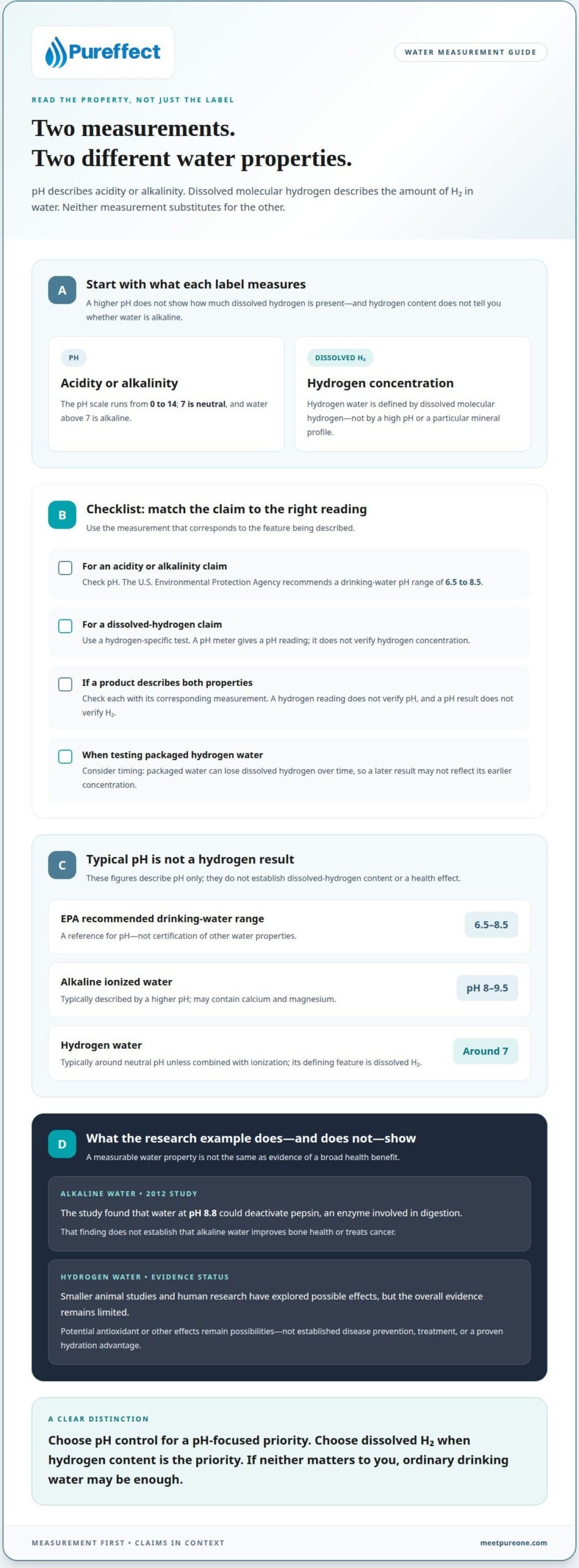
The labels can be confusing because both refer to specially treated drinking water, and some devices may combine hydrogen and pH features. But a higher pH does not show how much dissolved hydrogen the water contains, just as hydrogen content does not tell you whether water is alkaline.
This guide explains how pH and dissolved hydrogen differ, what devices are designed to produce each, and what research can and cannot tell us about potential benefits. It also offers a practical way to choose: consider whether you want hydrogen in your water, pH control, or a clearer understanding of both before deciding. Comparing the labels and measurements makes the distinction easier.
Key Takeaways
- Separate the two measures: pH describes acidity or alkalinity, while dissolved molecular hydrogen is a different property of water.
- According to the U.S. Environmental Protection Agency, the recommended drinking-water pH range is 6.5 to 8.5.
- Learn what medical research has explored about hydrogen water and alkaline water, and where evidence about potential benefits remains limited.
- Choose a device based on whether your priority is hydrogen output or control over water’s pH.
- See how the PureONE Molecular Hydrogen Generator may fit if you’re interested in hydrogen-infused water and other ways to use molecular hydrogen.
Should You Switch to Specialized Drinking Water?
Whether to switch depends on what you want to change: the water’s pH, its dissolved molecular hydrogen, or neither. These are different properties, so higher pH alone does not indicate hydrogen content or a health benefit.
Alkaline Ionized Water
Alkaline ionized water is the drinking-water stream associated with a higher pH and minerals such as calcium and magnesium. It typically measures between pH 8 and 9.5; the acidic water associated with ionized-water systems typically measures between pH 4.5 and 5.5. These are different water types, but the pH label doesn’t tell you the dissolved hydrogen level.
Hydrogen Water
Hydrogen water contains dissolved molecular hydrogen, H₂. It typically has a pH around 7 unless it’s combined with ionization, so it can be neutral rather than alkaline. Its defining feature is dissolved hydrogen, not a higher pH or a particular mineral profile. An alkaline reading, by itself, doesn’t establish that water contains H₂.
Here’s the practical distinction: alkaline water is classified by pH, while hydrogen water is characterized by dissolved gas. The pH scale runs from 0 to 14, with 7 neutral; water above pH 7 is alkaline. A higher pH doesn’t show that water can neutralize free radicals or deliver a specific wellness effect.
Research gives a narrow example, not a broad health conclusion. A 2012 study found that alkaline water at pH 8.8 could deactivate pepsin, an enzyme involved in digestion. That finding doesn’t establish that alkaline water improves bone health or treats cancer. Athletes choosing a drink should distinguish those medical claims from the measurable properties of the water.
| Water type | Main distinguishing feature | Typical pH | What the label tells you |
|---|---|---|---|
| Alkaline ionized water | Higher pH; may contain calcium and magnesium | 8 to 9.5 | Alkalinity, not hydrogen level |
| Hydrogen water | Dissolved molecular hydrogen | Around 7, unless combined with ionization | Hydrogen content, not alkalinity |
Choose based on the property you want: pH control points to alkaline water, while dissolved H₂ points to hydrogen water. If neither is a priority, ordinary drinking water may be enough.
What is Hydrogen Water?
Hydrogen water is drinking water with dissolved molecular hydrogen, promoted for possible antioxidant and other health effects. Its proposed benefits remain an active area of research, not a proven reason to replace everyday hydration habits.
Claimed Benefits of Hydrogen Water
Supporters suggest hydrogen water may help counter oxidative stress, support exercise recovery, or benefit metabolic health. These claims concern possible biological effects, not a special hydration advantage. Like regular water, it supplies fluid; current evidence does not establish that its hydrogen content makes it more hydrating.
That distinction matters for athletes and anyone choosing drinks for daily activity. Hydrogen water may interest people exploring antioxidant properties, but it should not be treated as a substitute for fluids or a balanced diet. The presence of molecular hydrogen also does not mean a person will experience a particular health effect.
What about risks or side effects? Water with a pH over 9.8 can cause problems, including too much potassium; that concern relates to high-pH water, not dissolved hydrogen itself. The evidence provided here doesn’t establish a specific side-effect profile for hydrogen water, so avoid treating it as a medical treatment.
Health Evidence and Limitations
Some smaller animal studies suggest potential benefits from hydrogen water, but animal findings do not establish the same effects in people. Human research has explored hydrogen-rich water in different settings, yet the overall evidence remains limited. Study duration or participant group alone cannot show that a benefit occurred or that the water caused it.
For now, treat health claims as possibilities rather than established outcomes. An antioxidant explanation may sound plausible, but it does not prove that hydrogen water prevents or treats disease. More research is needed to clarify which effects, if any, are meaningful for people and under what conditions.
If you’re curious about preparing hydrogen-infused water at home, the PureONE hydrogen water generator is one option to explore. Keep the device decision separate from medical claims, and treat hydration as a basic everyday need rather than a promised specialized-water benefit.
Differences in pH and Dissolved Molecular Hydrogen
Different readings answer different questions, so compare the measurement with the claim it supports. The U.S. Environmental Protection Agency recommends a drinking-water pH range of 6.5 to 8.5.
Water pH
A pH result helps interpret a claim about acidity or alkalinity, but it does not describe every feature of a water sample. The EPA range provides context for drinking-water pH, but does not certify a product’s other properties. If a label highlights a particular pH, compare that claim with a pH measurement rather than inferring benefits from the number alone.
When comparing products, the difference between hydrogen water and ionized water matters because their labels may refer to different measurements. A pH value cannot substitute for a hydrogen result; neither reading establishes a health outcome.
Dissolved Molecular Hydrogen
Hydrogen concentration requires its own measurement. A hydrogen-specific test assesses the dissolved amount, while a pH meter gives a pH reading. If a device describes both properties, check each with the corresponding measurement. A hydrogen reading, for example, does not verify a stated pH range.
Timing matters when measuring hydrogen: bottled or packaged hydrogen water can lose dissolved hydrogen over time. A later result may not represent the water’s earlier concentration. Check which property is measured and when the sample is tested.
Water Definitions and Composition
When comparing product descriptions, focus on the specific data provided. Both pH and dissolved hydrogen can apply to one sample, but evidence for one does not verify the other.
Keep measurements separate from their interpretation. The EPA recommendation is a reference for drinking-water pH, not a hydrogen threshold or a medical finding. Likewise, a hydrogen test result measures composition; it does not prove an antioxidant or anti-inflammatory effect. This distinction helps clarify the difference between hydrogen water and ionized water when assessing labels, measurements, and health claims.
Choosing a Device for Hydrogen Output or pH Control
Start with your intended use, then compare device specifications with that goal. If you want a particular output, prioritize the relevant measurement, operating instructions, and how the device fits into daily routines. Neutral pH, a desire for balance, and interest in magnesium are different considerations, so avoid choosing on the basis of a wellness slogan alone.
These ranges describe market categories, not the price of any specific device; ongoing filter replacement and power use can also affect ownership costs.
For a device that produces hydrogen, compare its stated output with a reading from a tool designed to measure dissolved hydrogen. Use the same water, follow the tester’s instructions, and note when you take the sample. Hydrogen can escape from water over time, so a delayed reading may differ from one taken soon after preparation.
For an ionizer, assess claims about its settings with a pH meter and record the sample’s pH. Make sure the tested sample corresponds to the setting you are evaluating. A feature list or display reading alone does not show every result in the glass. Test the selected setting, for example, rather than assuming all settings produce the same result.
Health goals require a separate perspective. A device measurement does not establish that water relieves acid reflux, reduces stress, or produces antioxidant effects. If you are considering water for a health concern, distinguish measurable device output from evidence about outcomes. Evaluate magnesium content directly rather than inferring it from a device’s name or settings.
Choose the device whose documented measurements and everyday use match your priority. If you’re interested in making hydrogen-infused water at home, explore the PureONE Molecular Hydrogen Generator as one option. A clear target makes it easier to compare features, testing methods, and the practical costs of ownership.
Pureffect: PureONE Molecular Hydrogen Generator
PureONE Molecular Hydrogen Generator is a relevant option if your priority is dissolved molecular hydrogen rather than pH control. Designed for home use, it offers several ways to incorporate hydrogen into a wellness routine. It is suited to people interested in hydrogen-infused water, inhalation, or topical application, rather than those mainly seeking to adjust water’s alkalinity.
The distinction matters: pH describes acidity or alkalinity, while dissolved H₂ is a separate property of water. PureONE is a molecular hydrogen generator, not a water ionizer for pH control. If a particular pH range is your main goal, its hydrogen focus may not match that priority. If you want hydrogen, its multiple modes may be relevant.
PureONE offers four therapeutic modes. The listed uses include inhaling hydrogen gas, drinking hydrogen-infused water, and applying hydrogen directly to the skin. These options let people consider how the product could fit their routines. For example, someone focused specifically on drinking hydrogen water can use that mode, while another person may value the additional inhalation or topical options.
The machine produces a consistent mixture of 66% molecular hydrogen and 33% oxygen. That specification describes the gas mixture it produces; it isn’t a pH reading or a measurement of water’s acidity. Keep those measures separate when deciding whether a hydrogen-focused product fits your goal. The stated mixture also shouldn’t be confused with a claim that hydrogen water treats a medical condition.
PureONE is designed to support overall wellness and reduce inflammation. This is its intended wellness purpose, not a reason to treat it as a substitute for medical care or proof of a particular health outcome. A clear decision starts with your intended use: hydrogen output, not pH adjustment.
If you want a home device for hydrogen-infused water, inhalation, and topical use, consider the PureONE Molecular Hydrogen Generator. Explore PureONE and choose the mode that best fits your wellness routine.
Choose a Water Approach That Fits Your Goals
Turn your curiosity into a clear personal priority. Are you exploring a wellness routine, looking for a particular water characteristic, or comparing product claims? Decide what would make an option useful in everyday life, and keep that goal separate from health promises that research has not established.
Understanding the difference between hydrogen water and ionized water helps you focus on the feature that matters to you rather than being swayed by broad labels. It also provides a grounded way to decide whether a specialized device belongs in your routine. You do not need to make a change just because an option sounds advanced.
If a home hydrogen-focused device feels like a reasonable next step, explore the PureONE Molecular Hydrogen Generator and contact Pureffect to discuss your water options. Take your time, ask what matters to you, and choose with confidence.
Frequently Asked Questions
What Is Ionized Water?
Ionized water is described in terms of pH, with alkaline and acidic forms. Home water ionizers are designed to provide water at different pH settings, including alkaline drinking water. The word “ionized” alone does not tell you the water’s mineral content or dissolved hydrogen level. A pH measurement can show a sample’s acidity or alkalinity, but not those other properties.
What Are They?
These are types of specially treated water named for different characteristics. Hydrogen water is identified by dissolved molecular hydrogen, while ionized water is generally described by pH. A single sample can have both characteristics, so the labels are not always mutually exclusive. When comparing products, check whether each label refers to hydrogen content, pH, or both.
What Is Hydrogen Water and How Is It Made?
Hydrogen water is drinking water with molecular hydrogen dissolved in it. A hydrogen-water generator or bottle adds hydrogen for drinking, and the device determines how the water is prepared. Hydrogen can escape over time, so drinking freshly prepared water helps preserve its dissolved hydrogen. For a practical comparison, distinguish information about a device’s hydrogen output from its pH reading, since they describe different properties.
What Is Ionized Water and How Does a Water Ionizer Work?
Ionized water is water produced at different pH settings by a water ionizer. Some systems offer alkaline drinking water and an acidic stream for uses such as surface cleaning or gentle skin rinsing. The device’s practical role is pH control, and its pH range and settings vary by model. Measuring a finished sample’s pH can assess acidity or alkalinity, but not dissolved hydrogen.
How Do Hydrogen Water and Ionized Alkaline Water Differ in Composition and pH?
Hydrogen water is characterized by dissolved H₂, while alkaline ionized water is characterized by its pH and may contain minerals such as calcium and magnesium. These properties can overlap in one sample. Water can be alkaline and contain dissolved hydrogen, for instance, but pH alone does not show hydrogen concentration. Consider each property separately when interpreting product information or test results.
Does Ionized Water Contain Dissolved Molecular Hydrogen?
It can, but the term “ionized water” alone does not establish whether a sample contains dissolved H₂ or how much. The amount depends on the water and the device that produces it. A hydrogen-specific measurement can assess dissolved hydrogen; a pH test cannot. When comparing readings, test the water itself rather than assuming its pH reveals its hydrogen content.
Disclaimer
The information provided by Pureffect and any of its products are for educational and informational purposes only and is not intended as medical advice. Individual results may vary, and no specific health outcomes are guaranteed. Always consult a qualified healthcare professional before starting any wellness practice or product.