
What if the secret to a full night’s rest isn’t a heavier sedative, but the smallest molecule in the universe? You’re likely tired of waking up at 3:00 AM. That morning brain fog is a heavy price to pay for poor sleep architecture. Improving sleep quality with hydrogen gas is moving from a niche biohack to a clinical reality. A 2026 randomized controlled trial published in Medical Gas Research involving 66 participants found that hydrogen-oxygen inhalation significantly improved total sleep time and efficiency after just seven days. It’s a promising shift toward restorative rest without the grogginess of pharmaceutical aids.
In this guide, we’ll explore how molecular hydrogen targets neuroinflammation to reset your biological clock. We’ll look at the 2025 HYDRAPPET data and the large effect sizes seen in 2024 Long-COVID sleep studies. You’ll discover how the latest clinical breakthroughs in molecular hydrogen therapy are helping people overcome sleep fragmentation. We’ll break down the evidence so you can decide if this non-pharmaceutical approach is the right fit for your health journey. Ready to see what the latest science says about your sleep architecture?
Key Takeaways
- Understand why oxidative stress in the brain’s hypothalamus is often the hidden culprit behind persistent nighttime hyperarousal.
- See the data from a 2026 randomized controlled trial showing significant gains in sleep efficiency after just one week of therapy.
- Learn how to use a specific 66/33 hydrogen-oxygen ratio to shift your nervous system into a restorative “rest and digest” state.
- Discover the “sweet spot” for timing your sessions to maximize the benefits of improving sleep quality with hydrogen gas.
- Get a step-by-step protocol for combining inhalation and infusion to reset your biological clock without morning grogginess.
The Oxidative Stress-Insomnia Cycle: Why Your Brain Can’t Switch Off
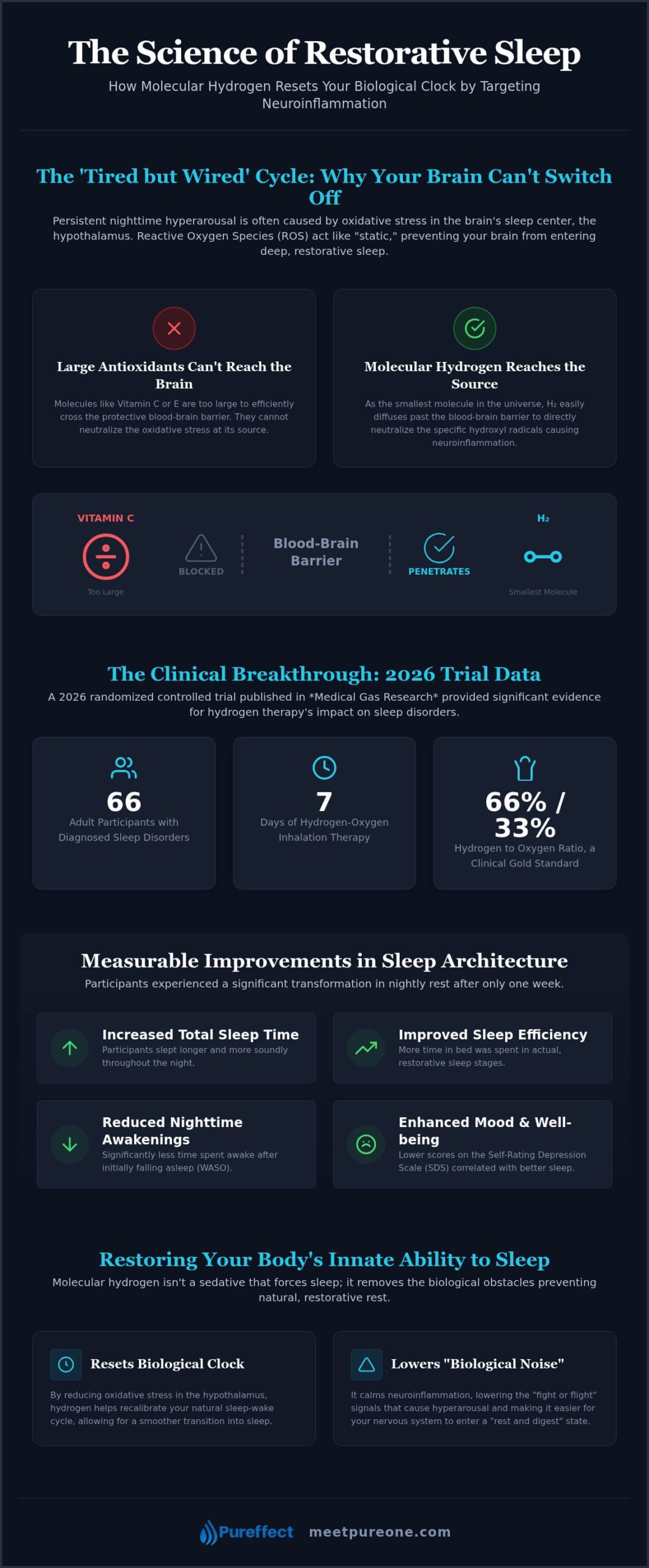
Ever wonder why your mind races the second your head hits the pillow? It isn’t always just stress from work or a busy schedule. Often, it’s a physiological glitch. Reactive Oxygen Species (ROS) act like static on a radio, creating a state of nighttime hyperarousal. When these unstable molecules accumulate in the hypothalamus, your brain’s primary sleep-regulating center, they disrupt the delicate balance of your sleep-wake drive. This creates a frustrating loop where your body is exhausted, but your neurons are firing as if you’re in the middle of a crisis.
Oxidative sleep fragmentation is the biological inability to maintain deep sleep stages. When this occurs, you might fall asleep, but you won’t stay under. Your brain keeps “pinging” awake because it can’t reach the metabolic stability required for long-term rest. Improving sleep quality with hydrogen gas is gaining traction because it addresses this specific cellular instability. Most people reach for standard antioxidants like Vitamin C or E to fight inflammation, but there’s a catch. These molecules are physically too large to cross the blood-brain barrier efficiently. They simply can’t get to where the trouble is. This is where Hydrogen therapy enters the conversation. Because molecular hydrogen is the smallest element in existence, it doesn’t just circulate in your blood; it diffuses through cell membranes and enters the brain’s protected zones to neutralize oxidative “static” at the source.
The ‘Tired but Wired’ Phenomenon
Do you feel exhausted yet strangely alert? This state is often driven by neuro-inflammation. When cellular inflammation stays high, your brain perceives a threat and stays in a state of high alert. This makes transitioning into REM sleep nearly impossible. Molecular hydrogen’s incredibly small size allows it to target the brain’s sleep centers directly. By neutralizing the specific hydroxyl radicals that trigger this inflammation, hydrogen helps your brain finally feel safe enough to power down. It’s about lowering the “biological noise” so your natural sleep architecture can take over.
Breaking the Cycle Naturally
Many traditional sleep aids simply mask symptoms by sedating the central nervous system. They don’t fix why you’re awake; they just shut you down. Addressing the oxidative root cause is a different strategy altogether. By reducing systemic inflammation, you’re removing the obstacles to natural rest. This creates a foundation for deep, restorative recovery rather than a chemically induced stupor. Improving sleep quality with hydrogen gas isn’t about forcing sleep; it’s about restoring your body’s innate ability to find it. If you’re curious about the mechanics of this molecule, you can explore the Pureffect generator to see how this science is applied in a home setting.
The 2025 Clinical Breakthrough: How Hydrogen-Oxygen Inhalation Resets Sleep Architecture
The research landscape changed significantly with the publication of a 2025 Clinical Breakthrough in the journal Medical Gas Research. This wasn’t just a small pilot study. It was a single-blind, randomized controlled trial involving 66 adults struggling with diagnosed sleep disorders. What did the researchers find? After only seven days of inhaling a specific hydrogen-oxygen mixture, the treatment group experienced a transformation in their nightly rest. Participants in the 2025 study saw measurable improvements in sleep quality by day three of therapy.
Improved Sleep Efficiency and Maintenance
The study focused on a 66% hydrogen and 33% oxygen ratio. This specific mixture is often considered the gold standard in clinical settings. Why does this matter for you? The data showed a significant increase in Total Sleep Time (TST) and overall Sleep Efficiency. Perhaps the most impressive metric was the reduction in Wake Time After Sleep Onset (WASO). That’s the technical term for those frustrating minutes, or hours, spent staring at the ceiling after you’ve already drifted off once. Improving sleep quality with hydrogen gas means fewer midnight awakenings and a more seamless bridge between sleep cycles.
Mood, Anxiety, and the Sleep Connection
Sleep doesn’t happen in a vacuum. It’s deeply tied to your emotional state. The 2025 trial used the Self-Rating Depression Scale (SDS) to track participant well-being. The results were clear. As sleep improved, scores on the SDS dropped. It’s a bidirectional relationship. Better sleep lowers anxiety; lower anxiety leads to deeper sleep. This systemic effect is similar to how hydrogen therapy supports athletic recovery by managing the body’s overall stress response. When you lower the “biological noise” of anxiety, your brain finally has the permission it needs to stay under.
If you’re looking to bring this clinical-grade 66/33 ratio into your own bedroom, the PureONE generator is designed to deliver that exact balance. It’s a straightforward way to apply these research findings to your nightly routine. Improving sleep quality with hydrogen gas isn’t just about feeling rested; it’s about giving your nervous system the tools it needs to recalibrate.
Neurological Harmony: Hydrogen’s Role in Melatonin and Autonomic Balance
Ever feel like your body’s “off” switch is broken? This often happens when your Autonomic Nervous System (ANS) gets stuck in a sympathetic state, commonly known as “fight or flight.” To fall into a deep, restorative sleep, your body must shift into a parasympathetic “rest and digest” state. Molecular hydrogen acts as a gentle modulator for this system. By supporting this neurological transition, hydrogen helps you enter the non-REM stages where physical repair actually happens. There is also evidence suggesting that hydrogen inhalation may enhance your body’s endogenous melatonin production, making the onset of sleep feel more natural and less forced.
The link between cellular stress and sleeplessness is well-documented. Research from major institutions highlights that when we lack rest, our vascular cells are essentially drowning in oxidants. Breaking The Oxidative Stress-Insomnia Cycle is a critical step in reclaiming your nights. Improving sleep quality with hydrogen gas works by targeting the root of this neurological noise, allowing your brain to finally settle into a quiet, receptive state for rest.
The Vagus Nerve and Hydrogen Therapy
The vagus nerve is the primary highway for relaxation in your body. Emerging perspectives suggest that hydrogen gas helps calm this nerve, which can be seen in improved heart rate variability (HRV) before bed. Beyond just relaxation, molecular hydrogen acts as a cellular housekeeper. It helps “clear” the metabolic waste products that accumulate in your brain during a busy day. This process is vital for your long-term mitochondrial health, ensuring that your cells have the energy they need to perform nighttime recovery tasks without interruption.
Circadian Rhythm Resilience
Modern life is a constant assault on your internal clock. Between blue light from screens and the persistent stress of a 24/7 world, your circadian rhythm can easily fall out of sync. A 20 to 30 minute inhalation session before bed can act as a biological “reset” button. It signals to your brain that the day is over and it’s time to recover. Consistency is the secret here. Improving sleep quality with hydrogen gas is most effective when it becomes a staple of your nightly hygiene. Over time, this helps build resilience against the environmental factors that typically disrupt your sleep-wake drive.
If you’re ready to experience this shift in your own nightly routine, you can explore the PureONE Molecular Hydrogen Generator to start your own evidence-based protocol for better rest.
Designing Your Nightly Protocol: Integrating Molecular Hydrogen for Deep Recovery
You have the data. You understand the neurological shift. Now, how do you actually apply this to your life? Timing is everything when it comes to improving sleep quality with hydrogen gas. Most experts recommend a “sweet spot” of 30 to 60 minutes of inhalation immediately before bed. This window allows the molecular hydrogen to reach peak concentrations in the brain just as your natural sleep-wake drive begins to take over. To maximize the effect, combine this with a low-stimulation environment. Swap the smartphone for a physical book or a light meditation practice while you inhale. It’s about creating a signal to your body that the day is officially done.
The PureONE Molecular Hydrogen Generator offers a distinct advantage here because it delivers a consistent 66/33 hydrogen-oxygen ratio. This specific balance ensures you’re receiving the therapeutic levels used in recent clinical trials without the guesswork. Using a multi-modal approach-inhaling the gas while also drinking hydrogen-infused water earlier in the evening-provides a comprehensive cellular “flush” that primes your system for rest.
Step-by-Step Evening Routine
- Step 1: Drink a glass of hydrogen-rich water two hours before bed. This initiates the systemic antioxidant process early.
- Step 2: Set your generator to inhalation mode 45 minutes before sleep. Use a comfortable nasal cannula and engage in a relaxing, screen-free activity.
- Step 3: Track your progress. Use a wearable device or a simple sleep journal to monitor your deep sleep stages and morning alertness over a 30-day period.
Long-Term Results and the 365-Day Trial
Are you expecting a miracle in one night? While some people notice a difference immediately, the most profound changes to sleep architecture are cumulative. Improving sleep quality with hydrogen gas is a marathon, not a sprint. Significant biological shifts in oxidative balance often manifest more clearly at the 30, 60, and 90-day marks. This is why consistency is the foundation of any successful protocol.
Because we value transparency, we encourage you to invest in preventative health with a long-term mindset. The PureONE is engineered with durable stainless steel condensers, designed to be a permanent pillar of your wellness stack. We offer a 365-day risk-free trial so you can verify the results for yourself. You don’t have to take our word for it; let your own sleep data and morning energy levels do the talking.
Reclaiming Your Nights with Molecular Science
Restorative sleep shouldn’t feel like a luxury. By addressing the oxidative root cause of nighttime hyperarousal, you’re doing more than just masking symptoms; you’re repairing your brain’s natural ability to switch off. The 2025 research confirms that a consistent protocol can significantly reduce wake time after sleep onset. It’s about shifting your nervous system from a state of alert into deep, physical repair. Improving sleep quality with hydrogen gas is a science-backed path toward waking up without that heavy, pharmaceutical grogginess.
Are you ready to see what a balanced 66/33 hydrogen-oxygen ratio can do for your sleep architecture? Trusted by health experts and public figures like Howie Mandel, our system is built for therapeutic consistency. You can experience deeper, research-backed sleep with the PureONE Molecular Hydrogen Generator today. With our 365-day risk-free sleep trial, you have a full year to let the data prove itself. Better rest is a foundational pillar of your long-term health. We’re here to help you get there.
Frequently Asked Questions
How long does it take for hydrogen gas to improve sleep quality?
Clinical findings, such as the 2026 study published in Medical Gas Research, showed significant improvements in total sleep time and efficiency after just seven days of use. Some participants reported measurable changes in sleep quality by day three. For long-term neurological shifts and deeper cellular recovery, we recommend consistent nightly use for 30 to 90 days to experience the full cumulative effects on your sleep architecture.
Is it safe to inhale hydrogen gas every night before bed?
Yes, inhaling molecular hydrogen is considered safe for nightly use. It is a selective antioxidant that only targets the most harmful free radicals without disrupting your body’s essential physiological processes. Because hydrogen is naturally produced in the human gut, your system is already familiar with it. Many people incorporate it into their permanent sleep hygiene stack to maintain a balanced autonomic nervous system without any risk of dependency.
Does hydrogen-infused water provide the same sleep benefits as inhalation?
Both methods offer unique advantages, but inhalation delivers a higher concentration of gas directly to the brain. This direct route is why inhalation was the primary focus of the 2026 sleep efficiency study. Hydrogen-infused water, highlighted in the 2025 HYDRAPPET trial, supports systemic metabolic health and reduces oxidative stress throughout the body. Using both methods together is often the most effective strategy for improving sleep quality with hydrogen gas.
Can hydrogen therapy help with sleep apnea or snoring?
Hydrogen gas is not a medical treatment for mechanical issues like sleep apnea or snoring. It shouldn’t replace a CPAP machine or other prescribed devices. However, it can help manage the secondary effects. A 2024 study on patients with persistent fatigue showed that hydrogen can reduce the oxidative stress caused by intermittent oxygen deprivation. This helps your body recover faster from the inflammation that typically follows a night of fragmented breathing.
What is the best time of day to use a hydrogen generator for sleep?
The “sweet spot” for sleep-focused therapy is 30 to 60 minutes before your intended bedtime. Using your PureONE generator during this window helps shift your nervous system from a sympathetic “fight or flight” state into a parasympathetic “rest and digest” state. This timing aligns with your body’s natural melatonin production. It makes it easier to drift into the deep, non-REM stages of sleep where the most significant physical repair occurs.
Are there any side effects to using molecular hydrogen for sleep?
Molecular hydrogen is non-toxic and has no known sedative “hangover” or morning grogginess. Unlike pharmaceutical sleep aids, it doesn’t leave you feeling foggy or lethargic the next day. Most users report feeling more alert and clear-headed upon waking. Clinical trials consistently show a high safety profile. Improving sleep quality with hydrogen gas is a clean, non-pharmaceutical approach that works with your body’s natural chemistry rather than forcing a state of sedation.
Disclaimer
The information provided by Pureffect and any of its products are for educational and informational purposes only and is not intended as medical advice. Individual results may vary, and no specific health outcomes are guaranteed. Always consult a qualified healthcare professional before starting any wellness practice or product.