
Did you know that researchers recently discovered a specific metabolite called α-ketoglutarate is significantly elevated in the blood of people with rosacea? This March 2026 finding in the journal *Cell* suggests that the persistent redness you see in the mirror isn’t just a skin problem. It’s a systemic one. If you feel like every new “miracle” cream just makes your face sting, you aren’t alone. It’s frustrating to deal with unpredictable flare-ups that seem to happen no matter how gentle your skincare routine is. Have you ever wondered if managing rosacea symptoms from within is the missing piece of your puzzle?
We’re here to help you shift your strategy. This guide explores the science of addressing the underlying oxidative stress that topical treatments often miss. Recent data from the *Archives of Dermatological Research* in January 2026 shows that rosacea patients often have a lower dietary antioxidant capacity. By understanding these internal triggers, you can learn to neutralize the inflammatory signaling that causes flushing. We’ll walk through the research together so you can gain a clear understanding of your skin’s internal environment and learn how to support it more effectively.
Key Takeaways
- Stop treating just the surface and start addressing the systemic inflammation that drives your skin’s sensitivity.
- See how recent clinical findings on antioxidant capacity offer a new roadmap for managing rosacea symptoms from within.
- Learn how reactive oxygen species (ROS) trigger flushing and why your mitochondria are the key to lasting relief.
- Discover why molecular hydrogen is uniquely capable of crossing the blood-skin barrier to neutralize inflammation at the source.
- Get a practical 3-step protocol for strengthening your internal antioxidant defense system and calming the gut-skin axis.
Why Topical Treatments Often Fail to Stop Rosacea at the Source
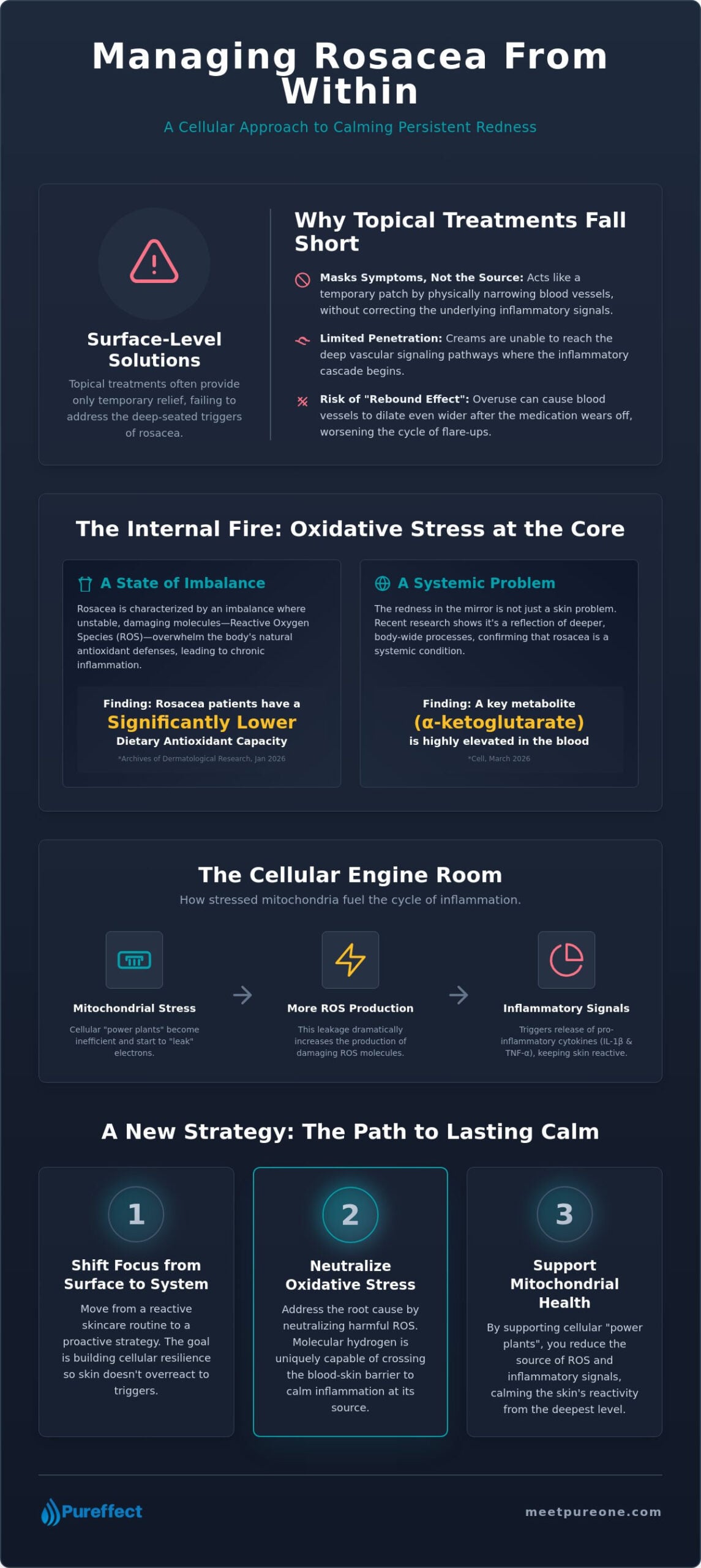
We’ve all been there. You apply a cooling gel or a prescription cream, and for a few hours, the fire in your cheeks subsides. But then, as if on cue, the redness returns. Why does this happen? Most common treatments for Rosacea are designed to address the symptoms on the surface. They often act as vasoconstrictors, physically narrowing the blood vessels to hide the flush. While this offers quick relief, it doesn’t address the underlying systemic triggers. Managing rosacea symptoms from within means looking past the surface to understand why those vessels are dilating in the first place.
Think of your skin as a dashboard. When a warning light flickers, you can put a piece of tape over it, but the engine is still overheating. This is essentially what happens when we rely solely on surface-level fixes. Your innate immune system plays a massive role here. In people with rosacea, the immune system is often in a “primed” state. This means it’s on high alert, ready to trigger an inflammatory response at the slightest hint of heat, sun, or even a spicy meal. Because this process starts deep within your biology, a cream applied to the top layer of skin simply can’t reach the source of the fire.
The Limits of Surface-Level Solutions
Creams cannot reach the deep vascular signaling pathways that control blood flow. Research highlighted by the Mayo Clinic discusses a frustrating phenomenon known as the “rebound effect.” This often happens with the overuse of certain topical medications. When the medication wears off, the blood vessels may dilate even wider than they were before. This leads to a cycle of dependency and unpredictable flare-ups. Instead of just masking the redness, the goal should be building cellular resilience so your skin doesn’t overreact to every external trigger.
Shifting the Focus to Cellular Health
Systemic health and skin appearance are inextricably linked. If your internal environment is characterized by high levels of inflammation, your skin will reflect that stress. This is why we focus on managing rosacea symptoms from within by changing how the body responds to oxidative pressure. For those curious about new ways to support this process, exploring what is molecular hydrogen can be an eye-opening start. It’s about moving from a “reactive” skincare routine to a “proactive” strategy that calms the inflammatory signaling before it ever reaches the surface of your face.
The Science of Oxidative Stress and Rosacea Flare-Ups
If you’ve ever felt like your face is radiating heat for no reason, you aren’t imagining it. This isn’t just a surface flush. It’s a sign that your internal cellular environment is under pressure. Why does the skin stay red long after a trigger is gone? The answer lies in the relationship between your immune system and oxidative stress. When your body’s internal balance is disrupted, it sends out a “red alert” that manifests as persistent erythema. Managing rosacea symptoms from within requires us to look at the microscopic molecules causing this chaos.
The Role of Reactive Oxygen Species (ROS)
Reactive Oxygen Species (ROS) are unstable molecules that naturally occur in the body. In small amounts, they help with cell signaling. However, in people with rosacea, these molecules are often out of control. They act as messengers that tell your blood vessels to dilate and stay open. A study published in the Archives of Dermatological Research in January 2026 found that rosacea patients have significantly lower dietary total antioxidant capacity compared to healthy controls. This creates a state of oxidative stress. Simply put, oxidative stress is the imbalance between free radicals and your cellular defense systems. Without enough antioxidants to neutralize them, ROS cause direct damage to your skin’s structural integrity.
Mitochondrial Health and Skin Inflammation
Your mitochondria are the “power plants” of your cells. When they are healthy, they produce energy efficiently. When they are stressed, they “leak” electrons, which creates even more ROS. This mitochondrial leakage triggers the release of pro-inflammatory cytokines, specifically IL-1β and TNF-α. These chemicals keep your skin in a constant state of “primed” reactivity. If you want to lower your skin’s sensitivity, you have to support these cellular engines. Learning how to increase cellular energy is a vital step in calming this internal fire. When your mitochondria run cleanly, they produce fewer inflammatory signals, leading to a calmer complexion.
Over time, this chronic inflammation does more than just cause redness. It actually damages the capillary walls. The vessels become fragile and lose their ability to constrict. This is why a holistic diet for rosacea is so important. It provides the building blocks for repair. To further support this repair process, many are turning to systemic tools like the PureONE molecular hydrogen generator to help neutralize those damaging free radicals at the source. By addressing the root cause, you can stop the cycle of damage before it reaches the surface.
How to Manage Rosacea Symptoms From Within: A 3-Step Protocol
Ready to move beyond just hiding from the sun or avoiding your favorite salsa? While trigger avoidance is a common recommendation, it’s a passive strategy. It doesn’t actually improve how your body handles stress. Managing rosacea symptoms from within is about building a more resilient internal environment. By following a research-driven protocol, you can actively lower your baseline sensitivity instead of just reacting to the next flare-up. Consistency is the key here. Daily internal support is far more effective than “emergency” topical use once the redness has already appeared.
Nurturing the Gut-Skin Axis
Step one begins with your digestion. Did you know that rosacea patients are significantly more likely to deal with Small Intestinal Bacterial Overgrowth (SIBO)? When your gut microbiome is out of balance, it can lead to “leaky gut.” This allows lipopolysaccharides (LPS), which are pro-inflammatory bacterial toxins, to slip into your bloodstream. These toxins act as a systemic fuel for skin inflammation. To combat this, focus on high-fiber foods and targeted fermented products that strengthen the gut lining. A healthy barrier prevents those inflammatory markers from ever reaching your facial capillaries.
Activating Internal Antioxidant Pathways
Step two involves flipping your body’s “master switch” for defense. This is known as the Nrf2 pathway. When activated, Nrf2 tells your cells to produce their own protective antioxidants like glutathione. You can jumpstart this process with phytonutrients like sulforaphane, found in broccoli sprouts. This is a core part of investing in preventative health at home. By boosting your natural production of enzymes, you help your body neutralize the oxidative stress that research identifies in the role of oxidative stress in the pathogenesis of rosacea.
Utilizing Selective Antioxidants
Step three is about precision. Not all free radicals are bad; some act as important signaling molecules. However, the hydroxyl radical is purely destructive and a major driver of skin redness. This is where molecular hydrogen shines. It’s a selective antioxidant, meaning it only targets the most harmful radicals without disturbing the beneficial ones. Because it’s the smallest molecule in existence, it reaches the deep layers of the skin that creams can’t touch. This systemic approach calms the “red alert” signal from the inside out. The same selective antioxidant properties that benefit your skin also make hydrogen therapy for dental health a compelling area of emerging research, as oxidative stress plays a key role in gum inflammation as well.
Are you ready to stop managing flares and start supporting your skin at the cellular level? You can begin your journey to a calmer complexion by incorporating the PureONE molecular hydrogen generator into your daily wellness routine.
Molecular Hydrogen: A Research-Backed Internal Strategy
Why is this tiny molecule making waves in dermatological research? It’s simple. Most antioxidants are too large to move through cell membranes easily. Molecular hydrogen is different. As the smallest molecule in the universe, it crosses the blood-skin barrier effortlessly. This allows it to reach the deep vascular layers where rosacea inflammation actually starts. If you’ve been managing rosacea symptoms from within using diet alone, hydrogen provides a high-tech way to accelerate that process. It doesn’t just sit on the surface; it goes where the fire is.
The real magic lies in its selectivity. Many antioxidants neutralize all free radicals, including the ones your body need for signaling. Hydrogen is smarter. It specifically targets the hydroxyl radical, which is the most destructive type of oxidative stress. By neutralizing only the “bad guys,” it lowers systemic inflammation without disrupting your body’s natural balance. Clinical studies have shown that consistent use of hydrogen can reduce C-reactive protein (CRP) levels. Since CRP is a key marker of systemic inflammation, lowering it often leads to a visible reduction in facial flushing and sensitivity. Researchers exploring this same anti-inflammatory mechanism have also documented promising results in hydrogen therapy for dental health, where reducing oxidative stress in oral tissues supports healthier gums and a more balanced oral microbiome. For those managing conditions where the immune system itself becomes the source of inflammation, the emerging research on hydrogen therapy for autoimmune support offers a compelling look at how this same selective mechanism helps reduce inflammatory cytokines in chronic immune-driven conditions.
Hydrogen Inhalation vs. Ingestion
The PureONE Advantage for Rosacea Support
Not all generators are created equal. The PureONE Molecular Hydrogen Generator is designed with a proprietary stainless steel condenser. This ensures the gas you inhale is cool, comfortable, and highly pure. Integrating this into your life is easy. A simple 15-30 minute daily session fits perfectly into an “internal” skincare routine. It’s a moment of quiet that supports your cellular resilience from the inside out. We believe in transparency and your right to experiment. That’s why we offer a 365-day risk-free trial. It’s an invitation to see the results for yourself and participate in your own discovery of better living.
Take Control of Your Skin’s Internal Environment
We’re excited to be your partner in this journey toward better living. Our Canadian-made generator is endorsed by wellness experts for its ability to provide systemic inflammation support. We want you to feel confident in your discovery. That’s why we offer a 365-day risk-free trial. Are you ready to see what happens when you treat the root cause? Experience the systemic benefits of the PureONE Molecular Hydrogen Generator and start your path to a calmer complexion today. It’s a simple, research-backed change that makes a world of difference. You’ve got this.
Frequently Asked Questions
Can rosacea be cured by changing my diet and internal health?
Rosacea is currently considered a chronic condition with no known permanent cure, but managing your internal health can lead to long-term remission and significantly fewer flare-ups. By addressing systemic inflammation and oxidative stress, you’re effectively removing the “fuel” that causes your skin to react. Many people find that a combination of dietary shifts and antioxidant support makes their skin much more resilient to daily triggers.
How does molecular hydrogen specifically help with facial redness?
Molecular hydrogen works by selectively neutralizing hydroxyl radicals, which are the specific free radicals that damage capillary walls and trigger persistent redness. Because it’s the smallest molecule, it can penetrate deep into the vascular layers of the face. This helps calm the inflammatory signaling that keeps blood vessels dilated. It’s a targeted approach that helps lower the “red alert” status of your skin cells.
Is it better to inhale hydrogen or drink hydrogen water for skin issues?
Inhalation is generally more effective for systemic skin issues because it delivers a higher concentration of hydrogen directly into the bloodstream. However, drinking hydrogen-infused water provides unique support for the gut-skin axis by neutralizing oxidative stress in the digestive tract. Using both methods together ensures you’re addressing inflammation from multiple angles, providing the most comprehensive internal support for your complexion.
How long does it take to see internal changes reflected on the skin?
Most people begin to notice a difference in skin sensitivity and flushing frequency within four to eight weeks of consistent internal support. This timeframe aligns with the natural cycle of skin cell turnover and the time it takes to lower systemic inflammatory markers like C-reactive protein. Consistency is vital. You’re retraining your body’s inflammatory response, which is a gradual process rather than an overnight fix.
What is the “gut-skin axis” and why does it matter for rosacea?
The gut-skin axis is the biochemical communication pathway between your gastrointestinal system and your skin. When the gut microbiome is imbalanced, it can release pro-inflammatory toxins into the blood that eventually manifest as facial redness and sensitivity. By managing rosacea symptoms from within through gut-friendly nutrition and antioxidants, you stop these signals before they ever reach the surface of your skin.
Are there any side effects to managing rosacea with molecular hydrogen?
Molecular hydrogen has an excellent safety profile with no known toxic side effects in hundreds of peer-reviewed studies. Since the only byproduct of the reaction between hydrogen and a hydroxyl radical is pure water, it doesn’t leave behind any harmful residues. It’s a non-toxic way to support your cellular health. As always, we recommend chatting with your healthcare provider before starting any new wellness routine to ensure it fits your specific needs.
Disclaimer
The information provided by Pureffect and any of its products are for educational and informational purposes only and is not intended as medical advice. Individual results may vary, and no specific health outcomes are guaranteed. Always consult a qualified healthcare professional before starting any wellness practice or product.