
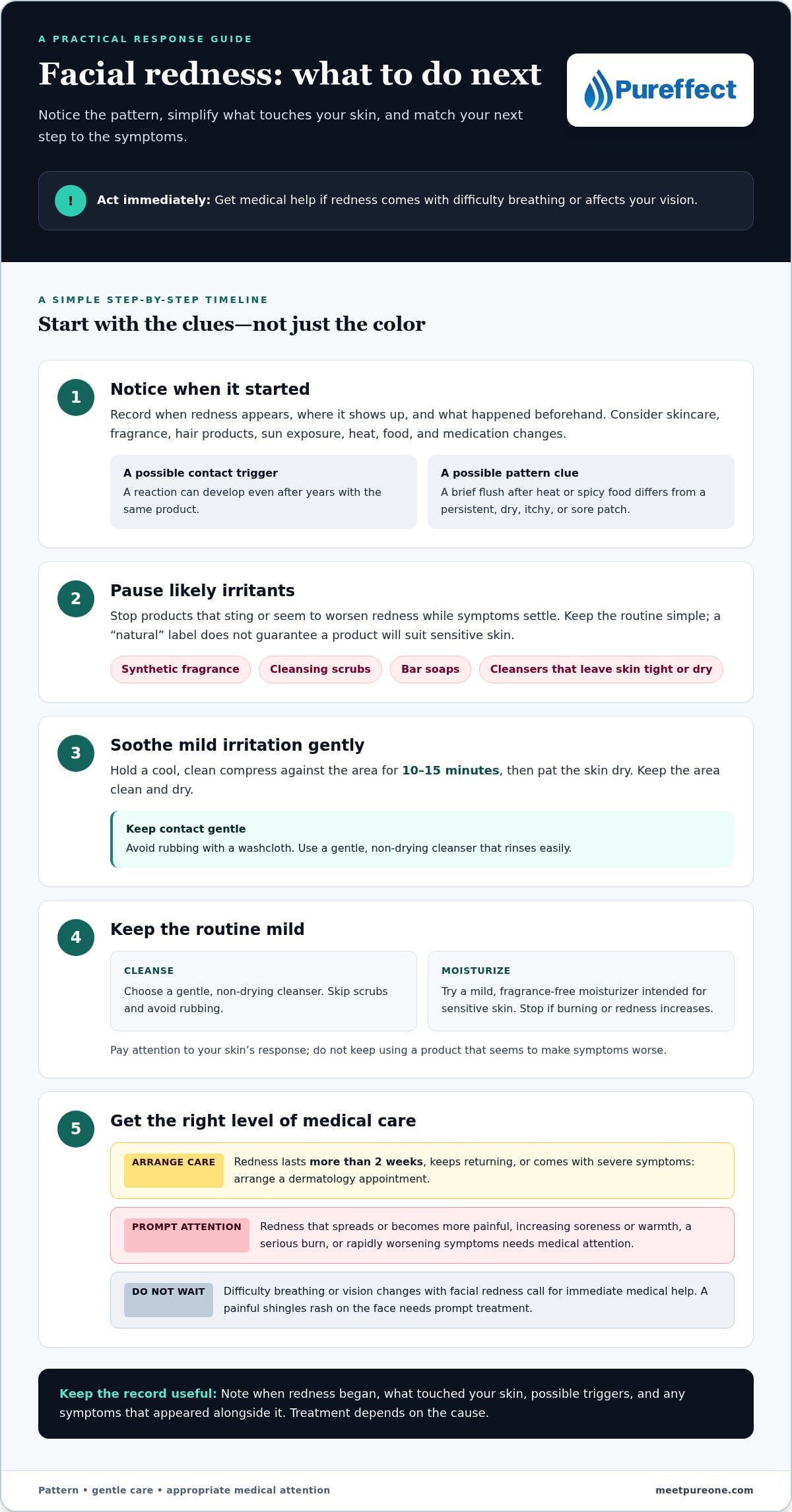
Persistent facial redness deserves attention, especially when it lasts more than 2 weeks. Seek immediate medical help if redness comes with difficulty breathing or affects your vision. For reducing skin redness and irritation, the right next step depends on what’s causing it, not just how it looks.
It’s easy to blame a new product, but irritation can also come from products you’ve used for years, sun exposure, infection, or an underlying skin condition. This guide explains common causes of facial redness, when to seek medical care, and which skincare ingredients and everyday habits may worsen irritation. You’ll also find practical ways to ease mild symptoms and recognize when gentle skincare isn’t enough. To reduce skin redness and irritation, start by noticing the pattern and choosing a response that fits.
Key Takeaways
- Facial redness can stem from irritation, allergies, sun exposure, infection, or an underlying skin condition, even when a product has been part of your routine for years.
- Seek urgent medical help if redness comes with difficulty breathing or affects your vision; persistent redness or severe symptoms also deserve medical attention.
- Check for possible triggers such as fragrance, harsh scrubs, tight-feeling cleansers, spicy foods, alcohol, and extreme temperatures.
- A gentle routine, sun protection, and a cool compress may help soothe mild irritation while you pay attention to what worsens it.
- Because treatment depends on the cause, notice when redness began, what touches your skin, and any symptoms that appear alongside it.
1. What causes redness on the face?
Facial redness is a visible sign, not a diagnosis. Inflammation can follow an allergic reaction, infection, ultraviolet (UV) damage, heat rash, stress, or an immune response that isn’t working as it should. The pattern offers clues: redness that starts after a new cleanser suggests a different trigger from redness that appears after a sunny afternoon. Common skin conditions can also cause recurring irritation, so timing and accompanying symptoms matter.
Contact dermatitis is one possible cause. It can result from an ingredient in skincare, fragrance, hair dye, or another substance that touches the face. A reaction can develop even after years of using the same product. The immune system may become sensitized over time, so a familiar routine doesn’t rule out an allergy. Note recent changes, but also consider products that repeatedly touch the affected area, such as shampoo along the hairline.
Sun exposure can directly cause redness, and some medications can make skin react like it’s sunburned after time outdoors. A mild, itchy red rash from a drug allergy may appear days or weeks after starting a medication. If a new rash follows a medication change, note when it began and where it appears. Don’t assume it’s ordinary sunburn, especially if the reaction seems stronger than the exposure would explain.
Heat can irritate facial skin, while spicy foods may trigger temporary flushing in some people. Other possible triggers include alcohol, extreme temperatures, and particular skincare ingredients. A brief flush after a hot meal differs from a persistent patch that stays dry, itchy, or sore. When redness appears, note the setting, food, products, and symptoms. These details can reveal whether it follows heat, contact, or another repeated exposure.
Burns need careful attention. A first-degree burn may cause minor swelling and dry, red, tender skin that turns white when pressed. A second-degree burn can cause very painful, clear, weeping blisters and red or patchily colored skin. Third-degree burns may look white or dark, feel leathery, and have little or no sensitivity to touch. A blistering or leathery injury is not routine facial irritation.
Infection is another possible cause of inflammation, as the immune system responds to invading microbes. Redness accompanied by increasing soreness, warmth, or spreading changes warrants attention, not another skincare experiment. To help reduce skin redness and irritation, pause products that seem to trigger symptoms and note when the change began. Treatment depends on the cause, so identifying the pattern is a practical first step.
2. When should I get medical help for skin redness?
Redness caused by rosacea, eczema, or contact dermatitis needs care suited to its cause. A dermatologist can assess symptoms, recommend gentle skincare, and prescribe medication when appropriate. For contact dermatitis, avoiding the substance causing the reaction often helps the skin clear.
Arrange a dermatology appointment if facial redness lasts more than 2 weeks, keeps returning, or comes with severe symptoms. Persistent flushing can be a sign of rosacea, but redness alone can’t confirm that diagnosis. Rosacea has no cure, though treatment can lessen redness. A clinician may examine your skin and, when needed, order allergy testing or a biopsy to clarify the cause.
Rosacea may involve recurring facial flushing, visible small blood vessels, or other persistent skin changes. Heat, spicy foods, alcohol, and certain skincare products trigger redness for some people. Keep a brief record of flare-ups and possible triggers; the pattern can help a dermatologist assess the cause. A gentle routine and moisturizer may support comfort, but ongoing symptoms still deserve medical attention.
Broken facial blood vessels, sometimes called spider veins, can be a cosmetic concern rather than an emergency. A dermatologist can assess whether they fit the pattern of rosacea or another skin condition. Laser treatment may remove facial spider veins, but medical insurance does not cover this treatment. A clinician can also distinguish rosacea from eczema or psoriasis, which may need different treatments.
Get immediate medical attention if facial redness comes with difficulty breathing or affects your vision, especially when redness is near or on the eyes. A painful shingles rash on the face also needs prompt treatment because it can permanently damage eyesight. Antiviral medication can help protect vision and prevent long-lasting nerve pain. Untreated shingles may cause nerve pain lasting months or years.
Redness that spreads or becomes more painful can signal an infection. A doctor may prescribe antibiotics if infection is the cause. Chronic inflammation also warrants evaluation, as it can point to an infection or skin disorder. Seek urgent care for a serious burn or rapidly worsening symptoms, rather than trying new creams first.
After medical concerns have been addressed, readers exploring topical wellness options can review these topical-use details. This is a separate consideration, not a substitute for diagnosis or treatment of rosacea, eczema, infection, or another skin condition.
3. Skincare ingredients and practices to avoid
Red, reactive skin often needs fewer products, not a more elaborate routine. Bar soaps, cleansing scrubs, and cleansers that leave your face tight or dry can aggravate irritation. Avoid synthetic fragrance while symptoms settle. A “natural” label doesn’t guarantee a product will suit sensitive skin, so pay attention to how your skin responds.
How can you quickly soothe red, irritated skin at home? Hold a cool, clean compress against the area for 10–15 minutes, then pat the skin dry. Keep the area clean and dry, and pause products that sting or seem to worsen redness.
Try this simple routine while your skin is unsettled:
- Cleanse: Use a gentle, non-drying cleanser that rinses easily. Skip scrubs and avoid rubbing with a washcloth.
- Moisturize: Apply a mild, fragrance-free moisturizer intended for sensitive skin. Stop using it if it causes burning or increased redness.
- Protect: Apply broad-spectrum sunscreen rated SPF 30 or higher. Reapply every two hours, especially after swimming or sweating.
Sunburn can worsen facial irritation, so daily sun protection matters even when redness seems mild. Heat, spicy foods, alcohol, and certain skincare products can also trigger facial redness. Keep a journal to spot patterns: note the product, food, weather, and symptoms when a flare begins. Change one product at a time rather than overhauling your routine all at once.
Can over-the-counter hydrocortisone help skin irritation, and how long is it safe to use? It may help some irritation, but using hydrocortisone cream longer than directed can cause a skin reaction. Follow the product directions, and ask a healthcare professional if symptoms persist or worsen.
How do you safely patch test a new skincare product? Apply a small amount to a discreet patch of skin, following the product directions, and watch for itching, burning, swelling, or redness before applying it to your face. Test one new product at a time so it’s easier to identify the cause if irritation appears.
Choose care products labeled fragrance-free and designed for sensitive skin, then introduce them individually. Ingredients such as colloidal oatmeal may help soothe irritation by forming a protective barrier, while glycerin helps support the skin’s moisture barrier. Neither ingredient replaces medical care when redness is persistent, severe, or linked to an underlying condition.
4. Skin redness and irritation
Dermatitis is a general term for dry, red, irritated skin. Higher transepidermal water loss, meaning water escapes more readily through the outer skin layer, is associated with dermatitis and sensitive skin. This helps explain why redness can appear alongside dryness or roughness. The visible reaction is only part of the picture; changes in the skin’s moisture balance can also affect how comfortable it feels.
Natural oils in sebum help reduce transepidermal water loss. If your skin feels rough or tight, consider whether your routine is stripping away too much of its natural oil. Notice how your skin changes after cleansing or applying a new product. A simple record of the product and reaction can help distinguish a temporary response from a recurring pattern.
Topical hyaluronic acid can reduce roughness and smooth skin texture. It may also support elasticity and minimize the appearance of fine lines. A study found that topical novel nano hyaluronic acid, used in lotion, cream, or serum form for 8 weeks, boosted skin hydration. Hydration may improve the feel and appearance of dry skin, but it does not identify or treat the cause of persistent redness.
Other skincare ingredients used for redness include aloe vera, green tea, licorice root, centella asiatica, chamomile, and ascorbic acid. Their presence on an ingredient list doesn’t guarantee a product will suit everyone. When comparing formulas, check the full ingredient lists and introduce one new product at a time. That makes it easier to notice a reaction and connect it to a specific formula.
Keep the goal practical: observe your skin, change one relevant factor, and note what follows. For example, if roughness begins after adding a serum, pause it and track whether the texture changes. If redness persists, worsens, or comes with new symptoms, seek medical assessment instead of continually switching topical products. A dermatologist can assess whether dermatitis or another skin condition is involved and guide your next step.
Glycerin can support the skin’s barrier function, helping protect against moisture loss, environmental stressors, pollutants, and irritants. Keeping an area affected by redness clean and dry can usually help reduce redness. Hyaluronic acid attracts and retains moisture, helping keep skin hydrated and reducing the appearance of redness.
Natural options listed for reducing redness and inflammation include colloidal oatmeal alongside aloe vera, green tea, licorice root, centella asiatica, and ascorbic acid; chamomile is also identified as an ingredient that can help reduce redness and irritation. A botanist and physician claimed cucumber relieved his redness in 1649.
Pureffect: PureONE Molecular Hydrogen Generator
PureONE is a home-use molecular hydrogen generator with four modes: drink hydrogen-infused water, apply it to the skin, apply hydrogen gas directly to the body, or inhale the gas. If you’re interested in adding a separate wellness practice after simplifying your skincare routine, explore the PureONE device and its four ways to use it.
PureONE is not a medical treatment for redness, rosacea, dermatitis, or other skin conditions, and it shouldn’t replace care from a healthcare professional. Keep focusing on the cause of irritation and follow medical advice for persistent or severe symptoms. Learn more about the device and its uses at meetpureone.com.
Make your next skincare choice with intention
Your next step doesn’t need to be a dramatic overhaul. Choose a clear priority, such as avoiding repeat irritation or making room for a wellness practice, and judge each new choice against that goal. A steady, considered approach to reducing skin redness and irritation can help you avoid chasing quick fixes that don’t address what matters to you.
If redness continues to affect your comfort or daily life, bring your questions to a healthcare professional and discuss what you’ve noticed. Keep medical care at the center of decisions about persistent skin symptoms. For a separate wellness option, explore PureONE and consider whether it fits your personal routine.
There’s no need to solve everything at once. Take the next sensible step, pay attention to how your skin responds, and give yourself room to make informed choices.
Frequently Asked Questions
When should I get medical help for skin redness?
Seek medical help when redness is worsening, recurring, or interfering with daily activities. Make an appointment more useful by noting when it started, whether it changes during the day, and what treatments you’ve tried. Bring a list of medicines and skincare products, including anything you’ve recently stopped. These details can help a clinician assess the timeline and decide what’s relevant to your symptoms.
How Can I Reduce Inflammation Quickly?
There’s no single quick fix for every cause, but a chemical burn needs immediate action: remove the chemical and rinse the skin under lukewarm, slow-running water. Don’t try to neutralize it with another substance. For other sudden reactions, avoid adding new topical products while symptoms are active. The safest next step depends on the trigger and the skin’s condition, especially if the reaction is severe.
How To Get Rid Of Facial Redness?
For temporary visible redness, a green-tinted color corrector can help neutralize its appearance. Apply a small amount gently instead of rubbing the skin, and stop if it causes discomfort. This cosmetic approach changes how redness looks, but doesn’t treat its cause. If redness persists or comes with other symptoms, seek medical assessment rather than relying on makeup to conceal it.
What Can You Do About General Inflammation Care?
Care works best when it targets the condition causing inflammation. For example, treatment for seborrheic dermatitis may include dandruff shampoo and medicine applied to the skin for a short time. That approach is specific to this condition, not a general remedy for every red or irritated patch. If inflammation keeps returning, ask a healthcare professional to assess the pattern and guide care suited to the affected area.
What Causes Skin to be Inflamed?
Skin inflammation can reflect an immune response to infection, an allergic reaction, or another immune-system problem. The same visible redness can therefore have different causes and need different care. A clinician considers its appearance and pattern alongside your health history. Don’t assume redness alone identifies an infection or allergy; the cause matters because treatment for one problem may not suit another.
What causes redness on the face?
Facial redness can also follow cosmetic procedures. A dermatology practice in Fairfax says redness or swelling after most laser therapies and chemical peels typically subsides within a few hours to a few days. That short-lived response differs from redness that persists or changes over time. If you’re unsure whether a post-procedure reaction is following its expected course, contact the clinician who performed the treatment.
Disclaimer
The information provided by Pureffect and any of its products are for educational and informational purposes only and is not intended as medical advice. Individual results may vary, and no specific health outcomes are guaranteed. Always consult a qualified healthcare professional before starting any wellness practice or product.