
Hydrogen water isn’t a proven energy drink. Hydrogen water for energy may help with fatigue or exercise performance, but current human evidence is limited and doesn’t show that it reliably works better than regular water.
That distinction matters. If you’re looking for steadier energy or a better workout, it’s reasonable to ask whether dissolved molecular hydrogen does anything beyond hydration. Water can support hydration without providing an immediate energy boost, and those are different outcomes. Early studies offer some intriguing signals, but small participant groups and varied measures make the results difficult to treat as conclusive.
This article explains what hydrogen water contains, how it compares with regular water, and what research has found about fatigue, energy, and athletic performance. It also shows where the evidence remains preliminary, so you can weigh potential benefits against the basics that still matter: enough fluids, recovery, sleep, and sensible training. Curiosity tempered by caution is a sensible approach to a wellness topic that is still being studied.
Key Takeaways
- Hydrogen-rich water is being studied for possible antioxidant and anti-inflammatory effects, but those mechanisms don’t establish a reliable energy benefit.
- Compare hydrogen water with regular water by separating hydration from claims about extra effects; the human evidence remains limited.
- In a small study of male cyclists, the study authors report participants consumed 2 liters of hydrogen-enriched water daily. The findings offer a research clue, not a universal performance prescription.
- Molecular hydrogen dissolved in water is different from the hydrogen already bound in water molecules and food.
- Learn what the research can, and can’t, say before deciding whether hydrogen water fits your wellness routine.
Hydrogen Water: Does It Actually Work?
Hydrogen water has plausible biological mechanisms, but evidence for everyday benefits remains limited. To assess claims about energy, focus on what human studies actually measured.
Antioxidant and Anti-Inflammatory Effects
Antioxidants may help limit effects associated with reactive molecules, while anti-inflammatory effects concern the body’s inflammatory response. Researchers are investigating whether dissolved molecular hydrogen influences these processes. Oxidative stress and inflammation can accompany illness or strenuous activity, but a possible mechanism does not establish that drinking hydrogen water will improve how someone feels.
Animal studies have suggested possible effects on oxidative stress, fatigue, and inflammation associated with cancer treatment. These findings provide a basis for further research, not proof of symptom relief in people. Results from animal models also do not directly predict what someone might experience during everyday activities or exercise.
Antioxidants and Oxidative Stress
Oxidative stress occurs when reactive molecules outweigh the body’s antioxidant defenses. Researchers can measure related markers, but a change in a marker does not necessarily mean a noticeable improvement in energy or wellbeing.
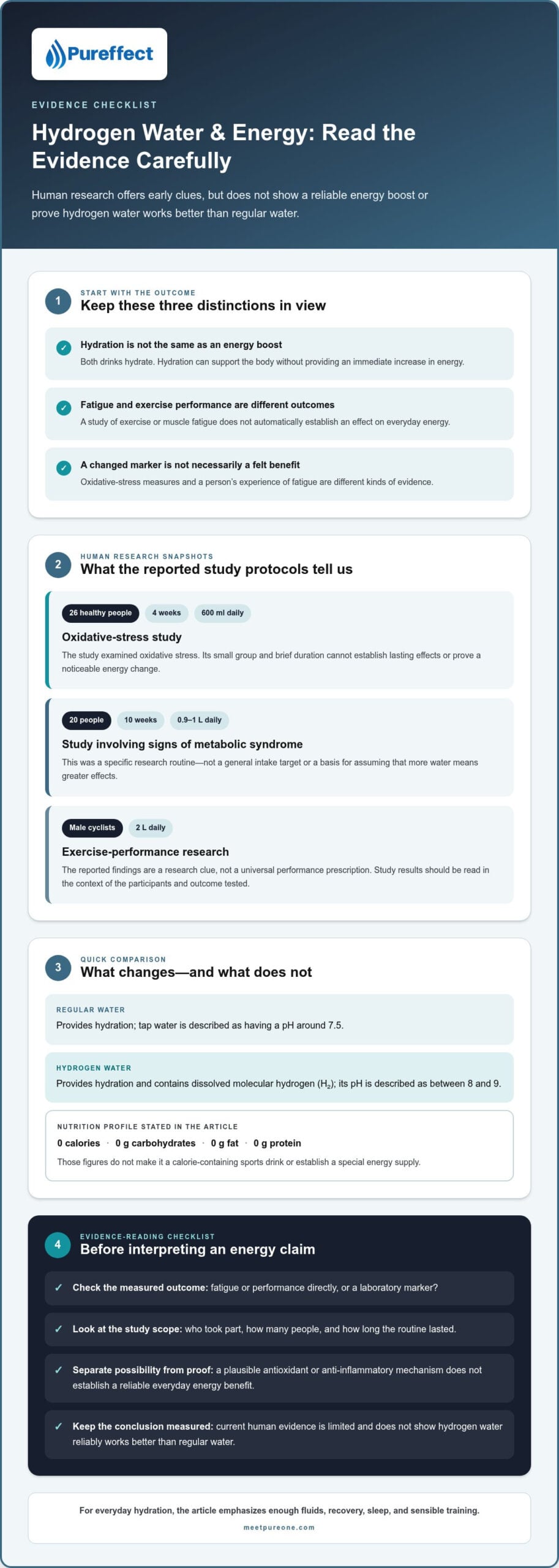
A four-week study examined oxidative stress in 26 healthy people who drank 600 ml of hydrogen-rich water daily. Its design offers human evidence to examine, yet the small group and brief duration can’t establish lasting effects. The outcome also needs to be interpreted in context: a laboratory measure and a person’s experience of fatigue are different kinds of evidence.
When assessing hydrogen water for energy, this distinction is useful. Look for studies that measure fatigue or performance directly, not just antioxidant activity.
Intake Amount and Timing
Study routines vary, so no single intake amount applies to everyone. Some researchers suggest 50 to 60 ounces (1.5 liters) daily. A separate 10-week study involving 20 people with signs of metabolic syndrome used 0.9-1 liter daily.
Those study amounts describe specific research settings, not a universal target. The four-week oxidative-stress study used 600 ml daily, illustrating how protocols differ according to participants and research goals. If you’re considering hydrogen water, keep your usual hydration needs and activity in mind rather than assuming a larger amount will lead to greater effects.
Timing depends on the outcome being studied. Exercise research examines use around physical activity, while other trials track daily intake over time. When comparing bottles, tablets, and ready-to-drink products in the United States, consider package size, servings, and cost per serving. These practical details help compare formats without assuming one offers greater health benefits.
Hydrogen water compared with regular water
The main difference is dissolved molecular hydrogen, H2. Regular water supplies hydration; hydrogen water contains that additional dissolved gas, but the distinction alone doesn’t prove extra health benefits.
A water molecule contains three atoms: two hydrogen atoms and one oxygen atom. In hydrogen water, molecular hydrogen is dissolved in the liquid too. That’s different from the hydrogen already bonded inside water molecules. Both drinks hydrate, while only one is described as containing added dissolved H2.
Nutrition labels offer another simple comparison. Hydrogen water contains 0 calories, 0 grams of carbohydrates, 0 grams of fat, and 0 grams of protein. Those figures describe its basic nutrition profile, not a special energy supply. Drinking hydrogen water doesn’t replace food or make it a calorie-containing sports drink.
Hydrogen water’s pH is described as between 8 and 9, while tap water typically has a pH around 7.5. Those figures describe acidity and alkalinity. They don’t, by themselves, show that one water supports energy or health better. For a practical comparison, hydration, taste, access, and whether you’ll drink enough water matter more day to day.
What about cancer-related claims? The National Cancer Institute describes potential preventive, antioxidant, anti-inflammatory, and radiation-protective activities for hydrogen-rich water. Potential activity, however, is not proof of cancer prevention or treatment. One study examined hydrogen-enriched water in the specific setting of radiation therapy for liver cancer. Its results should not be generalized into a claim that hydrogen water treats cancer or benefits everyone.
Are hydrogen water health claims regulated by the FDA in the United States? The FDA reports that hydrogen water is generally recognized as safe. That safety statement is not proof that specific claims about energy, inflammation, or cancer benefits have been demonstrated.
For everyday hydration, regular water remains a straightforward choice. Hydrogen water adds dissolved H2, but evidence that it provides greater long-term benefits than regular water is limited. So compare the drink’s actual contents with the claim being made: a different composition doesn’t automatically mean a meaningful difference in how you feel.
If you’re considering a home option for drinking hydrogen-infused water, explore this molecular hydrogen water generator alongside the evidence and your own hydration routine.
Potential energy, fatigue, and athletic performance effects
Energy, fatigue, and exercise performance are related, but they are not interchangeable outcomes. Someone might finish an interval session with less muscle fatigue yet notice no difference during an ordinary workday. Read research on hydrogen water in light of the specific outcome tested, rather than treating “more energy” as a single measurable result.
Exercise studies have examined endurance, muscle fatigue, and recovery after physical activity. Findings suggest hydrogen water may affect these outcomes, but each addresses a different question: how long someone sustains activity, how tired their muscles feel, or how quickly they recover. A result in one area does not establish an effect in the others.
Study authors report male cyclists consumed 2 liters of hydrogen-enriched water daily. That intake describes a study protocol, not a general recommendation for every athlete. The useful point is that researchers have tested a defined routine in a specific exercise context. It doesn’t show that the same amount suits people with different training, hydration needs, or health circumstances.
Oxygen is part of exercise because working muscles rely on its delivery and use. That fact alone does not mean drinking hydrogen water increases oxygen supply or makes exercise feel easier. A runner’s pace, for example, can change with effort, rest, and conditions. Interpret performance results alongside the study design and the measure researchers recorded.
Metabolic and cardiovascular health are separate research areas from immediate exercise performance. A finding about a metabolic marker does not, by itself, show less fatigue during training. Similarly, an endurance result does not demonstrate protection from heart disease. Keeping these outcomes distinct helps you judge what a study supports instead of extending a narrow exercise observation into a general health claim.
The practical takeaway is to match the evidence to your question. If you want better workout endurance, look for endurance measures; if muscle fatigue concerns you, look for fatigue measures. A single performance result cannot answer every question about exercise, recovery, or everyday energy.
Hydrogen water and molecular hydrogen
Hydrogen water contains dissolved molecular hydrogen, or H2. That’s different from the hydrogen atoms already bonded to oxygen in each water molecule.
What is hydrogen water, and how is it made? It’s water with molecular hydrogen gas dissolved in it. The hydrogen is added to the water as H2, rather than becoming a new ingredient in the water molecule itself.
That distinction helps explain what “hydrogen-rich water” means. The phrase refers to water containing dissolved H2, not water containing extra hydrogen atoms bonded into its molecules. People also get hydrogen through ordinary food and water, so hydrogen water isn’t needed to supply hydrogen as a basic element.
Why are researchers interested in H2? Some propose that molecular hydrogen could affect oxidative stress, a process involving reactive molecules and the body’s defenses. That proposal is a research question, not a direct measure of energy. To evaluate a study, look at what it measured, who participated, and whether it tracked a meaningful change rather than only a biological marker.
How can you tell whether hydrogen water contains dissolved hydrogen? Look for a claim that specifically identifies dissolved molecular hydrogen, and use a measurement of H2 in the water to assess its presence. Bubbles alone don’t tell you how much dissolved hydrogen is in a glass.
Timing matters because dissolved gas can escape after a container is opened. Northwell Health advises drinking hydrogen water soon after opening because hydrogen molecules dissipate quickly. A measurement taken long after opening may not reflect the water as served. Storage, time, and handling can affect how much hydrogen remains.
This also matters when interpreting product claims. A statement about hydrogen content describes the water at a particular point, while the amount present when you drink it can depend on storage and handling after opening. Keep those ideas separate when comparing a sealed product with water prepared at home. The label alone does not reveal how much remains in your glass.
The useful takeaway is simple: H2 is dissolved molecular hydrogen, not a different form of water molecule. If you want to explore a home option for drinking hydrogen-rich water, see a molecular hydrogen water generator and consider how serving time affects the distinction between stated content and what you drink.
Pureffect: PureONE Molecular Hydrogen Generator
PureONE is a home generator for making hydrogen-infused water as part of a personal wellness routine. It may suit readers who understand that research is still developing and want to explore this format without treating it as a proven fix for low energy or exercise fatigue.
Use the evidence as your guide: hydration, sleep, nutrition, and recovery remain central to daily energy. PureONE also offers other ways to use hydrogen, but this discussion focuses on drinking hydrogen-infused water.
For details about this home-use option, visit the PureONE product page.
Make Your Next Step an Informed One
Choosing a wellness habit is easier when you’re clear about what you want it to support. If you’re curious about hydrogen water for energy, consider how it fits into your day alongside routines that already help you feel your best. Notice any changes, and keep expectations grounded in the evidence rather than a promise of instant vitality.
Hydrogen water may be worth exploring as a personal wellness choice, but it should not replace addressing persistent fatigue or caring for your overall health. Its effects are not guaranteed, and current research does not establish it as a dependable way to boost energy.
Pureffect offers the PureONE Molecular Hydrogen Generator for people interested in making hydrogen-infused water at home. If you’d like to learn more, explore the PureONE Molecular Hydrogen Generator and decide whether it suits your goals. A thoughtful, informed approach is a good place to start.
Frequently Asked Questions
Does It Benefit Health?
Hydrogen water may influence biological processes linked to health, but that doesn’t establish broad health benefits. For example, a change in an oxidative-stress marker wouldn’t necessarily mean better sleep, easier workouts, or improved day-to-day wellbeing. Think about the outcome you care about and whether a study measured that outcome directly. A research finding about one marker or group shouldn’t be taken as proof of a general wellness effect.
Should You Drink It?
You can drink hydrogen water as a beverage without replacing your usual hydration routine. Consider why you want to try it, whether you enjoy the taste, and whether the habit fits your day. If you’re curious about wellness products, for example, track how you feel alongside sleep and exercise patterns rather than relying on a single impression after one glass.
Does hydrogen water improve energy levels or reduce fatigue?
It might, but current evidence doesn’t show a dependable effect on everyday energy or fatigue. A report involving 10 individuals described elevated energy levels and improved wellbeing after drinking hydrogen-enriched water over several weeks. That observation is interesting, but it doesn’t establish that hydrogen water caused the changes or that other people will experience them. Persistent fatigue deserves attention beyond experimenting with a beverage.
What does clinical research say about hydrogen water and energy?
Clinical research offers early signals, not a settled answer about energy. The 10-person report is one example, but reports of perceived wellbeing don’t carry the same weight as larger, controlled trials measuring energy consistently. When reviewing a study, look at its participants, comparison group, duration, and outcome measures. A result involving athletic performance, for instance, may not answer whether someone feels less tired during an ordinary workday.
What are the potential side effects and risks of hydrogen water?
Hydrogen water is generally considered safe and is not known to cause significant risks or side effects. However, that broad description does not cover every product or individual circumstance. Check the ingredient information, especially if a ready-to-drink product contains anything besides water and dissolved hydrogen. If you notice an unusual reaction after trying a new beverage, stop drinking it and seek appropriate medical advice.
Can hydrogen water interact with medications or health conditions?
Do not change or delay prescribed medication to try hydrogen water. If you take medication or manage a health condition, discuss adding it with a healthcare professional who understands your treatment and any fluid guidance you follow. This is especially practical when comparing several new supplements or beverages: reviewing them together can help avoid confusion if you notice a new symptom.
Disclaimer
The information provided by Pureffect and any of its products are for educational and informational purposes only and is not intended as medical advice. Individual results may vary, and no specific health outcomes are guaranteed. Always consult a qualified healthcare professional before starting any wellness practice or product.