
Your cells have a built-in recycling system that is always at work. Autophagy is the process by which cells break down and reuse components. Supporting autophagy with home therapies means exploring everyday habits, such as exercise, meal timing and food choices, that may influence this process.
It’s reasonable to wonder whether fasting or a particular diet can make a difference, especially when you’re thinking about brain health. There isn’t one routine that suits everyone. This article explains what autophagy does and what research says about exercise, intermittent fasting and low-carbohydrate diets, so you can understand possible connections without treating any habit as a guaranteed fix.
Key Takeaways
- Understand autophagy as the cell’s ongoing process for breaking down and reusing components, and why it matters when considering brain health.
- Compare endurance exercise, high-intensity intervals and resistance training as practical ways to explore the relationship between movement and cellular cleanup.
- Learn how different intermittent-fasting windows are discussed in relation to autophagy, and why longer fasts call for added care.
- See how consistent, quality sleep may support cellular processes in the brain and central nervous system.
- Explore how low-carbohydrate and ketogenic eating patterns relate to autophagy, including what distinguishes a ketogenic diet.
1. Exercise and autophagy
Autophagy is the cellular process of breaking down and reusing damaged or unneeded components. It helps cells manage stress, but exercise doesn’t simply switch it on like a light. Regular movement is one practical habit linked to cellular cleanup. Endurance exercise, high-intensity interval training (HIIT) and resistance training are all studied in relation to this process.
What does evidence show about supporting autophagy at home? Exercise is a practical habit associated with cellular cleanup, while eating patterns can also affect the process. Research reports that as little as 30 minutes of exercise can induce autophagy in skeletal and cardiac muscle. For readers considering supporting autophagy with home therapies, that finding is relevant but limited to observed tissue responses. It doesn’t prove exercise prevents disease or causes the same effect throughout the body.
Different kinds of activity may trigger distinct responses. Endurance exercise, such as brisk walking or cycling, repeatedly challenges working muscles. HIIT alternates intense bursts with recovery, while resistance training asks muscles to work against a load. Research indicates that these forms of physical activity can stimulate autophagy in multiple organs. The process involves cellular responses to exercise-related energy demands, which may support the clearing and recycling of cellular material.
A simple starting plan is to schedule 30-minute exercise sessions 4-5 days per week, choosing activities you can repeat consistently. For example, combine brisk walking with body-weight resistance exercises, or use cycling intervals if they suit your fitness level. Aim for regular movement rather than an exhausting workout every day. If you’re new to exercise, build gradually; a sudden jump in intensity can make a routine harder to sustain.
How strong is the human evidence compared with animal and laboratory research? Exercise-related autophagy findings include observations in human tissue, but many details about the mechanisms come from laboratory and animal studies. The findings support a biological link, but don’t establish that exercise-driven autophagy alone improves a particular disease outcome. Supporting autophagy with home therapies should therefore focus on practical habits, not promises of a specific result.
Can you measure autophagy at home? Consumer wearables can record activity and related signals, but they don’t directly measure cellular autophagy. There’s no reliable consumer test showing how much autophagy is happening in your tissues. A training log can still help you track whether you’re following your exercise plan consistently.
2. Intermittent fasting
Intermittent fasting sets periods for eating and fasting, while caloric restriction reduces total energy intake. The approaches can overlap, but they aren’t the same. For example, someone might eat their usual meals within a set window without deliberately cutting calories. During fasting, changes in nutrient availability can influence cellular function, including how cells manage proteins and other components.
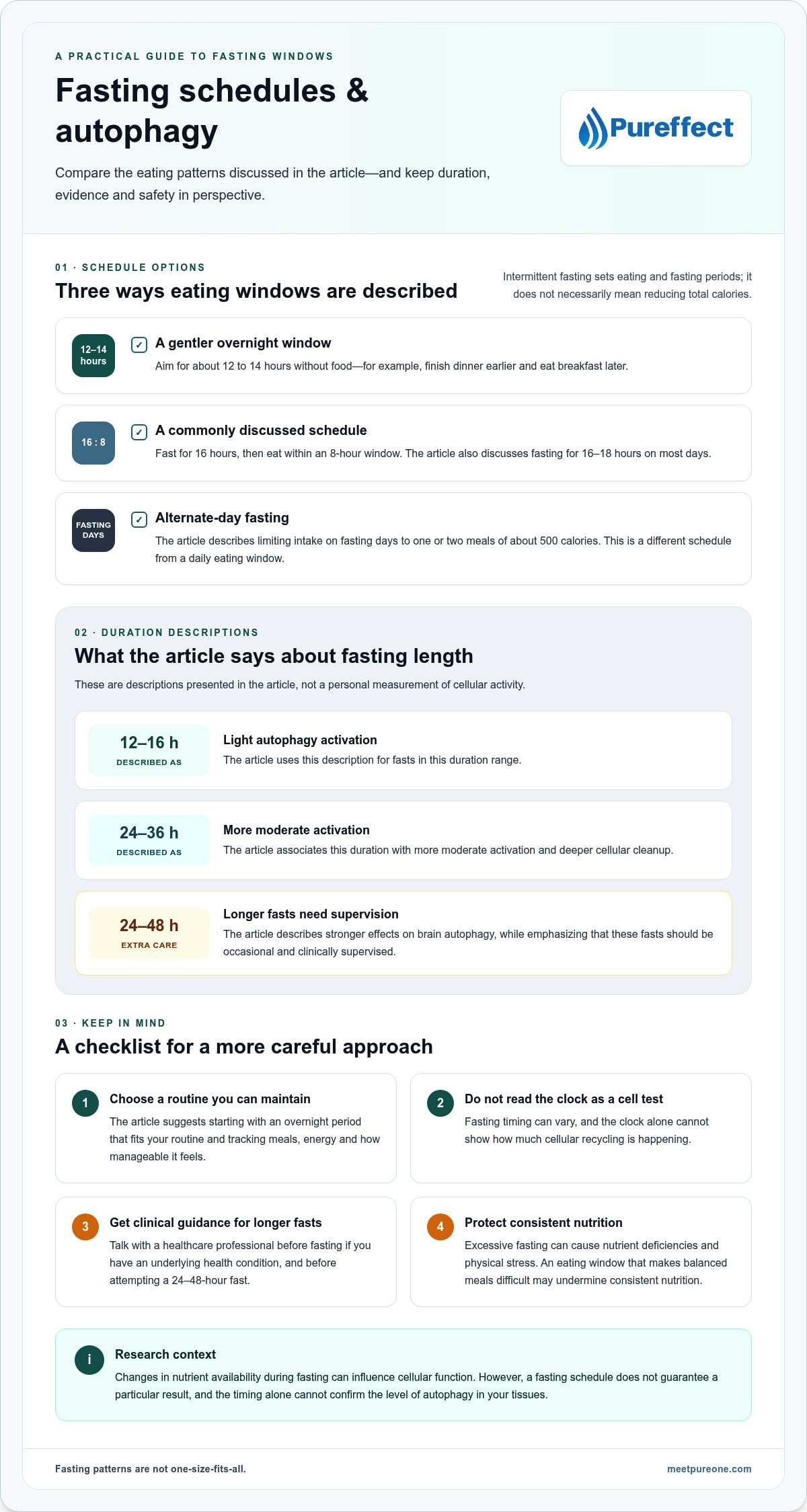
One commonly discussed schedule is 16:8: fast for 16 hours, then eat within an 8-hour window. A gentler option is aiming for about 12 to 14 hours without food, such as finishing dinner earlier and eating breakfast later. The timing of autophagy during fasting can vary, and the clock alone does not show how much cellular recycling is happening. The clock alone cannot show how much cellular recycling is happening.
Fasting duration matters. Fasts of 12-16 hours are described as light autophagy activation, while 24-36 hours are associated with more moderate activation and deeper cellular cleanup. Fasts of 24 to 48 hours are described as having stronger effects on brain autophagy, but they should be occasional and supervised, especially for people with underlying health conditions. Prolonged fasting calls for clinical supervision, not guesswork.
To try a modest schedule, choose an overnight fasting period that fits your routine, then note your meals, energy and ability to maintain it. Some guidance suggests starting intermittent fasting once or twice a week. Don’t treat longer fasting as a faster route to better health. Excessive fasting can cause nutrient deficiencies and add physical stress, while an eating window that makes balanced meals difficult can undermine consistent nutrition.
Do supplements marketed for autophagy work? A product label doesn’t prove that a supplement reliably changes autophagy in people. Research on a particular ingredient doesn’t establish the effects of every supplement. Costs vary by ingredient and product, while risks can include interactions or unwanted effects, so weigh both before adding supplements.
Talk with a healthcare professional before trying fasting if you have an underlying health condition, or before attempting a 24 to 48-hour fast. Their guidance is especially relevant when prolonged fasting could affect your health or nutrition.
Alternate-day fasting restricts intake on fasting days to one or two meals of about 500 calories. An intermittent-fasting eating window may be 4 to 8 days per day. These schedules differ in how they set limits on eating. Fasting for 16-18 hours most days can facilitate autophagy. As people become more experienced with fasting, they may occasionally try a 2-3 day fast, but prolonged fasting should take place under clinical supervision.
3. How Does Autophagy Affect Your Brain and Mental Health?
Autophagy is cellular recycling and quality control. Cells break down worn components, including damaged proteins and organelles, then reuse useful materials. This repair process helps maintain normal cellular function. Think of it as routine upkeep, not a switch that guarantees longevity or prevents chronic disease.
In the brain, cellular waste management matters because nerve cells rely on healthy proteins and structures to function. Autophagy helps cells process unwanted material through internal breakdown and recycling. Researchers study this process in relation to Alzheimer’s disease, but that connection doesn’t mean that boosting autophagy at home prevents or treats Alzheimer’s.
Sleep is one practical part of this picture. Consistent, high-quality sleep supports autophagy in the brain and central nervous system. A useful target is 7-9 hours each night; getting at least 7 hours of uninterrupted sleep is another simple benchmark. Sleep supports many functions, so it’s best viewed as one part of everyday brain care.
Keep a steady bedtime and wake time, and protect the hours between them. For example, keep your bedroom dark and quiet, and avoid regularly letting late-night tasks cut into sleep. If your schedule changes, return to your usual routine the next night. A sleep diary can help you notice patterns in bedtime, waking and daytime alertness.
How might this relate to mental health? Sleep and brain function are closely connected in daily life: after a poor night, concentration and emotional balance can feel harder to manage. Autophagy offers a cellular explanation for one aspect of maintenance, but it doesn’t account for every change in mood, memory or focus. Those experiences involve many processes beyond cellular recycling.
Metabolic signals, nutrient availability and cellular stress can also influence autophagy. That’s why one habit, such as intermittent fasting, can’t explain the whole process. Sleep, movement and eating patterns affect the body in different ways; combining extreme routines isn’t a shortcut to better repair. A consistent sleep schedule is a practical place to start.
Keep the takeaway grounded: sleep may support the brain’s cellular maintenance, while autophagy research continues to examine how this process works in different tissues. Aim for 7-9 hours of quality sleep, and notice whether your routine leaves enough time for uninterrupted rest. These steps support healthy habits, not a diagnosis or a treatment for Alzheimer’s or another chronic condition.
Regular exercise, particularly endurance and high-intensity interval training, has been shown to enhance cellular cleanup mechanisms. Berberine is a plant compound that mimics insulin activity and supports mitochondrial health.
4. Low-carbohydrate and ketogenic diets
Low-carbohydrate and ketogenic diets are related, but they’re not interchangeable. A low-carbohydrate approach reduces carbohydrate intake without necessarily aiming for ketosis. A ketogenic diet is more specific: it provides about 75 percent or more of daily calories from fat and no more than 5-10 percent from carbohydrates. Those proportions distinguish it from simply swapping one refined snack for a lower-carbohydrate food.
Why consider a ketogenic pattern for autophagy? Changing what you eat changes the nutrients available to cells, which can influence cellular activity and recycling. Occasional low-protein or ketogenic-style meals have been suggested as ways to help induce autophagy. That’s a proposed relationship, not evidence that a particular meal activates the process in every tissue or produces a specific health outcome.
Autophagy helps cells break down and reuse damaged components. A ketogenic diet is sometimes discussed because the body responds to a different balance of dietary fat and carbohydrates. But the diet itself isn’t a disease treatment, and the word “ketogenic” doesn’t prove that cellular cleanup has increased. Researchers distinguish changes in metabolic signals from demonstrated health effects.
For a practical comparison, picture two meals: one uses a grain-based side, while another replaces it with a lower-carbohydrate choice. That change alone doesn’t make the second meal ketogenic. The ketogenic pattern involves the overall balance of daily calories, with fat supplying about 75 percent or more and carbohydrates no more than 5-10 percent. A single menu item can’t establish that balance.
If you’re exploring food choices, start by noticing what your usual meals contain. Consider whether a lower-carbohydrate swap fits your routine, without assuming that a stricter plan is automatically better for autophagy. The key question is how the overall eating pattern affects nutrient intake and whether it’s workable as a lifestyle. Autophagy is natural cellular recycling, not a score to chase with increasingly restrictive meals.
Use measured language when weighing claims. A diet may be discussed as a possible trigger for autophagy, but that doesn’t show it can prevent chronic disease or replace medical treatment. The available facts describe ketogenic meal composition and proposed links to cellular processes; they don’t establish an ideal plan for everyone. Ground food choices in the overall pattern, rather than treating one ingredient or meal as a shortcut.
Pureffect: PureONE Molecular Hydrogen Generator
The PureONE Molecular Hydrogen Generator offers a home-based option for people exploring molecular hydrogen as part of a broader wellness routine. It supports inhaling hydrogen gas, drinking hydrogen-infused water, or applying it to the skin. These options are separate from the habits discussed above, and the device should not be treated as a proven way to stimulate autophagy or as a medical treatment.
Consider it if you’re interested in adding a molecular hydrogen device to your home wellness practices, while keeping exercise, sleep and balanced eating as distinct parts of your routine. To learn more about the PureONE Molecular Hydrogen Generator, visit the product page.
Choose a Routine You Can Sustain
A useful next step is to choose one habit you can maintain and observe how it fits your daily life. Supporting autophagy with home therapies is best approached with curiosity, not as a race to intensify exercise, restrict meals or follow a rigid food plan. Keep your goals grounded in well-being and notice which routines feel practical over time.
Autophagy is a complex cellular process, and no home routine guarantees a specific effect. If molecular hydrogen is also part of your wellness interests, Pureffect offers the PureONE Molecular Hydrogen Generator as a separate home-use option. Consider it for that purpose, not as a proven autophagy treatment.
Explore the PureONE Molecular Hydrogen Generator to learn more. Keep asking thoughtful questions, make choices that suit your circumstances, and take your next step at a pace that feels right.
Frequently Asked Questions
What Is Autophagy?
Autophagy is a cellular maintenance process, not a whole-body cleanse or a treatment you can switch on at will. Cells use it to manage internal material and respond to changing conditions. It’s also an area of ongoing research, so a proposed connection between autophagy and health doesn’t by itself show that deliberately increasing it will improve health or extend longevity.
Can fasting or time-restricted eating increase autophagy in humans, and what schedules have been studied?
Fasting and time-restricted eating have been studied in relation to autophagy, but the response is difficult to generalize across people and tissues. Studies have examined restricted daily eating windows as well as longer fasts. Changing your eating schedule doesn’t reveal cellular activity directly, and the length of a fast alone can’t confirm that autophagy increased in a particular organ.
What are the health risks and contraindications of fasting, including for people with diabetes or taking medication?
Fasting can be risky if it disrupts nutrition or complicates management of a health condition. People with diabetes should discuss plans with a healthcare professional, since changes in eating may affect their care. The same applies to anyone taking medication that must be coordinated with food or a consistent schedule. A professional can consider health history, medication timing and nutritional needs before fasting begins.
Do exercise types or workout durations affect autophagy in humans?
Research links exercise with autophagy, but human evidence doesn’t establish one workout type or duration as best for everyone. Findings can depend on the tissue examined and how cellular activity is measured. Exercise studies may reveal biological responses without showing that a specific routine improves a disease outcome. Choose activity based on fitness, ability and consistency, rather than treating a workout as a way to measure autophagy.
Does sleep duration or sleep quality influence autophagy?
Sleep quality and consistency are relevant to brain and central nervous system autophagy, but sleep duration alone can’t show what’s happening inside cells. A sleep tracker may help identify patterns such as frequent waking or irregular bedtimes; it doesn’t directly measure autophagy. If sleep problems persist or affect daily functioning, discussing them with a healthcare professional can help identify useful next steps.
Which foods or dietary patterns have evidence for affecting autophagy?
Research has identified plant compounds associated with autophagy, including resveratrol in red grapes and berries, spermidine in wheat germ, soy and aged cheese, and curcumin in turmeric. Finding a compound in a food doesn’t establish that eating it produces a measurable autophagy response in people. Consider these foods as part of an overall eating pattern, not as standalone treatments or substitutes for medical care.
Disclaimer
The information provided by Pureffect and any of its products are for educational and informational purposes only and is not intended as medical advice. Individual results may vary, and no specific health outcomes are guaranteed. Always consult a qualified healthcare professional before starting any wellness practice or product.