
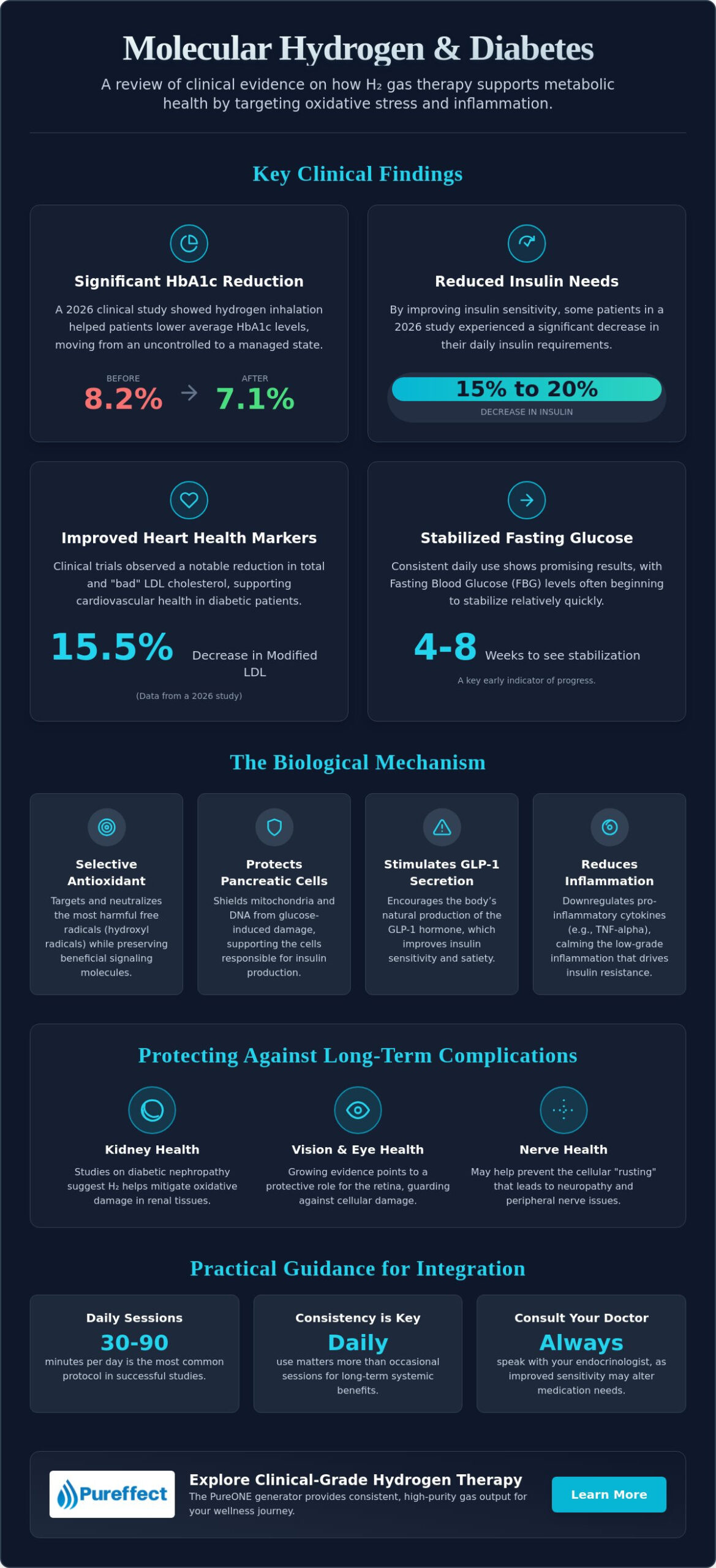
Did you know that a 2026 clinical study in China found patients could drop their HbA1c levels from 8.2% to 7.1% simply by adding hydrogen inhalation to their daily routine? It’s a startling figure. If you’ve been struggling with persistent high glucose levels despite strict medication, you know how draining the constant monitoring can be. The fear of long-term complications like neuropathy is always in the back of your mind. Is there a way to support your body’s natural defenses against the inflammation that fuels these issues? Hydrogen Gas Therapy for diabetes is emerging as a powerful adjunctive tool for those seeking better metabolic flexibility.
We believe in following the science wherever it leads. That’s why we’re exploring the latest medical research, including findings that show a 15% to 20% decrease in insulin needs for some patients. This article breaks down the clinical evidence behind molecular hydrogen as a way to reduce oxidative stress and lower fasting blood glucose. You’ll learn how this “biological tuner” might help you reclaim your energy and manage your health with more confidence. Let’s look at what the data actually says about your metabolic health.
Key Takeaways
- Understand how molecular hydrogen selectively targets harmful free radicals to protect your pancreas and support natural insulin secretion.
- Discover why Hydrogen Gas Therapy for diabetes is being studied for its ability to lower “bad” LDL cholesterol and improve overall metabolic health.
- Review the 2022 clinical data highlighting the role of hydrogen in stabilizing glucose levels for Type 2 patients.
- Learn the practical steps for integrating hydrogen into your routine, including why daily sessions matter more than occasional use.
- Explore the benefits of using a clinical-grade generator like the PureONE to ensure a consistent gas output for your wellness journey.
The Biological Mechanism: How Molecular Hydrogen Influences Glucose Metabolism
How does a tiny molecule change the way your body handles sugar? It starts with a concept called selective neutralization. Molecular hydrogen acts as a precise antioxidant. It specifically targets the hydroxyl radical, which is the most destructive free radical in your body. Unlike other antioxidants that might interfere with helpful signaling molecules, hydrogen only goes after the “bad guys.” This precision is a cornerstone of Hydrogen therapy research.
When we look at the pancreas, oxidative stress is often the culprit behind impaired insulin secretion. High glucose levels create a cycle of damage that wears down the cells responsible for producing insulin. Hydrogen gas enters the mitochondria to protect DNA from glucose-induced damage, effectively shielding the cell’s engine room. But it does more than just shield. It also triggers a “hormetic” effect. This means it sends a mild signal that prompts your body to ramp up its own production of protective enzymes like glutathione. It’s like a workout for your cells.
Hydrogen and the Stimulation of GLP-1
Reducing Chronic Low-Grade Inflammation
Diabetes is often a state of constant, low-grade fire in the body. Hydrogen helps put that fire out by downregulating pro-inflammatory cytokines like TNF-alpha. This is particularly important for addressing “metabolic endotoxemia.” This condition occurs when gut-derived toxins leak into the bloodstream, a common issue for diabetic patients that worsens insulin resistance. By calming this systemic inflammation, hydrogen provides a foundation for metabolic recovery. You can learn more about these foundational mechanics in our guide on what is molecular hydrogen.
Clinical Evidence: Key Findings from Recent Diabetes Studies
Let’s look at the hard data. A 2022 retrospective study on Chinese patients with Type 2 diabetes showed a significant drop in HbA1c levels after consistent hydrogen use. This isn’t just a minor fluctuation. These findings were echoed in a 2026 study where participants saw their average HbA1c drop from 8.2% to 7.1%. For many, this represents the difference between “uncontrolled” and “managed” health. How does this happen? It’s likely due to the molecule’s ability to reduce systemic oxidative stress over time.
The benefits extend to your heart health, too. Clinical trials have observed reductions in total cholesterol and LDL levels, with one 2026 study noting a 15.5% decrease in modified LDL. Throughout these trials, the safety profile remains remarkable. Researchers consistently report zero serious adverse effects for hydrogen inhalation. Most successful protocols involve sessions lasting between 30 and 90 minutes daily. It’s a simple time commitment for a potentially significant reward. If you’re ready to start your own routine, you might explore the PureONE Molecular Hydrogen Generator for consistent home use.
Impact on Fasting Blood Glucose (FBG)
Fasting blood glucose often acts as the first indicator of progress. Studies show that FBG levels begin to stabilize within just 4 to 8 weeks of consistent use. This isn’t about replacing your current treatment. Instead, hydrogen works in synergy with traditional medication to reduce insulin resistance, often measured as HOMA-IR. You can find a deeper dive into these findings in a comprehensive review of molecular hydrogen therapy. It’s about giving your body the extra support it needs to process energy efficiently.
Protection Against Diabetic Complications
What about the long-term worries? Research is moving toward protecting the kidneys, eyes, and nerves. For instance, studies on diabetic nephropathy suggest that hydrogen helps mitigate oxidative damage in renal tissues. If you’re interested in this specific area, check out our guide on molecular hydrogen for kidney health. There is also growing evidence regarding its role in protecting the retina and peripheral nerves. By neutralizing the hydroxyl radical, Hydrogen Gas Therapy for diabetes may help prevent the cellular “rusting” that leads to neuropathy and vision issues.
Practical Guidance: Integrating Hydrogen Therapy into Your Diabetes Management
Ready to start? Before you begin, you must speak with your endocrinologist. This is a powerful adjunctive therapy; as your insulin sensitivity improves, your medication needs may change. Research from 2026 suggests some patients see a 15% to 20% decrease in insulin requirements. This makes professional supervision essential to avoid hypoglycemia. Think of your doctor as a partner in this discovery rather than just a prescriber.
Consistency is your best friend here. Sporadic use rarely yields the metabolic regulation seen in clinical trials. Most successful studies involve daily sessions. We recommend monitoring your glucose response meticulously during the first 30 days. Keep a log. Note how you feel after each session. For the best results, combine your inhalation with hydrogen-infused water. This dual approach ensures systemic coverage, addressing oxidative stress from multiple angles. When you’re ready to commit to a daily routine, you can order the PureONE Molecular Hydrogen Generator to begin your home protocol.
The 66/33 Ratio: Why the Hydrogen-Oxygen Balance Matters
Safety should always come first. Many high-level studies utilize a mixture of 66% hydrogen and 33% oxygen, often called Brown’s Gas. Why this specific balance? Inhaling pure hydrogen for long periods can theoretically displace oxygen in the lungs. By providing oxygen alongside the hydrogen, you prevent hypoxia during those 60 to 90 minute sessions. This ratio mimics the exact mixtures used in successful clinical trials, ensuring both safety and efficacy for Hydrogen Gas Therapy for diabetes.
Creating a Home Protocol
How do you fit this into your day? Many users find success with post-meal sessions to help manage glucose spikes. Others prefer a session before bed to tackle systemic inflammation while they sleep. Keeping your device maintained is also key. You want to ensure gas purity and concentration remain high for every use. This consistent habit is a foundational step in your long-term wellness journey. For a broader look at the benefits, see our guide on how can hydrogen therapy help extend your life. It’s about building a sustainable path toward metabolic flexibility.
The PureONE Solution: Clinical-Grade Hydrogen Support at Home
Versatility matters when you’re managing a complex condition. That’s why the PureONE offers four distinct therapeutic modes. Whether you’re focusing on deep inhalation sessions or prepping hydrogen-infused water for your morning routine, you have the tools to customize your approach. We also offer a 365-day risk-free trial. This gives you a full year to track your fasting blood glucose and verify your own metabolic results. It’s a low-barrier way to see if Hydrogen Gas Therapy for diabetes is the right fit for your lifestyle.
Quality Engineering for Consistent Results
Consistency isn’t just about your schedule; it’s about the machine. Our generators undergo rigorous quality control through Canadian manufacturing to ensure they meet high standards. As we discussed earlier, the 66/33 hydrogen-oxygen ratio is vital for safety during long sessions. This balance is far superior to hydrogen-only units that might lead to oxygen displacement over time. You can find the full list of technical specifications on the PureONE product page.
Empowering Your Wellness Journey
We believe you should be the expert on your own body. By staying informed on the latest medical research, you’re taking an active role in your metabolic health. Our team is here to act as a friendly guide while you explore the science of molecular hydrogen. Are you ready to see what the research looks like in practice? You can explore the PureONE shop today to start your 365-day trial and take the next step in your wellness journey.
Your Path to Metabolic Flexibility
Ready to see what the science can do for you? We’ve explored how molecular hydrogen acts as a selective antioxidant to protect your pancreas and naturally stimulate GLP-1. The research is compelling. With studies showing significant reductions in HbA1c and improved insulin sensitivity; Hydrogen Gas Therapy for diabetes is a tool that works with your biology rather than against it. It’s a chance to address the root cause of oxidative damage and reclaim your daily energy.
You shouldn’t have to guess about your health. That’s why the PureONE is manufactured in Canada with medical-grade components and is proudly endorsed by Howie Mandel. We believe in transparency and your right to choose what’s best for your body. To help you decide; we offer a 365-Day Risk-Free Trial so you can track your own progress without any pressure. Why not start your own discovery today?
Start your 365-day risk-free trial of the PureONE Hydrogen Generator
Your journey toward better living is just beginning. We’re honored to be your partner in this exciting field of medical science. Keep asking questions and keep moving forward.
Frequently Asked Questions
Is hydrogen gas therapy safe for Type 1 and Type 2 diabetics?
Hydrogen gas therapy is considered safe for both Type 1 and Type 2 diabetics according to current clinical research. Studies consistently report a lack of serious adverse effects because hydrogen is a non-toxic gas naturally produced by your gut flora. While most research focuses on Type 2 patients, the molecule’s ability to neutralize the hydroxyl radical helps anyone dealing with chronic oxidative stress.
How long does it take to see changes in blood sugar levels with hydrogen inhalation?
You can typically expect to see initial changes in fasting blood sugar levels within 4 to 8 weeks of consistent daily use. Larger metabolic shifts, such as significant drops in HbA1c, often require a commitment of six months or more. This timeline reflects the duration used in the most successful 2026 clinical trials where patients achieved more stable glucose readings over time.
Can I stop taking my diabetes medication if I start hydrogen therapy?
You must not stop or change your diabetes medication without consulting your endocrinologist first. Hydrogen Gas Therapy for diabetes is an adjunctive treatment, which means it’s designed to work alongside your current medical plan. As your insulin sensitivity improves, your doctor may decide to adjust your dosage based on your lab results, but this must be a supervised process.
What is the difference between drinking hydrogen water and inhaling the gas for diabetes?
Inhalation allows you to absorb a much higher volume of molecular hydrogen into your bloodstream compared to drinking hydrogen-rich water. While drinking the water is beneficial for gut health and reducing local oxidative stress, gas inhalation is necessary to achieve the systemic saturation levels often seen in metabolic research. Many people find that using both methods together provides the most comprehensive support for their cells.
Are there any side effects of inhaling a 66/33 hydrogen-oxygen mix?
There are no reported side effects for inhaling a 66/33 hydrogen-oxygen mixture in the available clinical literature. This specific ratio, often used in Japan’s “advanced therapy B” protocols, ensures you receive a therapeutic dose of hydrogen while maintaining safe oxygen levels. It’s specifically designed to prevent hypoxia during longer sessions, making it a reliable choice for daily home use.
How many minutes a day should a diabetic person use a hydrogen generator?
Most clinical protocols for Hydrogen Gas Therapy for diabetes suggest a daily duration of 30 to 90 minutes. Some researchers recommend splitting this time into two sessions to maintain a more consistent level of hydrogen in the body’s tissues throughout the day. Following this specific window ensures you are mimicking the dosages that have shown the most promise in recent medical studies.
Disclaimer
The information provided by Pureffect and any of its products are for educational and informational purposes only and is not intended as medical advice. Individual results may vary, and no specific health outcomes are guaranteed. Always consult a qualified healthcare professional before starting any wellness practice or product.