
What if the reason you still feel like you’re walking through a thick fog isn’t because the bacteria are still there, but because your body’s internal alarm system won’t turn off? It’s a frustrating reality for many. You’ve finished the antibiotics, yet the migrating joint pain and cognitive exhaustion remain. If you’re tired of hearing that your labs look “normal” while you struggle to get through a workday, you aren’t alone. The CDC reports that diagnosed cases in the United States tripled between 2010 and 2023. This surge has led many to seek more effective ways of managing Lyme disease symptoms at home by focusing on cellular recovery rather than just antimicrobial attacks.
Recent 2026 research from the HHS and updated clinical guidelines suggest that recovery often requires a shift toward modulating inflammation and supporting mitochondrial health. This guide explores evidence-based strategies to help you reclaim your energy and clarity. We’ll look at how specific molecular hydrogen protocols can address systemic oxidative stress and provide clear, actionable steps you can take without another clinic visit. From understanding the latest legislative shifts in insurance coverage to implementing research-backed home recovery tools, it’s time to stop just surviving and start truly healing.
Key Takeaways
- Understand why your immune system stays in a “cytokine storm” long after antibiotics and how this 6-month window defines Post-Treatment Lyme Disease Syndrome.
- Explore research-backed strategies for managing Lyme disease symptoms at home by shifting focus from killing bacteria to modulating systemic inflammation.
- Discover how molecular hydrogen acts as a selective antioxidant to target specific pro-inflammatory markers like IL-6 and TNF-alpha.
- Learn how to build a “low-inflammation sanctuary” using air quality, light exposure, and a pro-mitochondrial diet to support long-term recovery.
- See why maintaining a specific 66% hydrogen to 33% oxygen ratio is essential for safety and gas purity in a home wellness setting.
Understanding the Lyme Aftermath: Why Do Symptoms Linger After Antibiotics?
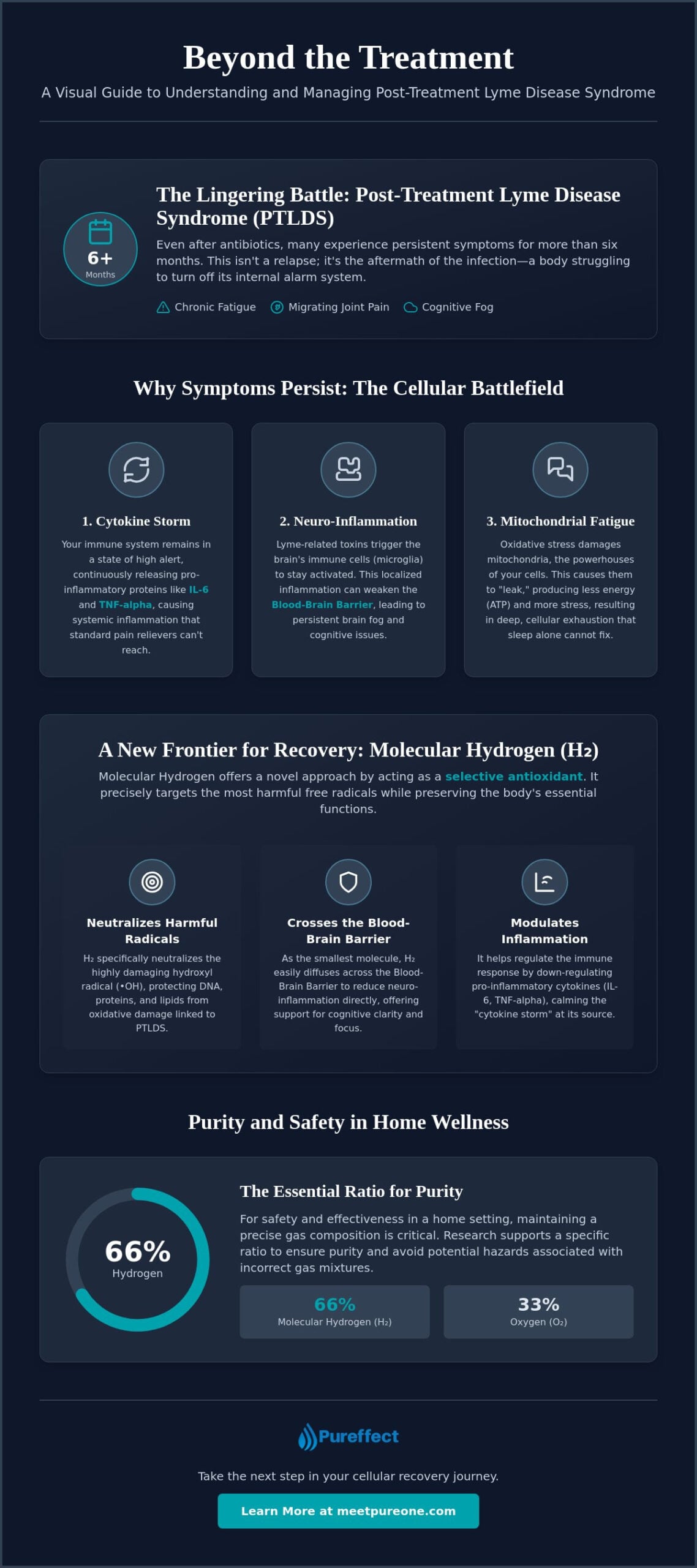
Why does the exhaustion persist long after the prescription bottle is empty? For many, the end of antibiotic treatment isn’t the end of the journey. When symptoms like fatigue, joint pain, or cognitive issues last for more than six months after completing therapy, clinicians refer to it as Post-Treatment Lyme Disease Syndrome (PTLDS). It’s a frustrating gap in care. Traditional medicine often focuses on killing the Borrelia burgdorferi bacteria, but it sometimes misses the biological debris left behind. You’ve cleared the “invader,” but the battlefield is still smoldering.
Research suggests this lingering malaise is often driven by a “cytokine storm.” Your immune system stays in a state of high alert, pumping out pro-inflammatory proteins even when the active infection is gone. Standard over-the-counter anti-inflammatories often fail here. Why? Because they don’t always reach the deep connective tissues or cross into the central nervous system where this inflammation hides. This creates a cycle of oxidative stress that drains your battery every single day. Successfully managing Lyme disease symptoms at home requires moving beyond simple painkillers to address this systemic fire.
The Role of Persistent Neuro-inflammation
Ever feel like your brain is wrapped in cotton wool? That’s brain fog. It happens when Lyme-related toxins trigger “microglia activation.” Microglia are the brain’s resident immune cells. When they stay “on,” they create localized inflammation that can weaken the blood-brain barrier. This explains why cognitive impairment often outlasts physical joint pain. Your joints might stop aching, but your processing speed remains sluggish because the neural “smoke” hasn’t cleared yet. It’s not in your head; it’s a measurable biological response.
Mitochondrial Fatigue: The Engine Room Problem
Why do you feel tired after ten hours of sleep? The answer lies in your mitochondria. Borrelia bacteria are known to interfere with cellular ATP production, which is the primary fuel for your body. Research indicates a “leaky” mitochondria theory. Essentially, the oxidative stress from the infection damages the mitochondrial membrane. Instead of producing energy, the cells “leak” electrons, creating more stress and less power. This is the hallmark of cellular exhaustion rather than active bacterial growth. Identifying this difference is the first step in managing Lyme disease symptoms at home effectively.
The Science of Molecular Hydrogen: A New Frontier for Lyme-Related Inflammation
Molecular hydrogen (H2) isn’t your average antioxidant. Most people think of Vitamin C or E when they hear the word “antioxidant,” but H2 operates on a different level. It is a selective antioxidant. This means it doesn’t just clear out every radical it finds. Instead, it specifically targets the most aggressive and damaging free radicals, such as the hydroxyl radical, while leaving beneficial signaling radicals alone. For someone managing Lyme disease symptoms at home, this precision is vital. It allows the body to maintain its natural defense mechanisms while dampening the fires of chronic inflammation.
Neutralizing the Hydroxyl Radical
Why is this specific radical so dangerous? The hydroxyl radical is highly reactive and can cause immediate damage to DNA, proteins, and lipids. Research shows that H2’s ability to neutralize these cytotoxic radicals is critical for protecting tissues already weakened by chronic inflammation. A 2024 study confirmed that oxidative stress in Lyme-recovery patients is often linked to elevated lipid peroxidation. H2 acts as a targeted buffer against this specific damage, helping to preserve cellular integrity when the body’s internal resources are tapped out.
Crossing the Blood-Brain Barrier (BBB)
The brain is protected by a strict security system called the Blood-Brain Barrier. Most anti-inflammatory compounds are simply too large to get through. Hydrogen, however, crosses the BBB effortlessly due to its tiny molecular size. Clinical observations have shown significant improvements in cognitive clarity and focus in patients using hydrogen inhalation protocols. This neuroprotective effect is why many individuals are now integrating the PureONE Molecular Hydrogen Generator into their daily routines. It provides a non-invasive way to support brain health and address the neuro-inflammation that drives persistent brain fog.
Your At-Home Recovery Protocol: Practical Steps for Symptom Management
Recovery isn’t a single event; it’s a series of environmental and biological adjustments. When you’re managing Lyme disease symptoms at home, your surroundings are just as important as your supplements. Start by creating a “Low-Inflammation Sanctuary.” This involves filtering indoor air to reduce VOCs and strictly managing light exposure. Research indicates that Lyme patients often experience heightened sensory sensitivity. By dimming blue lights after sunset, you help your brain signal that it’s time to heal, reducing the baseline stress on your nervous system.
Your nutrition should also shift toward a pro-mitochondrial plan. While many start with a gluten-free diet, the goal is actually to repair the cellular “engine room” damage we discussed earlier. Focus on high-quality omega-3 fatty acids and polyphenols found in dark berries. These nutrients help stabilize mitochondrial membranes, which is a cornerstone of managing Lyme disease symptoms at home effectively. To track what works, keep a simple symptom journal. Note your energy levels on a scale of 1 to 10. You’ll likely notice that “good days” correlate with periods of lower systemic stress and better sleep hygiene.
The Dual-Mode Hydrogen Strategy
Integrating hydrogen therapy doesn’t have to be overwhelming. A three-step approach ensures you’re addressing inflammation from multiple angles:
- Morning Support: Drink hydrogen-infused water first thing to provide antioxidant support for your digestive system and blood.
- Evening Inhalation: Use a cannula for 30 to 60 minutes before bed. This targets neuro-inflammation and helps quiet the “cytokine storm.”
- Localized Application: For migrating joint pain or stiffness, applying hydrogen-rich water directly to the skin can provide targeted relief.
Optimizing Sleep and Circadian Rhythms
Why do your joints ache more at night? Lyme symptoms often peak during the late hours as the body’s natural cortisol levels drop, allowing inflammatory cytokines to surge. This is also when the “Herxheimer” response, the detox reaction to dying bacteria, can feel most intense. Using molecular hydrogen inhalation before bed helps shift your body into a parasympathetic “rest and digest” state. This transition is vital for improving deep sleep cycles with hydrogen gas. When your body is in a state of rest rather than high alert, it can finally focus on cellular repair instead of just defense.
Implementing PureONE: How Molecular Hydrogen Supports Your Long-Term Wellness Journey
When you shift from the “kill” phase of antibiotics to the “recovery” phase of cellular repair, the tools you use at home must be both effective and safe for daily use. The PureONE Molecular Hydrogen Generator is designed with a specific 66% Hydrogen and 33% Oxygen ratio. Why does this matter? This specific balance, often referred to as Oxy-Hydrogen, is considered the gold standard for home safety. It ensures that you aren’t just inhaling a combustible gas, but a therapeutic blend that supports the body’s natural oxygenation while delivering the antioxidant benefits of H2. Managing Lyme disease symptoms at home becomes much more sustainable when you have a device that prioritizes long-term safety over quick, unverified results.
Purity is another non-negotiable factor. Many devices on the market can inadvertently release metallic byproducts into the gas stream. PureONE uses a high-grade stainless steel condenser to maintain gas purity over thousands of hours of use. This ensures that the hydrogen you inhale is as clean as the research requires. With four distinct therapeutic modes, you can customize your recovery based on how you feel each day. Whether you need a high-flow session for intense joint stiffness or a gentle cycle for evening relaxation, the flexibility allows you to listen to your body’s changing needs.
We understand that chronic illness doesn’t follow a linear path. Healing takes time. That’s why a 365-day trial is essential. It gives you a full year to observe how your body responds to consistent hydrogen therapy. This risk-free approach removes the pressure of the “quick fix” and allows you to focus on the steady, incremental progress that characterizes true Lyme recovery.
Inhalation vs. Ingestion: Which Does Your Body Need?
Do you need to drink it or breathe it? The answer is usually both, but for different reasons. Inhalation is often superior for addressing the “brain fog” and neuro-inflammation we discussed in earlier sections because the gas reaches the brain more rapidly. On the other hand, hydrogen-infused water is excellent for gut health, where a significant portion of your immune system resides. If you’re wondering which method to prioritize, our guide on a Hydrogen Inhalation Machine vs. Water Bottle breaks down the science of gas volume and absorption rates in detail.
A Long-Term Partner in Health
The PureONE Molecular Hydrogen Generator isn’t just a temporary fix for a flare-up; it’s a foundational tool for your long-term wellness. Consistent use has been shown to support the body’s natural NAD+ levels and optimize cellular energy production. By reducing the daily burden of oxidative stress, you give your mitochondria the space they need to function efficiently again. Managing Lyme disease symptoms at home is a marathon, not a sprint. Having a reliable partner in that journey makes all the difference for your energy, your family, and your future.
Your Path to Cellular Resilience Starts Today
Take control of your healing process by moving beyond the traditional antibiotic model. We’ve explored how understanding the biological “aftermath” of an overactive immune response is the first step in managing Lyme disease symptoms at home. By using molecular hydrogen to target specific inflammatory markers and support mitochondrial health, you’re addressing the root cause of persistent fatigue. It’s about giving your body the selective tools it needs to finally turn off the internal alarm system and begin deep tissue repair.
The journey to recovery shouldn’t feel like a high-stakes gamble. That’s why the PureONE generator, which is proudly made in Canada with proprietary stainless steel tech, includes a full year to test its impact on your daily life. Even public figures like Howie Mandel have turned to this technology to support their wellness goals. You deserve a partner that stands by the science and your long-term results.
Ready to see the difference for yourself? Start your 365-day risk-free trial of the PureONE Molecular Hydrogen Generator today. You have the power to reclaim your clarity and energy. We’re here to help you every step of the way.
Frequently Asked Questions
Can I use hydrogen therapy while taking antibiotics for Lyme disease?
Yes, hydrogen therapy is generally compatible with antibiotic protocols. While antibiotics focus on eliminating the Borrelia bacteria, hydrogen addresses the collateral damage. Research shows that hydrogen gas can mitigate the oxidative stress caused by bacterial die-off. This makes it a helpful companion rather than a competitor to your prescribed medication. It helps manage the biological “cleanup” while the antibiotics handle the active infection.
How long does it take to see results when managing Lyme symptoms at home?
Many individuals notice shifts in their energy levels or mental clarity within 2 to 4 weeks of consistent use. However, managing Lyme disease symptoms at home is a long-term strategy. Because cellular repair involves healing the mitochondrial “leaks” we mentioned earlier, the most significant improvements often appear after 3 to 6 months. Consistency is the key to seeing a measurable reduction in daily inflammation and sustained energy gains.
Is hydrogen inhalation safe to do every day?
Daily inhalation is safe because hydrogen is a naturally occurring gas in the body with no known toxic threshold. Unlike some supplements that can build up to harmful levels, any excess hydrogen is simply exhaled. Clinical research has documented the safe use of hydrogen in high concentrations over extended periods. This makes it an ideal foundational tool for those dealing with persistent, daily inflammatory challenges without the risk of over-supplementation.
What is the difference between hydrogen water and regular water for Lyme recovery?
The difference lies in the therapeutic gas dissolved in the liquid. Regular water is essential for basic hydration, but it lacks the selective antioxidant power of molecular hydrogen. Hydrogen-infused water delivers active H2 molecules directly to your digestive tract and bloodstream. This helps neutralize the hydroxyl radicals that regular tap or bottled water cannot reach, providing a targeted approach to recovery that supports your immune system’s home base in the gut.
Can hydrogen therapy help with the ‘brain fog’ associated with Lyme?
Hydrogen is uniquely suited for brain fog because it effortlessly crosses the blood-brain barrier. Most antioxidants are too large to enter brain tissue, but the tiny size of H2 allows it to diffuse into the central nervous system. By neutralizing neuro-inflammation at the source, it helps clear the “neural smoke” that makes thinking feel difficult. This is a primary reason why inhalation is a favorite for those seeking to restore processing speed and focus.
What should I do if I experience a Herxheimer reaction while using hydrogen?
If you feel a “Herx” reaction, the best approach is to temporarily reduce the duration of your sessions. This reaction occurs when your body is overwhelmed by cellular debris and toxins. Increasing your intake of pure water can help flush these byproducts out. Hydrogen actually supports the detoxification process by reducing the oxidative stress that accompanies a flare. You don’t have to stop entirely; simply find a pace that your body can handle comfortably.
Disclaimer
The information provided by Pureffect and any of its products are for educational and informational purposes only and is not intended as medical advice. Individual results may vary, and no specific health outcomes are guaranteed. Always consult a qualified healthcare professional before starting any wellness practice or product.