
Better allergy control often comes from a plan, not a single remedy. A holistic approach to managing allergies combines clinician-guided care with practical steps to reduce relevant exposures. That can help when symptoms are confusing and online advice about diets, supplements, and “natural” treatments points in different directions. Broader support does not mean giving up treatments that work.
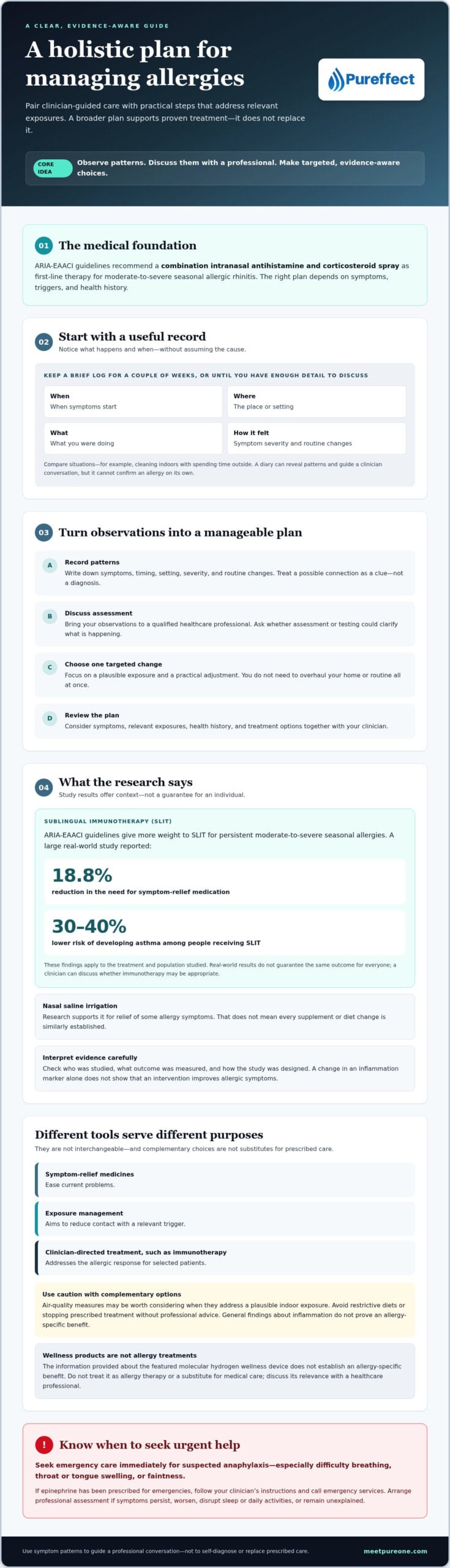
There is a clear medical foundation to build on. The April 2026 ARIA-EAACI guidelines recommend a combination intranasal antihistamine and corticosteroid spray as first-line therapy for moderate-to-severe seasonal allergic rhinitis. Your plan depends on your symptoms, triggers, and health history. This guide explains how to look for exposure patterns, build manageable daily habits, and work with a qualified healthcare professional to coordinate care. It also covers how to assess complementary wellness options for evidence and safety without mistaking them for proven allergy treatments.
Key Takeaways
- A holistic approach to managing allergies combines appropriate medical care with practical habits, not unproven substitutes.
- Track when symptoms occur and what exposures may be involved before making major changes.
- Work with a qualified healthcare professional to decide whether assessment or treatment adjustments make sense for your situation.
- Evaluate complementary options by checking the quality of evidence, possible risks, and fit with your care plan.
- PureONE is a molecular hydrogen wellness device, not a treatment for diagnosed allergies. Discuss its relevance with a healthcare professional.
A holistic approach to managing allergies starts with identifying the problem
Start with two questions: what symptoms are happening, and when? A holistic approach to managing allergies coordinates evidence-aware medical care with practical support for overall wellbeing. It does not replace diagnosis or prescribed treatment, and it does not promise to cure allergies. Instead, it helps you and your clinician make decisions based on your symptoms, possible exposures, and health history.
Allergic reactions involve the immune system, but sneezing, itchy eyes, rashes, and congestion can have other causes. Learning more about understanding allergic reactions can provide useful background, but online reading cannot establish what is causing your symptoms. Factors such as existing conditions, medicines, and when symptoms began can help a healthcare professional decide whether assessment or testing may be appropriate.
How to build a useful allergy symptom-and-exposure record
Keep a brief log for a couple of weeks, or until you have enough detail to discuss at an appointment. Note when symptoms start, where you are, what you are doing, how severe they feel, and any changes in your routine. For example, compare how you feel while cleaning indoors with how you feel after spending time outside. Record what happened rather than assuming what caused it. A diary can help reveal patterns and guide a conversation with a clinician, but it cannot confirm an allergy on its own.
When allergy symptoms deserve professional evaluation
Arrange a professional assessment if symptoms persist, worsen, disrupt sleep or daily activities, or remain unexplained. A clinician can consider your history alongside appropriate testing and recommend an individual plan instead of relying on guesswork or broad avoidance rules. Seek emergency care immediately for suspected anaphylaxis, especially if symptoms include difficulty breathing, throat or tongue swelling, or faintness. If you have been prescribed epinephrine for emergencies, follow your clinician’s instructions and call emergency services.
What allergy research says about treatment, triggers, and complementary care
Research findings need context. Guidelines weigh evidence across studies, systematic reviews combine results, and individual trials or real-world studies address narrower questions. Before applying a finding to your situation, check who was studied, what outcome was measured, and how the study was designed. A change in an inflammation marker alone, for example, does not show that an intervention improves allergic symptoms.
How to judge evidence for allergy treatments
The April 2026 ARIA-EAACI guidelines give more weight to sublingual immunotherapy (SLIT) for persistent moderate-to-severe seasonal allergies. A large real-world study reported an 18.8% reduction in the need for symptom-relief medication and a 30-40% lower risk of developing asthma among people receiving SLIT. These findings apply to the treatment and population studied; real-world results do not guarantee the same outcome for everyone. A clinician can explain whether immunotherapy may be appropriate for you.
Keep treatment goals distinct. Symptom-relief medicines ease current problems, exposure management aims to reduce contact with a relevant trigger, and clinician-directed treatments such as immunotherapy address the allergic response for selected patients. These approaches serve different purposes and are not interchangeable.
What to know about complementary approaches
Assess each option on its own evidence. Research supports nasal saline irrigation for relief of some allergy symptoms, but that does not mean every supplement or diet change is similarly established. Air-quality measures may be worth considering when they address a plausible indoor exposure. Avoid restrictive diets or stopping prescribed treatment without professional advice. General findings about inflammation do not prove an allergy-specific benefit.
Product descriptions are not clinical evidence. The information provided about PureONE does not establish an allergy-specific benefit, so do not treat it as an allergy therapy or a substitute for medical care. If you are considering it for general wellness, review the PureONE product information and discuss its relevance with a healthcare professional. Evidence-aware care means weighing each option against the research, its limitations, and your individual needs.
A practical daily plan for managing allergy triggers and symptoms
Turn observations into a small, testable plan. A holistic approach to managing allergies works best when daily adjustments address a plausible trigger and fit alongside clinician-guided care. You do not need to overhaul your home or routine all at once.
- Record patterns. Note symptoms, timing, setting, severity, and routine changes. For example, record whether a rash or irritation appears after using a new scented laundry detergent and whether it also occurs on days you use your usual detergent. Skin reactions can have causes other than allergy, so treat this as a clue to discuss, not a diagnosis.
- Discuss assessment. Bring your observations to a healthcare professional. Ask which exposures are worth investigating and whether evaluation or testing could help clarify what is happening.
- Choose one targeted change. If the new detergent seems relevant, consider pausing that one product while keeping other routines steady, if practical. Avoid broad restrictions or major changes without professional advice.
- Review the results. Continue tracking symptoms and note what changed. Discuss persistent problems, treatment concerns, or possible side effects with your clinician.
Make targeted changes at home and in everyday routines
Match each step to a suspected exposure. If symptoms seem to follow use of a particular household product, changing one item at a time may make patterns easier to interpret. Note when you used it and whether symptoms changed. This is exposure management, not a guaranteed way to prevent or treat symptoms. Do not assume every reaction is allergic or make sweeping changes based on a single episode.
Review the plan instead of relying on guesswork
Compare symptom notes over time and record relevant changes, including new products, medicines, or routines. If several factors change at once, it is harder to tell what may have contributed. Bring your observations and questions to a clinician if symptoms persist or treatment concerns arise.
Appointment checklist: Bring your symptom timeline, suspected exposures, relevant routine or medication changes, and questions about assessment and treatment. If you are also considering a wellness device, review the PureONE product information and discuss its relevance with a healthcare professional. It is not an allergy treatment or a substitute for medical care.
How to choose next steps, and assess wellness products without overclaiming
A complementary option can sound promising and still lack evidence for allergies. Before adding anything to your routine, check what outcome was studied, who took part, and whether the research involved people with the same diagnosed condition. A change in a general measure of inflammation or a positive testimonial does not establish that a product improves allergic symptoms.
Questions to ask before trying a complementary wellness option
- What outcome has been studied? Look for allergy-specific symptoms or clinical outcomes, not just broad claims about wellness.
- Who was studied? Findings from people without diagnosed allergies may not apply to allergy care.
- Is it safe for me? Ask a qualified healthcare professional about possible interactions, contraindications, and practical considerations, especially if you take medication or have other health conditions.
- What would it change in my care? Do not stop prescribed treatment or delay assessment based on a product claim.
Where molecular hydrogen fits, and what remains unproven
PureONE is a molecular hydrogen wellness device with options for hydrogen inhalation, hydrogen-infused water, or direct skin application. Its product information does not establish that these uses prevent, treat, or manage allergies. Do not consider it a treatment for diagnosed allergies or a replacement for clinician-guided care. General wellness or inflammation claims are not the same as evidence of allergy-specific benefit.
For a broader introduction to the topic, the article “What is Molecular Hydrogen? The Science of Cellular Health in 2026” may offer context, but it is not proof of an allergy benefit. A holistic approach to managing allergies keeps that distinction clear while weighing evidence, personal health needs, and safety.
If you are considering PureONE for general wellness, review the PureONE product information and discuss its relevance with a healthcare professional. Keep your allergy plan grounded in assessed needs and evidence-based care.
Build an allergy plan you can feel confident about
A holistic approach to managing allergies starts with noticing patterns and using that information to guide conversations with a healthcare professional. Match daily changes to plausible triggers instead of relying on blanket rules, and judge complementary options by allergy-specific evidence and safety. Keep wellness claims separate from proven allergy care.
PureONE is a molecular hydrogen wellness device, not a treatment for diagnosed allergies or a substitute for medical care. Its product page describes four therapeutic modes, including hydrogen inhalation, hydrogen-infused water, and direct skin application. These are device functions, not demonstrated allergy outcomes. If you are exploring it for general wellness, explore the PureONE molecular hydrogen generator and discuss its relevance with a healthcare professional. Check the product page for current trial terms.
Keep tracking symptoms, ask questions, and follow evidence-based guidance as you build a plan that fits your needs.
Frequently Asked Questions
Is a holistic approach to managing allergies a replacement for medication?
No. A holistic approach to managing allergies can combine practical habits and awareness of possible triggers with diagnosis and prescribed treatment, not replace them. The right plan depends on your symptoms, suspected allergy, health history, and current clinical guidance. Discuss changes with a qualified healthcare professional, especially if symptoms are persistent, severe, or affecting daily life. Seek emergency care immediately for symptoms that may indicate anaphylaxis.
Can changing my diet help manage allergies?
Diet changes may be relevant if a food allergy or another dietary trigger is being considered, but broad elimination diets are not a reliable way to diagnose an allergy. Unnecessary restrictions can affect nutrition. Ask a qualified clinician whether assessment or a referral to a dietitian makes sense. Do not remove major food groups or reintroduce a suspected allergen without professional guidance, particularly if you have had a serious reaction.
How do I know what is triggering my allergy symptoms?
Track when symptoms occur, where you are, what you were exposed to, and how symptoms change. For example, note whether symptoms appear during a particular activity or in a specific setting. A diary can help you and a clinician spot patterns, but it cannot confirm an allergy by itself. Avoid drawing conclusions from one isolated episode. A healthcare professional can review your history and decide whether testing or another evaluation is appropriate.
Can an air purifier prevent allergy symptoms?
An air purifier may be relevant to some indoor-air concerns, but it cannot address every allergen or guarantee symptom prevention. Whether it is worth considering depends on the suspected trigger, the product’s specifications, room conditions, and reliable evidence for the intended use. Treat it as one possible exposure-management measure, not a complete care plan. If symptoms persist, discuss them with a clinician rather than relying on a household device alone.
Is molecular hydrogen proven to treat allergies?
The information provided about PureONE describes a molecular hydrogen wellness device, but does not establish that it treats or prevents allergies. General wellness or inflammation claims are not proof of allergy-specific benefit. If you are considering a complementary product, review current research and ask a qualified healthcare professional about safety and relevance to your situation. Do not delay an allergy assessment or stop prescribed treatment to try it.
When should I seek urgent help for allergy symptoms?
Seek emergency care immediately if symptoms suggest a severe allergic reaction, such as trouble breathing, swelling of the throat or tongue, faintness, or rapidly worsening symptoms. Follow any emergency plan your clinician has given you, and do not wait to see whether a home measure or wellness product helps. For recurring or concerning symptoms that are not an emergency, arrange an appointment with a qualified healthcare professional.
Disclaimer
The information provided by Pureffect and any of its products are for educational and informational purposes only and is not intended as medical advice. Individual results may vary, and no specific health outcomes are guaranteed. Always consult a qualified healthcare professional before starting any wellness practice or product.