
What if the most useful wellness space in your home isn’t a new room, but a familiar corner you already use? Creating a home wellness sanctuary doesn’t require a renovation or a shelf full of gadgets. Start by arranging your surroundings so a restorative routine is easier to begin and return to.
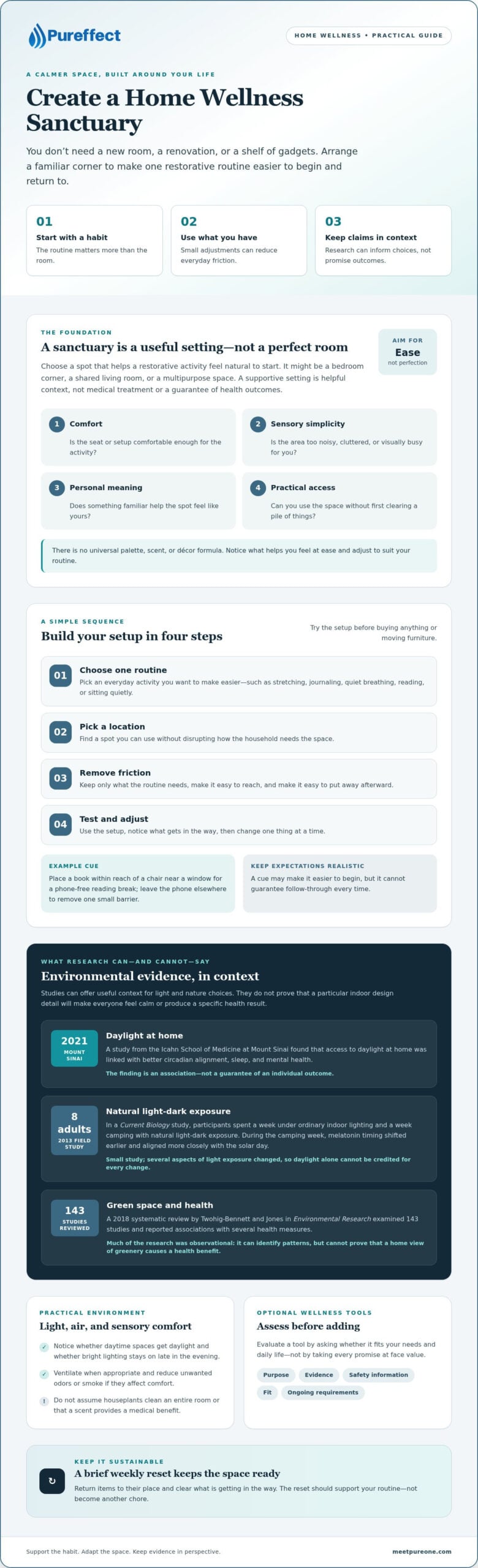
It’s easy to assume that better well-being calls for expensive purchases or a dedicated meditation room. In practice, small changes can make a space feel calmer and help a routine fit into everyday life. Research offers useful context: a 2021 study from the Icahn School of Medicine at Mount Sinai found that access to daylight at home was linked with better circadian alignment, sleep, and mental health.
This guide shows you how to use light, layout, and sensory cues with what you already have, then connect those choices to a routine you can sustain. It also explains how to assess wellness tools and research claims without taking every promise at face value. The goal is a supportive everyday environment built around your life, not a picture-perfect room.
Key Takeaways
- Define a sanctuary by the restorative habit it supports, not by how much space you can dedicate to it.
- Assess research on light and nature without treating associations as guaranteed outcomes.
- Use a simple four-step plan to create a home wellness sanctuary in a bedroom corner, shared living room, or multipurpose space.
- Make a brief weekly reset part of your routine so the space stays ready to use without becoming another chore.
- Evaluate optional wellness tools by their purpose, evidence, safety information, fit, and ongoing requirements.
What Does Creating a Home Wellness Sanctuary Actually Mean?
Well-being is a broad concept that can include physical, psychological, and emotional dimensions, as outlined in this definition of well-being. A supportive setting may help you make room for a chosen routine, but it isn’t medical treatment and can’t guarantee a health outcome. Think of the space as helpful context, not a cure.
Start with the routine, not the room
Ask yourself: What everyday activity would I like to make more inviting? Choose one routine, then find a spot that suits it. If you want a short, phone-free reading break, try a chair near a window with a book within reach. The chair doesn’t need a makeover. Placing the book where you can see it can serve as a cue, while leaving your phone elsewhere removes one small barrier. These choices may make it easier to begin, though they won’t guarantee you’ll follow through every time.
What makes a space feel restorative?
What Does Research Say About Light, Nature, and a Calmer Home?
Research can help distinguish useful environmental principles from design trends. It can’t establish that a particular paint color or decorative object will make everyone feel calm. Findings about outdoor settings don’t automatically apply to an indoor plant or a nature image either. Use evidence as context, then pay attention to how your own space feels.
Daylight, evening light, and the body clock
Your circadian rhythm is the body’s roughly 24-hour timing system. Light and darkness help synchronize it with the day. In a 2013 field study published in Current Biology, Wright and colleagues tracked eight adults during a week of ordinary indoor lighting and a week of camping with natural light-dark exposure. During the camping week, participants’ melatonin timing shifted earlier and aligned more closely with the solar day. The small study changed several aspects of exposure at once, so it can’t show that daylight alone caused every change or predict individual results.
A practical starting point is to notice whether your usual daytime spaces get daylight and whether bright lighting stays on late into the evening. You don’t need to treat lighting as therapy. Simply observe what’s available and what suits your routine.
Natural elements, air, and sensory comfort
A 2018 systematic review by Twohig-Bennett and Jones in Environmental Research examined 143 studies on exposure to green space and health. It reported associations with several health measures, but much of the research was observational. That means it can identify patterns, not prove that a view of greenery at home will cause a particular health benefit. Yale’s overview of research on the health benefits also provides context on the variety of evidence and types of nature exposure.
As you continue creating a home wellness sanctuary, treat design choices as personal preferences and research findings as evidence with limits. A wellness device is separate from these environmental basics. If you’re considering one, review the PureONE Molecular Hydrogen Generator details and assess whether it fits your needs.
How to Create a Home Wellness Sanctuary in Any Amount of Space
Start small. Creating a home wellness sanctuary is less about adding things and more about making one useful routine easier to begin. Try this four-step sequence before buying anything or rearranging furniture.
- Choose a routine. Pick one everyday activity you want to make easier, such as stretching, journaling, or quiet breathing.
- Pick a location. Find a spot you can use without disrupting how the household needs the space.
- Remove friction. Gather only what the routine needs and make it easy to put away afterward.
- Test and adjust. Use the setup, notice what gets in the way, and change one thing at a time.
Build the space around one realistic ritual
Test the environment instead of chasing perfection
A brief check-in after using the space can guide your next adjustment. Was it easy to start? Did anything interrupt the routine? Does the setup need to be simpler? These small observations are more useful than aiming for a perfect arrangement.
If you’re considering a wellness device after establishing a routine, review the PureONE Molecular Hydrogen Generator details and decide whether it fits your preferences and needs.
How to Sustain Your Sanctuary, and Choose Optional Wellness Tools
A restorative space should make a routine easier, not create another job. A brief weekly reset can help keep it ready: return items to their places, clear the surface you use, and make one small adjustment for comfort. If the space is shared, put away anything that needs to move so it’s simple to set up again.
Keep the routine flexible and sustainable
Plan a fallback for busy days or interruptions. If your usual routine needs a quiet corner, try a shorter version wherever you can pause comfortably. Then check whether the space still supports the habit you chose or has become cluttered or inconvenient. Adjust the setup when your needs change. Creating a home wellness sanctuary should remain flexible enough to fit real life.
Evaluate wellness devices with clear expectations
A device is optional, not a requirement for a supportive home environment. Before adding one, consider:
- Purpose: What specific role would it play in a routine you already want to keep?
- Evidence: Are claims supported by relevant research, and do they match what the research actually measured?
- Safety information: Are clear instructions, precautions, and relevant safety details available?
- Fit: Does it suit your preferences, space, and circumstances?
- Ongoing requirements: What upkeep, supplies, or regular steps does using it involve?
Pureffect describes its PureONE Molecular Hydrogen Generator as a home wellness device with four modes, including inhalation, hydrogen-infused water, and direct skin application. That product description isn’t proof of a medical benefit. Don’t treat the device as a way to diagnose, treat, or prevent disease. Review the device information and instructions, and consider personal suitability before use. For broader context, consult independent, reliable sources about molecular hydrogen rather than assuming a product claim is established science.
If it fits your routine and expectations, explore the PureONE hydrogen generator and review its details for yourself.
Make Your Space Work for the Life You Have
Creating a home wellness sanctuary doesn’t start with a renovation. Start with one restorative routine, make it easy to begin, and shape a comfortable spot around it. Research on daylight and nature can offer helpful context, but your space should support well-being, not promise a particular health outcome.
Keep the setup sustainable with a simple reset, and assess any wellness tool by its purpose, evidence, safety information, and fit. A device is optional. Pureffect describes its PureONE Molecular Hydrogen Generator as having four therapy modes, being manufactured in Canada, and producing a mixture specified as 66% molecular hydrogen and 33% oxygen. Review current product details and relevant evidence independently; these descriptions aren’t proof of medical benefit.
A small space that helps you return to a meaningful habit is a strong place to begin. If you’re considering a device as part of your routine, explore the PureONE hydrogen generator.
Frequently Asked Questions
How do I create a wellness sanctuary at home without a spare room?
Start with one routine you want to make easier, then choose a corner or shared area that can support it. Keep the essentials nearby, reduce obvious distractions, and make the setup easy to restore after use. Creating a home wellness sanctuary can be as simple as keeping a book beside a comfortable chair or clearing a small floor space for stretching. You don’t need a renovation, a particular aesthetic, or special products.
What should I put in a home wellness sanctuary?
Can a home wellness sanctuary improve sleep?
How can I make a small home feel more calming?
Focus on one usable area instead of trying to redesign the whole home. Choose a clear purpose, remove items that get in the way, and make the setup comfortable and easy to maintain. For example, position a chair where you can read comfortably or keep a journal and pen together. Test one change at a time. What feels calming is personal, and shared spaces need to work for everyone who uses them.
Are wellness devices necessary for creating a home sanctuary?
No. A home sanctuary can support an ordinary routine using a comfortable environment and items you already own. Devices are optional; their usefulness depends on your needs, the available evidence, instructions, safety information, and ongoing requirements. Read health claims carefully and distinguish a product description from proven medical benefits. Consumer wellness products aren’t a substitute for medical evaluation or care. You can build a supportive space without buying anything.
What is molecular hydrogen, and does it belong in a wellness sanctuary?
Molecular hydrogen, or H₂, is hydrogen gas made up of two hydrogen atoms. It’s used in some consumer wellness products. Pureffect describes its PureONE Molecular Hydrogen Generator as a home-use device with modes that include inhalation, hydrogen-infused water, and direct skin application. Those descriptions don’t prove a medical benefit. If considering a device, review relevant research, safety information, and usage instructions, and discuss personal health concerns with a qualified professional.
Disclaimer
The information provided by Pureffect and any of its products are for educational and informational purposes only and is not intended as medical advice. Individual results may vary, and no specific health outcomes are guaranteed. Always consult a qualified healthcare professional before starting any wellness practice or product.