
What if the better choice depends less on which therapy sounds more advanced and more on what you want to address? In the hydrogen therapy vs red light therapy debate, the approaches aren’t interchangeable: molecular hydrogen is inhaled, consumed in water, or applied to the skin, while red or near-infrared light is directed at tissue. That difference matters when you assess research, because evidence for one method and outcome doesn’t automatically support another.
It’s understandable to feel unsure. Wellness claims can make early findings sound like settled medical advice, and studies may involve different people, methods, and outcomes. This guide explains the basic differences, compares what human research has found so far, and clarifies what remains uncertain. It also offers practical questions to help you assess whether a study matches your goal and what to discuss with a qualified healthcare professional before making a decision.
Key Takeaways
- In the hydrogen therapy vs red light therapy comparison, start by asking which approach has human research relevant to your specific goal.
- Before applying a study’s findings to yourself, check who took part, what intervention they received, and which outcome researchers measured.
- Weigh goal-specific evidence, safety questions, and day-to-day practicality before choosing either approach.
- PureONE is a home-use hydrogen generator with four modes. Its features describe the device, not proof that it treats a medical condition.
Hydrogen Therapy vs. Red Light Therapy: What Is Being Compared?
The phrase hydrogen therapy vs red light therapy can make these approaches sound like two versions of the same treatment. They aren’t. One involves exposure to molecular hydrogen (H2); the other, called photobiomodulation, studies how tissue responds to specific light. Their delivery methods and research questions differ, so assess their evidence separately.
What does hydrogen therapy involve?
In research, molecular hydrogen may be inhaled, dissolved in water and consumed, or applied to the skin. These routes don’t necessarily deliver the same exposure. Dose and study procedures can vary, too. When evaluating a study, note the delivery method and intervention first. Findings about hydrogen-rich water, for example, don’t automatically apply to inhalation or skin application, or to a product using a different protocol.
What does red light therapy involve?
Red light therapy is often discussed under the broader term photobiomodulation. It uses light directed at tissue; protocols may use red light, near-infrared light, or both. These terms describe different portions of the light spectrum, so treatment details matter. For a general overview of the terminology and history, see Low-level laser therapy (LLLT), also known as photobiomodulation.
Research protocols can differ in wavelength, dose, distance from the light source, and treatment schedule. A consumer device may not reproduce the conditions used in a clinical study. Similar-looking devices, or different settings on one device, don’t guarantee an equivalent exposure. When comparing a device with a study, look for these protocol details rather than relying on the broad label “red light therapy.”
| What to compare | Molecular hydrogen | Red light therapy |
|---|---|---|
| Modality | Exposure to molecular hydrogen | Light-based photobiomodulation |
| Typical delivery | Inhalation, hydrogen-infused water, or skin application | Light directed at a treatment area |
| Research questions | Whether a specific route and dose affect a measured health outcome | Whether a particular light protocol affects a measured outcome |
| Evidence caveat | Results may not transfer across delivery methods or doses | Results may not transfer across wavelengths, devices, or schedules |
The key distinction is that these are not interchangeable treatments, and neither has one universal protocol. To compare evidence fairly, match the study’s method and settings to the goal you’re considering. Then assess what human studies have actually found.
What Does Medical Research Say About Hydrogen and Red Light?
For hydrogen therapy vs red light therapy, the useful comparison isn’t which sounds more promising. It’s what human studies tested, in whom, and against which measured outcome. A study of one delivery method or light protocol can’t establish that every device or use will produce the same result.
What have human studies found about molecular hydrogen?
A small pilot study by Aoki and colleagues tested hydrogen-rich water in 10 male soccer players using a double-blind crossover design. After an exercise challenge, researchers reported lower blood lactate and less decline in muscle function with hydrogen-rich water than with placebo water. That is a specific finding in a small athletic sample, not evidence that hydrogen therapy broadly improves performance or recovery for everyone. Read the study in Medical Gas Research.
Other human trials have examined different hydrogen delivery methods and outcomes, including sleep quality and depression scores. Interpret each finding in context: the population, route, dose, duration, and measured outcome all matter. Results from hydrogen-rich water don’t automatically establish effects from inhalation or skin application.
What have human studies found about red light therapy?
A review of low-level light therapy for skin discusses human research on photoaged skin, including reported changes in skin texture, wrinkles, and collagen-related measures. The review describes varied study protocols, so those findings don’t prove that every red light device produces the same results. Explore the review of LLLT for skin health for its discussion of the evidence and its limits.
Red light research also includes clinical work on other defined outcomes, but results for one condition or protocol shouldn’t be treated as proof for unrelated uses. Wavelength, dose, treatment area, and schedule can differ between studies. Lab or animal findings may help explain possible effects, but they aren’t a substitute for replicated human trials.
Evidence-strength guide: A small or early human trial can suggest a possibility. Confidence grows when well-designed studies in relevant populations produce consistent results. Reviews help summarize the evidence, but their conclusions depend on the quality and comparability of the studies they include.
If you’re considering a home-use hydrogen option, review the PureONE generator details and compare its delivery modes with the methods used in the research.
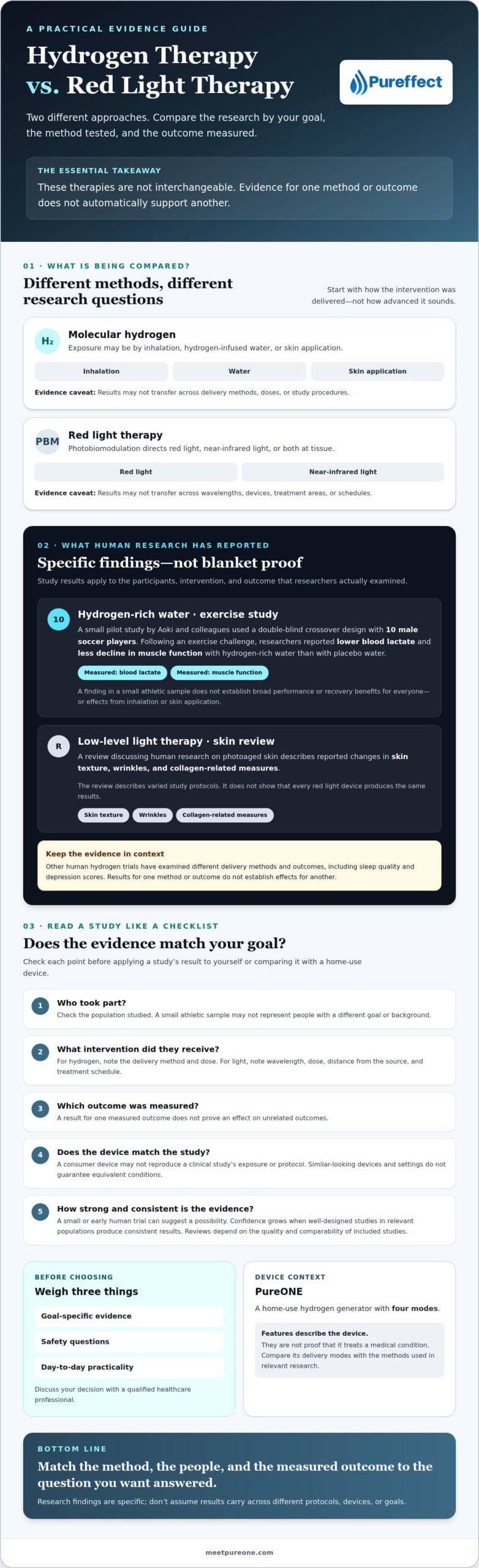
How to Compare Hydrogen Therapy and Red Light for Your Goal
A useful hydrogen therapy vs red light therapy comparison starts with your goal, not the device. Use this framework to check whether the evidence answers the question you actually have.
1. Name the outcome. Be specific. Less muscle soreness after exercise is different from improved performance or a change in blood lactate. A study measuring one outcome can’t establish benefits for another.
2. Find a matching human study. Compare the study population, intervention, and measured outcome with your situation. The small soccer-player trial discussed above tested hydrogen-rich water and measured blood lactate and muscle function after exercise. It doesn’t directly answer whether hydrogen reduces soreness for every person or delivery method. For more context on that specific topic, look for a guide to hydrogen therapy for athletic recovery. For a skin question, check whether research measured the outcome you care about, such as skin texture, rather than assuming evidence for one skin measure applies to all concerns.
3. Check safety information. Look for adverse events reported in relevant studies, and follow the device’s instructions. A lack of reported problems in one trial doesn’t establish universal safety. Ask a qualified clinician before trying a therapy if you have a medical condition, take medication, are pregnant, or have persistent symptoms. Don’t use either approach to replace prescribed care without medical guidance.
4. Weigh practicality. Consider the delivery method, time commitment, treatment area, and whether the routine realistically fits your life. Protocols vary, so don’t assume a home device matches the study setup. A routine that is practical may be easier to follow, but consistency doesn’t guarantee a result.
Bring the specific study and device instructions to your clinician. Ask whether the evidence applies to your goal, what risks matter in your circumstances, and whether the routine could interfere with your care.
If you’re considering a home-use hydrogen option, review the PureONE generator details to understand its modes and compare them with the hydrogen delivery methods used in research.
Where PureONE Fits If You’re Exploring Hydrogen Therapy
After weighing the evidence, you may want to understand what a home-use hydrogen option offers. PureONE is a molecular hydrogen generator, not a red light therapy device. In the hydrogen therapy vs red light therapy comparison, it belongs on the hydrogen side only.
What PureONE offers, and what it doesn’t establish
PureONE has four modes that allow users to inhale hydrogen gas, drink hydrogen-infused water, or apply it directly to the skin. The generator uses a proprietary stainless steel condenser and produces a consistent mixture of 66% molecular hydrogen and 33% oxygen. These are product specifications, not evidence that the device treats a health condition or produces a particular clinical outcome.
That distinction matters. A device’s modes and stated output don’t show that it reproduces the intervention used in a particular study, or that a study’s results apply to every user. For a fair comparison, check the research method and delivery route against the device details. Discuss health questions with a qualified clinician.
How to take a measured next step
If you’re comparing hydrogen inhalation with hydrogen-infused water, look for human studies that tested the same delivery method and a goal relevant to you. A sibling article comparing hydrogen inhalation machines and water bottles can help you think through those format differences, but it shouldn’t replace study-specific evidence or medical advice.
PureONE is manufactured in Canada, and the company offers a 365-day risk-free trial. Trial terms and conditions can change, so verify the current details on the product page before deciding. Treat the trial as a purchasing term, not proof of effectiveness.
If the product’s modes fit the option you’re researching, explore the PureONE hydrogen generator and review its details alongside the evidence relevant to your goal.
Choose the Approach That Matches Your Goal
The clearest takeaway from hydrogen therapy vs red light therapy is that they’re different approaches, and evidence for one outcome doesn’t establish benefits for another. Start with the health goal you care about, then look for human research that tested a similar population, method, and outcome. Promising findings deserve attention, but they aren’t the same as proven treatment.
If you’re considering PureONE as a home-use hydrogen option, it offers four modes for hydrogen inhalation, hydrogen-infused water, and direct skin application. The generator is manufactured in Canada. These product details help explain what it offers, but they don’t establish a medical benefit. The company offers a 365-day risk-free trial; verify the current terms before making a decision.
Explore the PureONE hydrogen generator and review its details alongside the research relevant to your goal. If you have a medical condition, take medication, are pregnant, or have ongoing symptoms, discuss your options with a qualified healthcare professional. A thoughtful next step beats a rushed choice.
Frequently Asked Questions
Is hydrogen therapy better than red light therapy?
No, neither is universally better. The right comparison depends on the outcome you’re interested in, the population studied, and how strong and relevant the human evidence is. Hydrogen therapy involves exposure to molecular hydrogen, while red light therapy uses light directed at tissue. Look for studies that match your specific question, including the intervention and measured outcome, rather than relying on broad claims or assuming either is a proven treatment.
Can you use hydrogen therapy and red light therapy together?
The information reviewed here doesn’t establish whether combining hydrogen therapy and red light therapy improves outcomes. Research on each approach separately can’t show that using both together provides an added benefit. If you have a medical condition, take medication, or have concerns about possible risks, ask a qualified clinician before adding either practice. Don’t combine therapies based on wellness claims alone or use them in place of prescribed care.
What does research say about hydrogen therapy?
One small study by Aoki and colleagues tested hydrogen-rich water in 10 male soccer players after exercise. The researchers measured blood lactate and muscle function, reporting lower lactate and less decline in muscle function compared with placebo water. This finding applies to that study’s participants, delivery method, and exercise context. It doesn’t establish that hydrogen therapy treats health conditions or produces the same outcomes for other people or delivery methods.
What does research say about red light therapy?
A review of low-level light therapy for skin health describes human studies using red and near-infrared light, including repeated-session protocols using 633-nm red light. Reported outcomes include changes in skin appearance and collagen-related measures. The review covers varied methods, so its findings don’t show that every device or schedule produces those outcomes. Check the tested wavelength and protocol, and distinguish clinical research from general marketing claims.
Is hydrogen therapy safe for everyone?
No universal safety conclusion applies to everyone or every delivery method. Check the device instructions and look for adverse events reported in studies using a similar intervention. If you have a medical condition, take medication, are pregnant, or have safety concerns, discuss hydrogen therapy with a qualified healthcare professional first. It isn’t a substitute for diagnosis or prescribed treatment, and study findings shouldn’t be treated as personal medical advice.
How do I choose between hydrogen therapy and red light therapy?
Start by defining a specific goal, then find human studies that match it in population, intervention, and measured outcome. Check the tested protocol and available safety information, and consider whether the delivery method and routine are practical for you. In the hydrogen therapy vs red light therapy comparison, evidence should carry more weight than broad claims or testimonials. Ask a qualified clinician for guidance if you have a health condition or may change existing care.
Disclaimer
The information provided by Pureffect and any of its products are for educational and informational purposes only and is not intended as medical advice. Individual results may vary, and no specific health outcomes are guaranteed. Always consult a qualified healthcare professional before starting any wellness practice or product.