
What if the most effective way to protect your healthy cells during treatment was actually the smallest molecule in the universe? You likely already know that chemotherapy is a blunt instrument. It’s incredibly effective at targeting cancer, but it often leaves you grappling with debilitating fatigue and that persistent, metallic “chemo mouth.” Finding ways of reducing side effects of chemotherapy naturally can feel like an uphill battle when you’re already exhausted. It’s frustrating to feel like your body is a battleground where you have no say in the collateral damage.
We believe you deserve a sense of agency over your recovery process. This guide explores how you can support your body by leaning into specific, evidence-based research. We’ll dive into the latest findings, including a 2025 review in Biochemistry and Biophysics Reports that highlights the benefits of molecular hydrogen for oxidative-stress-related conditions. You’ll discover how over 1,000 scientific articles and new trends like hospital-at-home monitoring are changing the way we look at recovery. Let’s look at how these research-backed tools can help you protect your healthy cells and reclaim your energy.
Key Takeaways
- Understand how chemotherapy-induced oxidative stress damages healthy DNA and why neutralizing reactive oxygen species (ROS) is vital for your comfort.
- Learn why molecular hydrogen is gaining attention for reducing side effects of chemotherapy naturally by selectively targeting only the most toxic free radicals.
- Discover specific medical research regarding cisplatin-induced nephrotoxicity and how molecular hydrogen helps protect healthy kidney cells from damage.
- Master practical home techniques for deep hydration and inhalation to help manage systemic inflammation and support your recovery pace.
- Explore how the PureONE Molecular Hydrogen Generator offers a multi-modal way to apply these scientific findings through inhalation, drinking water, and skin application.
Why Does Chemotherapy Cause Side Effects? The Role of Oxidative Stress
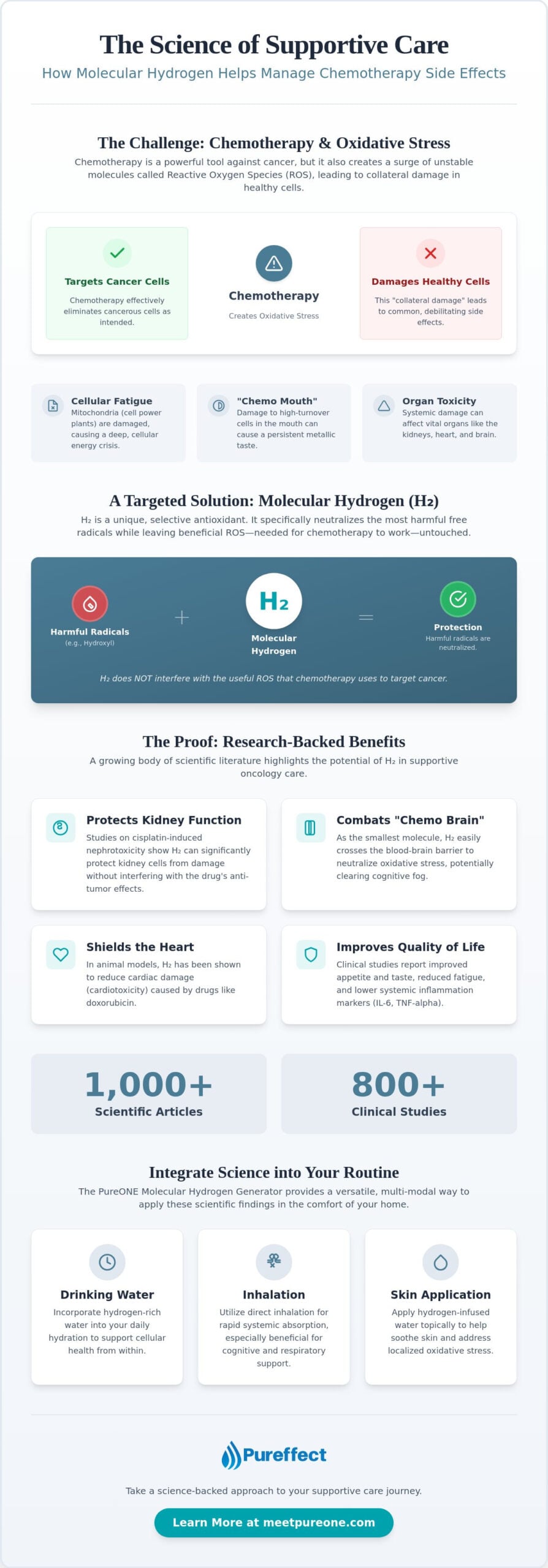
Why does a treatment meant to heal often make you feel so broken? The answer lies in a process called oxidative stress. Think of chemotherapy as a powerful storm. While it’s designed to wash away the cancer, it also creates a surge of unstable molecules known as reactive oxygen species (ROS). These molecules are like tiny wrecking balls. They bounce around your system, stealing electrons and damaging healthy DNA in their path. This is the primary driver behind the common side-effects of chemotherapy that many patients endure.
It’s a classic case of collateral damage. The medicine is doing its job by killing cancer cells, but it doesn’t always distinguish between the “bad guys” and your healthy tissues. This systemic “rusting” of your cells is what leads to the long-term anxiety over organ damage. Is there a way to protect the good while the medicine fights the bad? That’s where supportive care comes in. By focusing on reducing side effects of chemotherapy naturally, you aren’t just managing symptoms. You’re giving your body the resilience it needs to stay the course of treatment.
The Impact on Healthy Cellular Function
Why does the exhaustion feel so heavy? It’s often because your mitochondria, the tiny power plants in your cells, are under fire. When chemotherapy drugs flood the system, they trigger oxidative bursts that can paralyze these energy producers. This is why “chemo fatigue” feels different than just being tired; it’s a cellular energy crisis. The gut lining and nervous system are particularly vulnerable to these bursts because they contain high-turnover cells. Hydroxyl radicals, which are the most aggressive reactive species, cause direct damage to lipids and proteins in these tissues, leading to systemic organ toxicity during treatment.
The Shift Toward Integrative Supportive Care
Many patients are now looking for ways of reducing side effects of chemotherapy naturally to lower their overall toxicity burden. The goal isn’t to stop the chemo from working. It’s to protect the “innocent bystander” cells. This has led to the rise of Redox Medicine, a field of oncology support focused on managing the body’s internal chemical balance. By using targeted methods that don’t interfere with the drug’s intended mechanism, you can maintain your treatment schedule with fewer interruptions. It’s about finding a bridge that helps you cross the finish line of your recovery with your quality of life intact.
Molecular Hydrogen: Research-Backed Findings in Oncology Support
Have you ever wondered why some antioxidants are discouraged during treatment? It’s because many generic supplements can’t tell the difference between a harmful radical and the oxidative stress chemo uses to kill cancer. Molecular hydrogen (H2) is different. It acts as a selective antioxidant. This means it only targets the most cytotoxic radicals, like the hydroxyl radical, while leaving the “useful” ones alone. This selectivity is a major breakthrough for those interested in reducing side effects of chemotherapy naturally.
Research into cisplatin-induced nephrotoxicity has shown that H2 can significantly protect kidney function. Cisplatin is effective, but its tendency to cause kidney damage often limits how much a patient can tolerate. Studies suggest that H2 helps shield these organs without interfering with the drug’s anti-tumor activity. This approach fits perfectly within the growing field of Integrative oncology, where the goal is to enhance the patient’s experience through evidence-based support.
H2 is the smallest molecule in existence. Because of its size, it easily crosses the blood-brain barrier. This is critical for patients struggling with “chemo brain” or cognitive fog. By neutralizing oxidative stress directly within brain tissue, H2 may help clear the mental haze that often accompanies treatment.
Selective Antioxidant Action: Protecting Healthy Cells
Generic antioxidants can be a double-edged sword. If they neutralize the ROS that chemo uses to destroy tumors, they might actually make the treatment less effective. H2 doesn’t do that. It specifically hunts for the radicals that cause heart and liver toxicity. In various animal models, H2 has been shown to reduce cardiac damage caused by doxorubicin. This achievement highlights its potential for protecting vital organs from collateral damage without shielding the cancer itself.
Clinical Evidence for Symptom Management
The benefits aren’t just theoretical. With over 1,000 scientific articles and 800 clinical studies published since 2007, the data pool for H2 is deep. One clinical study found that patients drinking hydrogen-rich water reported a significant improvement in appetite and taste perception. This is a huge win for anyone battling “metallic mouth.” Additionally, H2 has been shown to lower systemic inflammation markers like IL-6 and TNF-alpha. A specific trial involving hydrogen gas inhalation demonstrated that patients experienced a measurable reduction in treatment-related fatigue. If you’re interested in exploring this at home, the PureONE Molecular Hydrogen Generator provides a versatile way to integrate these findings into your daily routine.
A Practical How-To: Implementing Natural Support at Home
Managing “chemo mouth” requires a proactive approach. Have you noticed a persistent metallic taste? This is often triggered by platinum-based drugs reacting with metal silverware. Switch to plastic utensils to instantly reduce this sensation. You can also use hydrogen-rich water as a gentle mouth rinse to soothe sensitive oral tissues. Finally, don’t underestimate gentle movement. A short, slow walk helps stimulate lymphatic drainage. This is your body’s primary system for clearing out cellular debris and reducing the heavy fatigue that often sets in after a session.
Maximizing the Benefits of Hydrogen Inhalation
Gas mixture is a vital detail for effective inhalation. A 66/33 hydrogen-to-oxygen ratio is frequently used in research protocols because it provides high-concentration hydrogen alongside essential oxygen. This specific blend is excellent for those who may experience shortness of breath or respiratory fatigue during recovery. The 66/33 hydrogen-oxygen ratio ensures that users receive a therapeutic dose of hydrogen without sacrificing the oxygen levels needed for comfortable respiratory intake. Most clinical studies suggest sessions of 30 to 60 minutes to reach effective saturation levels in the blood and tissues.
Dietary and Lifestyle Adjustments for Toxicity Reduction
Your kitchen can be a powerful ally in your recovery. Incorporate anti-inflammatory staples like ginger and turmeric, which are highlighted in this scientific review of natural products for chemotherapy support for their ability to manage nausea and gut inflammation. These natural compounds work in harmony with your body’s own defense systems. For deeper insights into how hydrogen targets inflammation specifically, you might find our guide on The Science of Hydrogen Therapy for Athletic Recovery helpful, as the inflammatory markers involved are often very similar. Ready to start your home protocol? You can order the PureONE Molecular Hydrogen Generator to access both inhalation and drinking water modes today.
The PureONE Approach: Targeted Support for Your Journey
Transitioning from the clinic to the living room shouldn’t mean leaving your support system behind. How do you maintain the momentum of your recovery between scheduled treatments? The PureONE Molecular Hydrogen Generator was designed to be that bridge. It’s a multi-modal tool that brings the research we’ve discussed directly into your home. By providing a consistent source of molecular hydrogen, it helps you stay proactive in reducing side effects of chemotherapy naturally every single day.
Why Design Matters in Supportive Care
Consistency is the key to efficacy. As we touched on earlier, the 66% H2 and 33% O2 delivery is a standard used in clinical settings for both safety and respiratory comfort. Having a single device that handles both water infusion and gas inhalation simplifies your routine when you’re feeling fatigued. These units are built to Canadian manufacturing standards. This ensures you’re getting a high-tech tool that meets rigorous quality requirements. It’s about professional-grade support in a low-barrier format.
Empowering Your Recovery at Home
Natural support isn’t meant to replace your medical team. It’s meant to be their most effective partner. When you actively support your cells, you’re not just enduring the process; you’re participating in it. Ready to customize your setup? You can view PureONE accessories to find the right fit for your daily routine. Remember, you don’t have to just “get through” your side effects. You have the tools to protect your healthy cells and reclaim your sense of agency. Your journey toward better living starts with the very next breath.
Taking Control of Your Healing Process
Recovery is rarely a straight line, but it doesn’t have to be a journey you take without the right tools. We’ve explored how oxidative stress drives systemic toxicity and why molecular hydrogen is a breakthrough for protecting healthy DNA. By focusing on reducing side effects of chemotherapy naturally, you’re choosing to support your body’s innate resilience. Whether it’s soothing sensitive tissues or clearing the fog of treatment-related fatigue, the research shows that selective antioxidant support can make a measurable difference in your daily comfort.
You deserve a partner in this process that values transparency and scientific rigor. The PureONE Molecular Hydrogen Generator is manufactured in Canada and comes with the peace of mind of a 365-day risk-free trial. It’s even endorsed by Howie Mandel for its quality and ease of use. Why just endure the side effects when you can actively participate in your cellular defense? Discover how PureONE supports your natural recovery journey and start reclaiming your energy today. You have the power to influence your own recovery, one breath at a time.
Frequently Asked Questions
Can molecular hydrogen interfere with my chemotherapy’s effectiveness?
Research suggests that molecular hydrogen does not reduce the cancer-killing power of chemotherapy. Because H2 is a selective antioxidant, it only targets the most damaging radicals like hydroxyl. It leaves the specific reactive oxygen species (ROS) used by chemo to destroy tumor cells untouched. This unique selectivity makes it a primary tool for reducing side effects of chemotherapy naturally without compromising your medical treatment.
How many times a day should I use a hydrogen generator during chemo?
Most clinical research protocols involve one to two sessions per day. Inhalation sessions typically last between 30 and 60 minutes to ensure the gas reaches therapeutic levels in your bloodstream. You can drink hydrogen-rich water throughout the day to maintain hydration. Consistency is the most important factor in managing the steady wave of oxidative stress that follows a treatment session.
Is drinking hydrogen water better than inhaling the gas for nausea?
Both methods are effective, but they serve different roles in your recovery. Inhalation provides a higher concentration of hydrogen for systemic issues like fatigue or inflammation. Drinking hydrogen water, however, puts the antioxidant in direct contact with your stomach lining. This can be particularly helpful for soothing the gut and managing the nausea or “chemo mouth” that often makes eating difficult.
What are the most common natural ways to reduce ‘chemo brain’?
Targeting neuro-inflammation is the most effective approach for clearing cognitive fog. Molecular hydrogen is highly effective here because its tiny size allows it to cross the blood-brain barrier easily. Other natural strategies include increasing your intake of omega-3 fatty acids and practicing gentle “brain games” to keep neural pathways active. Protecting your brain cells from oxidative bursts helps maintain mental clarity during and after treatment.
Can I use hydrogen therapy alongside other natural supplements?
Yes, molecular hydrogen is a neutral gas and generally doesn’t react with other supplements. Many patients find success by combining H2 with ginger for nausea or turmeric for systemic inflammation. This multi-layered approach is common when reducing side effects of chemotherapy naturally. It’s always a smart move to share your full supplement list with your medical team to ensure everything works together harmoniously.
How soon after a chemo session can I start using a hydrogen machine?
You can typically begin your hydrogen session as soon as you return home from the clinic. There is no evidence suggesting you need to wait before starting inhalation or drinking hydrogen water. In fact, using the machine early may help your body begin the process of neutralizing treatment-induced toxins right away. This proactive timing can be a game-changer for managing the initial spike in fatigue.
Disclaimer
The information provided by Pureffect and any of its products are for educational and informational purposes only and is not intended as medical advice. Individual results may vary, and no specific health outcomes are guaranteed. Always consult a qualified healthcare professional before starting any wellness practice or product.