
What if the most effective way to fight brain fog and systemic inflammation wasn’t a pill, but a gas you’ve known about since middle school science? It sounds almost too simple. You might be feeling the weight of persistent fatigue. Maybe you’ve noticed your body doesn’t bounce back after a workout like it once did. It’s a common struggle. Many people are now turning to the benefits of inhaling hydrogen gas to reclaim their cognitive clarity and physical resilience.
Does the science actually back it up? Absolutely. This guide dives into the data. We start with the landmark 2007 study published in Nature Medicine. You’ll see how molecular hydrogen acts as a selective antioxidant, specifically targeting the destructive hydroxyl radical without disturbing helpful signaling molecules. We’ll also explore how recent clinical trials demonstrate its power in neuroprotection and recovery. We’ve compiled the latest research to help you understand the safety of this non-invasive tool. It’s time to see how a specific 66/33 hydrogen-oxygen ratio supports your cellular health every day.
Key Takeaways
- Discover why molecular hydrogen is the only antioxidant small enough to reach your mitochondria and cell nucleus for deep cellular repair.
- Examine clinical trials that suggest hydrogen inhalation can slow the loss of neurons and support sharper memory as we age.
- Learn about the 2024 Dove Press study findings regarding the safety of hydrogen gas during intense systemic inflammation.
- Realize the specific benefits of inhaling hydrogen gas through daily “micro-dosing” to maintain long-term cellular resilience.
- Find out why the 66/33 hydrogen-to-oxygen ratio is the recognized standard for maximizing safety and therapeutic results at home.
Why Inhaling Hydrogen Gas is a Game-Changer for Cellular Health
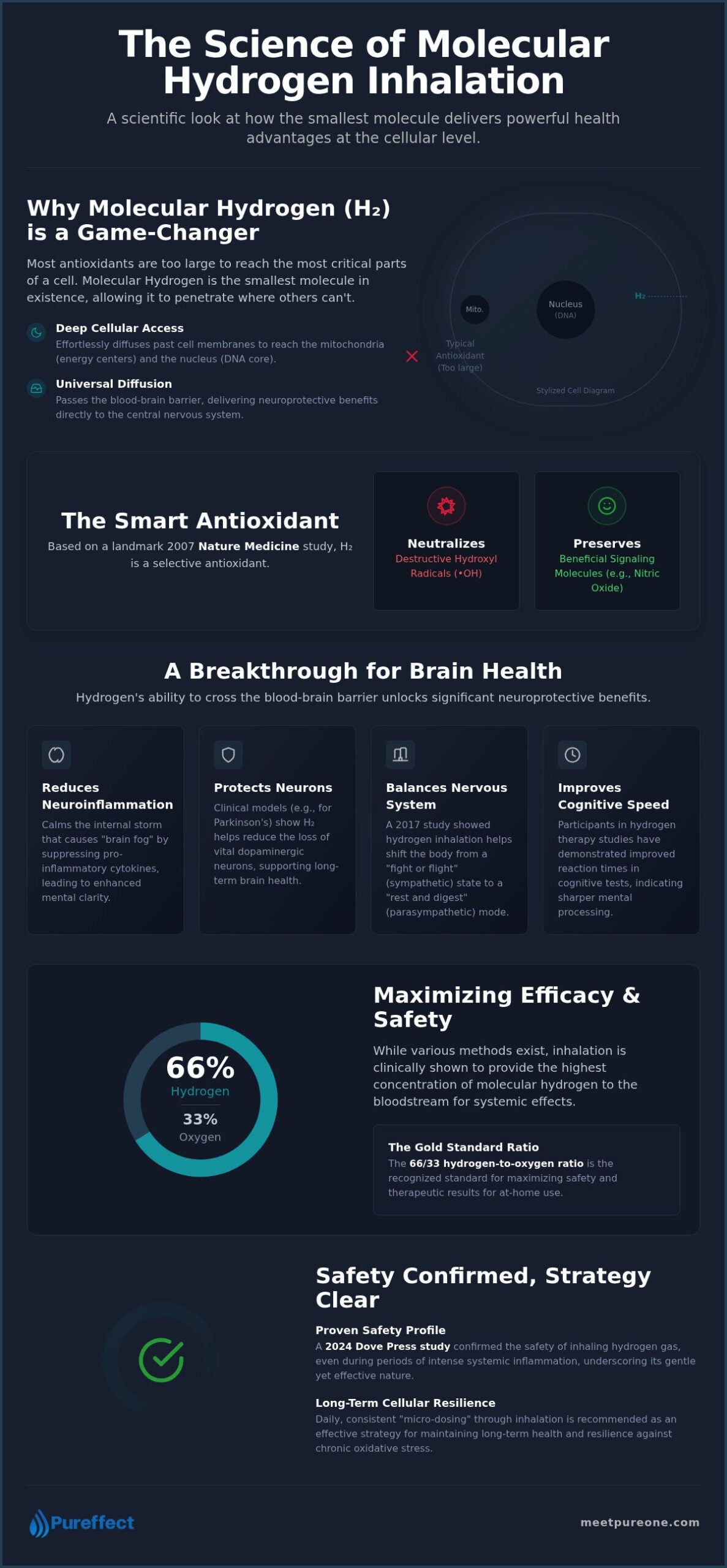
Ever wonder why some antioxidants feel like they’re hitting a wall? It’s usually a matter of scale. Think of your cells like a high-security facility. Most antioxidants are like bulky delivery trucks; they’re far too large to get through the narrow side doors where the actual work happens. Molecular hydrogen is different. It’s the smallest molecule in existence. This unique physical property allows it to slip past cellular membranes and enter the mitochondria and the cell nucleus effortlessly. This is where your DNA lives and where energy is produced. It’s also where the most oxidative damage occurs.
In 2007, a landmark study published in Nature Medicine changed how scientists view Hydrogen therapy. Researchers discovered that H2 doesn’t just neutralize every radical it finds. It’s picky. It specifically targets the hydroxyl radical, which is the most destructive free radical in the human body. Why does this selectivity matter? Your body actually needs some free radicals, like nitric oxide, for healthy signaling and immune function. Traditional antioxidants can be too aggressive and mop up the “good” radicals along with the bad. Hydrogen is smarter. It leaves the helpful molecules alone while neutralizing the ones that cause real harm.
If you’re looking for the most efficient way to get these molecules into your system, inhalation is the answer. Clinical research indicates that inhaling the gas allows for significantly higher concentrations in the bloodstream compared to oral ingestion. It’s a direct route to your cells. This efficiency is one of the primary benefits of inhaling hydrogen gas for those seeking rapid systemic support. Is it really that simple? Yes, because of how hydrogen behaves at a molecular level.
The Hydroxyl Radical: Targeting the Root of Oxidative Stress
Understanding the benefits of inhaling hydrogen gas starts with looking at the hydroxyl radical. This radical is a notorious cell-killer. It’s highly reactive and doesn’t hesitate to steal electrons from your DNA, proteins, and lipids, leading to permanent cellular damage. Research shows that hydrogen effectively prevents this DNA degradation by neutralizing these specific radicals before they can strike. We define a “selective antioxidant” as a substance with the ability to target only the most harmful free radicals.
Universal Diffusion: Crossing the Blood-Brain Barrier
Your brain is an energy hog. It consumes about 20% of your body’s oxygen, which makes it incredibly vulnerable to oxidative stress. Most protective compounds are blocked by the blood-brain barrier, a strict security system for your central nervous system. Hydrogen doesn’t care about the barrier. Because it’s so tiny and non-polar, it diffuses through the barrier effortlessly. Findings suggest this is why hydrogen is so effective at supporting cognitive health and protecting against age-related decline. You can learn more about this process in our guide on What is Molecular Hydrogen?.
Protecting the Brain: Clinical Evidence for Neuroprotection
Ever feel like your brain is wading through thick soup? We call it brain fog. It’s often the result of quiet, persistent neuroinflammation. One of the standout benefits of inhaling hydrogen gas is its ability to reach the central nervous system and calm this internal storm. A 2023 review on clinical studies and outcomes highlights how this intervention supports brain health across multiple conditions. It isn’t just about feeling better for a few hours. It’s about protecting the very cells that make you, you.
What about long-term concerns? In research involving Parkinson’s and Alzheimer’s models, hydrogen has shown a remarkable ability to reduce the loss of dopaminergic neurons. These are the specific cells responsible for movement and reward. By protecting these neurons, hydrogen helps maintain the delicate chemistry required for a sharp, functional mind as we age. These neuroprotective benefits of inhaling hydrogen gas are becoming a central focus in longevity research, offering a non-invasive way to support your brain’s biological hardware.
Mental health is just as much a physical process as it is an emotional one. A 2017 study looked at how hydrogen inhalation affects mood and anxiety. The results showed a significant reduction in sympathetic nerve activity. In plain English, it helps flip the switch from “fight or flight” to “rest and digest.” This physiological shift can make a world of difference for your daily focus and overall sense of calm.
Neuroinflammation and Cognitive Resilience
Chronic inflammation is the enemy of cognitive resilience. When your brain is inflamed, your reaction times slow down. Studies have measured this directly. Participants using hydrogen therapy showed improved reaction times in cognitive tests. This happens because hydrogen suppresses pro-inflammatory cytokines. These are the chemical messengers that keep the brain in a state of high alert. If you want to experience this clarity yourself, a home unit like the PureONE makes it easy to stay consistent.
Recovery from Traumatic Brain Injury (TBI)
Head injuries are a major concern for athletes and aging adults alike. The initial impact is bad. However, the “secondary damage” caused by oxidative stress in the following hours can be even more destructive. Emerging research suggests a critical window of opportunity where hydrogen can mitigate this damage. This overlap between brain health and physical performance is explored further in our guide on The Science of Hydrogen Therapy for Athletic Recovery.
Systemic Benefits: From Lung Support to Metabolic Health
While the brain gets a lot of attention, the systemic benefits of inhaling hydrogen gas extend to nearly every organ system. How does a simple gas influence your metabolism? Research suggests that hydrogen can stimulate the secretion of ghrelin, a hormone that does more than just signal hunger. It also plays a role in protecting the heart and vascular system. In fact, some studies indicate that hydrogen can mimic certain metabolic markers typically seen after physical exercise. This makes it a fascinating tool for those looking to support their metabolic balance from the inside out. A comprehensive review titled Therapeutic and Preventive Applications of Molecular Hydrogen details how these systemic effects work across different tissues.
Safety is a major priority in clinical settings. The 2024 Dove Press study highlighted the safety and feasibility of hydrogen inhalation even in patients undergoing intensive medical treatments. This research confirms that the body tolerates hydrogen exceptionally well, even during high-stress physiological challenges. It isn’t just about survival; it’s about maintaining cellular integrity when the body is under fire. Whether you’re recovering from an illness or just pushing your physical limits, the benefits of inhaling hydrogen gas provide a foundation for systemic resilience.
Respiratory Resilience and Lung Function
Your lungs are the primary entry point for hydrogen, and they receive immediate support. Findings show that hydrogen gas effectively reduces airway inflammation in chronic respiratory conditions. This is particularly important when environmental stressors are high. To maximize these effects, the 66/33 hydrogen-oxygen ratio is often used. This specific mixture ensures you receive therapeutic hydrogen without sacrificing the oxygen your blood needs. We define the synergistic effect of this 66/33 mixture as the way hydrogen and oxygen work together to reduce oxidative stress while simultaneously supporting cellular energy production.
Renal Health and Systemic Detoxification
Your kidneys are your body’s natural filtration system, but they’re often overworked. Research has found that hydrogen can significantly reduce oxidative markers in renal tissue. This is especially relevant in cases of drug-induced nephrotoxicity, where certain medications can accidentally damage the kidneys. By lowering the oxidative load, hydrogen helps these organs function more efficiently. You can find a deeper dive into this topic in our guide on Molecular Hydrogen for Kidney Health. Ready to bring this level of clinical-grade support into your home? You can explore the PureONE Molecular Hydrogen Generator to start your own journey toward better living.
Implementing Research-Backed Inhalation at Home
Is one big dose better than many small ones? For your cells, the answer is often no. Research suggests that frequent, lower-dose inhalation sessions may be more effective for maintaining cellular health than sporadic, high-dose treatments. This is the concept of daily micro-dosing. By integrating the benefits of inhaling hydrogen gas into your morning or evening routine, you provide your body with a steady supply of selective antioxidants. This consistent presence allows your mitochondria to remain in a state of ongoing repair rather than waiting for a monthly rescue session at a clinic. It’s about cumulative resilience rather than a quick fix.
Safety and purity are the two pillars of home inhalation. If you’re breathing a gas for thirty to sixty minutes a day, you need to know exactly what’s in it. The PureONE system uses a proprietary stainless steel condenser to ensure the gas you inhale is clean and free from unwanted byproducts. This commitment to purity is why figures like Howie Mandel have publicly integrated this technology into their wellness routines. It bridges the gap between complex clinical research and practical, everyday living. It’s a recommendation from a knowledgeable friend who is excited about the science.
The Convenience of the PureONE System
The PureONE Molecular Hydrogen Generator is designed to fit into your life, not the other way around. It features four distinct therapeutic modes that allow you to customize your experience based on your specific needs for the day. You can easily experience the benefits of inhaling hydrogen gas while you’re reading a book, catching up on emails, or watching your favorite show. Because we want you to feel the difference for yourself, every unit comes with a 365-day risk-free trial. It’s a transparent way to verify the research in your own home environment without any pressure.
The 66/33 Ratio: The Scientific Gold Standard
Why do we focus so much on the 66% hydrogen and 33% oxygen mixture? This specific ratio is widely considered the gold standard in clinical settings for both safety and efficacy. It ensures that you receive a therapeutic concentration of hydrogen without ever compromising your blood oxygen saturation. It’s a balanced approach to wellness. Some devices only provide pure hydrogen, which can require more careful monitoring of your oxygen levels during long sessions. By providing both in a precise ratio, the system offers a safer and more effective experience. You can visit our New Shop to explore the various accessories and therapy modes available for this specific 66/33 output.
Ready to Experience a New Level of Vitality?
The evidence is clear. From its unique ability to cross the blood-brain barrier to its role in systemic detoxification, molecular hydrogen is a precision tool for modern living. You’ve seen how its selective antioxidant power targets only the most destructive radicals. You’ve also learned why the 66/33 ratio is the trusted standard for daily safety and efficacy. It isn’t just about adding years to your life; it’s about adding life to your years by supporting your body at the cellular level.
Why wait for a clinic appointment to feel your best? Bringing the benefits of inhaling hydrogen gas into your home allows for the consistent, daily support your cells need to thrive. It’s a simple, non-invasive shift that can lead to profound changes in how you think, move, and recover. It’s about taking ownership of your health with a tool that works as hard as you do.
Our PureONE generator is manufactured in Canada and features proprietary technology endorsed by Howie Mandel. We’re so confident in the science that we offer a 365-day risk-free trial. It’s your journey toward better living. We’re just here to provide the map and the equipment.
Experience the Research-Backed Benefits of the PureONE Today
Frequently Asked Questions
Is inhaling hydrogen gas safe for daily use at home?
Yes, it’s considered very safe for daily home use when you use professional-grade equipment. The FDA recognizes molecular hydrogen as Generally Recognized as Safe (GRAS) under Notice No. 520 for use in beverages. For inhalation, therapeutic concentrations are typically kept between 2% and 4%. This is safely below the 4.6% flammability threshold, making it a reliable addition to a home wellness routine without the risks associated with higher concentrations.
How long should a typical hydrogen inhalation session last based on research?
Most clinical research protocols involve sessions lasting between 30 and 60 minutes. While some specialized trials explore longer durations, this window is the standard for achieving systemic benefits in a wellness setting. Consistency is the real secret here. Short, daily sessions are often more effective at maintaining cellular resilience than occasional, longer sessions. It’s about keeping a steady supply of molecules available to your cells.
What is the difference between inhaling hydrogen and drinking hydrogen water?
The primary difference is the concentration and the delivery route. While drinking hydrogen water is excellent for digestive health, the benefits of inhaling hydrogen gas include much higher levels of H2 in the bloodstream and brain. Inhalation provides a direct path to the respiratory and circulatory systems. This allows the molecules to reach your cells faster and in significantly greater quantities than oral ingestion alone.
Does hydrogen gas inhalation have any known side effects?
Hydrogen gas has no known toxic effects or significant adverse reactions in over 1,700 peer-reviewed human studies. Because it’s a selective antioxidant, it doesn’t interfere with the beneficial free radicals your body uses for essential immune signaling. This high safety profile makes the benefits of inhaling hydrogen gas accessible to almost everyone. It’s one of the few interventions that offers powerful cellular support without a long list of “fine print” warnings.
Can I use hydrogen inhalation alongside other wellness therapies like infrared saunas?
Absolutely. Hydrogen inhalation is often positioned as a “force multiplier” for other recovery tools. Many wellness centers now pair it with infrared saunas, red light therapy, or NAD+ infusions. This combination supports mitochondrial health from multiple angles at once. It’s a versatile tool that fits seamlessly into a broader biohacking protocol without conflicting with other treatments. It’s a team player for your cellular health.
Why do researchers emphasize the 66% hydrogen and 33% oxygen ratio?
This specific ratio is favored because it provides a high therapeutic dose of hydrogen while maintaining life-sustaining oxygen levels. Inhaling pure hydrogen for extended periods can sometimes lead to a drop in oxygen saturation, known as hypoxia. By including 33% oxygen, the mixture ensures you can enjoy a long, relaxing session without any concerns about your breathing. It’s the gold standard for balancing safety with deep molecular efficacy.
Disclaimer
The information provided by Pureffect and any of its products are for educational and informational purposes only and is not intended as medical advice. Individual results may vary, and no specific health outcomes are guaranteed. Always consult a qualified healthcare professional before starting any wellness practice or product.